💰 Budget
Ciudad Bolívar is cheaper than the Caribbean coast, with simple posadas in the old town, but cash is scarce and cards rarely work. Most visitors pass through on the way to Canaima, and the real expense is the package — light aircraft, camp, meals and the boat trip to Angel Falls — priced in US dollars.
- Daily Budget Midrange
- USD 150–350 (Canaima package with flights, camp, meals and the boat trip to Angel Falls)
- Daily Budget Shoestring
- USD 50–90 (basic posada in the old town, simple food, taxis)
Book Canaima trips through an established operator, and bring all the US dollar cash needed for the whole journey.
📅 Best Time to Visit
The dry season from December to April is a little cooler and suits the city. Angel Falls has most water in the wet season, from about June to November, when boats can reach it, though cloud may hide the top. Security matters more than the season.
⏳ Suggested Number of Days
The colonial centre and the riverfront need one or two days. Most visitors combine the city with an organised trip to Canaima and Angel Falls, which takes four or five days in all; flight delays can add more.
- First Visit
- 1–2 days
- With Surroundings
- 4–5 days
🚆 Transportation
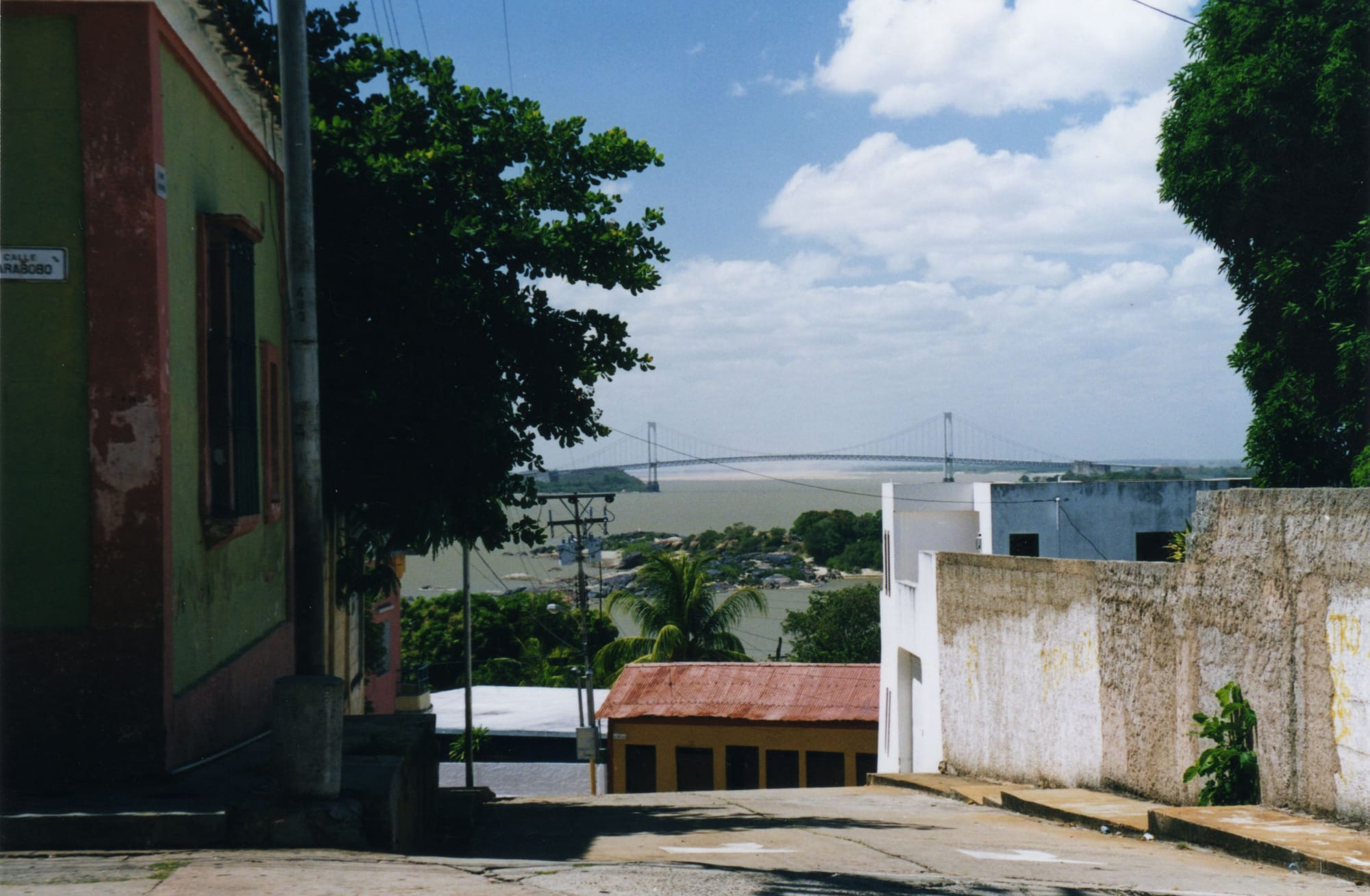
Buses are the city's public transport, but taxis arranged through a posada are the safer way around. The old town is compact. The Angostura Bridge carries the road north across the Orinoco, and a fast highway runs east to Ciudad Guayana. Fuel shortages disrupt road and air travel.
Use taxis arranged by the posada, especially after dark, and avoid driving the southern highway through the mining areas.
🛬 Airport & Station Connections
Tomás de Heres Airport is in the middle of the city and has had domestic flights from Maiquetía, whose airport was heavily damaged by the earthquakes of 24 June 2026 and reopened at about half capacity in August 2026. Light aircraft fly from here and from Puerto Ordaz to Canaima. Buses from Caracas take about eight hours. Check what is actually operating before planning anything.
🚶 Walkability
The colonial centre is small and walkable, though its streets climb steeply from the river and the heat is strong in the middle of the day. The Paseo Orinoco is pleasant by day but should be avoided on foot at night, and the museum and the newer districts are a taxi ride away.
🛡️ Safety
Much of Bolívar state is affected by illegal gold mining run by armed groups, and the borders with Brazil and Guyana are dangerous. In the city, the Paseo Orinoco has a reputation for muggings at night, and in December 2016 days of looting left much of its commerce in ruins. Malaria is widespread in mining areas. The United States strikes of 3 January 2026 and the earthquakes of 24 June 2026 hit the north of the country rather than the south, but flights through Caracas were disrupted for weeks.
Most governments advise against all or all-but-essential travel. Anyone who does go should keep strictly to organised trips to Canaima, stay away from mining zones and border areas, avoid the riverfront after dark and take malaria precautions. Check current official travel advice before travelling.
🌦️ Climate
A tropical savanna climate, hot all year with an average of about 28.5°C, a dry season from December to April and a wet season from May to early November. Rainfall averages about 980 mm a year, and even in the wet season many days are dry.
- Summer
- May to early November: the wet season, slightly warmer than the dry months, with the monthly average peaking near 29°C in October
- Winter
- December to April: the dry season, regularly about 32°C by day and 22°C at night
🤝 Local Customs
Ciudad Bolívar is proud of its part in independence and of its artists and musicians, from Jesús Soto to the guitarist Antonio Lauro. People are courteous and greetings matter; a handshake, or a kiss on the cheek between women and between men and women who know each other. Churches expect shoulders and knees covered.
Tipping of around 10 per cent is welcome where no service charge is added. Never photograph soldiers, police, checkpoints or the bridge's security posts, and ask before photographing people.
💳 Common Payment Methods
The currency is the bolívar digital, but in practice prices are set and paid in US dollars in cash. Cash is scarce here, and card and ATM access for foreigners barely functions, so bring all the cash needed, in small notes.