💰 Budget
Daily life is cheap for anyone holding US dollars in cash, and hotels on the seafront come at a range of prices. The extras are boats to the islands, private taxis, and hotels with their own generators and water supply, which are worth paying for.
- Daily Budget Midrange
- USD 120–300 (seafront hotel, seafood meals, private boat trips and official taxis)
- Daily Budget Shoestring
- USD 40–70 (simple hotel or posada, local food, boat taxis to the nearer islands)
Carry small US dollar notes, use official taxis, and arrange island boats at the Paseo Colón piers or through the hotel.
📅 Best Time to Visit
The coast is hot and dry for most of the year, with steadier weather from December to April. Christmas, Carnival and Holy Week bring crowds of Venezuelan holidaymakers to the beaches and ferries. Security and transport matter more than the season.
⏳ Suggested Number of Days
Two or three days cover the seafront and a boat trip to the islands. Four to six allow more time in the national park and along the coast. The city is often a stopover before the ferry to Margarita, and cancellations can add a day.
- First Visit
- 2–3 days
- With Surroundings
- 4–6 days
🚆 Transportation
Puerto La Cruz, Barcelona, Lechería and Guanta run together into one urban area linked by wide avenues. Official taxis are the quickest and safest way around; local buses are cheap but old and hard to fathom. Boats to the Mochima islands leave from two piers on the Paseo Colón and from Guanta. Fuel shortages affect road and sea transport.
Use only taxis marked with a company name; unmarked pirata cabs have been linked to robbery and kidnapping.
🛬 Airport & Station Connections
Puerto La Cruz has no airport of its own; General José Antonio Anzoátegui International Airport is in neighbouring Barcelona, with domestic flights, mainly from Caracas, whose airport at Maiquetía was heavily damaged by the earthquakes of 24 June 2026. Buses from Caracas take about six hours. Ferries to Margarita leave from the terminal on the Paseo Colón and take a few hours; schedules depend on fuel and working vessels.
🚶 Walkability
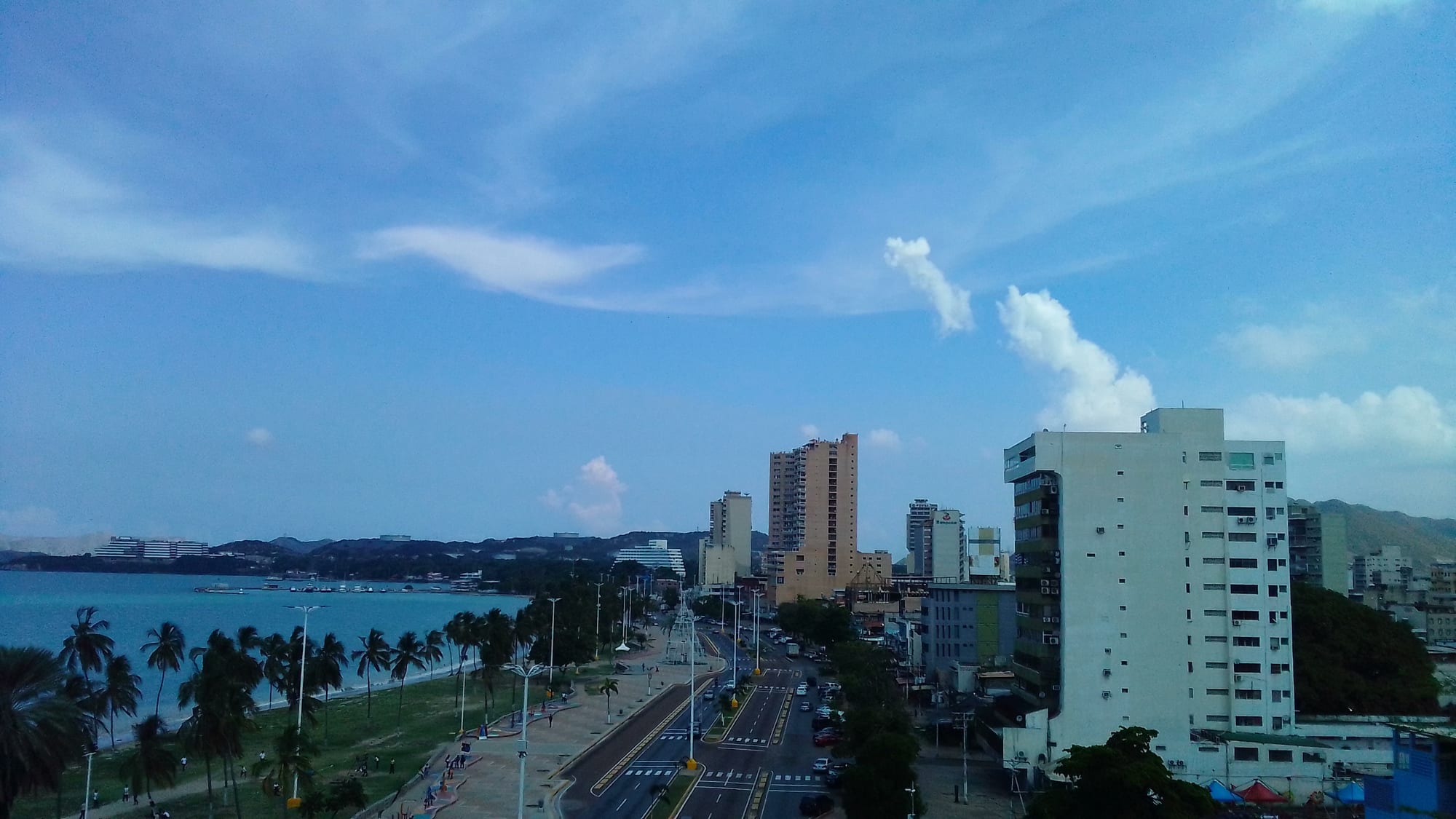
The Paseo Colón is pleasant on foot, with the boulevard, the cross and the boat piers close together. Beyond the seafront the city is built for traffic, with wide avenues and long distances. Taxis are the sensible way to reach Lechería, Barcelona and the beaches.
🛡️ Safety
Armed robbery is a risk in Puerto La Cruz and Barcelona, and the oil towns of the east have high crime. Unofficial taxis have been linked to robbery and kidnapping. The earthquakes of 24 June 2026 damaged the central coast and the north-west rather than the eastern states, but a state of emergency was declared across the country.
Most governments advise against all or all-but-essential travel. Anyone who does go should use official taxis only, keep to known beaches and established boat operators, and stay off the roads after dark. Check current official travel advice before travelling.
🌦️ Climate
Hot and sunny all year, with steady trade winds and dry hills of cactus scrub on the islands. Rain is heavier inland and further east than on this stretch of coast.
- Summer
- May to November: hot, about 27–33°C, with some rain
- Winter
- December to April: sunny, windy and dry, about 25–31°C
🤝 Local Customs
Puerto La Cruz is an easy-going coastal city with strong Margarita roots, a Catholic calendar of feasts and a large community of Arab descent in commerce. Bargaining is part of everyday life, including over taxi fares. Beachwear belongs on the beach, and churches expect shoulders and knees covered.
Tipping of around 10 per cent is welcome where no service charge is added. Never photograph the refinery, soldiers, police or checkpoints, and ask before photographing people.
💳 Common Payment Methods
The currency is the bolívar digital, but in practice prices are set and paid in US dollars in cash. Card and ATM access for foreigners barely functions, so bring all the cash needed, in small notes.