💰 Budget
Châu Đốc is cheap, even by delta standards, and has little on which to spend money beyond rooms, meals and boats. Hotels are simple, and the main cost for most visitors is a private boat to the fish farms and the Cham villages, or a seat on the river service to Cambodia. Prices rise sharply around the Bà Chúa Xứ festival.
- Daily Budget Midrange
- USD 50–130 (riverside hotel, restaurant meals, a private boat and a car or guide for Sam Mountain and Trà Sư)
- Daily Budget Shoestring
- USD 20–35 (guesthouse, market food, local transport and a shared boat)
Book a room well ahead for the fourth lunar month, when pilgrims fill the town, and hire a boat for early morning when the river is working.
📅 Best Time to Visit
December to April is dry, warm and easy for travel, and the temple festival falls at the end of it. The flood months from about August to November show the upper delta at its most distinctive, with water across the fields, lotus and linh fish in the markets, though some lanes are impassable. The hottest weeks are in March and April.
⏳ Suggested Number of Days
Most visits last a night or two, which is enough for the town, the river and the temples. Allow longer to add the countryside along the border, or to break the journey here on the way to or from Cambodia.
- First Visit
- 1–2 days
- With Surroundings
- 2–3 days
🚆 Transportation
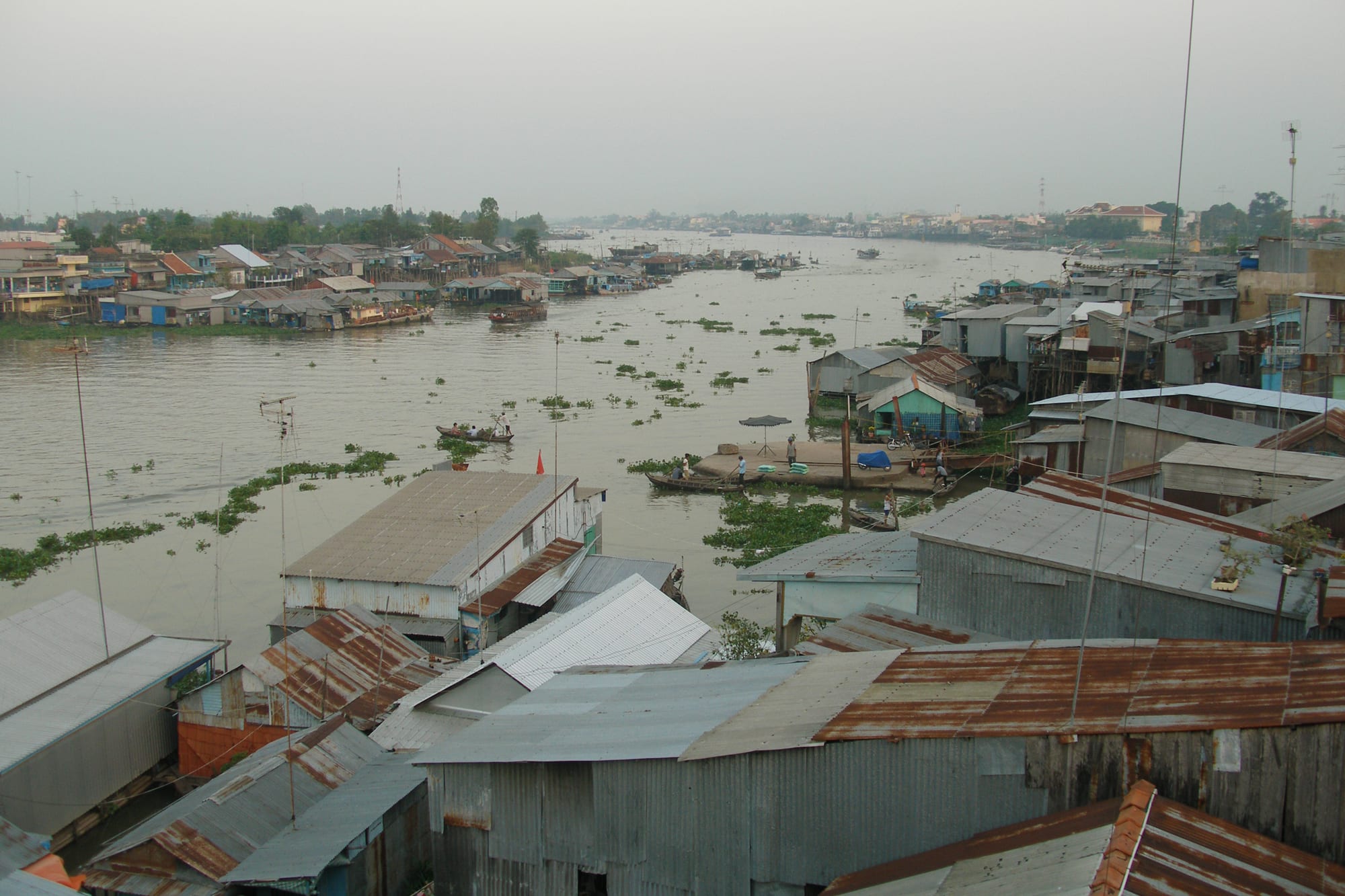
The town itself is covered on foot, by motorbike taxi or by the cyclos that still work the market streets. Sam Mountain is a short ride out; cars and minibuses can be hired for Trà Sư and the border villages. Small boats and a vehicle ferry cross to the far bank, and the river is as much a road here as the highway.
Agree the price and the route with a boatman before leaving the landing, and check that life jackets are aboard.
🛬 Airport & Station Connections
Buses and minibuses run from Ho Chi Minh City in about six hours and from Cần Thơ and Long Xuyên in much less, arriving at the edge of town. There is no airport and no railway. A river route links Châu Đốc with Phnom Penh by boat through the border crossing upstream, a journey of several hours that is used by travellers as well as by cargo.
🚶 Walkability
The centre is flat, small and walkable: the riverfront park, the market, the hotels and the boat landings sit within a few hundred metres of one another. Beyond that, pavements give way to busy roads, and Sam Mountain, five kilometres out, is too far and too hot to walk to, although the paths up the hill itself are made for walking.
🛡️ Safety
The town is safe and used to visitors, with pickpocketing in the crowded market and at the temple during festivals the main petty crime, along with persistent selling of incense, lottery tickets and caged birds at Sam Mountain. The river carries the real risks: small boats, slippery landings and strong currents in the flood season.
Keep valuables close in festival crowds, and wear a life jacket on small boats. Only ride a motorbike if experienced and licensed, and always with a helmet; hold bags away from the road; drink bottled or filtered water; and check surf conditions before swimming. Check current official travel advice before travelling.
🌦️ Climate
Hot all year, typically 24–35°C, with a dry season from December to April and a wet season from about May to November. From roughly August to November the annual high water from upstream spreads across the surrounding countryside, which is a normal season here rather than a disaster.
- Summer
- hot, humid and wet, 25–34°C, with afternoon storms and rising water in the fields
- Winter
- dry and sunny, 23–33°C, with cooler mornings and dusty roads by March
🤝 Local Customs
This is a pilgrimage town, and the temples are places of devotion rather than sights: dress with shoulders and knees covered at Bà Chúa Xứ and the pagodas, remove shoes where others do, and do not walk in front of people making offerings. The Cham villages are Muslim; modest dress matters more there, mosques should be entered only with permission, and alcohol is not appropriate.
Ask before photographing people at prayer, in the fish farms or in the Cham villages, and expect to be offered tea when invited into a house.
💳 Common Payment Methods
The currency is the Vietnamese đồng. Cash rules here: the market, boats, temple offerings, motorbike taxis and most restaurants take nothing else, though hotels and a few larger places accept cards and QR-code payment is spreading. ATMs are in the centre of town and scarce beyond it, and Cambodian riel are not used on this side of the border.