💰 Budget
There is no functioning tourism in Al Hudaydah. The city has been a front-line port for much of the war; such hotels as operate serve traders, officials and aid organisations, and prices in Yemeni rials swing with fuel shortages and the falling value of the currency.
- Daily Budget Midrange
- USD not applicable — the only foreigners present are mostly aid and UN staff under security arrangements
- Daily Budget Shoestring
- USD not applicable — the city is not open to ordinary visitors
Do not plan travel here; the only tourism in Yemen is to Socotra, on operator-run packages.
📅 Best Time to Visit
There is no safe time to visit, and the Red Sea coast has been an active front since September 2026. Before the war, visitors preferred November to February, when the Tihama's heat eases and the weekly markets of the plain were at their busiest; from spring to autumn the humidity on this coast is severe.
⏳ Suggested Number of Days
Length of stay is not a meaningful question here: the city is not open to ordinary visitors, and the foreigners present work under security arrangements that decide how long they stay and where they may go.
- First Visit
- Not applicable
- With Surroundings
- Not applicable
🚆 Transportation
Movement within the city is by shared taxi, minibus, motorcycle taxi and private car; there is no railway or urban transit system, and fuel shortages have repeatedly cut services and raised fares. Since the coastal fighting of September 2026 the shore road south towards the Bab al-Mandab strait has been a front line, and the roads inland to Sana'a and Taiz are interrupted by front lines and checkpoints, with journeys that once took hours taking far longer on detours through the mountains.
There is no safe way to travel within this region; do not attempt overland journeys.
🛬 Airport & Station Connections
Hodeidah International Airport, on the edge of the city, has been hit by air strikes and has had no scheduled services since airlines suspended their routes in 2015. By road, Sana'a is roughly 230 kilometres east through the mountains and Taiz about 250 kilometres to the south-east, both routes crossing front lines and many checkpoints. The port handles cargo and aid rather than passengers, and shipping in the nearby sea lanes has been disrupted. There is no ordinary way to arrive.
🚶 Walkability
The old quarter and the markets are flat and compact enough to walk, and much of the city's life happens in the street, but heat and humidity make walking exhausting for most of the year, and shade is limited to awnings and alleys. Traffic is heavy on the wide central roads, pavements are broken, and war damage, checkpoints and unexploded ordnance restrict movement in parts of the city and along the coast.
🛡️ Safety
Most governments advise against all travel to Yemen, and this city and the Red Sea shore have seen heavy fighting and repeated air strikes, including on the port and the airport. Attacks on shipping from 2023 to 2025 turned the nearby sea lanes into a war zone; those attacks stopped under a ceasefire and resumed in February 2026. Fighting inside Yemen restarted in July 2026 and grew sharply in September, when an offensive along the coast reached the Bab al-Mandab strait and tens of thousands of people were displaced within weeks. Kidnapping and detention of foreigners are real risks, landmines and unexploded ordnance affect the coastal plain, health care is severely degraded, and cholera outbreaks have recurred.
Do not travel to this region; there is no consular support and no reliable way out in an emergency. Check current official travel advice before travelling.
🌦️ Climate
The Tihama coast is one of the hottest and most humid places in Arabia. Heat is heavy all year and the sea keeps the air saturated, so nights bring little relief; haze and blown dust are common. Rain is scarce and irregular, and most of the water reaching the plain comes down the wadis from the highlands after mountain storms.
- Summer
- humid and above 40°C by day, with very warm nights
- Winter
- warm, around 30°C by day, with milder nights and clearer air
🤝 Local Customs
The city is conservative in public life, though its port history has made it used to outsiders. Women are generally covered, often in bright printed Tihama dress, and modest clothing with covered arms and legs is expected of everyone; swimming and beachwear in public are not acceptable. Greetings are long, the right hand is used for eating and giving, and shoes come off on entering a home. Afternoons are given to qat. Photographing people, especially women, requires permission, and the port, military positions and checkpoints should never be photographed.
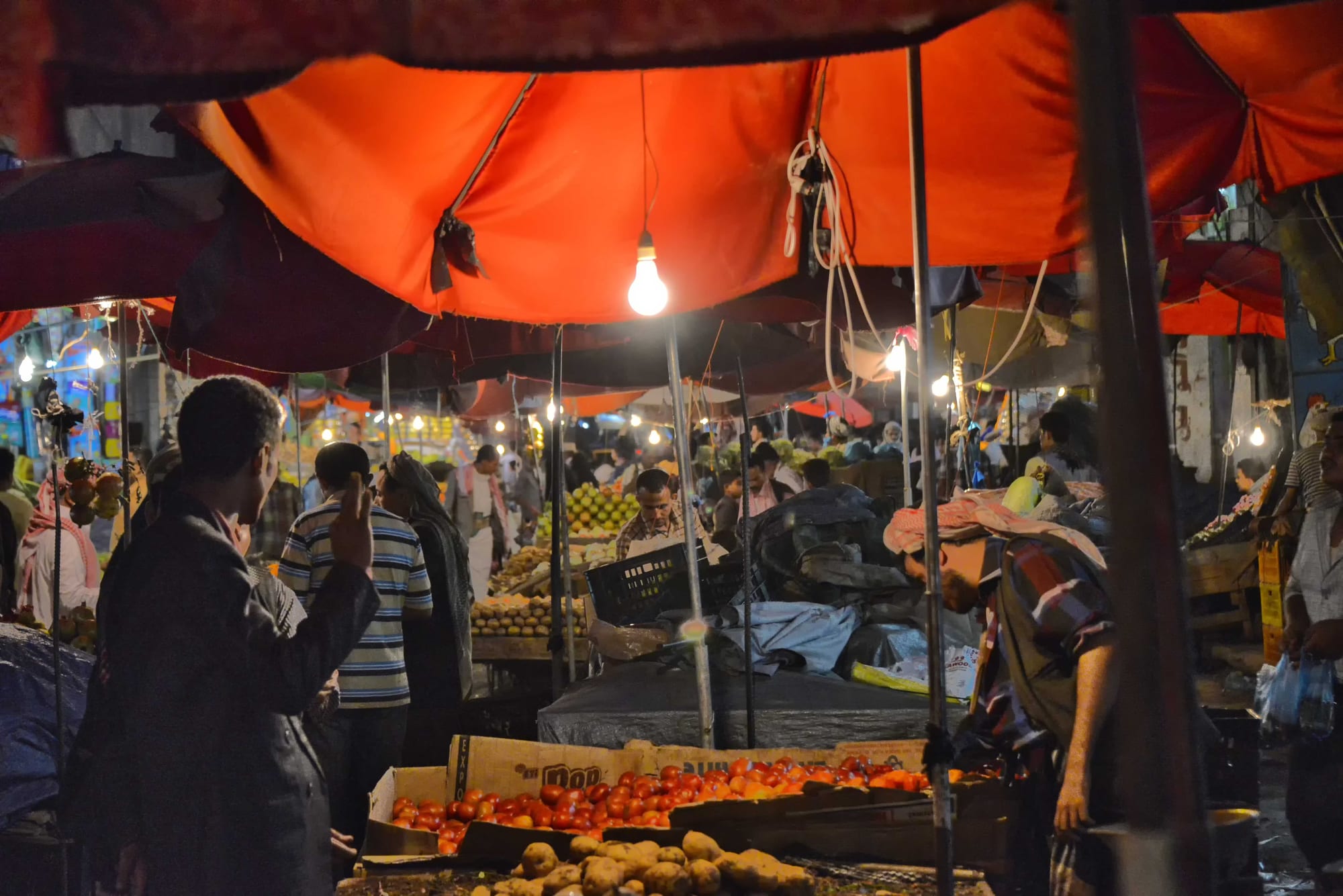
Alcohol is illegal and effectively absent. During Ramadan, eating, drinking and smoking in public during daylight are avoided, and markets shift almost entirely to the night.
💳 Common Payment Methods
The currency is the Yemeni rial, whose value has fallen sharply and which has circulated at different rates in different parts of the country during the war. Business is conducted in cash; card payment is not available in ordinary shops and international cards generally do not work. Money transfer offices handle the remittances that many households depend on.