💰 Budget
There is no visitor economy in the Hadhramaut valley. What little accommodation exists in Seiyun serves officials, aid workers and Yemeni travellers, and prices in rials have climbed steeply with the currency's collapse. Fuel for the long desert drives, and the security arrangements any foreign movement requires, are the real costs.
- Daily Budget Midrange
- USD not applicable — foreign visitors are mostly aid, diplomatic and business staff travelling with security
- Daily Budget Shoestring
- USD not applicable — the mainland east is not open to ordinary visitors
Do not plan mainland travel; the only tourism in Yemen is to Socotra, on operator-run packages.
📅 Best Time to Visit
The mainland is not a travel prospect at any time of year. In terms of weather alone, the valley is at its most bearable from November to February, when days are warm rather than fierce and the nights turn cool; summer in the wadi is extreme.
⏳ Suggested Number of Days
The walled town is small and can be taken in during a single visit, while three or four days would cover the other towns of the valley. Distances along the wadi are long and the roads slow, which is what governs the length of any stay.
- First Visit
- 1 day
- With Surroundings
- 3–4 days
🚆 Transportation
A single road runs the length of the Wadi Hadhramaut, linking Shibam with Seiyun, Tarim and the long desert routes south to Mukalla and west towards Marib. Movement is by shared taxi, minibus or private 4x4; there is no rail and no organised public transport. Fuel shortages and checkpoints affect journeys, and the roads cross areas where armed groups operate.
There is no safe way to travel the mainland east; on Socotra, rely entirely on the operator's arrangements, vehicles and guides.
🛬 Airport & Station Connections
Seiyun Airport, about 18 kilometres east, is the nearest air link and has had limited and irregular flights; Mukalla on the coast is several hours away by road across the plateau. Air travel across the region has also been disrupted by the war that began in February 2026. The few foreigners who reach the valley do so on institutional business, with transport arranged for them.
🚶 Walkability
Inside the walls everything is on foot, and that is the point: the lanes are too narrow for vehicles, deeply shaded and cool in the mornings, and the whole town can be crossed in a few minutes. Outside the walls the valley floor is open, hot and dusty, and any distance means a vehicle.
🛡️ Safety
Most governments advise against all travel to Yemen, including the Hadhramaut valley. Armed groups operate in the region, kidnapping of foreigners is a serious risk, control of the eastern governorates has changed hands more than once during the war, and roads are controlled by checkpoints. Medical care is basic and there is no consular presence.
Do not travel to the mainland; if visiting Socotra, go only with a reputable operator and carry evacuation insurance, cash and all medicines needed. Check current official travel advice before travelling.
🌦️ Climate
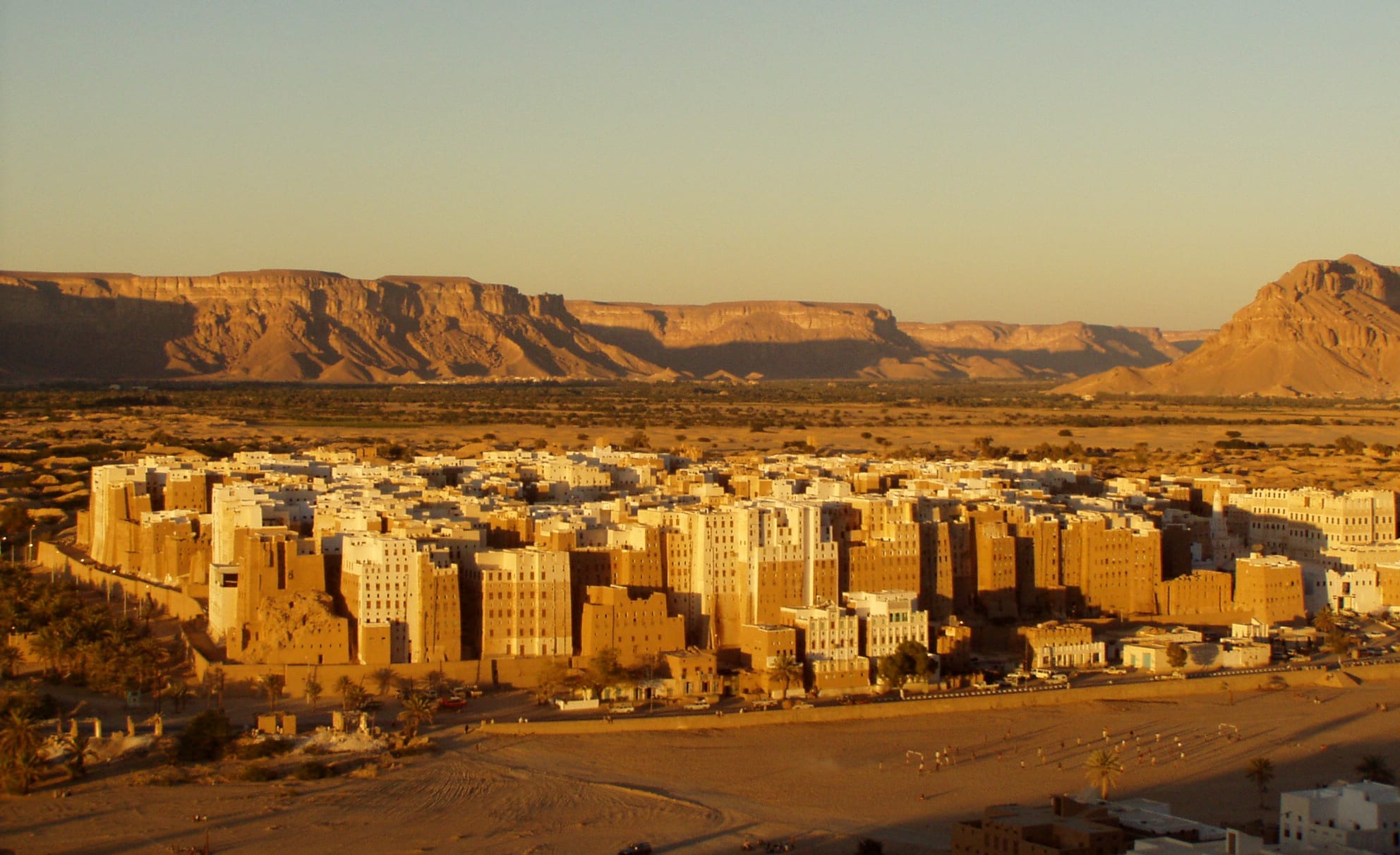
Desert climate, with very little rain and a wide gap between day and night temperatures. What rain does fall arrives in short, heavy storms that can send flash floods down the wadi, which is the main threat to the mud-brick buildings.
- Summer
- extremely hot, regularly above 40°C by day, with warm nights and occasional violent storms
- Winter
- warm days of about 25–30°C and cool nights that can drop close to 10°C
🤝 Local Customs
The valley is conservative and Sunni Muslim, with a strong tradition of religious learning centred on nearby Tarim. Men wear the wrapped futah or a long shirt, women cover in public, and hospitality to guests is a serious obligation. Houses are private: tower houses are family homes, and the upper floors in particular are women's space.
Ask before entering any house or photographing people, especially women; dress covering shoulders and knees; do not climb on the town walls or rooftops. Alcohol is not available, and eating or drinking in the street during daylight in Ramadan gives offence.
💳 Common Payment Methods
The Yemeni rial is the currency, and its value has fallen sharply, so prices change quickly and payments are made in thick bundles of notes. Everything is cash: there are no reliable cash machines in the valley and cards are not accepted. US dollars are changed through money changers in Seiyun.