💰 Budget
The town itself is cheap: simple guesthouses, market food and kombis cost little. The expense is the bush around it — park fees, fuel for long distances, a high-clearance vehicle for Gonarezhou, or a bed in one of the private camps and conservancies, which are priced in US dollars and cost many times more than a room in town.
- Daily Budget Midrange
- USD 100–250 (lodge, restaurant meals, fuel and car hire; considerably more for Gonarezhou or a private conservancy)
- Daily Budget Shoestring
- USD 35–60 (guesthouse or camping, market food, kombis and buses)
Draw cash and fill the tank in the town: fuel and US dollar notes become hard to find on the roads towards Gonarezhou.
📅 Best Time to Visit
May to October is the season, when the lowveld is dry, game gathers on the rivers and the park tracks are passable; nights are mild and days warm to hot. From November to March the rains bring heat, humidity and mud, many tracks in Gonarezhou become impassable, and the cane country is at its greenest. October before the rains is punishingly hot.
⏳ Suggested Number of Days
The town itself needs little more than a day, and most visitors use it as a staging post. Allow four to six days if the trip includes Gonarezhou or a conservancy, since the distances inside the parks are long and the roads slow. Travelling without a vehicle stretches everything.
- First Visit
- 1 day
- With Surroundings
- 4–6 days
🚆 Transportation
The centre is small and walkable, and kombis (minibuses) link it with Tshovani, the estate townships and the surrounding villages. Buses run to Masvingo, Bulawayo and Harare, and towards the Mozambican and South African borders. Beyond the tarred roads a high-clearance vehicle is needed, and the tracks inside Gonarezhou require a 4x4.
Arrange transport into the park through an operator or lodge unless driving a suitable vehicle, and carry spare fuel and water for long distances.
🛬 Airport & Station Connections
Chiredzi lies deep in the south-east, roughly 190 kilometres from Masvingo by road, which is about three hours, and a long day's drive from Harare. Buses and kombis on the Masvingo road are how most people arrive. Buffalo Range Airport, a few kilometres from town, takes charter and light aircraft flying in to the estates, conservancies and the national park rather than regular scheduled services.
🚶 Walkability
The centre is a compact handful of streets that can be crossed in a few minutes on foot, and Tshovani is a short walk or kombi ride away. The heat in the middle of the day discourages walking for much of the year, distances between the town and the estate settlements are too far to walk, and streets are unlit during power cuts.
🛡️ Safety
The town is calm and the concerns are ordinary: petty theft around the market and bus stops, and the roads, which carry heavy truck traffic and are dangerous at night. Malaria is a real risk in the lowveld. The bush around the town is not fenced, so elephants and other large animals can be encountered outside the parks, especially near the rivers.
Take malaria precautions in the low-lying areas, avoid political gatherings, don't drive at night, keep documents and small change ready for roadblocks, and don't swim in still fresh water outside managed sites. Check current official travel advice before travelling.
🌦️ Climate
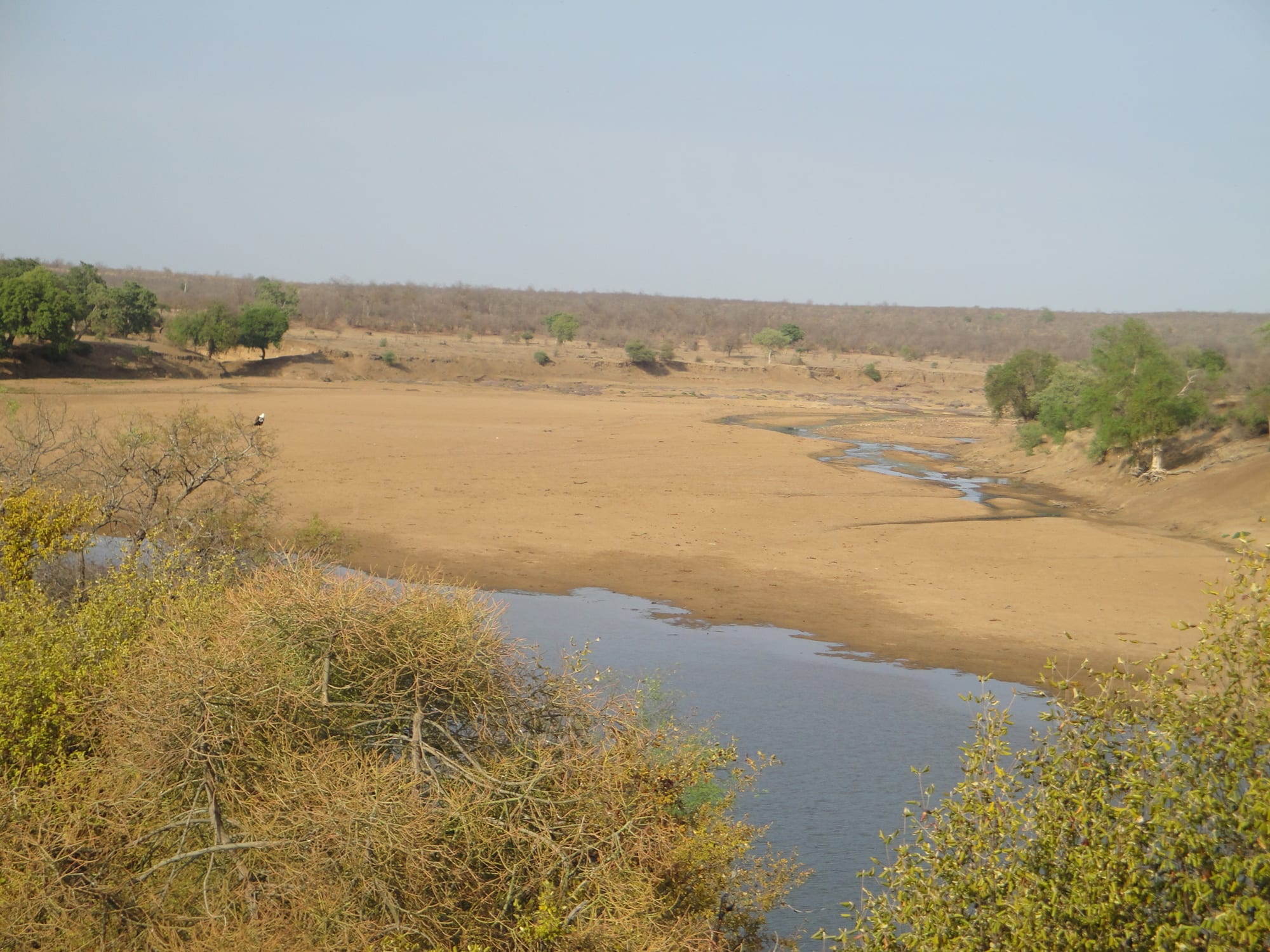
This is the hottest corner of Zimbabwe. The lowveld lies well below the plateau, and rainfall is low and unreliable. Summer, December to February in the southern hemisphere, is very hot and humid with heavy storms; winter is warm, dry and sunny. Drought is a recurring hardship, as in 2024.
- Summer
- very hot and humid, often above 35°C, with heavy afternoon storms
- Winter
- warm, dry and sunny with days around 25–28°C and mild nights
🤝 Local Customs
The lowveld is home to Shangaan (Tsonga) communities alongside Shona speakers, and English is used in offices and shops. Greetings come before business and elders are greeted first. Much of the surrounding land is communal land, a conservancy or a company estate, so permission matters before walking or driving off the public roads.
Ask before photographing people, houses or workers on the estates, and do not photograph police, roadblocks or government buildings. Tipping is not expected in the town, though guides, trackers and drivers in the parks are usually tipped in US dollars.
💳 Common Payment Methods
Most trade is in US dollars in practice, alongside the gold-backed ZiG introduced in 2024. Cash is essential here: bring clean, recent dollar notes in small denominations, as change is scarce and there is little else once past the town. Cards work at a few larger businesses, mobile money is widely used by residents, and ATMs are unreliable.