History
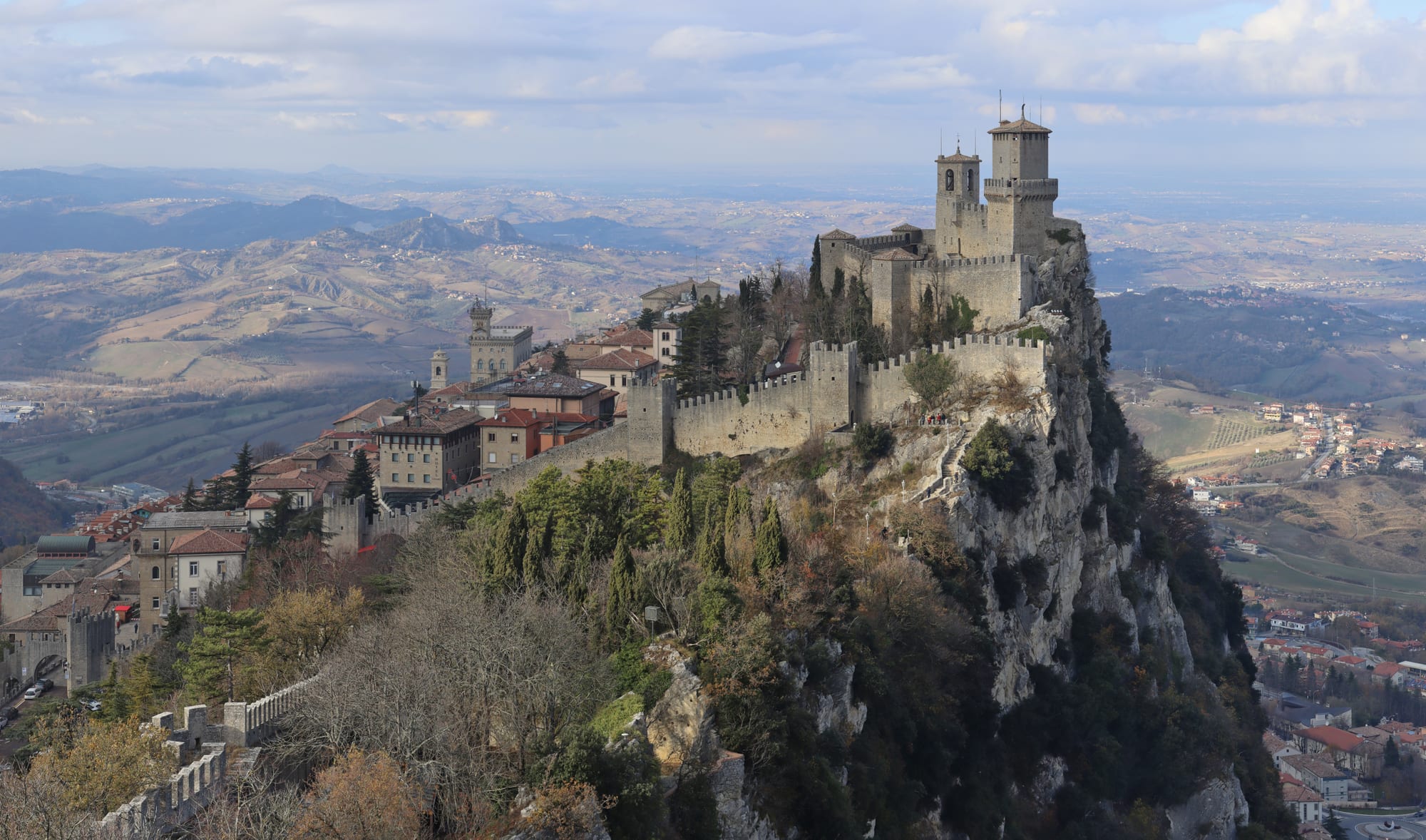
By tradition, San Marino was founded in 301 AD by Marinus, a Christian stonemason from the Adriatic island of Rab who fled persecution and formed a monastic community on Monte Titano. That community grew into a commune in the Middle Ages, had its independence recognised by the Papacy in 1631, and survived a brief occupation by a cardinal in 1739.
In 1849 San Marino sheltered Giuseppe Garibaldi as he fled Austrian troops, and Garibaldi in turn made sure that a unified Italy would respect the little republic's independence; a treaty of friendship with Italy dates from 1862 and has been renewed ever since. San Marino stayed neutral in both world wars, was bombed by the RAF in 1944 on intelligence later shown to be false, briefly occupied by German forces that September, and sheltered around 100,000 refugees — many times its own population of about 15,000 — during the Italian campaign.
In 1945 San Marino elected one of the world's earliest communist-led governments, a coalition of the Communist and Socialist parties that held power until 1957. A later reputation as a tax haven and banking-secrecy centre brought friction with Italy and international scrutiny, resolved through transparency agreements that shrank the financial sector. The country now lives largely on tourism, collectible coins and stamps, light industry, and finance. Negotiations on an association agreement with the EU concluded in 2023, and in July 2026 the Council of the EU authorised its signing.
- San Marino: The Oldest Republic — A mountain-top city-state that has kept its independence since, by tradition, the year 301 — surviving the popes, Napoleon, Italian unification and two world wars by being too small, too steep and too clever to bother conquering