History · San Marino
San Marino: The Oldest Republic
A mountain-top city-state that has kept its independence since, by tradition, the year 301 — surviving the popes, Napoleon, Italian unification and two world wars by being too small, too steep and too clever to bother conquering
By Globeway Editorial · 30 September 2026
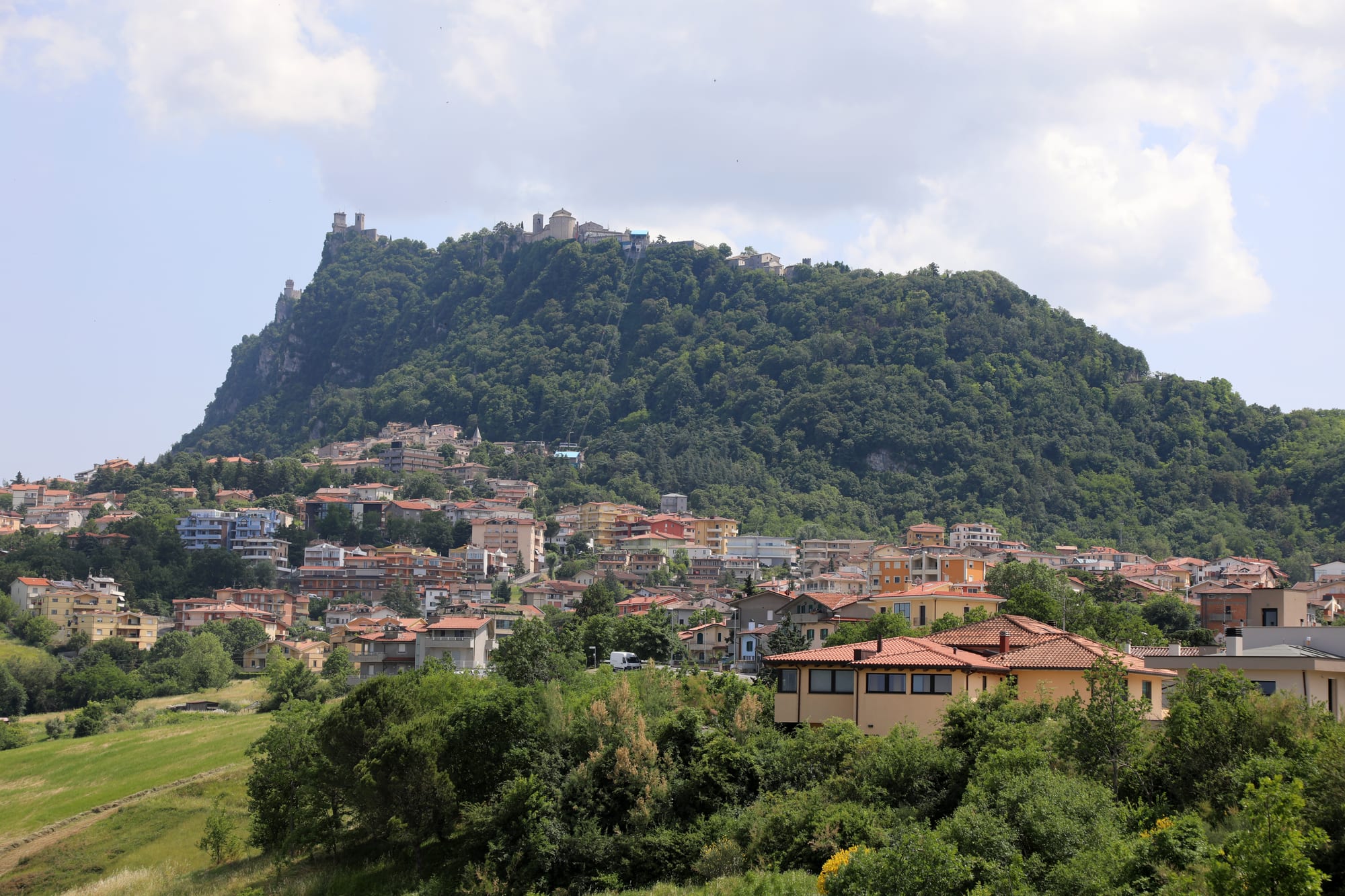
The state that never fell
San Marino is a landlocked microstate of about 61 square kilometres entirely surrounded by Italy, built on and around the limestone ridge of Monte Titano near the Adriatic coast. With around 34,000 people, it is the fifth-smallest country in the world — and, by its own reckoning, the oldest continuously sovereign state and the oldest republic still in existence, tracing its constitution to statutes of 1600 and its founding to the year 301. It has survived, essentially, by being not worth the trouble to annex, and by a long habit of accepting protection without surrendering independence.
A short history
- 301 (traditional)
Foundation
The stonemason Marinus founds a Christian community on Monte Titano.
- Middle Ages
The commune
San Marino emerges as a self-governing town; its earliest statutes date from 1263.
- 1243
The Captains Regent
Two heads of state are elected jointly — a system still in use.
- 1631
Papal recognition
The Papal States formally acknowledge San Marino's independence.
- 1797
Napoleon
Offers to enlarge the republic; it politely declines.
- 1861
Italian unification
San Marino refuses to join the new Kingdom of Italy.
- 1862
Treaty with Italy
A friendship-and-protection treaty, repeatedly renewed since.
- 1944
The Second World War
Bombed despite neutrality; shelters over 100,000 refugees.
- 1992
United Nations
San Marino joins as a full member.
Legend and commune
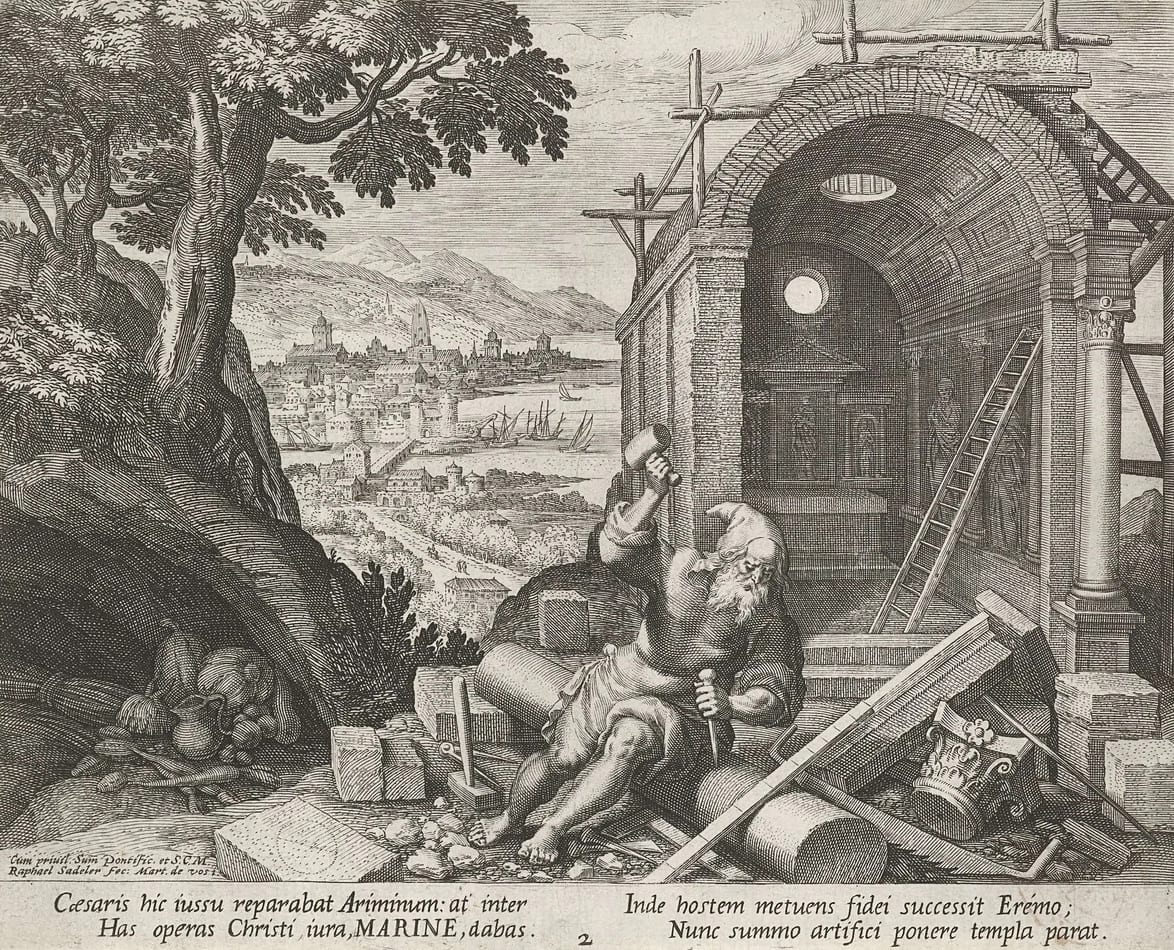
By tradition, a Christian stonemason named Marinus, fleeing persecution, took refuge on Monte Titano in 301 and founded a small monastic community that grew into a town. Whatever the truth of the legend, by the Middle Ages San Marino existed as a self-governing commune with its own council, and its earliest statutes date from 1263, perched on a defensible mountain in a region otherwise carved up between feuding lords, bishops and, later, the Papal States. In 1243 it adopted the office of the Captains Regent — two heads of state, elected together for six-month terms, a check against tyranny that the republic still uses today.
Surviving the neighbours
San Marino's independence was threatened many times and lost only twice, each time briefly: an occupation by Cesare Borgia, son of Pope Alexander VI, in 1503, and a papal occupation in 1739–40 that lasted a few months before the pope restored the republic's rights. The Papal States formally recognised its independence in 1631. When Napoleon's army swept through Italy in 1797, he offered to expand San Marino's territory; the republic declined, reportedly to avoid making enemies among its neighbours. In 1861, as the Kingdom of Italy was proclaimed around it, San Marino again chose to stay separate — Giuseppe Garibaldi, who had once sheltered there after the fall of the Roman Republic in 1849, supported its wish to remain independent. An 1862 convention of friendship with Italy, revised and followed by later conventions, governs the relationship.
The wars, and after
San Marino declared neutrality in both world wars. In the Second World War it took in an extraordinary number of refugees — about 100,000 people, several times its own population of some 15,000 — fleeing the fighting along the Gothic Line. British aircraft bombed it in June 1944 in the mistaken belief that German forces were massing there, causing deaths and heavy damage, and later that year the front line passed directly over Monte Titano in a brief battle between Allied and German troops. San Marino had a communist–socialist coalition government from 1945 to 1957, one of the first democratically elected governments of its kind anywhere, a Cold War curiosity.
San Marino now
San Marino joined the United Nations in 1992 and the Council of Europe, uses the euro under an arrangement with the EU (though it is not a member), and in July 2026 the EU authorised the signing of an association agreement with it. Its economy has run on tourism, the sale of collectors' postage stamps and coins, light manufacturing, and — until reforms abolished anonymous companies in 2010 and banking secrecy in 2017 — bank secrecy, which had kept it on Italy's blacklist of tax havens until 2014. It remains a parliamentary republic, with the two Captains Regent still sworn in every 1 April and 1 October in a ceremony largely unchanged for centuries.
What San Marino carries
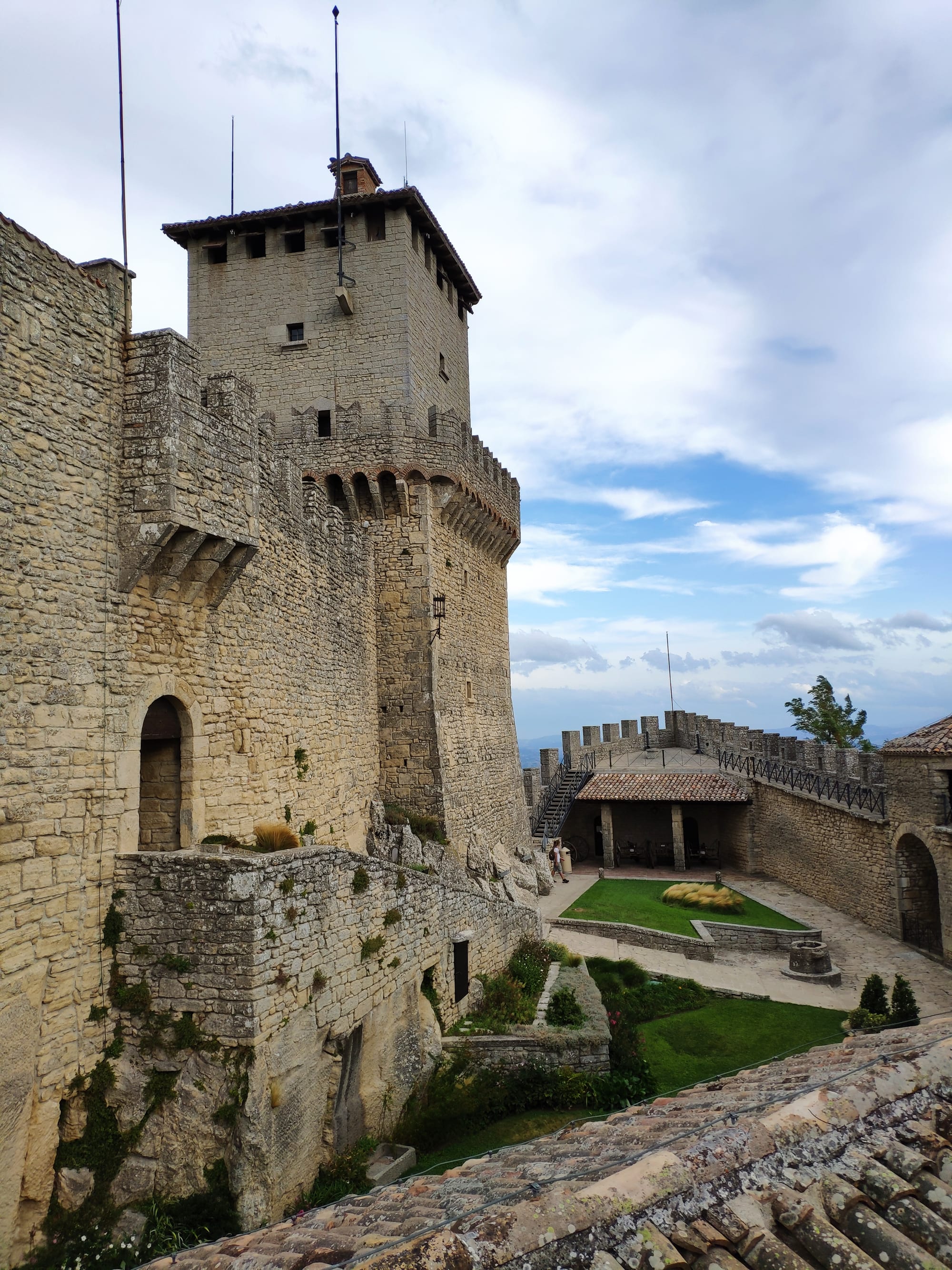
San Marino's whole history is its own continuity: a small elected republic that outlasted every empire, kingdom and papal claim around it, mostly by being too minor to be worth absorbing and by accepting powerful friends without ever letting one take over. The three towers, the six-month Regents and the 1600 statutes are not museum pieces but a working state that simply never stopped.