Attractions & Natural Wonders · San Marino
San Marino: Five Attractions and Natural Wonders
One of the world's oldest surviving republics, its three medieval towers strung along a single mountain ridge with views reaching to the Adriatic on a clear day
By Worldlore Editorial · 30 September 2026
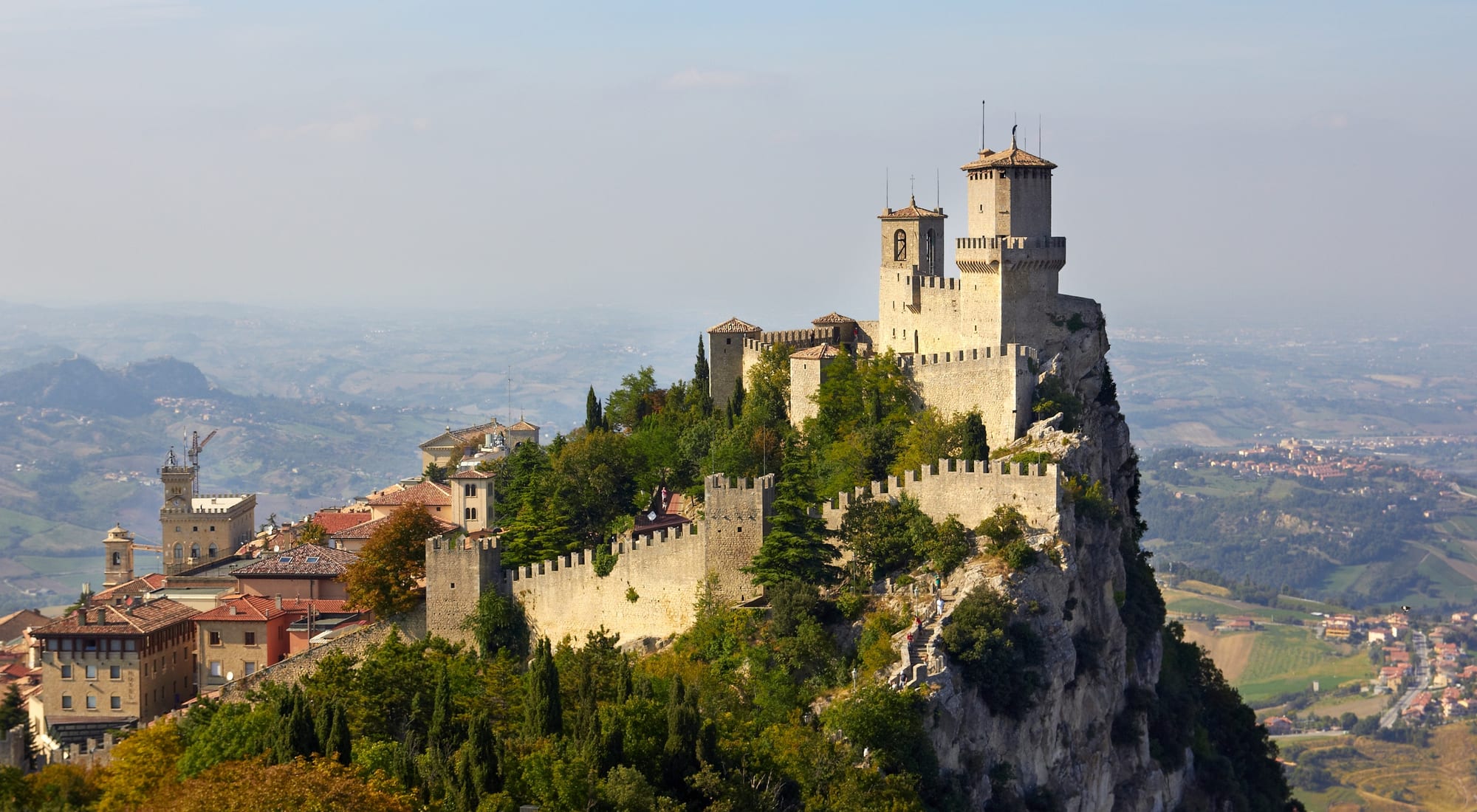
The world's oldest surviving republic
San Marino, a tiny microstate entirely surrounded by Italy, claims to be the oldest surviving sovereign state and constitutional republic in the world, tracing its founding to 301 AD. Its capital sits on Mount Titano, whose medieval fortified towers and walled old town give sweeping views over the surrounding Italian regions of Emilia-Romagna and Marche, stretching on clear days to the Adriatic coast about 10 kilometres away.
The five below are all within San Marino's compact historic centre atop Mount Titano, easily covered on foot in a single day. Spring and autumn offer the clearest, most comfortable weather for the views the towers are known for.
1. The Guaita Fortress
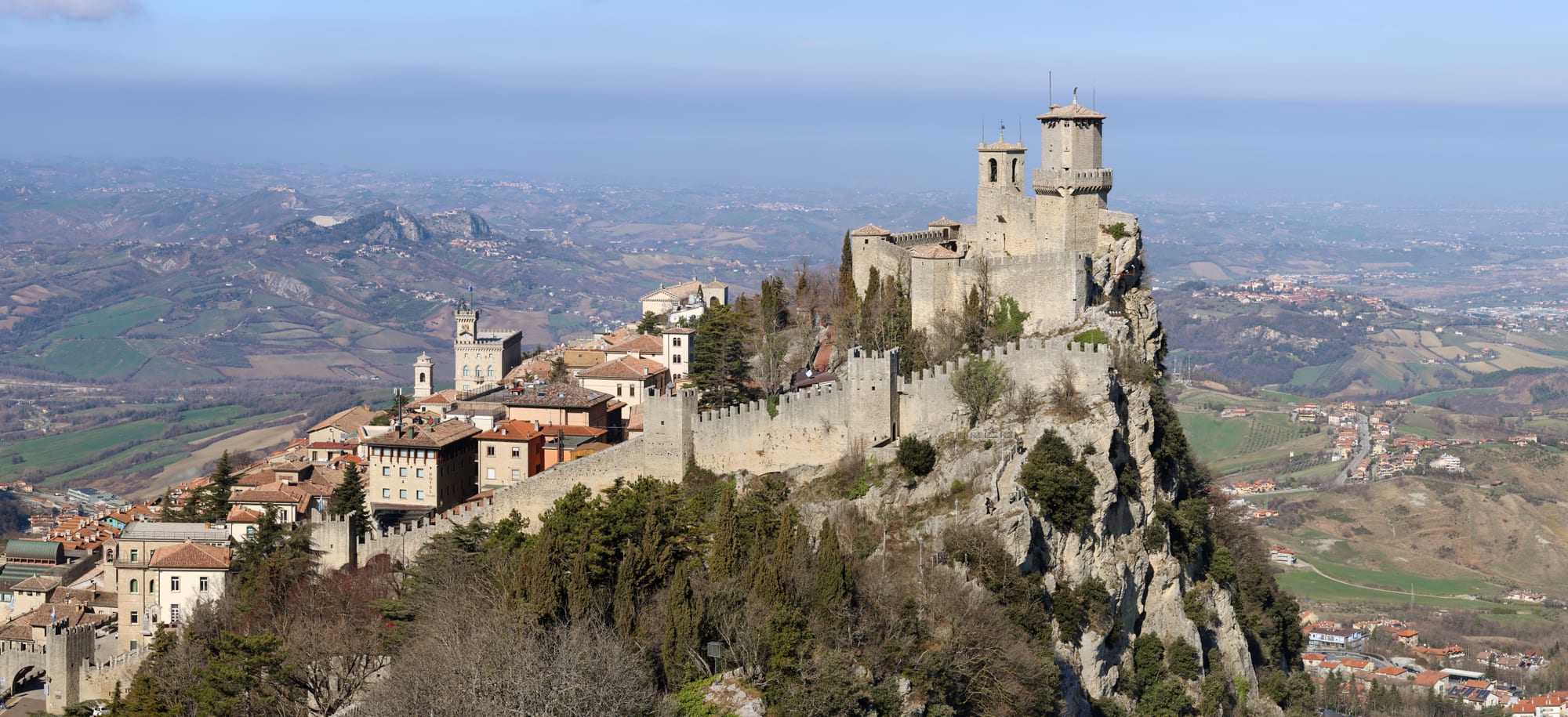
Guaita, the oldest of San Marino's three towers, dates to the 11th century and served for a time as a prison; it is the most famous and imposing of the three, and, with the other two towers, appears on the country's flag and coat of arms. Its ramparts give sweeping views over the walled old town and the countryside below.
2. Piazza della Libertà
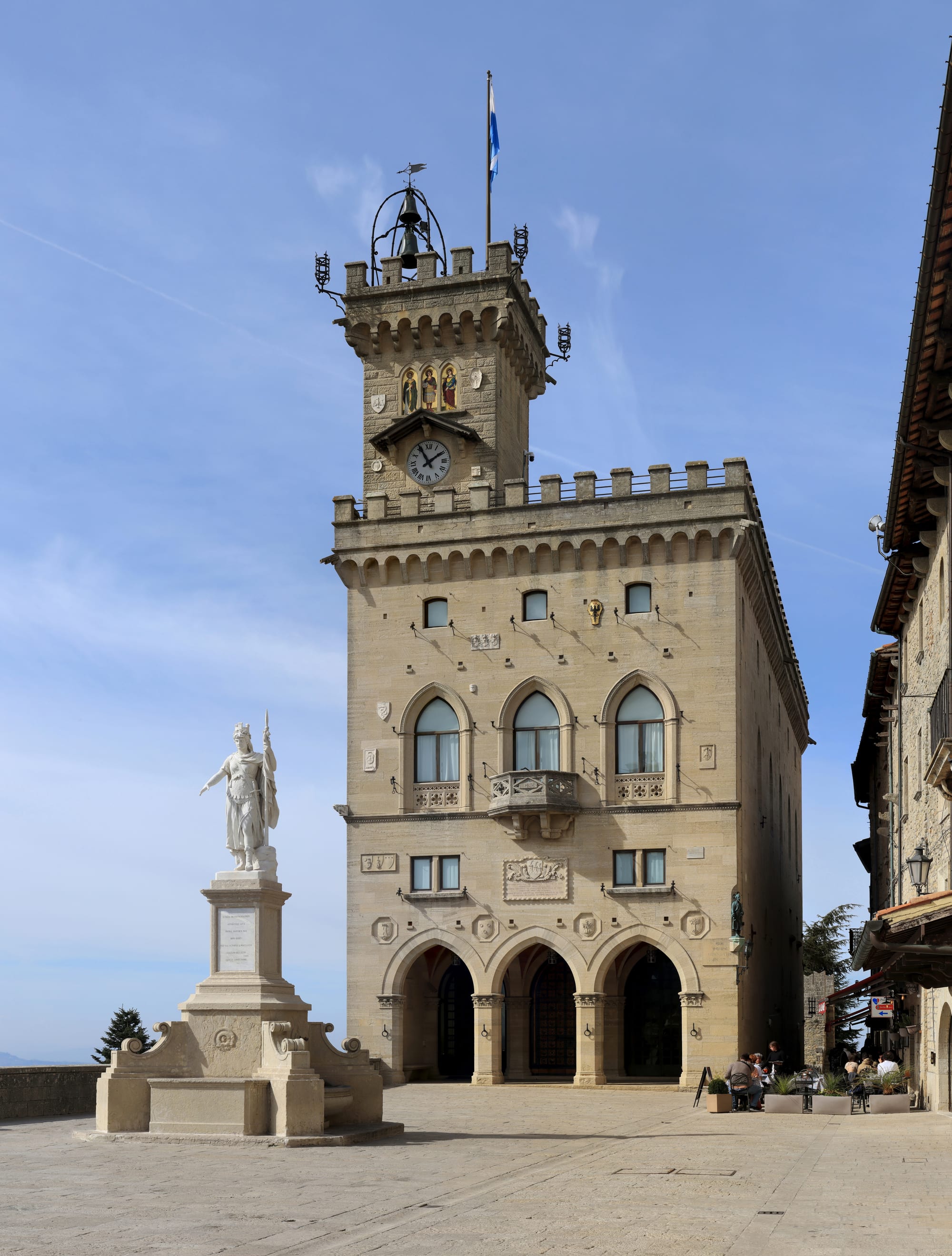
Piazza della Libertà, the heart of San Marino City, is dominated by the Public Palace (Palazzo Pubblico), the seat of the country's government and its Captains Regent, who serve as joint heads of state in a system dating back centuries. In summer a changing-of-the-guard ceremony held here by the Guard of the Rock draws visitors.
3. The three towers of Mount Titano
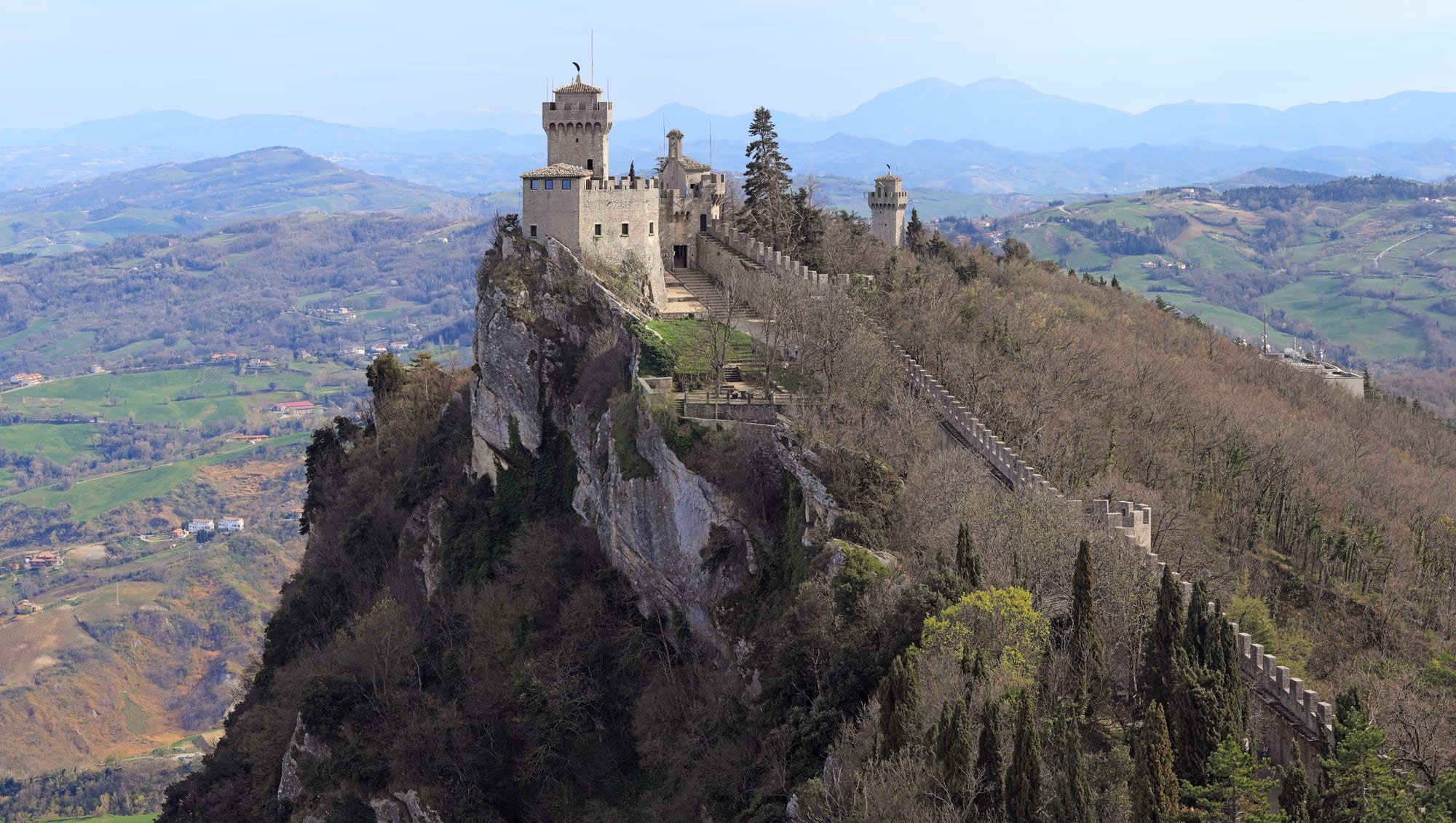
The three towers of Mount Titano — Guaita, Cesta, and Montale — strung along the mountain's three peaks, are part of the UNESCO World Heritage Site "San Marino Historic Centre and Mount Titano", inscribed in 2008. Cesta, the second tower, on the highest summit at about 756 metres, houses a museum of more than 1,550 weapons; Montale, on the smallest summit, has never been open to the public but adds to the dramatic skyline seen from the other two.
4. The Basilica di San Marino
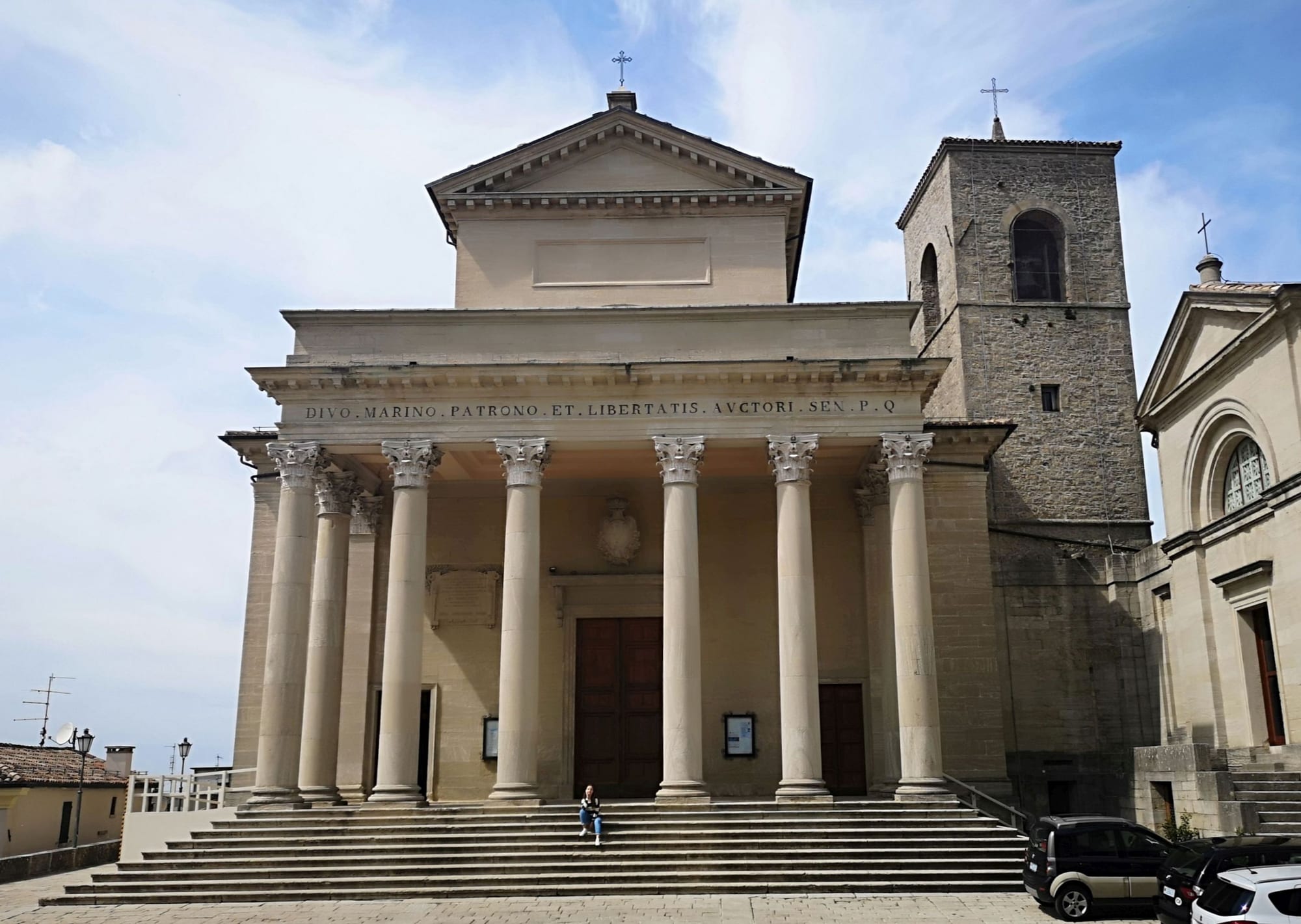
The Basilica di San Marino, built between 1826 and 1838 in a neoclassical style on the site of an earlier church, holds relics of Saint Marinus, the stonemason and Christian saint whose 4th-century community on Mount Titano gave the republic both its name and its founding legend as a refuge from religious persecution.
5. The view from Mount Titano
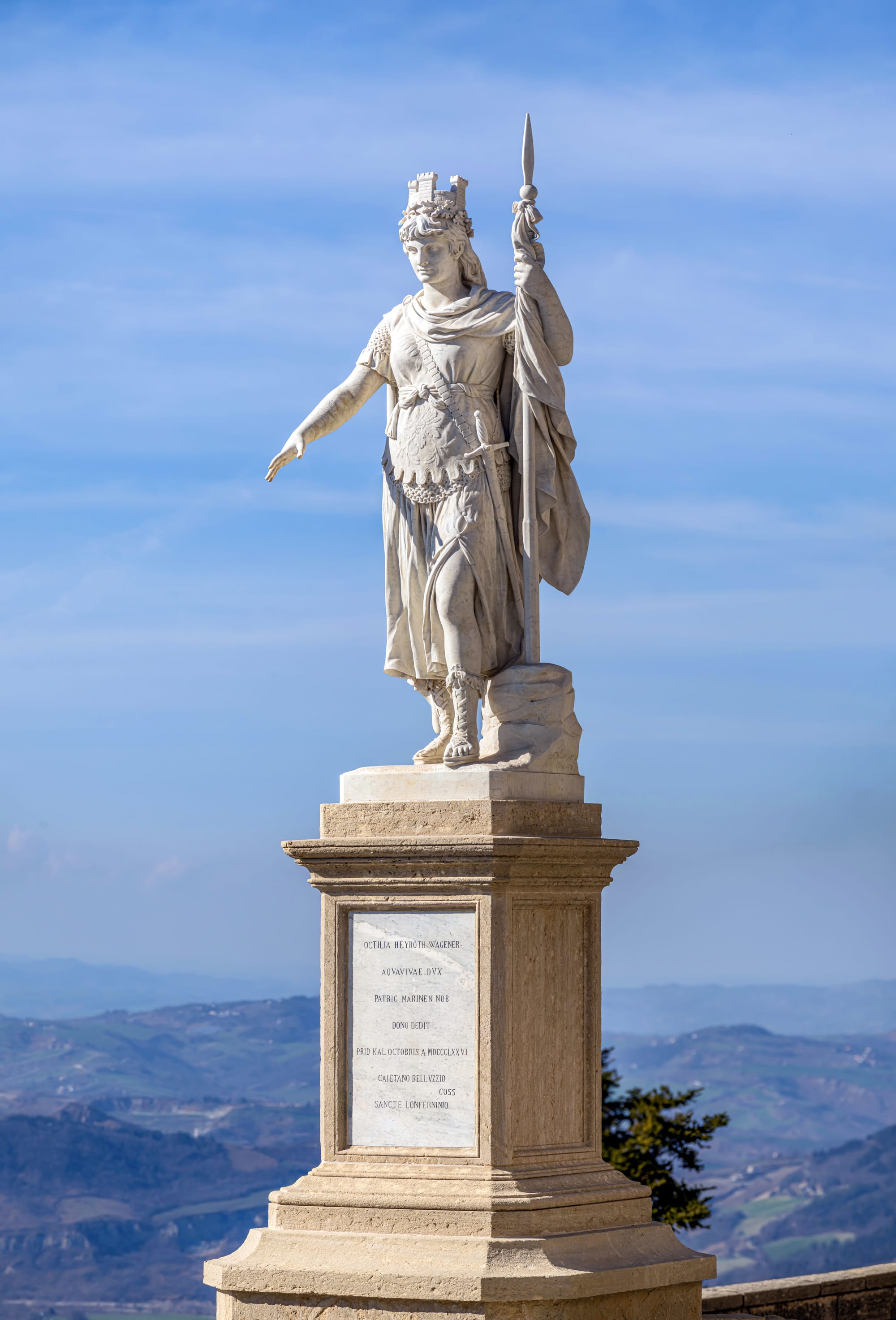
On clear days, the view from San Marino's towers and squares is said locally to extend across the Italian region of Emilia-Romagna toward the Adriatic coast — a striking panorama for a country of only around 34,000 people, and one that helped the republic survive in seclusion for centuries.
San Marino is easily visited as a half-day or full-day trip from nearby Rimini on Italy's Adriatic coast, making it one of the simplest microstates in Europe to add onto a longer Italian itinerary.