History
The north-west holds the oldest remains of urban life in Bangladesh. Mahasthangarh, north of Bogura, is identified with Pundranagara, capital of the ancient land of Pundravardhana, and has yielded finds from about the 3rd century BC. From the 8th century the Buddhist Pala kings ruled from this part of Bengal, and the Pala king Dharmapala is credited with founding the great monastery of Somapura at Paharpur, a centre of learning for several centuries.
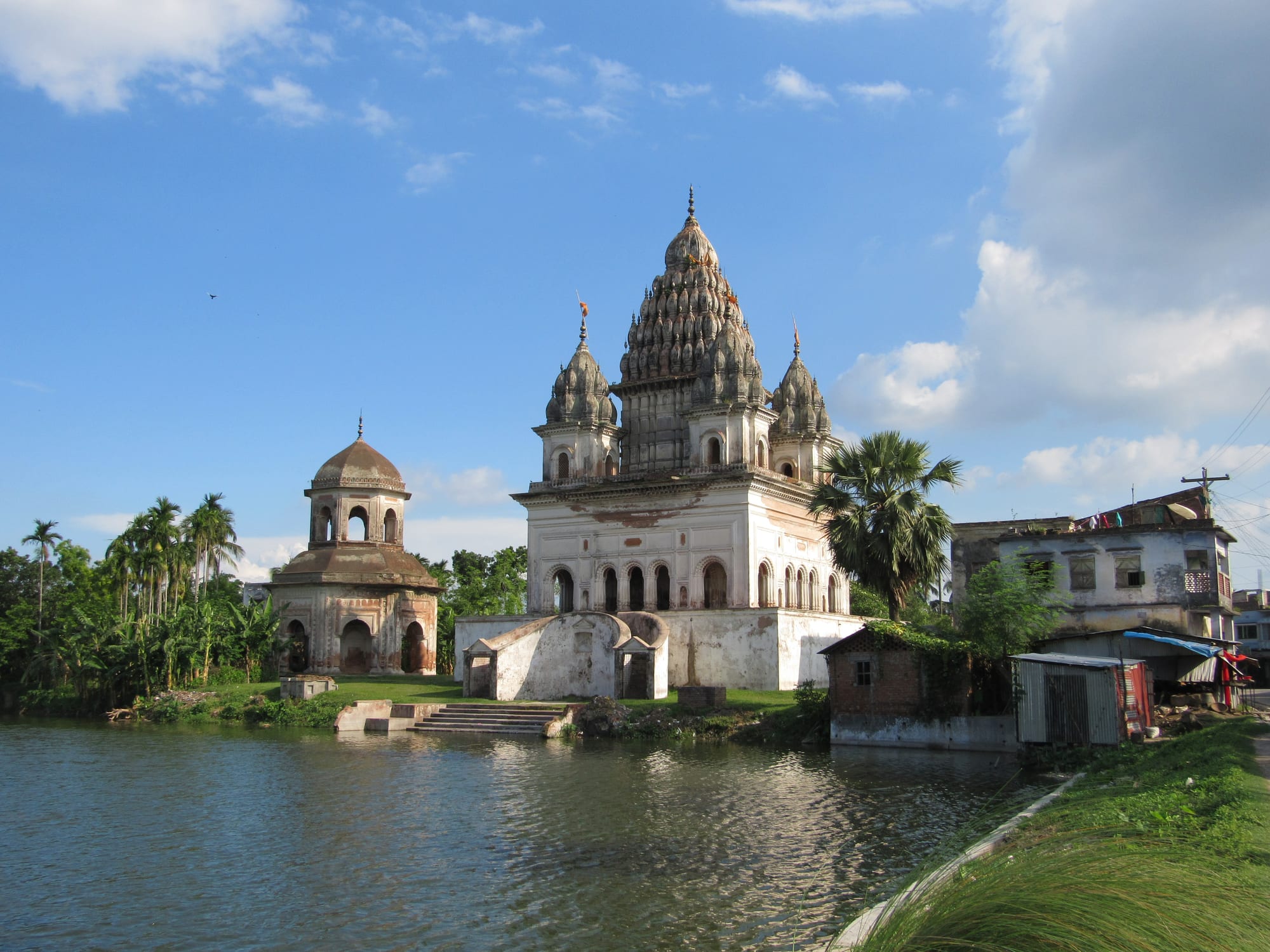
The Hindu Sena dynasty followed, and then the Muslim conquest of the early 13th century. Gaur, the capital of the Bengal Sultanate, lay on the border of today's Chapai Nawabganj, and its Choto Sona Mosque, built during the reign of Alauddin Hussain Shah, stands on the Bangladeshi side. Under the Mughals and then the British the north became a land of great zamindar estates — Natore, Puthia, Dinajpur, Tajhat — whose families built the temples and palaces that remain. Rajshahi grew as a silk-trading town on the Padma.
The British period also brought famine, most notoriously in 1770, and peasant uprisings, including the Tebhaga sharecroppers' movement of 1946–47, strong in Dinajpur. Partition in 1947 cut the region off from Murshidabad, Malda and Cooch Behar across the border. In 1971 the north was a scene of heavy fighting, and after independence the poorest northern districts suffered repeated seasonal hunger, known as monga, which has eased greatly in recent decades.