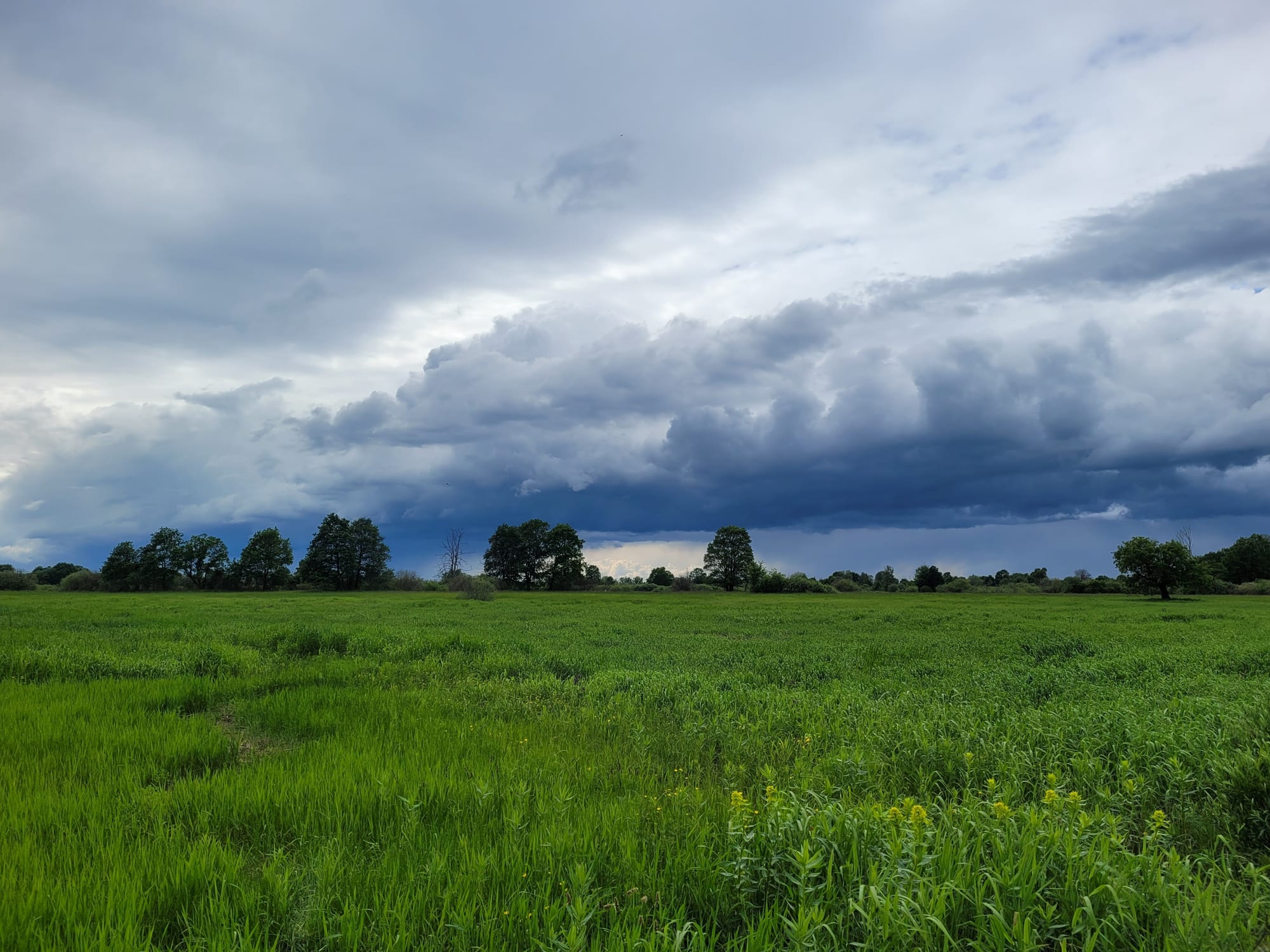
A flat green water meadow with scattered trees under dark, heavy rain clouds

Belarus

Gomel, Mogilev & the East

A water meadow in Pripyatsky National Park, in the Polesian marshes of the Gomel Region. (Tassia24 / Wikimedia Commons · CC BY-SA 4.0)

The south-eastern half of Belarus along the Dnieper, Sozh and Pripyat rivers, bordering Russia and Ukraine — the industrial cities of Gomel, Mogilev and Babruysk, the flooded marshes and oak meadows of Polesia around Turaŭ, and the districts most contaminated by the 1986 Chernobyl disaster.

Explore Gomel, Mogilev & the East

History

The east lies on the old river roads between the Baltic and the Black Sea, and its first power was Turaŭ, on the Pripyat, recorded in the late 10th century as the seat of a principality; its 12th-century bishop Cyril of Turaŭ is remembered as a writer and saint. Gomel on the Sozh is first mentioned in 1142, and Mogilev on the Dnieper in 1267. The region passed into the Grand Duchy of Lithuania and then the Commonwealth, and it suffered badly on the frontier with Muscovy, above all in the wars of the 1650s and 1660s, when Mogilev's townspeople rose against their Muscovite garrison in 1661.

The first partition of 1772 brought the region into the Russian Empire. Catherine the Great gave Gomel to Field Marshal Pyotr Rumyantsev, whose family built its palace, and in 1834 it passed to Prince Ivan Paskevich. Babruysk gained a large fortress. The towns became trading centres with large Jewish populations, and Gomel suffered a pogrom in 1903. From 1915 to 1917 Mogilev housed the headquarters of the Russian army, where Nicholas II lived for long spells as commander-in-chief.

The Second World War destroyed Mogilev, Gomel and Babruysk and murdered their Jewish communities; Soviet rebuilding made them industrial cities. On 26 April 1986 the Chernobyl explosion, just across the border, spread fallout over large parts of Gomel and Mogilev Regions. Villages were evacuated and the southern districts closed as a reserve, and the disaster's legacy remains part of daily life.

Culture & Customs

The east is the most Russian-speaking and Soviet-shaped part of Belarus, with close family and trade ties to neighbouring Bryansk and Smolensk in Russia and, until 2022, to Chernihiv in Ukraine. Orthodoxy is strongly dominant, and war memorials and Victory Day parades carry great weight in cities rebuilt from ruins.

Polesia, in the south, has a distinct culture. Its villages among the marshes were isolated for centuries, and their dialects sit between Belarusian and Ukrainian. Folklorists still record Polesian songs, spring rituals and weaving and embroidery traditions, and dugout boats were used on the rivers into living memory. Vetka, near Gomel, was founded by Old Believers fleeing Russia in the late 17th century and became famous for its icons, manuscripts and woodcarving, now collected in a museum.

Chernobyl shaped identity as well as the landscape: evacuated villages, annual memorial days on 26 April, health programmes and summer stays abroad for children became part of the region's shared experience. Mogilev and Gomel both have theatre and folk-ensemble traditions, and Gomel's riverside park is the scene of the city's summer festivals.

Daily Life

Gomel, with about 500,000 people, is the second city of Belarus, and Mogilev has about 360,000. Babruysk, with about 200,000, Mazyr, Zhlobin, Rechytsa, Svetlahorsk and Asipovichy are the other main towns, while rural Polesia and the Chernobyl-affected south have lost much of their population.

The region is heavily industrial. Gomel makes combine harvesters and other farm machinery, Mazyr has one of the country's two big oil refineries, the small Belarusian oilfields lie around Rechytsa, Zhlobin has a large steel works, Babruysk makes tyres, and Mogilev builds lifts and chemical fibres. Agriculture continues outside the contaminated zones, under strict monitoring of milk, meat and crops.

Daily routines follow the national rhythm, but the war in Ukraine is felt more closely here: the Ukrainian border is closed, military traffic has increased, and families with relatives across it can no longer visit. Gomel keeps a lively centre along the Sozh, with its parks and river beach busy on summer evenings.

Food

Eastern cooking is the national potato table with Polesian and Russian touches. Draniki, potato babka and kalduny are everyday food, often with machanka pork gravy, and borsch and sauerkraut soups are eaten year-round. In Polesia the rivers supply pike, tench, catfish and crucian carp, fried, baked with sour cream or cooked into yushka fish soup, and villages keep bees and gather cranberries from the marshes.

Pickles are central: cucumbers, tomatoes, cabbage and wild mushrooms preserved for winter, although gathering in the contaminated south is restricted and state laboratories test produce. Buckwheat, pork, salo, sausages and home-baked rye bread fill out the table, and blini, thin pancakes, are eaten at Maslenitsa and at memorial meals.

Gomel's Spartak factory produces chocolates and sweets sold across the country, and the region's dairies make milk products such as tvarog, fresh curd cheese, and smetana, sour cream. Kvass in summer, tea in winter and samahon in the villages are the usual drinks.

Attractions & Natural Wonders

Gomel's palace and park are its centrepiece: the Rumyantsev-Paskevich Palace, a classical mansion on the high bank of the Sozh, stands in a landscaped park with the Peter and Paul Cathedral, the Paskevich family chapel and a riverside promenade. The city also has a regional museum in the palace and a bridge across the Sozh to its beaches. Vetka's Museum of Old Belief lies a short drive from Gomel.

Mogilev has its rebuilt town hall and square, the St Nicholas convent, the Stanislaus church and the site of the tsar's wartime headquarters, and on its outskirts the Buinichi Field memorial marks the 1941 defence of the city. Babruysk keeps the remains of its Berezina fortress, and in the Mogilev Region's east the old town of Mstsislaw has old Carmelite and Jesuit churches and a castle hill.

The south belongs to the Pripyat marshes of Polesia. Pripyatsky National Park protects floodplain oak woods, oxbow lakes and water meadows, and boat trips on the Pripyat and the Turaŭ meadow reserve draw birdwatchers in spring to see waders, storks and eagles. Turaŭ itself has a museum on the site of the medieval town. Further south-east, the Polesie State Radiation-Ecological Reserve covers the evacuated Chernobyl districts, closed to ordinary visits.

Cities in Gomel, Mogilev & the East

Planning basics

Budget

The east is among the cheapest parts of Belarus: hotels in Gomel, Mogilev and Babruysk cost less than in Minsk, canteen meals are very cheap, and park guesthouses and farm-stays in Polesia charge modest rates with meals. Few foreign visitors come, so services are aimed at Belarusians and Russians, and cash is essential.

Daily Budget Midrange
USD 45–85 (city hotel or park guesthouse with meals, restaurants, a guided boat trip in Pripyatsky)
Daily Budget Shoestring
USD 20–35 (budget hotel, canteen food, buses and trains)

Arrange Pripyatsky National Park stays and boat trips through the park's own tourism office in advance.

Safety

Street crime in Gomel, Mogilev and Babruysk is low, but this region has more specific risks than the rest of Belarus. The southern border with Ukraine is militarised and closed, with military bases and exercise areas in both regions; the Chernobyl exclusion zone in the south of Gomel Region is a closed reserve entered only with special permission; and photography of military movements or border areas can lead to detention. Wild food from contaminated districts should be avoided.

Stay well away from the Ukrainian border and military sites, do not enter the exclusion zone, and avoid wild mushrooms and berries from roadside sellers. Check current official travel advice before travelling.

Climate

Continental, with cold winters, especially in the east, and warm summers around Gomel. Spring floods spread the Pripyat across its floodplain for weeks, and the marshes stay humid and full of mosquitoes through early summer.

Summer
warm to hot, 20–27°C, and hotter in spells around Gomel
Winter
cold, around -6 to -9°C in January, with snow and hard frosts in the east

Transportation

Trains and buses link Minsk with Mogilev, Babruysk and Gomel in roughly three to five hours, and Gomel is the main rail junction of the south-east. Passenger crossings to Ukraine have been closed since 2022, and the land border with Russia is not an international crossing for most foreigners. Pripyatsky National Park and Turaŭ are best reached by car, and the park organises boat trips on the Pripyat.

Hire a car or book a park transfer for Polesia; buses to Turaŭ and the marsh villages are infrequent.

Best Time to Visit

April and May for the Pripyat spring floods and bird migration, when the Turaŭ meadow fills with waders and storks; June to August for boat trips, Gomel's riverside park and summer festivals; September for autumn colour and the mushroom season. Winter is cold and quiet, with little to draw visitors outside the cities.