History
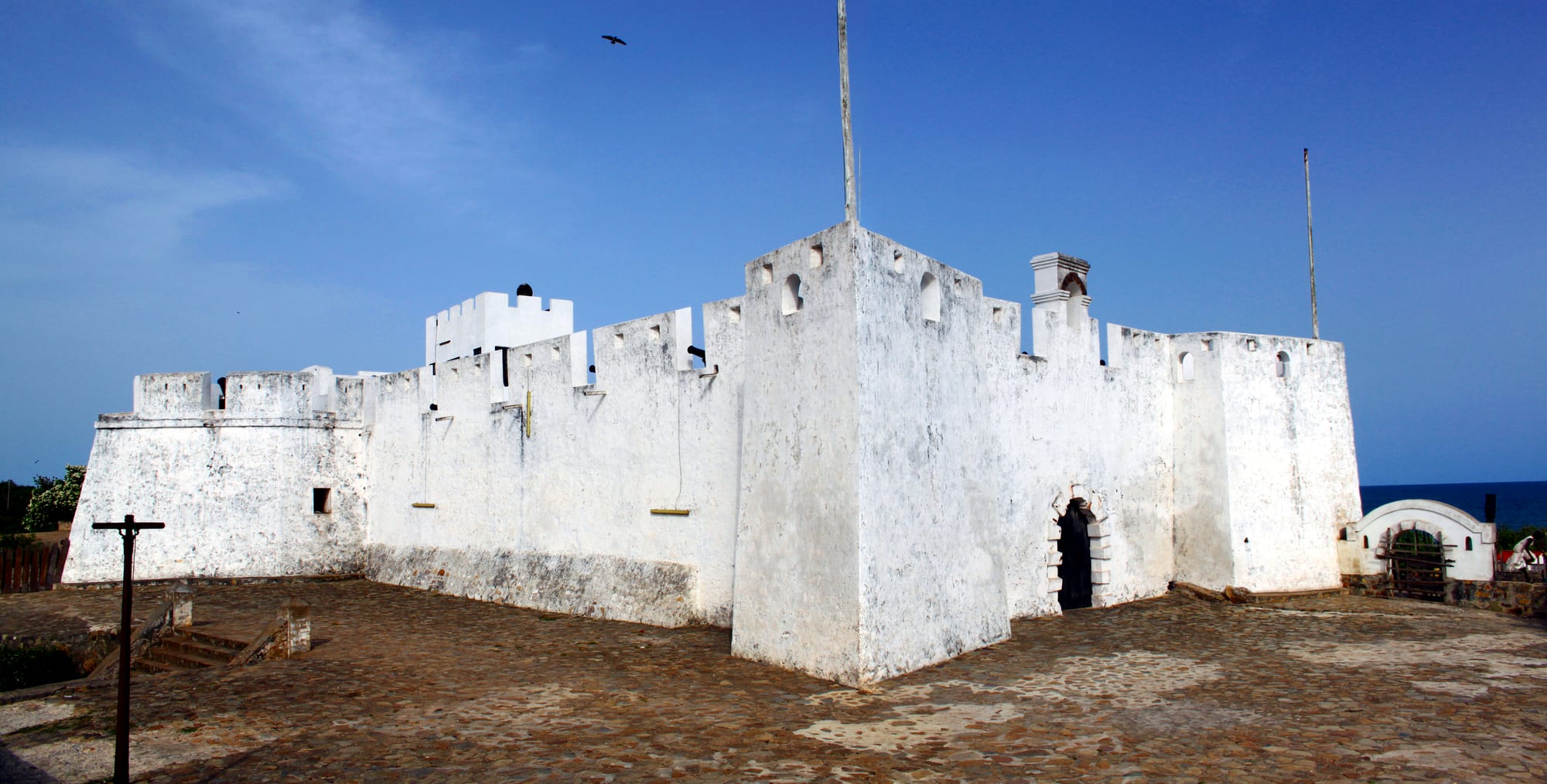
Before Europeans arrived, the coast was divided among small states: the Ga-speaking towns around Accra, the Fante kingdoms of the centre, and the Ahanta and Nzema in the west. Gold from the forest interior drew the Portuguese, who built São Jorge da Mina at Elmina in 1482 and Fort San Antonio at Axim in the early 16th century. The Dutch took Elmina in 1637, and English, Danish, Swedish and Brandenburger companies followed with forts of their own, until dozens of them stood along a few hundred kilometres of shore.
From the 17th century the trade turned from gold to people. Captives from the interior, many sold through Asante and other inland states, were held in the dungeons of Cape Coast, Elmina and the smaller forts before being shipped to the Americas; the castles' cells, chapels built directly above them and the "Door of No Return" record that trade plainly. Britain abolished its slave trade in 1807, but the coast remained a contested field of European and African power. Cape Coast served as the British capital until the seat of government moved to Accra in 1877, and the Dutch sold their forts to Britain in 1872.
In the 20th century Accra grew into the colony's commercial centre, and the 1948 shooting of ex-servicemen marching on Christiansborg Castle sparked the riots that sped up independence. Kwame Nkrumah, born in Nkroful in the Western Region, declared independence in Accra in 1957. Since the late 2000s offshore oil fields off the Western Region have brought new money and new arguments to Takoradi.