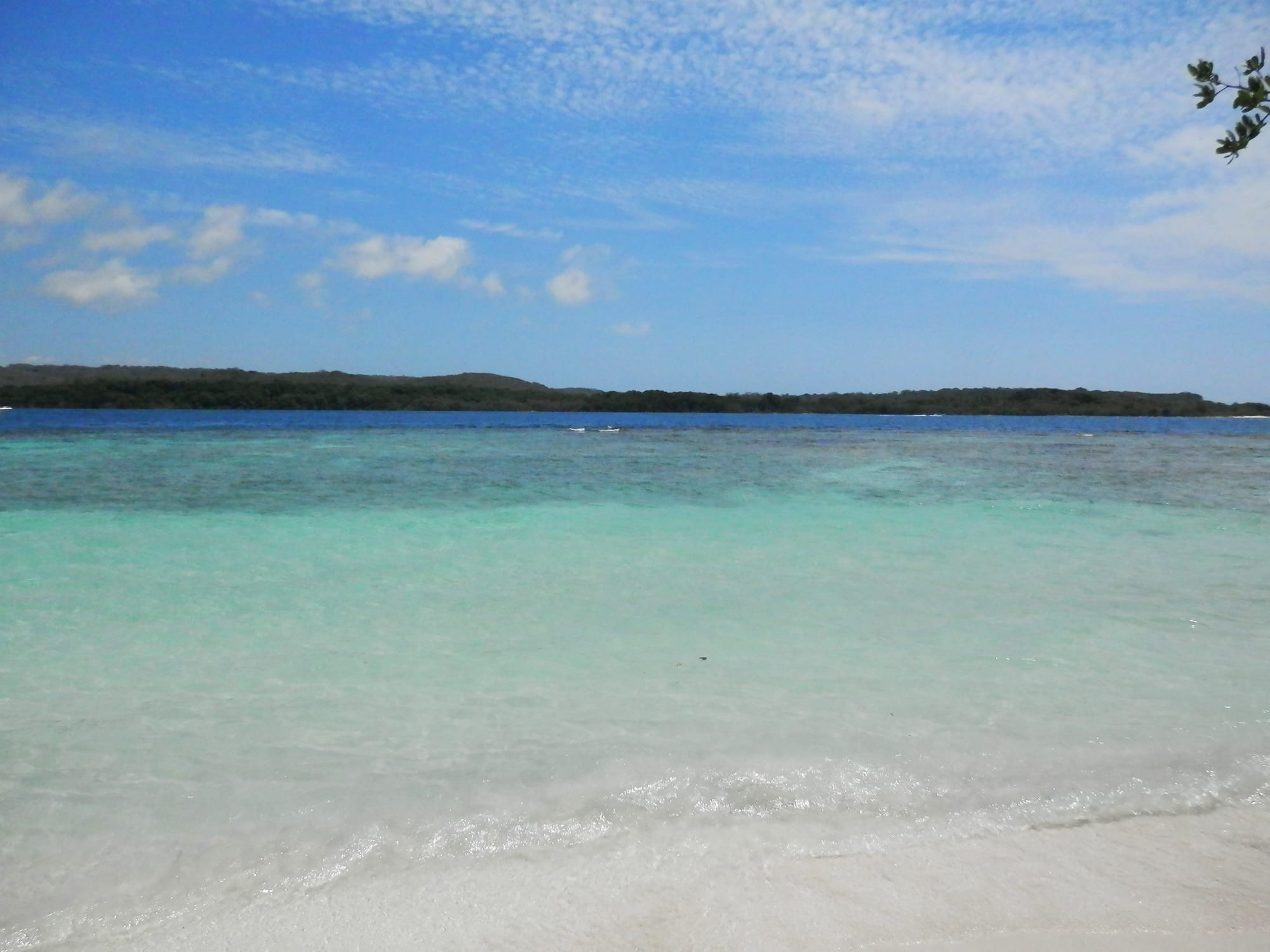
Clear turquoise shallows over a white sand beach, with a low line of green mangrove islands on the horizon

Venezuela

Maracaibo, Coro & the Northwest

The shallows off Cayo Azul in Morrocoy National Park, on the coast of Falcón. (Hireem / Wikimedia Commons · CC BY-SA 4.0)

Venezuela's north-west, from Lake Maracaibo and its oilfields on the Colombian border east through the deserts and colonial towns of Falcón to the farming valleys of Lara, Yaracuy and Portuguesa — the birthplace of the oil industry, the gaita and the country's great Marian pilgrimages. This page is written to explain the region, not to encourage travel.

Explore Maracaibo, Coro & the Northwest

History

The Wayuu of the Guajira, the Añú of the lake's lagoons, and the Caquetío of Falcón and Lara were among the peoples living here when Alonso de Ojeda sailed into the Gulf of Venezuela in 1499. Coro was founded in 1527 and became the first seat of Spanish government in the province; from 1528 the German banking house of the Welsers ran Venezuela under contract from the Spanish crown, sending expeditions inland from Coro in search of gold. El Tocuyo, in Lara, followed in 1545, and Barquisimeto and Maracaibo were founded in the following decades.

Francisco de Miranda landed at La Vela de Coro in 1806 in an early attempt at independence. The naval battle of Lake Maracaibo in 1823 was the last major engagement of Venezuela's independence war, won by the patriot fleet of José Prudencio Padilla.

Oil transformed the region. The first commercial well came in at Mene Grande in 1914, and the Barroso II blowout at Cabimas in 1922 announced the scale of the lake's reserves to the world. Foreign companies built camps along the eastern shore, Maracaibo boomed, and the Rafael Urdaneta bridge opened in 1962. Paraguaná became home to one of the world's largest refining complexes, at Amuay and Cardón, where an explosion in 2012 killed dozens of people. Falling oil production since the 2000s, the 2019 blackouts and emigration have hit Zulia particularly hard.

Culture & Customs

Zulians — maracuchos — are famous across Venezuela for their pride, their accent and their use of vos in place of tú. Their music is the gaita zuliana, played on the furro friction drum, cuatro and maracas, with sharp political and religious lyrics; it rings out from November, when the feast of the Virgin of Chiquinquirá, "La Chinita", fills the basilica on 18 November. The Wayuu, the largest indigenous people in Venezuela, live across the Guajira and the border with Colombia and are known for their woven bags and hammocks; the Añú keep stilt houses in the Sinamaica lagoon.

Lara is known as the musical state, with its tamunangue dances for Saint Anthony and a strong tradition of cuatro and string playing. On 14 January the image of the Divina Pastora is carried from Santa Rosa into Barquisimeto in one of the largest religious processions in Latin America. In Yaracuy, Sorte mountain is the sanctuary of the María Lionza cult, which blends Catholic, indigenous and African beliefs and draws pilgrims seeking trance and healing. Guanare, in Portuguesa, holds the national sanctuary of the Virgin of Coromoto, Venezuela's patron saint.

Daily Life

Maracaibo is Venezuela's second city, with well over a million people, and Cabimas and Ciudad Ojeda are oil towns on the eastern shore. Barquisimeto is the fourth city, Coro and Punto Fijo are the main towns of Falcón, and San Felipe, Acarigua and Guanare are regional centres.

Oil remains the backbone of Zulia and Paraguaná, though production and refining have fallen far below their peak. Lara, Yaracuy and Portuguesa are farming states, growing sugar cane, grains, vegetables and rice, and Portuguesa is one of the country's main food-producing areas. Along the border, fuel and goods smuggling has long been a livelihood.

Life in Zulia is shaped by heat and by failing infrastructure: long power cuts leave homes without air conditioning or water pumps, and many families have left for Colombia and beyond. Afternoons slow down in the heat, evenings bring people out onto porches and streets, and baseball — the Águilas del Zulia and the Cardenales de Lara — is followed intensely.

Food

Zulia has its own cooking. The patacón is a sandwich in which flattened, fried green plantain replaces the bread, stuffed with meat, cheese and salad; mandocas are fried rings of cornmeal, ripe plantain and cheese, eaten at breakfast; and chivo en coco is goat stewed in coconut milk. Sweets include huevos chimbos, egg yolks cooked in syrup, and the region's milk and coconut sweets.

Falcón is goat country: goat stews and grilled goat are standard, and the state is known for its goat's-milk dulce de leche and, on Paraguaná, for talkarí, a spiced goat stew. Fish and seafood dominate the coast around Tucacas and Chichiriviche, served fried with tostones. The spirit of the semi-arid hills of Lara and Falcón is cocuy, distilled from agave. Lara grows grapes near Carora, where Venezuelan wine is made, and its markets sell cheeses, sweets and the goat cheese of the dry valleys. Portuguesa's rice fields and cattle supply the rest of the country, and the arepa and cachapa are eaten here as everywhere.

Attractions & Natural Wonders

Maracaibo's sights are its lake and its faith: the basilica of Chiquinquirá, the colourful restored houses of Calle Carabobo, and the Rafael Urdaneta bridge stretching across the strait. North of the city, the Añú stilt villages of the Sinamaica lagoon recall the houses that may have given Venezuela its name. In the south-west, where the Catatumbo river enters the lake, near-nightly thunderstorms produce the Catatumbo lightning, seen from villages such as Congo Mirador and from boats on the lake.

Coro's colonial centre of adobe houses, the cathedral and the Balcón de los Arcaya lies at the edge of the Médanos de Coro, a national park of shifting dunes on the isthmus to the Paraguaná peninsula, where Cerro Santa Ana rises above the flat scrub. The coast east of Coro leads to Morrocoy National Park, a maze of mangroves, coral shallows and cays such as Cayo Sombrero and Cayo Sal, reached from Tucacas and Chichiriviche, with flamingos in the nearby Cuare refuge. Inland, the Sierra de San Luis is cooler and green.

Barquisimeto has its modern cathedral and the Divina Pastora's church at Santa Rosa, and El Tocuyo and Carora keep colonial churches. Sorte mountain in Yaracuy and the Coromoto sanctuary near Guanare complete the region's pilgrim routes.

Cities in Maracaibo, Coro & the Northwest

Planning basics

Budget

Prices follow the national pattern: cheap for anyone holding US dollars in cash, with Falcón's beach posadas and Barquisimeto's hotels costing less than Caracas. The real costs are private transport and generators: Zulia's long power cuts make air-conditioned hotels with backup power worth paying for in Maracaibo's heat.

Daily Budget Midrange
USD 80–180 (hotel with generator, private driver, boat trips to the cays)
Daily Budget Shoestring
USD 30–60 (simple posada in Coro or Tucacas, local food, shared transport where available)

Carry small US dollar notes, confirm that accommodation has backup power and water, and arrange boat trips through the posada.

Safety

Maracaibo has high rates of violent crime, and the Zulia border with Colombia, including the Guajira, is dangerous, with smuggling networks and armed groups operating. Zulia has suffered the country's worst power and water failures. Falcón, Lara and the beach towns are calmer but not free of armed robbery, and road checkpoints are common.

Most governments advise against all or all-but-essential travel. Anyone who does go should avoid the Colombian border and the Guajira entirely, stay off the roads after dark, and move with trusted local contacts. Check current official travel advice before travelling.

Climate

The north-west is the hottest and driest part of Venezuela. Maracaibo is hot and humid all year, often above 35°C, and the Falcón coast and Paraguaná are semi-desert with cactus scrub and steady trade winds. Lara's valleys are drier and slightly cooler, while the south-west of the lake and the Andean foothills of Portuguesa are wet.

Summer
the wet season, roughly May to November: hot and humid around Maracaibo, 25–36°C, with storms; the Falcón coast stays largely dry
Winter
the dry season, December to April: hot, sunny and windy on the coast; slightly cooler nights in Barquisimeto

Transportation

Maracaibo has an international airport with a reduced network, and Barquisimeto and Punto Fijo on Paraguaná have smaller ones. Roads link Maracaibo, Coro, Barquisimeto and Valencia, with journeys of several hours between each; the Rafael Urdaneta bridge carries traffic across the mouth of the lake. Fuel shortages have been severe in Zulia, and boats to the Morrocoy cays leave from Tucacas and Chichiriviche.

Travel between cities in daylight only, keep a full tank where possible, and book Catatumbo trips only with an established operator.

Best Time to Visit

The dry season from December to April suits the coast and the dunes. The Catatumbo storms are most frequent in the wet months. Barquisimeto's Divina Pastora procession is on 14 January, and Maracaibo's feast of the Virgin of Chiquinquirá on 18 November opens the gaita season. Security and power supplies matter more than the season.