Attractions & Natural Wonders · Côte d'Ivoire
Côte d'Ivoire: Eight Attractions and Natural Wonders
A basilica bigger than St Peter's dropped into the savannah, a French colonial capital slowly returning to the sand, and a tooth-shaped mountain over a town of waterfalls
By Globeway Editorial · 30 September 2026
The economic engine of West Africa
Côte d'Ivoire is the world's largest cocoa producer and, for decades, one of the more prosperous and stable countries in West Africa — until a period of turmoil that included civil wars in 2002–07 and 2010–11. It has recovered strongly since, and Abidjan is again a booming regional hub. Some caution still applies: the northern border areas have seen jihadist attacks spilling over from the Sahel since 2020, and it is worth checking current advice before travelling there.
The eight below run from the coast and Abidjan to the western mountains and the northern savannah, where eight Sudanese-style mosques built between the 17th and 19th centuries were inscribed together as a UNESCO World Heritage Site in 2021. The main dry season (roughly November to February) is the most comfortable time to visit.
1. The Basilica of Our Lady of Peace, Yamoussoukro
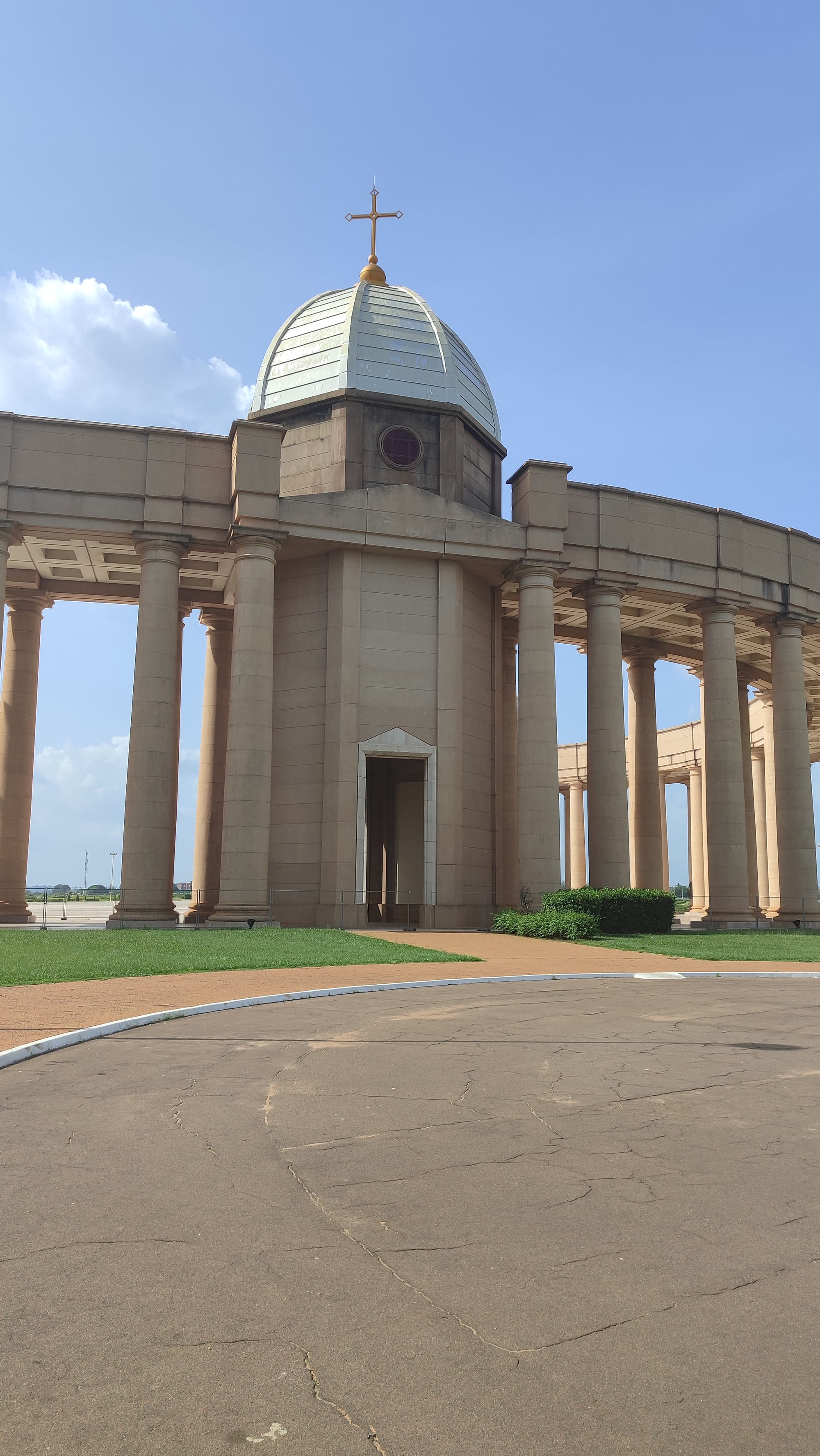
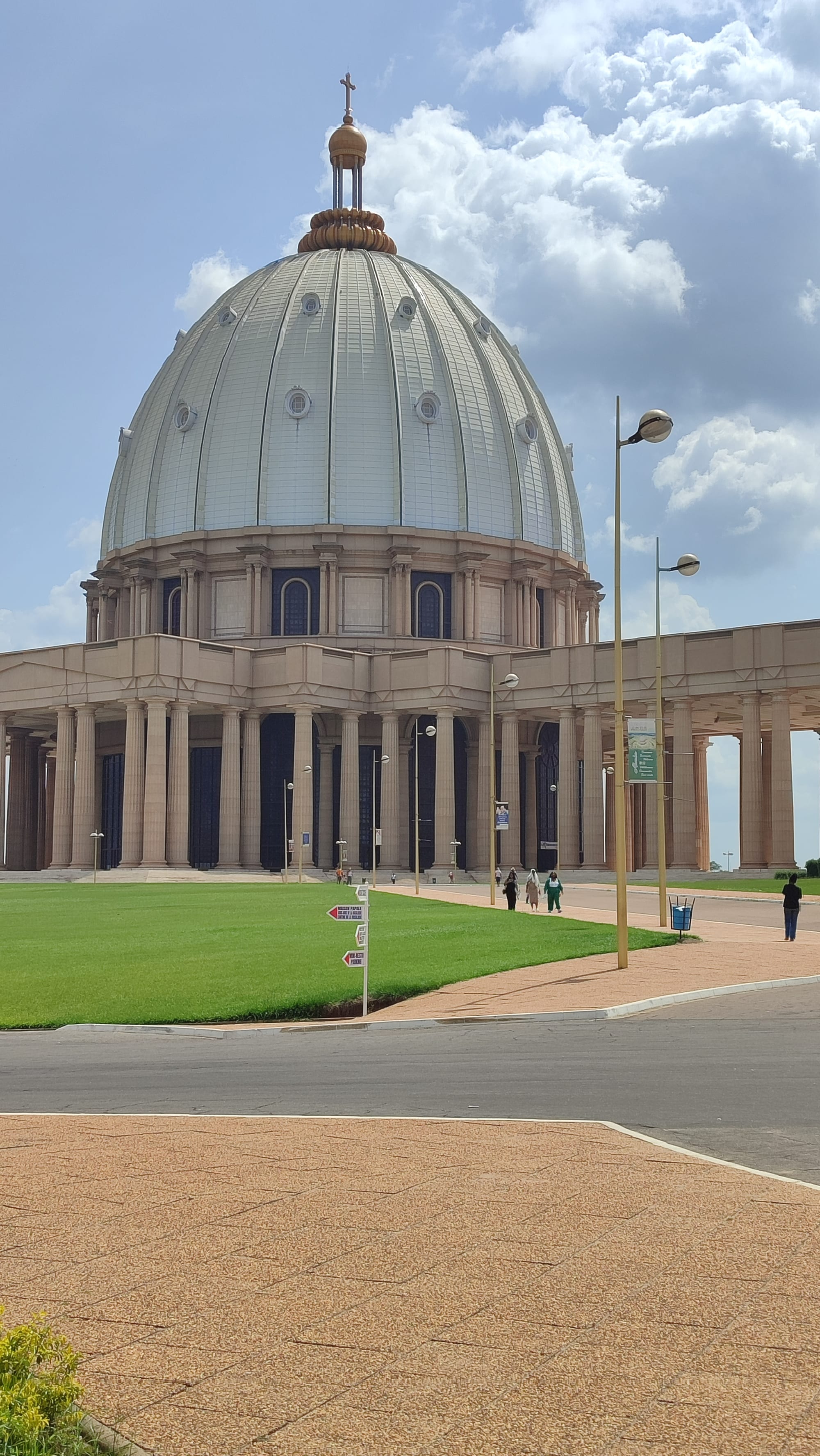
The country's founding president, Félix Houphouët-Boigny, made his birthplace, Yamoussoukro, the capital in 1983 and had a basilica built there in 1985–89, its dome and encircling plaza inspired by St Peter's — with a dome slightly lower than St Peter's but topped by a larger cross, and seats for 7,000 plus standing room for 11,000 more. Guinness World Records lists it as the largest church in the world.
It sits in a town where most economic activity has stayed in Abidjan, the official "economic capital".
2. Grand-Bassam
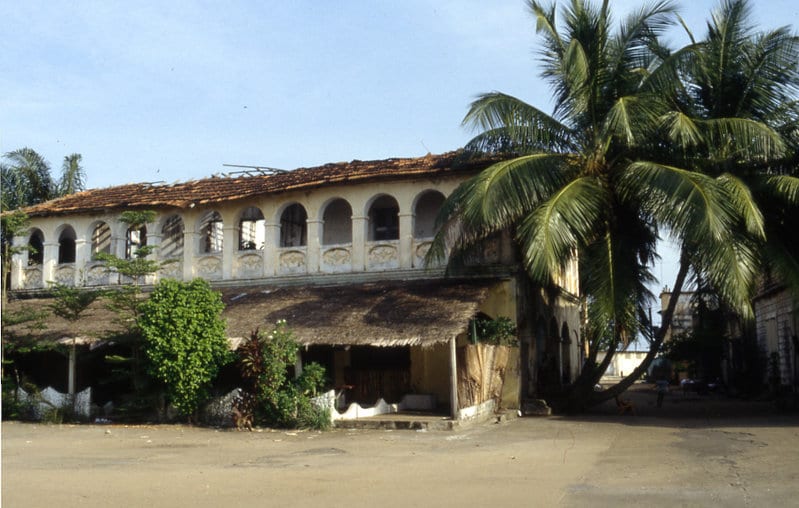
Grand-Bassam, east of Abidjan on a sandy spit between the ocean and a lagoon, was the French colonial capital from 1893 until a yellow-fever epidemic led to a move to Bingerville in 1899–1900. Its planned colonial town — quarters of administrative buildings, trading houses, and villas, many now beautifully decayed, beside a traditional Nzema village — has been a UNESCO World Heritage Site since 2012, with the National Museum of Costume in the former governor's palace.
The beach here is a popular weekend escape from Abidjan (with a strong current); in March 2016 gunmen attacked a beach resort here, killing at least 19 people.
3. Abidjan
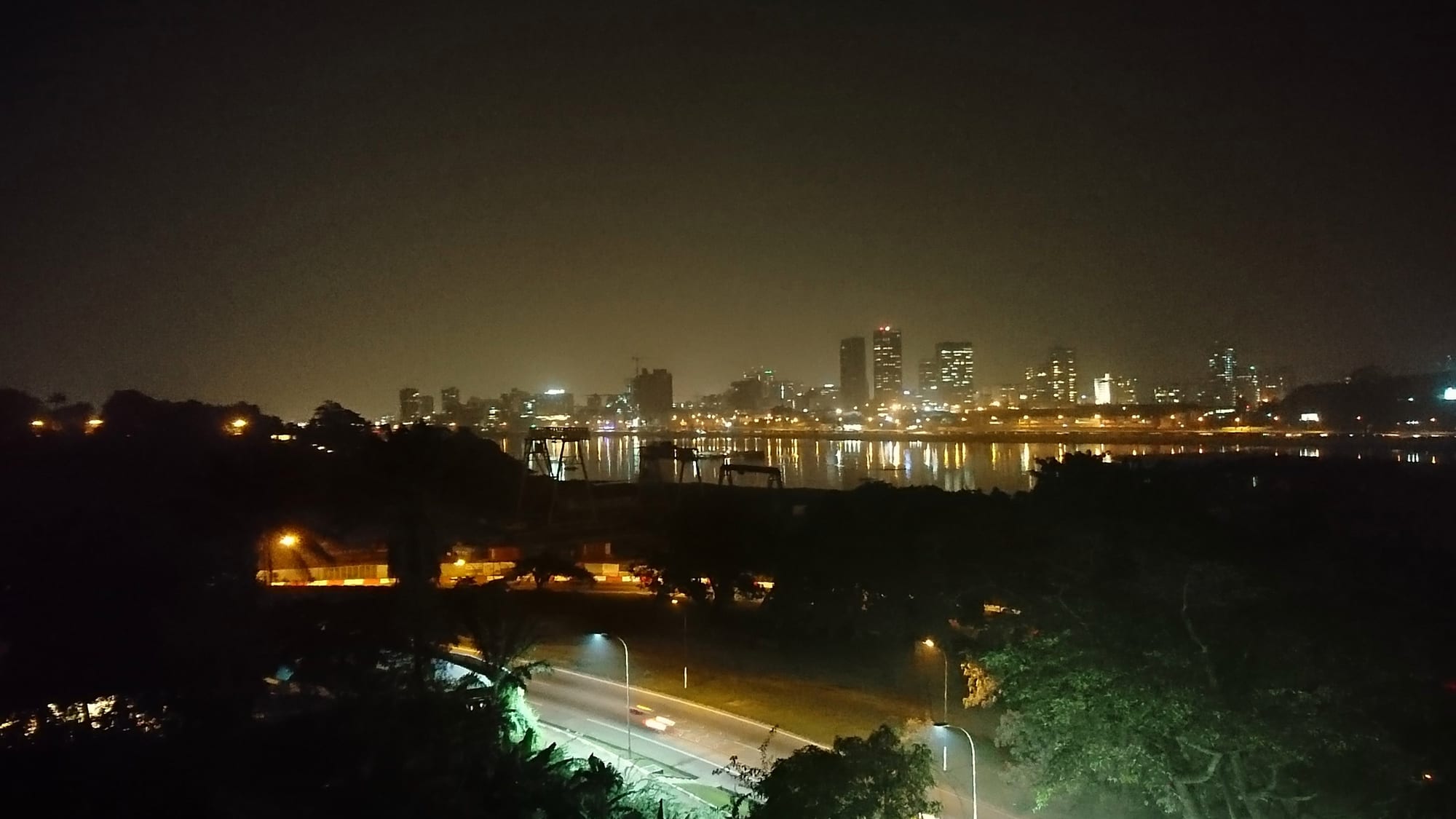
Abidjan is the most populous French-speaking city in West Africa, spread across peninsulas and islands in a lagoon and crossed by long bridges. The Plateau is the high-rise centre; Cocody has the presidential palace and embassies; Treichville and Adjamé have the markets and the music. It is the economic and cultural motor of the region, with a serious live-music and nightlife scene.
Sights include the striking St Paul's Cathedral, the Musée des Civilisations de Côte d'Ivoire, and the Banco National Park — a patch of primary rainforest in the heart of the city.
4. St Paul's Cathedral, Abidjan
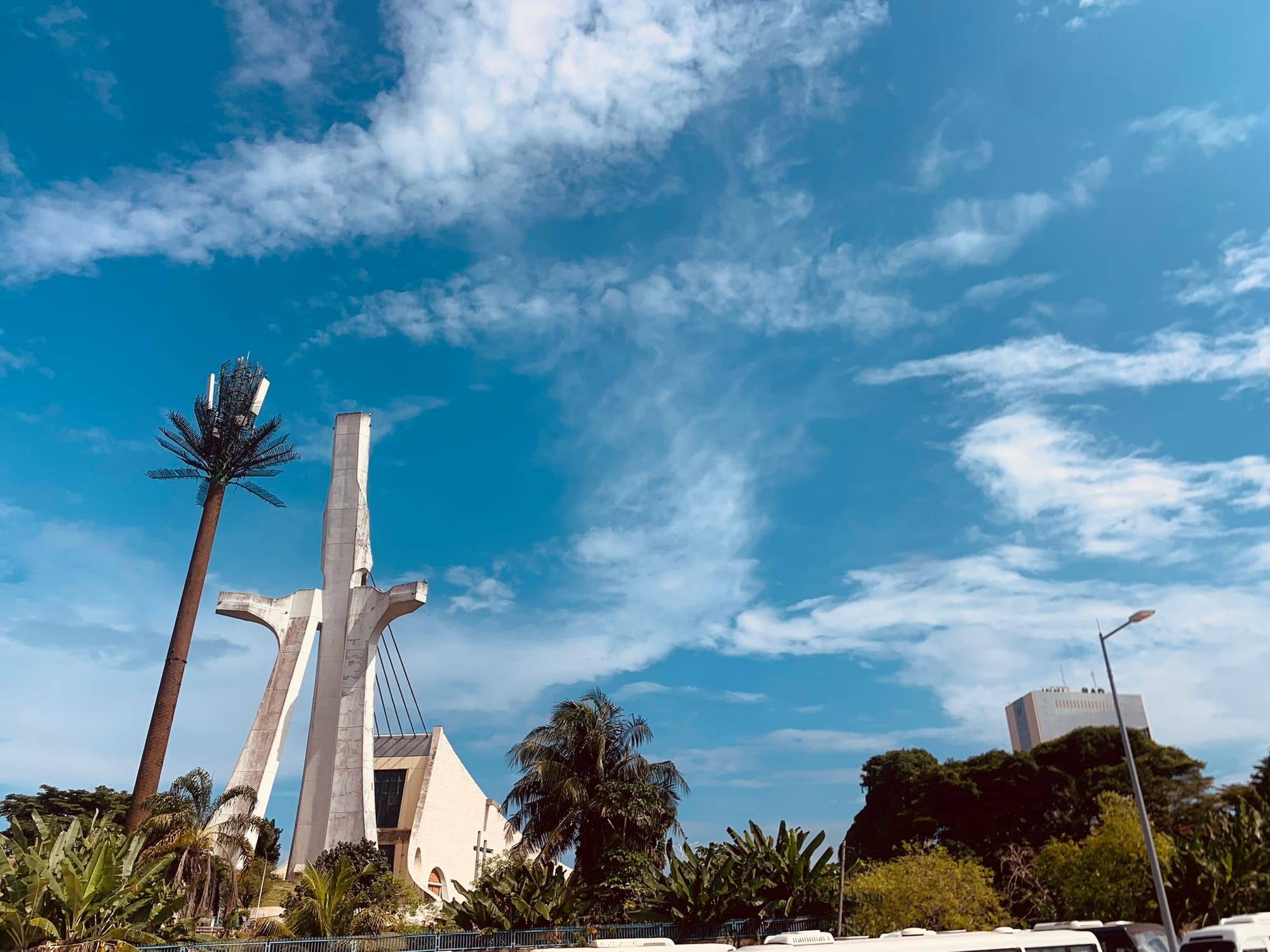
Abidjan's Catholic cathedral, consecrated in 1985 and also blessed by John Paul II, is a striking piece of modern architecture: its tall concrete front is shaped like a giant human figure, and seven cables tie its winged cross to the triangular main building, so that the church seems to be tugged towards the lagoon.
It stands on the edge of the Plateau above the lagoon, with six large stained-glass windows of abstract and angelic figures inside, and is one of the city's few genuine architectural landmarks.
5. Comoé National Park
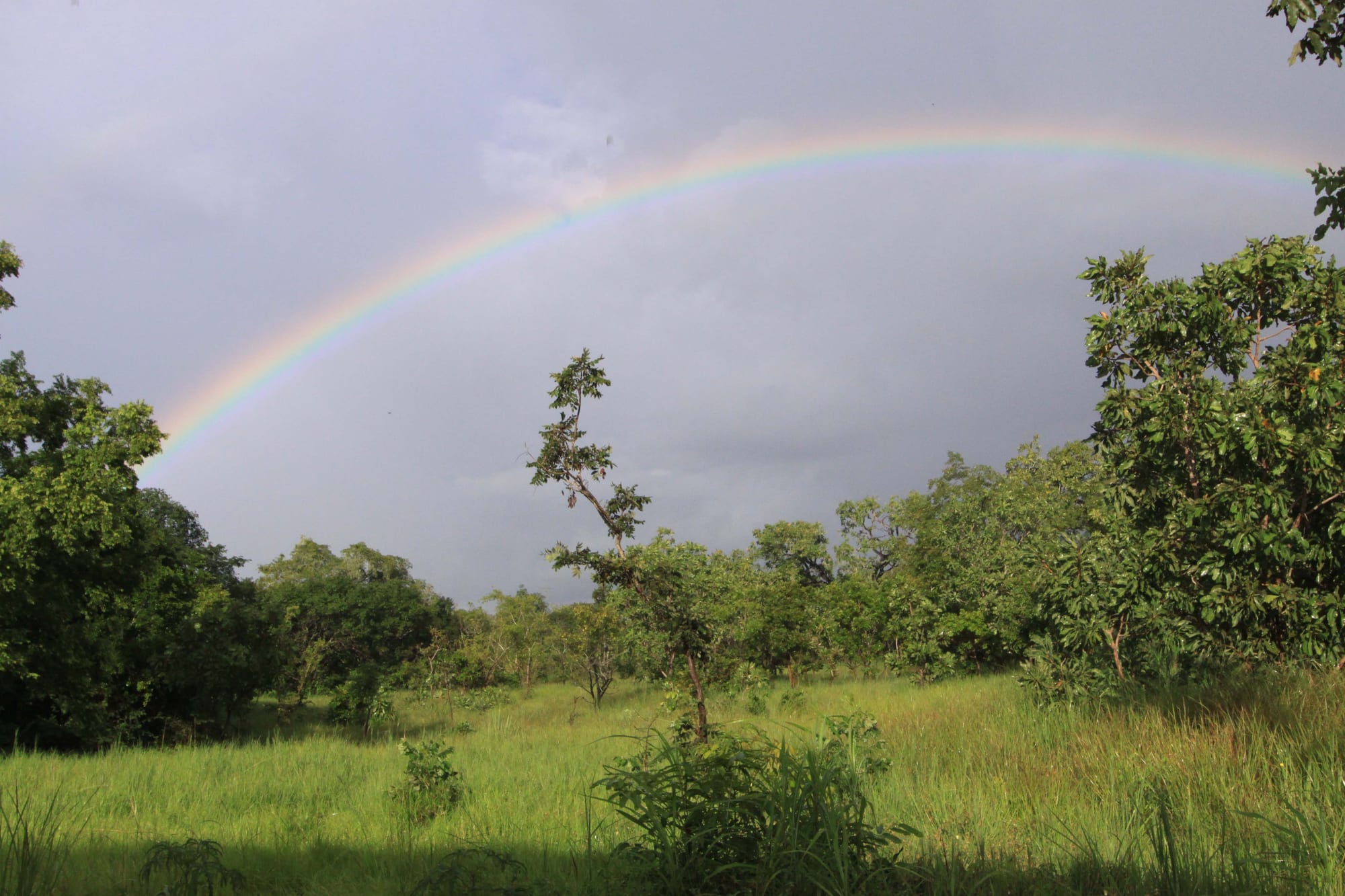
Comoé, in the northeast, covers about 11,500 square kilometres of savannah and gallery forest along the Comoé river — a UNESCO World Heritage Site that was on the danger list from 2003 because of poaching, cattle grazing and the lack of management during the civil war, and was removed in 2017 as conditions improved. It has elephant, buffalo, hippo, several antelope species including bongo and roan, chimpanzees, and a long bird list.
Infrastructure is basic and access depends on the security situation in the north; it is visited mostly by researchers and a trickle of adventurous travellers.
6. Man and the western mountains
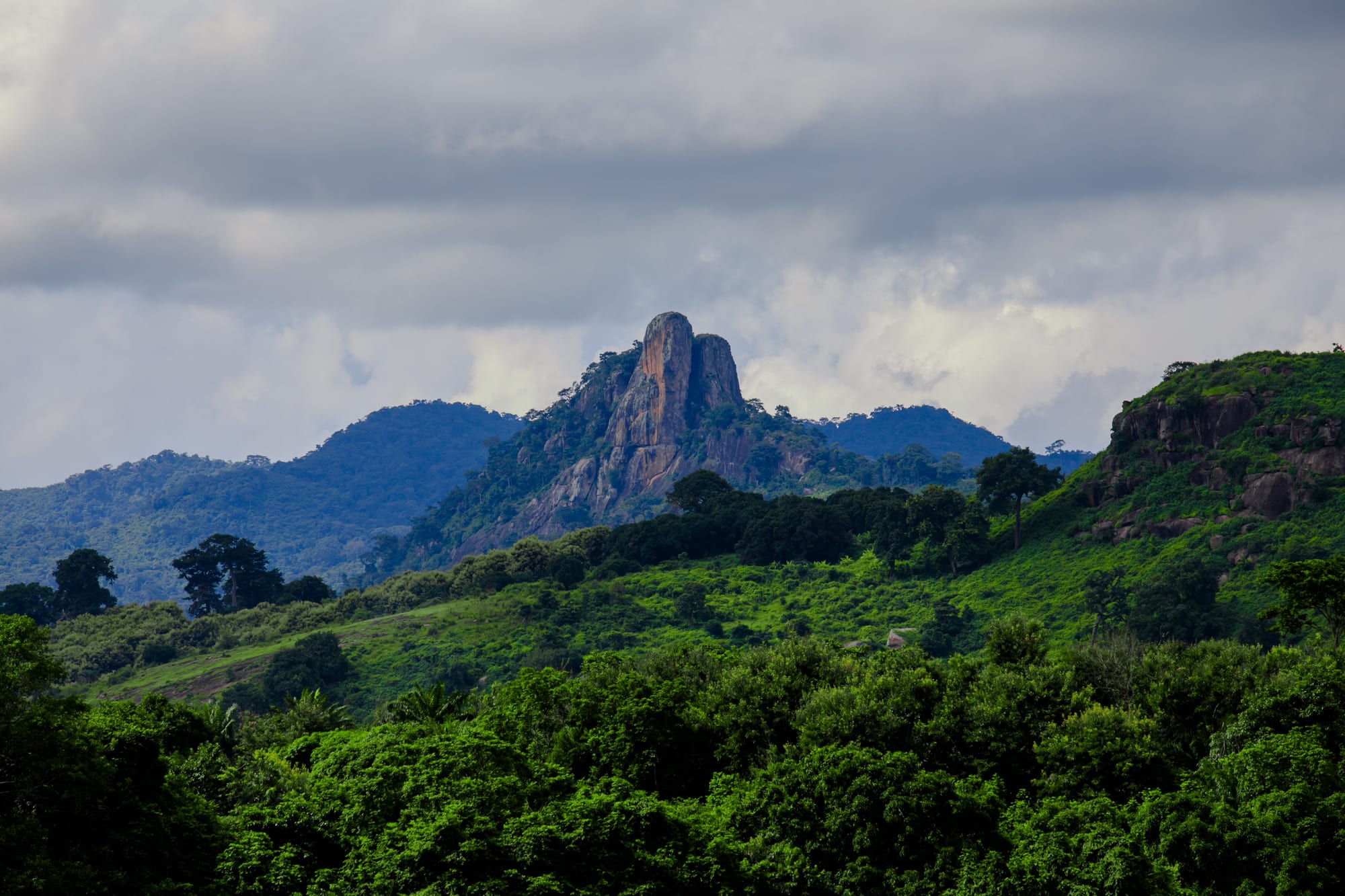
The west of the country is green and hilly — the mountains around the town of Man, close to the Guinean and Liberian borders. Man is a base for hiking the Dent de Man, visiting the local waterfalls, crossing the "liana bridges" woven from forest vines, and — in nearby villages — seeing the acrobatic mask dances, including the famous stilt dancers, and the carved masks of the Yacouba (Dan) people.
Mount Nimba, where Côte d'Ivoire meets Guinea and Liberia, is a strict nature reserve and a UNESCO site shared with Guinea, rich in species found nowhere else; access is restricted, and it has been on the danger list since iron-ore exploration began on the Guinean side in 1992.
7. The forests and parks of the southwest
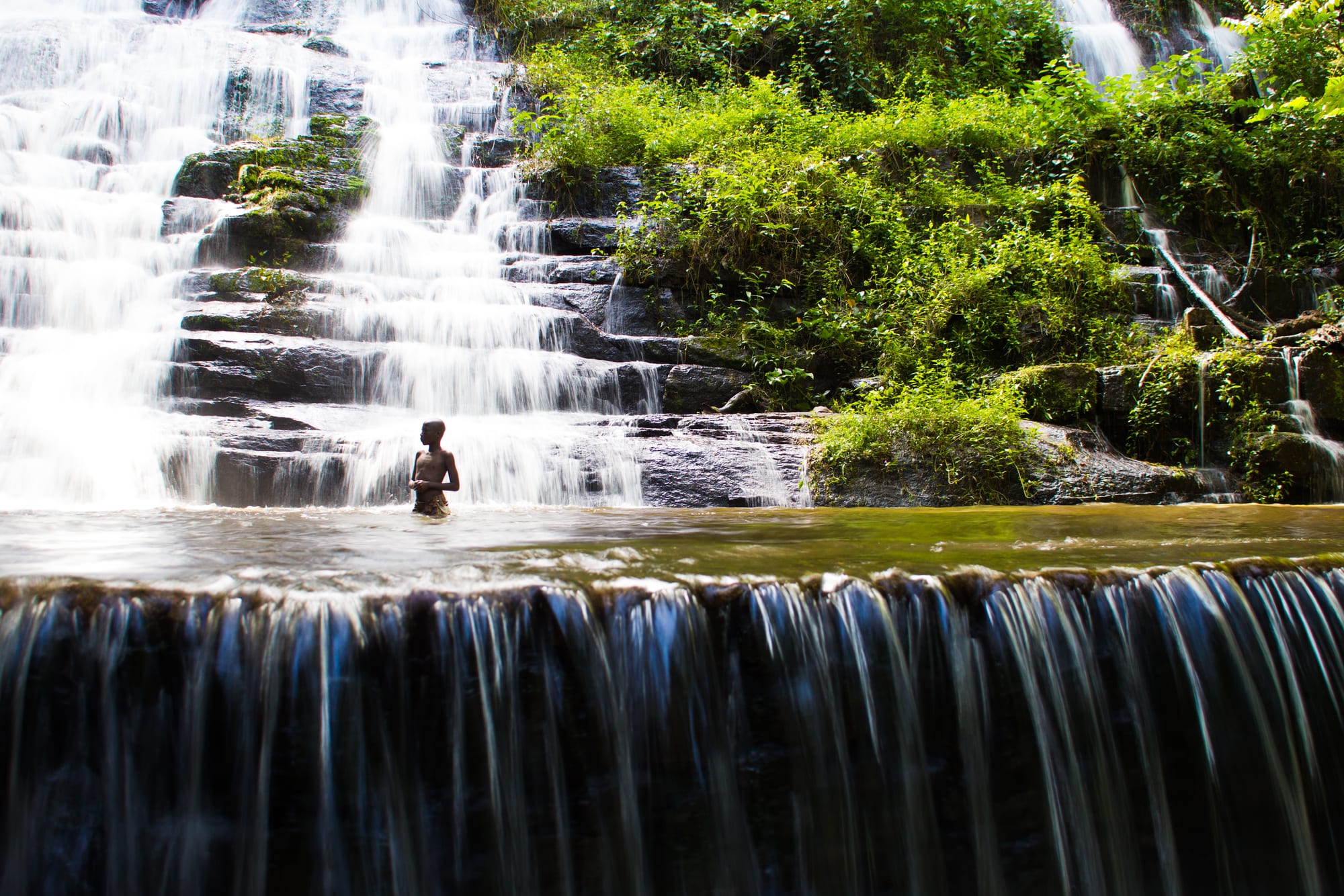
The southwest holds the country's rainforest. Taï National Park, near the Liberian border, is the largest relatively intact block of primary rainforest left in West Africa — a UNESCO World Heritage Site since 1982, home to pygmy hippo, forest elephant, and chimpanzees famous among primatologists for their use of tools. Access requires planning.
Closer to the coast, the beaches around Sassandra and San Pédro, and the little port of Sassandra, a former timber port at the mouth of the Sassandra River, make an easier addition.
8. Assinie and the coast
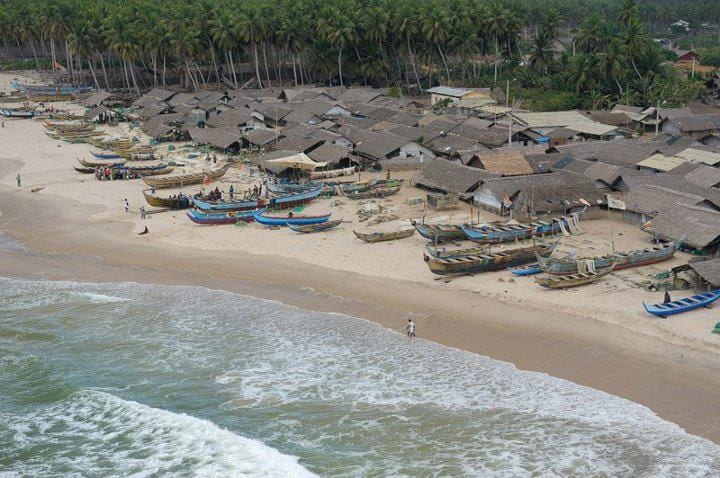
Assinie-Mafia, on a narrow spit between the Aby Lagoon and the Atlantic near the Ghanaian border, is where well-off Abidjanais keep weekend houses and where the resorts and beach clubs are. It has water sports on the calm lagoon side and surf on the ocean side, and it was the setting of the 1978 French comedy film Les Bronzés, set in its Club Med.
The wider coast — palm-lined, humid, with a heavy Atlantic swell and rip currents — is more for lounging than swimming.
Côte d'Ivoire is a straightforward trip in the south — Abidjan, Grand-Bassam, Yamoussoukro, Assinie all link on good roads in a few days — with the western mountains and the national parks for travellers with more time and an eye on the security situation.