Food · Côte d'Ivoire
Côte d'Ivoire: Food and the National Dish
A fermented cassava couscous eaten with grilled fish, a chicken stew sealed shut to cook in its own juices, and the world's largest cocoa producer, where chocolate plays only a small part in everyday eating
By Globeway Editorial · 30 September 2026
A coastal and cocoa-growing West African kitchen
Côte d'Ivoire's food draws on cassava, plantain, rice and fish along its Atlantic coast and lagoons, with peanut and palm-oil-based sauces filling out meals inland. The country is also, by a wide margin, the world's largest producer of cocoa, supplying around 45 per cent of the world's supply — though much of that goes out as raw beans for processing abroad, and Ivorian food itself makes surprisingly little everyday use of chocolate.
The national dish: attiéké
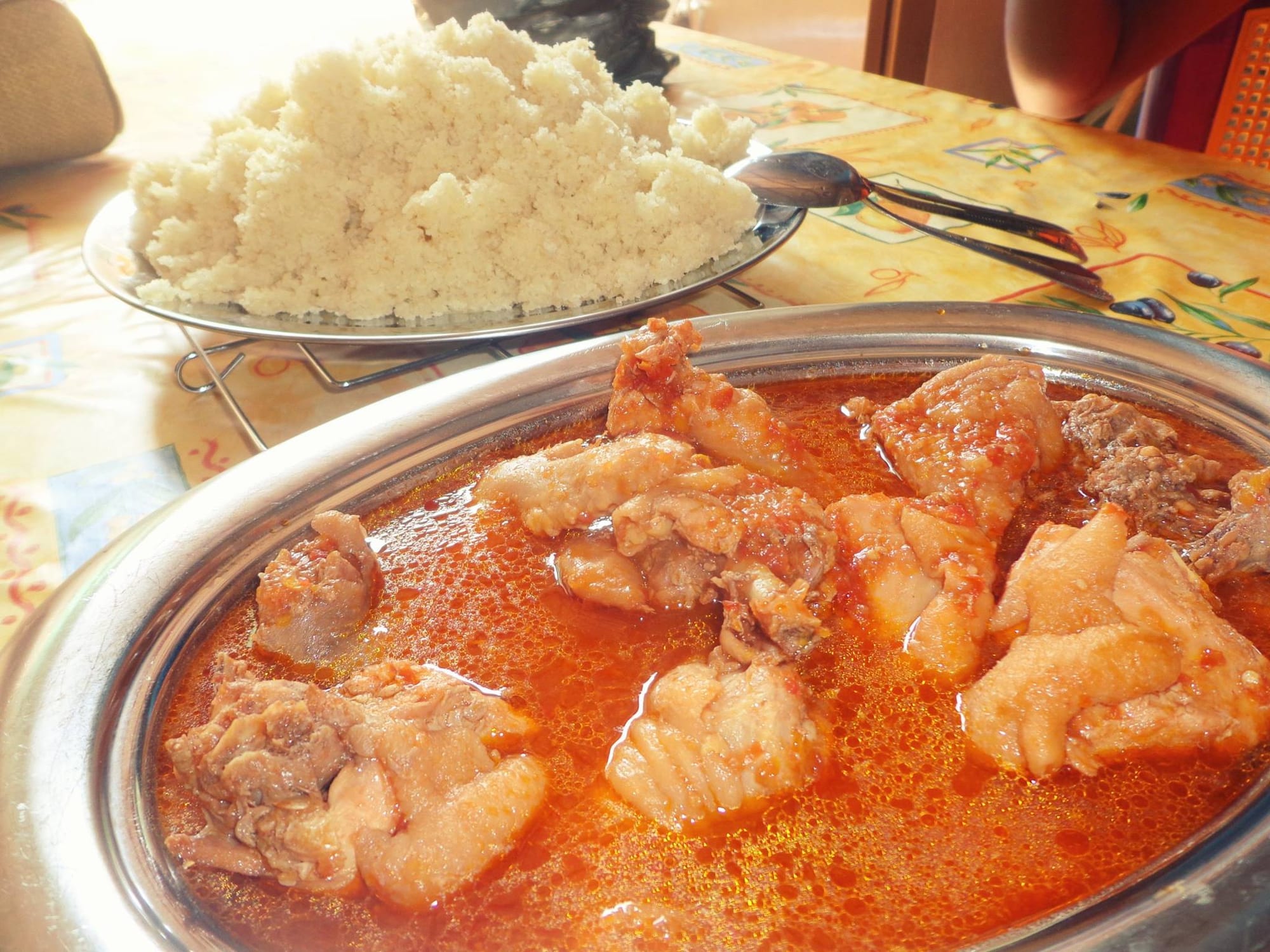
Attiéké, often regarded as the national dish, is a couscous-like grain made from fermented, grated cassava, steamed until light and fluffy, with a distinctive faintly sour tang from the fermentation. A speciality of the lagoon peoples of the south, including the Ébrié around Abidjan, whose language gave it its name, it is eaten nationwide, almost always paired with grilled or fried fish and a spicy tomato-onion garnish — attiéké-poisson is the combination most identified with Ivorian food both at home and abroad.
Kedjenou and the sealed pot
Kedjenou, chicken or guinea fowl slow-cooked with vegetables in a sealed terracotta pot called a canari over a low fire or coals, is Côte d'Ivoire's other major dish. With the pot sealed and little or no liquid added, the meat and vegetables braise slowly in their own juices, producing a deeply concentrated, spicy stew traditionally served with attiéké.
Dishes to know
Five more to recognise across Côte d'Ivoire:
- Foutou — pounded plantain, cassava or yam, served with sauce graine
(palm nut sauce) or other sauces, part of the same wider West African fufu family.
- Garba — fried tuna served with attiéké, sold cheaply from street stalls
and a genuine working-class food institution, especially in Abidjan.
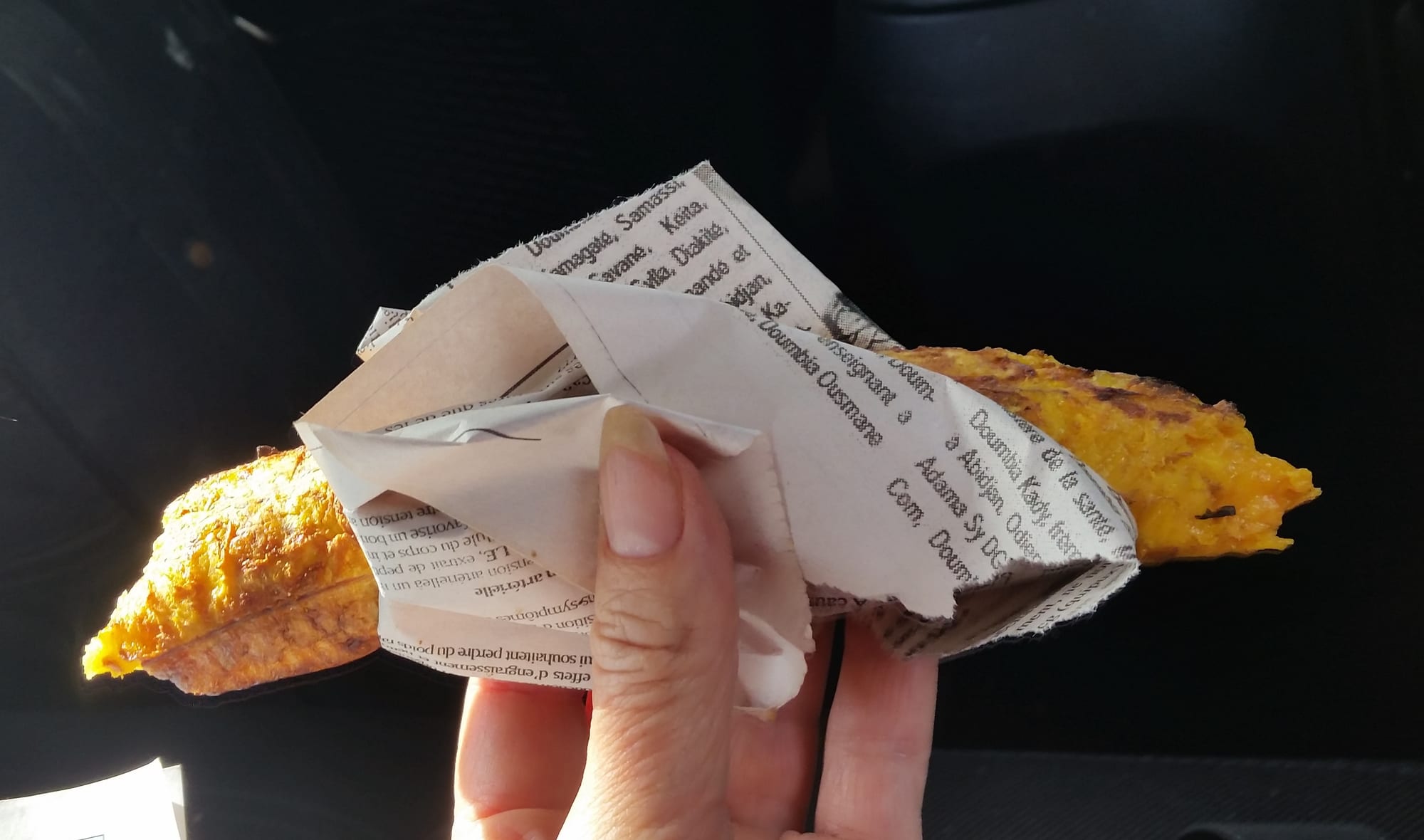
- Alloco — ripe plantain fried in palm oil, served with a spicy onion and
chilli sauce, as a street snack or with grilled fish or a boiled egg.
- Gombo frais — a stew of fresh okra chopped with tomato and palm oil.
- Maafe — meat simmered in a peanut sauce, a common dish shared with much
of West Africa.
Maquis culture and drinks
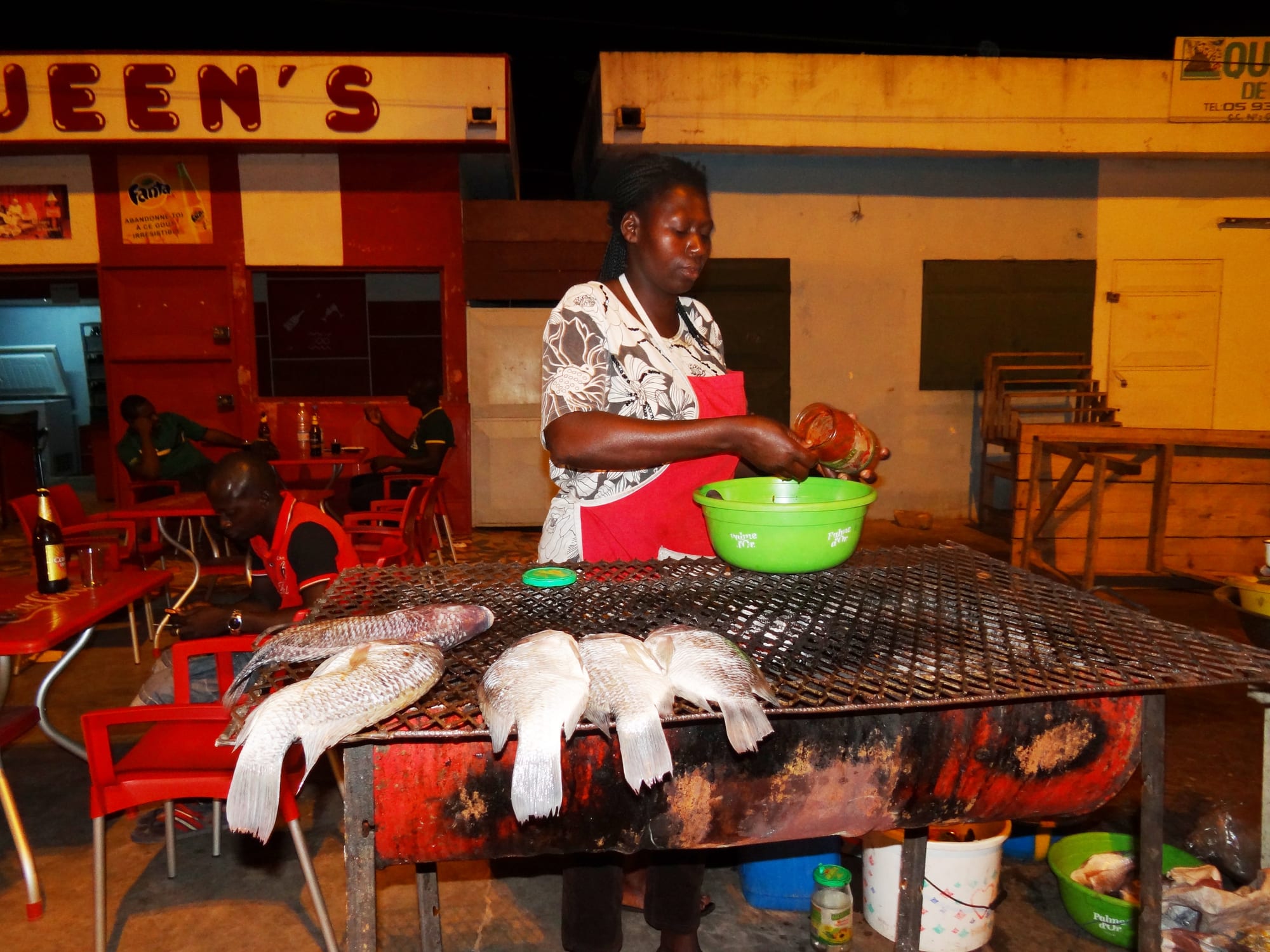
A maquis — an open-air, informal restaurant serving grilled fish or chicken with cold beer — is a genuine Ivorian social institution, and "going to the maquis" is as much about the evening out as the food itself. Bangui, the local palm wine, and local beer are common drinks alongside it, and gnamakoudji, a ginger and pineapple juice, is a popular soft drink.
Eating as a traveller
Vegetarians can rely on foutou with a vegetable sauce, alloco and rice dishes, though attiéké's classic pairing and most sauces lean on fish or meat. Bottled or boiled water is the safer choice for drinking. Garba stands and maquis restaurants are both excellent, inexpensive ways to eat the way most Ivorians actually do, rather than seeking out formal restaurant dining.
What to take from the table
Attiéké with grilled fish is the dish to try first, and an evening at a maquis, with kedjenou or grilled chicken and a cold beer, is the best way to see how central eating out socially is to everyday Ivorian life.