Food · Democratic Republic of the Congo
Democratic Republic of the Congo: Food and the National Dish
Chicken simmered in a rich palm-nut sauce, cassava leaves pounded into a peppery side, and a food culture built around one of the world's great rivers
By Worldlore Editorial · 30 September 2026
A cuisine built around cassava, palm oil and the river
The Democratic Republic of the Congo sits at the heart of the Congo Basin, and its food reflects that geography directly: cassava, grown for both its starchy root and its leaves, is the backbone of most meals, cooked in red palm oil and often finished with a rich sauce of ground peanuts. The Congo River and its tributaries, among the largest river systems on earth, supply fish that reaches markets across the country, fresh, smoked or dried.
The national dish: poulet à la moambe
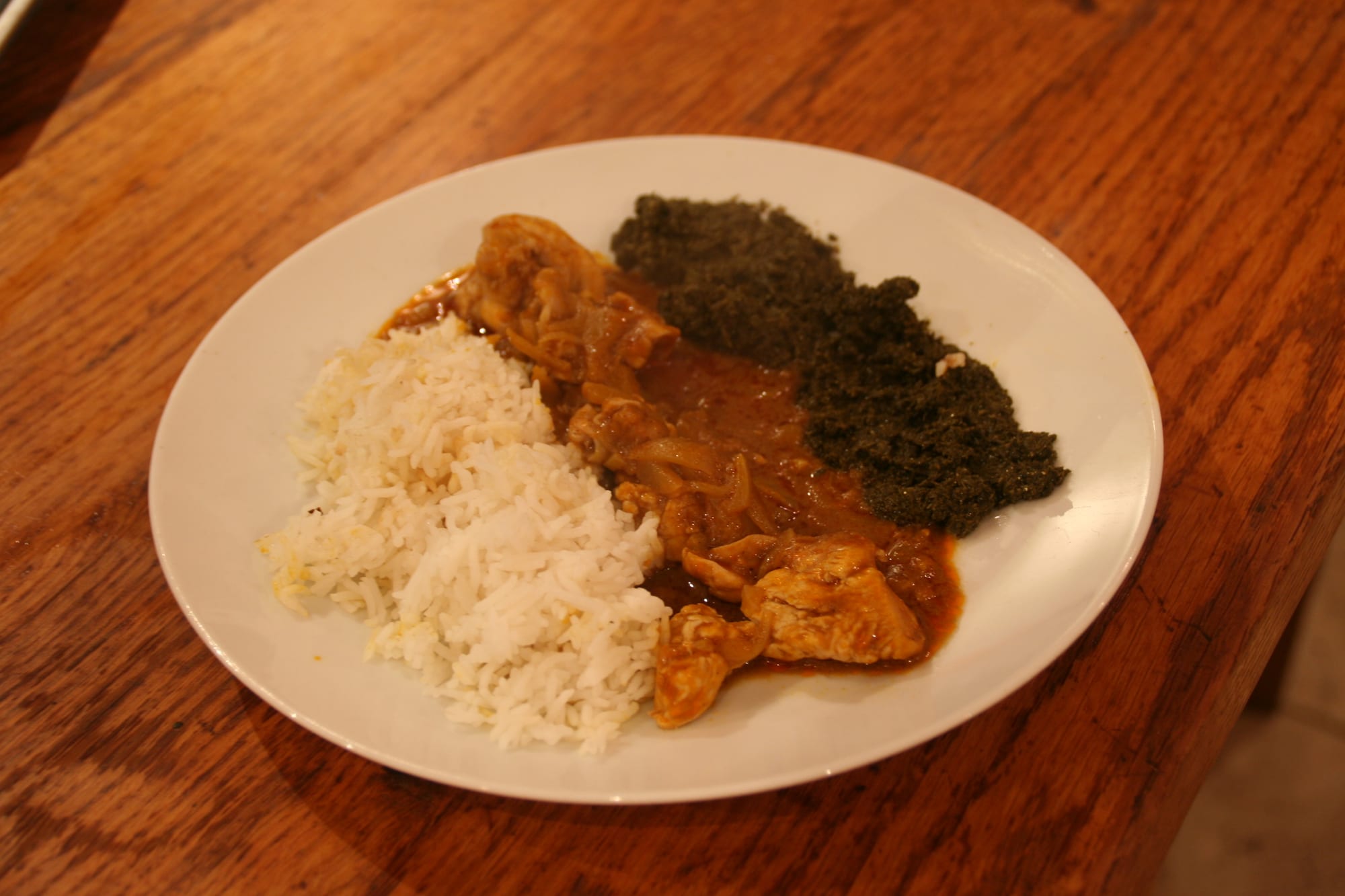
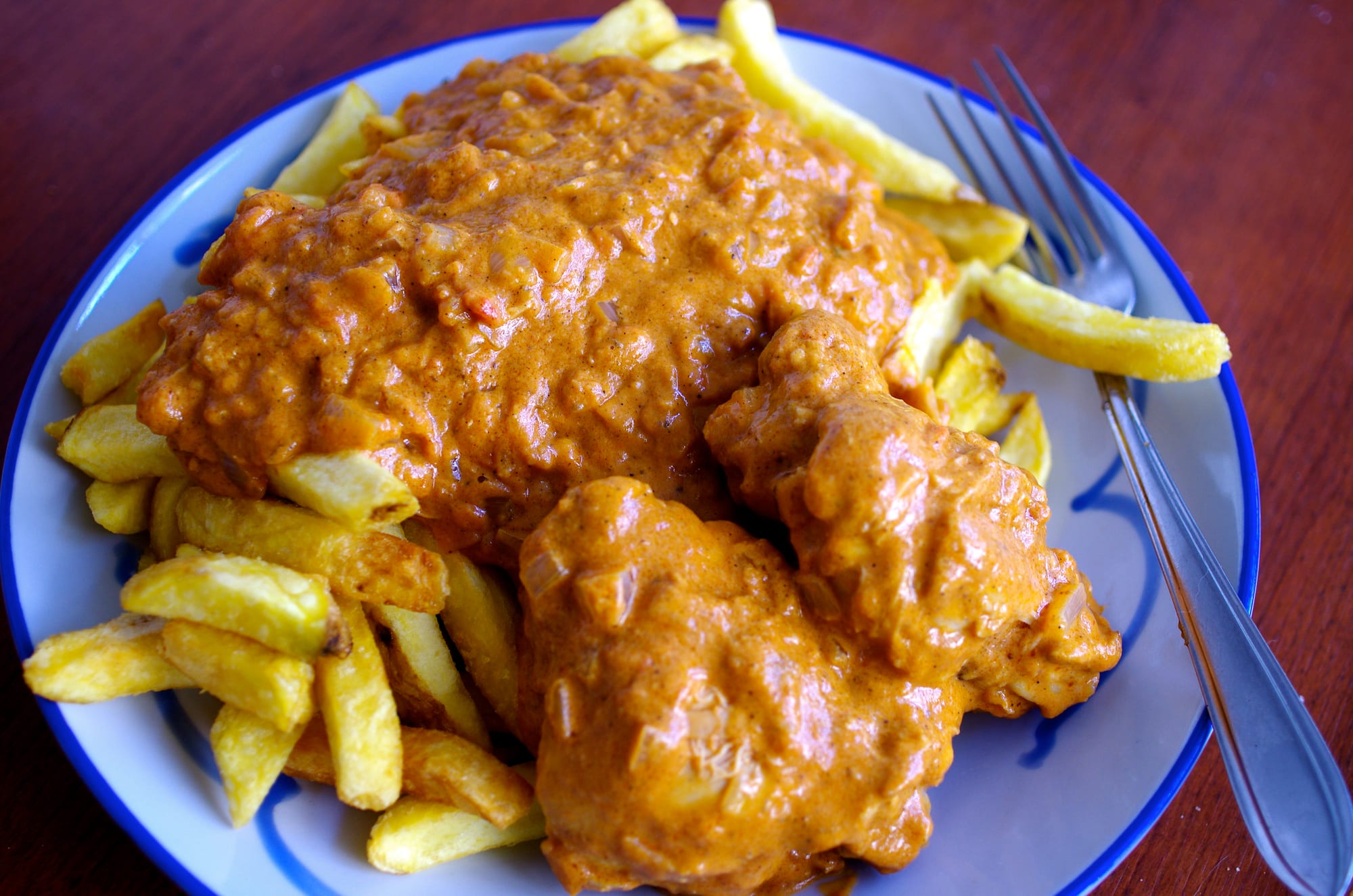
Poulet à la moambe — chicken simmered in a sauce made from palm-nut cream (palm butter) and spices, sometimes with peanut and chilli — is widely considered the Democratic Republic of the Congo's national dish. It is often served with rice or cassava paste, and is shared across Central Africa: the same dish, as muamba de galinha, is also considered the national dish of Angola, and of the Republic of the Congo.
Pondu, fufu and the everyday table
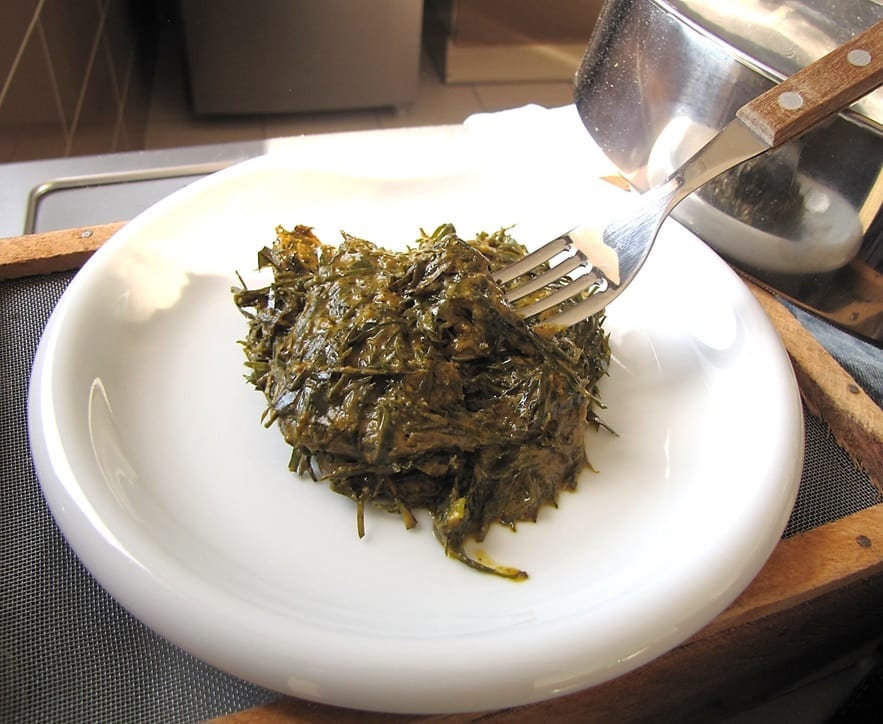
Pondu, also called saka-saka, is pounded cassava leaves cooked down for a long time, often with palm oil, until they soften into a dark, savoury side dish. Fufu, a stiff paste made from cassava (or sometimes maize) flour, stands in for bread or rice at most everyday meals, eaten by hand and dipped into whatever sauce is on the table; kwanga (chikwangue), a fermented cassava bread steamed and stored in leaves, is sold throughout the country.
Dishes to know
Five more to recognise across the DRC:
- Pondu (saka-saka) — pounded cassava leaves cooked down, often with
palm oil, the everyday leafy side dish.
- Fufu — a stiff cassava-flour paste, rolled into balls by hand and
dipped into stews.
- Liboke — fish (often catfish) or pork seasoned with pepper, wrapped
in banana leaves and steamed.
- Mfumbwa — a peanut-based sauce made from Gnetum africanum leaves,
distinct from the more common cassava-leaf pondu.
- Makayabu — dried, salted fish, rehydrated and cooked into stews and
sauces, an important protein source away from the rivers.
Drinks
Primus, brewed in the country since the colonial era, is the flagship beer of Bralima, the country's oldest brewer, first brewed in 1926. Palm wine, tapped fresh and drunk while still lightly fermented, remains an important traditional drink, and coffee, grown in Kivu and other provinces, is the country's leading agricultural export.
Eating as a traveller
Vegetarians can rely on pondu, fufu and vegetable-based sauces, though most sauces and stews across the country are built around meat, fish or their stock. Tap water is not safe to drink; stick to bottled or boiled water. Kinshasa and other major cities have a wider restaurant scene than most of the country, where eating what local households actually cook is often the more realistic and rewarding option.
What to take from the table
Poulet à la moambe, its rich palm-nut sauce ladled over rice with pondu alongside, is the dish that best represents Congolese food — rich, deeply savoury, and built on ingredients this part of Central Africa has relied on for a very long time.