History · Falkland Islands
Falkland Islands: The Disputed Archipelago
An empty South Atlantic group claimed by France, Spain, Britain and Argentina in turn — a sheep colony, a Cape Horn way station, and the cause of a 1982 war
By Worldlore Editorial · 30 September 2026
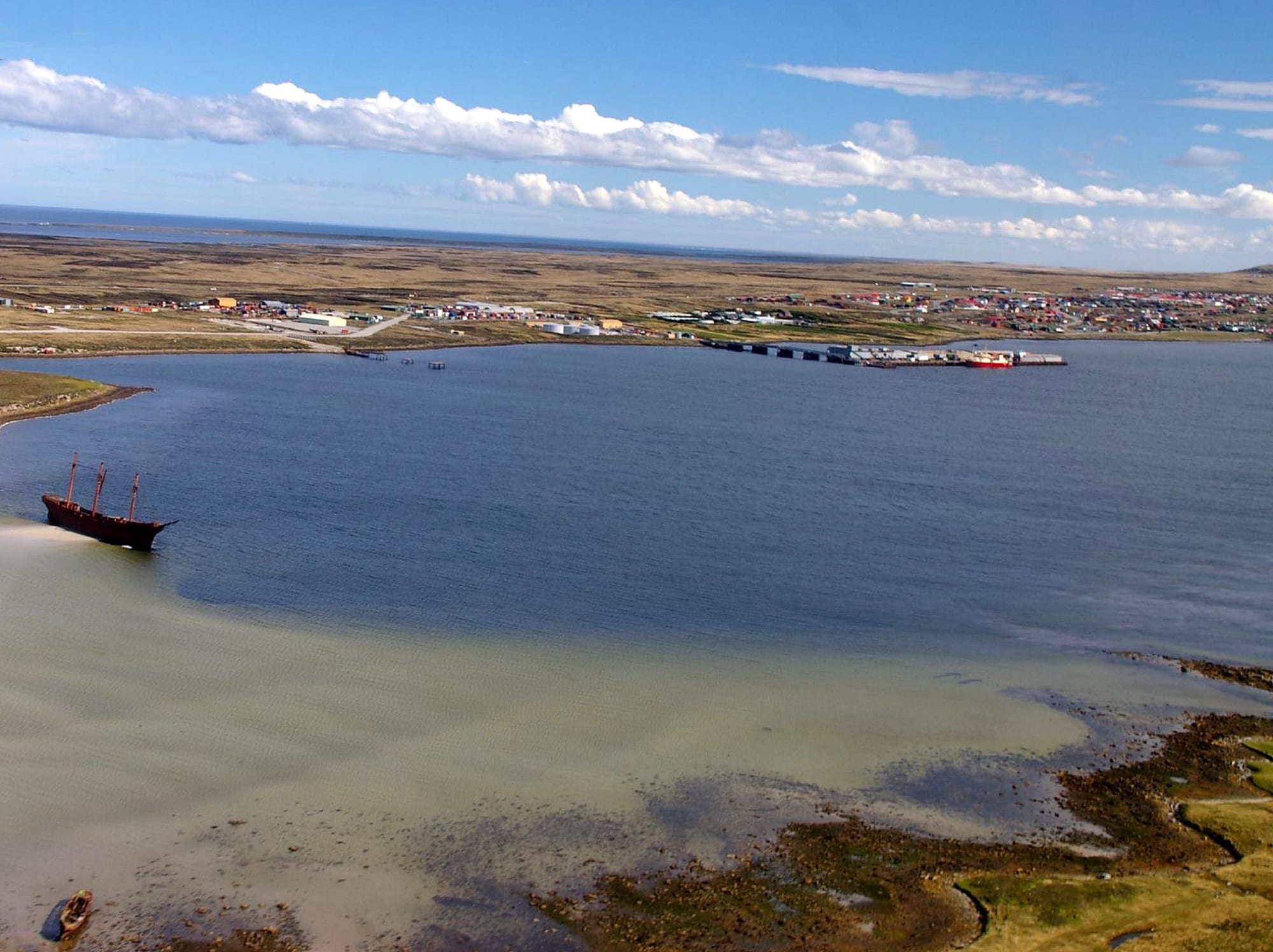
An empty archipelago, and four flags
The Falkland Islands sit about 300 miles east of southern Argentina: two large islands, hundreds of small ones, a treeless landscape of moorland, peat and wind. No one lived there when Europeans arrived — there is no indigenous Falklands people — and that emptiness is exactly why the islands have been claimed, settled and argued over by France, Spain, Britain and Argentina for more than 250 years. Today they are a British Overseas Territory of around 3,600 people; Argentina still calls them the Islas Malvinas and claims them as its own.
A short history
- 1690
First landing
English captain John Strong names Falkland Sound.
- 1764–1765
Rival settlements
France founds Port Louis; Britain founds Port Egmont.
- 1767
Spain buys in
Spain takes over the French settlement and compensates its founder.
- 1811
Spain withdraws
The islands are left largely unoccupied.
- 1820s–1832
The Argentine claim
Buenos Aires asserts control and plants a settlement.
- 1833
The British return
Britain re-establishes control; Argentina protests, and still does.
- 1845
Stanley
Stanley becomes the capital; sheep farming takes over.
- 1982
The war
Argentina invades; a British task force retakes the islands.
- 2013
Referendum
Islanders vote 99.8% to remain British.
Claim after claim
France built the first settlement, Port Louis, in 1764; Britain founded Port Egmont the next year, each barely aware of the other. Spain bought out the French in 1767 and, in 1770, expelled the British — nearly starting a war — before letting them return. Britain then decided in 1774, for reasons of cost, to withdraw, and its garrison left in 1776, leaving a plaque behind. Spain kept a small garrison settlement until 1811, when the Peninsular War and the South American wars of independence pulled it out too, also leaving a plaque. For a while the islands belonged to no state at all, visited only by sealers and whalers.
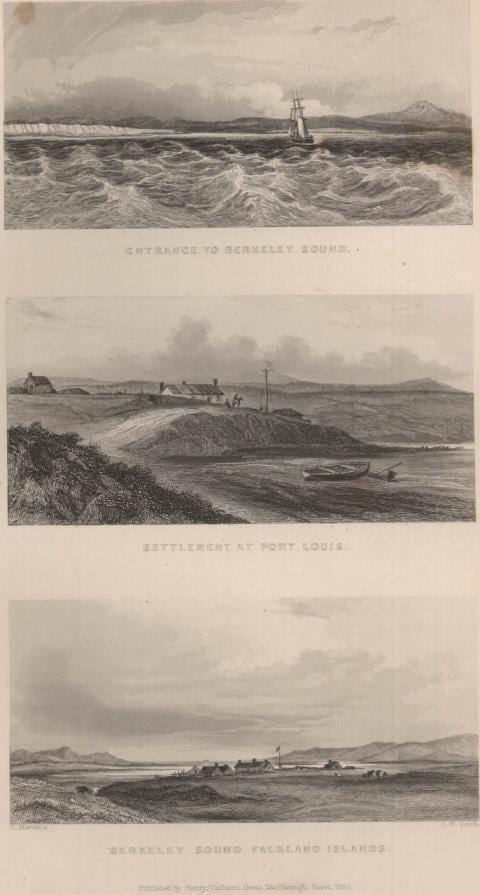
The newly independent government in Buenos Aires claimed Spain's inheritance and, in 1828, backed a settlement under Luis Vernet. After Vernet seized American sealing ships, a US warship raided the settlement in 1831. Buenos Aires sent a garrison in 1832; it mutinied. In January 1833 Britain returned, removed the small Argentine garrison without bloodshed, and has held the islands ever since, apart from the ten weeks of 1982 — over Argentina's repeated formal protests. That is the sovereignty dispute in a nutshell.
The sheep colony
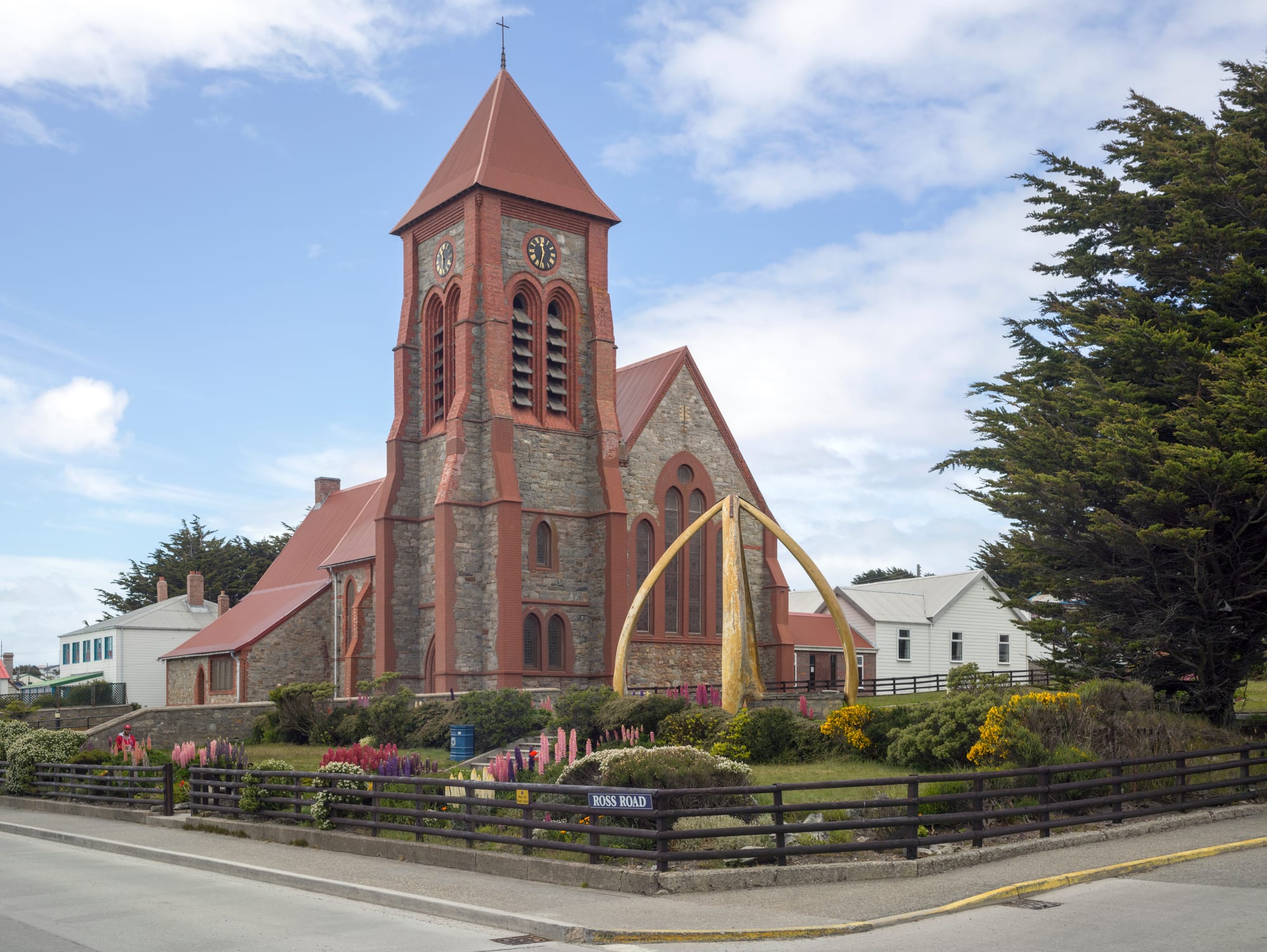
Stanley, begun in 1843, became the capital in 1845. The economy became sheep, and almost only sheep: by the late 19th century the Falklands were effectively one vast wool run, dominated by the Falkland Islands Company, with the whole population working the flocks or servicing the port. Stanley did a brisk trade repairing ships battered by Cape Horn — until the Panama Canal opened in 1914 and the sailing traffic vanished, leaving hulks rotting in the harbour.
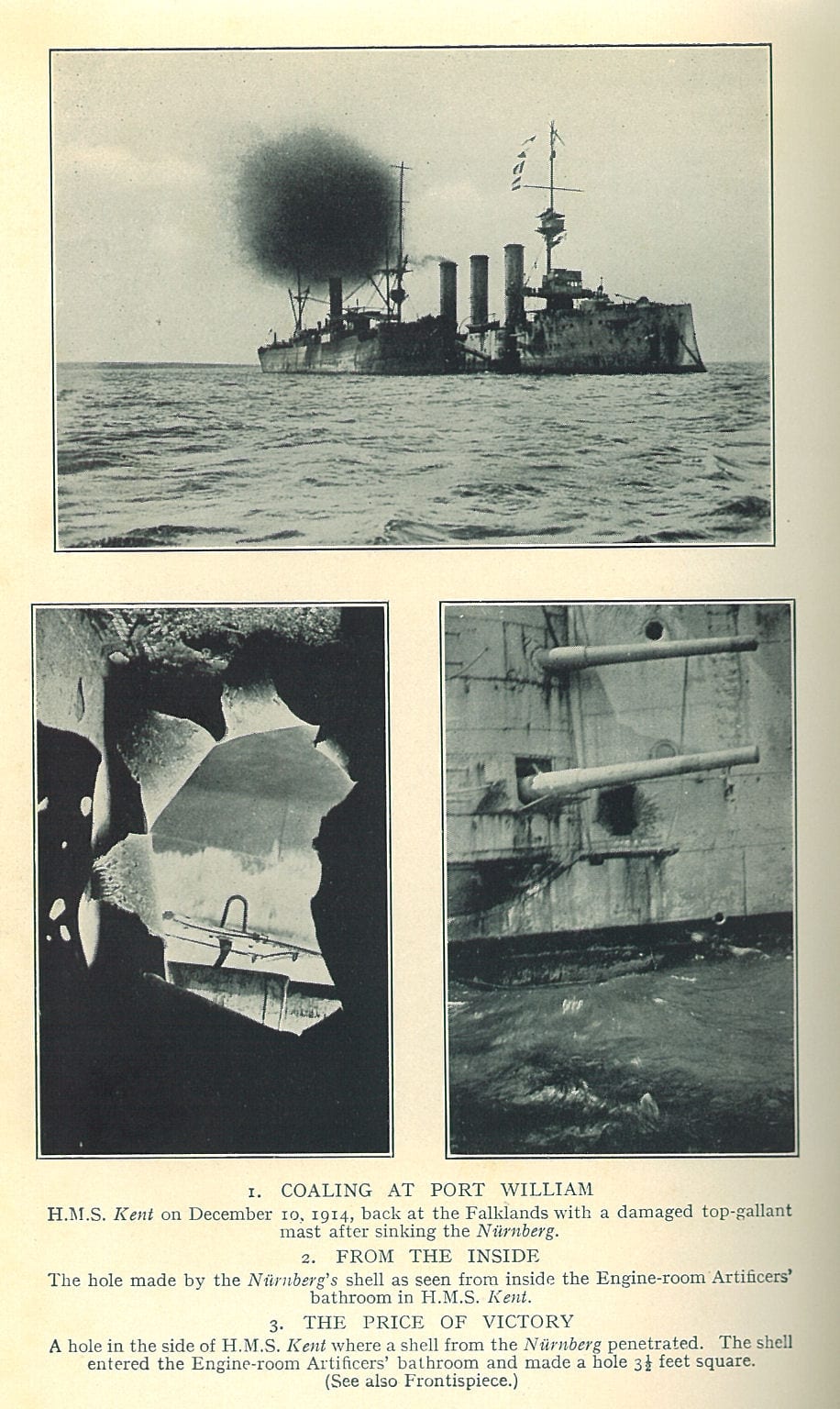
The islands' other brush with world events came on 8 December 1914, when a British squadron caught and destroyed a German cruiser force off the coast in the Battle of the Falkland Islands, a major naval action of the First World War.
The 1982 war
Through the 1960s and 70s the United Nations pressed Britain and Argentina to settle the islands' status. Talks ran for years — including ideas of transferring sovereignty and leasing the islands back — but always broke on the same point: the islanders wanted to stay British.
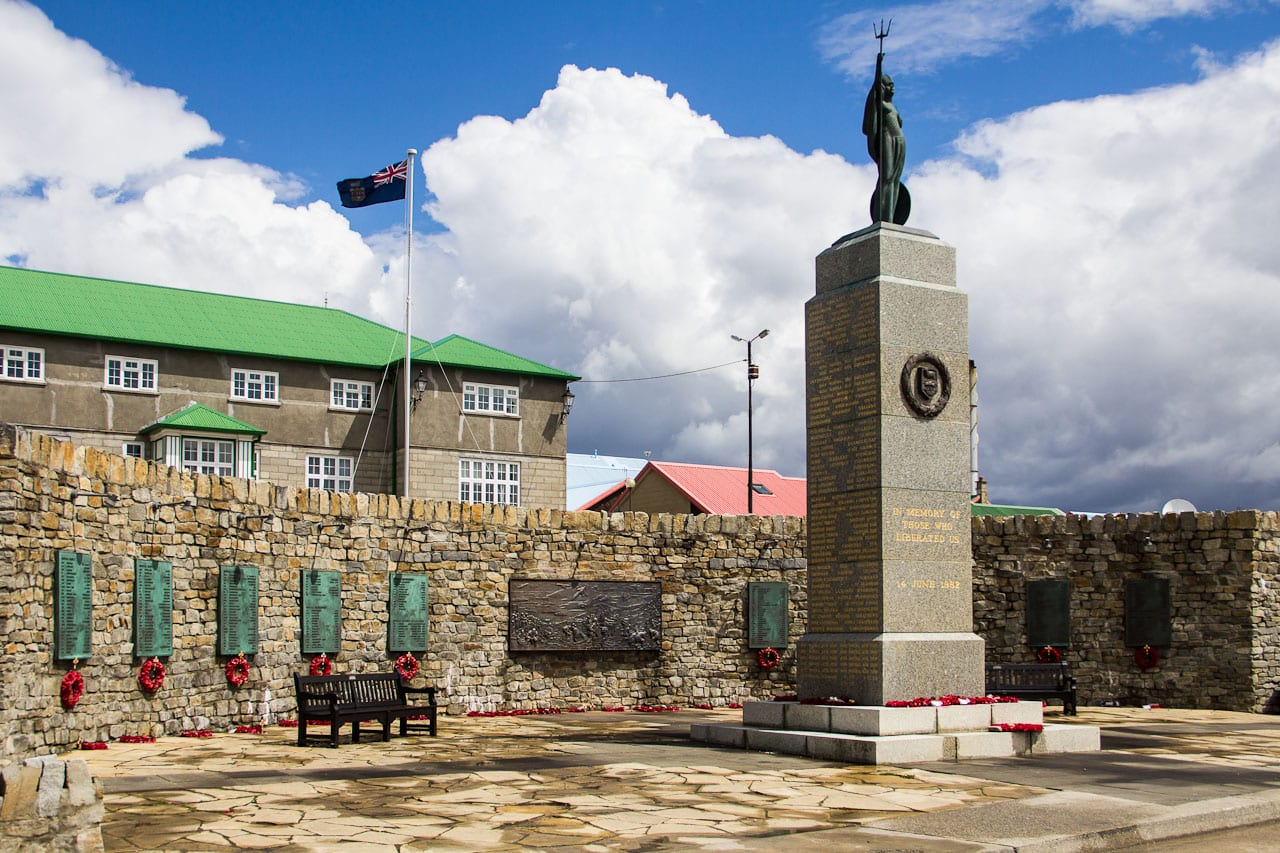
On 2 April 1982 Argentina's military junta, facing economic collapse and unrest at home, invaded and quickly overwhelmed the tiny Royal Marine garrison. Britain sent a naval task force 8,000 miles south. Over ten weeks came the sinking of the cruiser General Belgrano and the destroyer Sheffield, the landings at San Carlos, and land battles at Goose Green, Mount Longdon and Tumbledown. Argentine forces surrendered at Stanley on 14 June. About 650 Argentine, 255 British and three Falkland Islander lives were lost. The defeat brought down the junta and sped Argentina's return to democracy the next year.
The Falklands now
After the war Britain invested heavily: full British citizenship for the islanders in 1983, and a fishing zone of 160 nautical miles in 1986 whose squid-licence fees, along with tourism and potential offshore oil, turned a marginal economy into a prosperous one. In a 2013 referendum, on a 92 per cent turnout, islanders voted 99.8 per cent to remain a British Overseas Territory. Argentina maintains its claim, and the question resurfaces regularly in its politics and at the UN.
What the Falklands carry
The Falklands are one of the clearest cases in the world of a territory whose two strongest arguments point in opposite directions: a British claim resting on possession since 1833 and the settled wishes of the people who live there, against an Argentine claim resting on succession to Spain, geography and the events of that same year. An empty archipelago in 1690, the islands are now permanently, and contentiously, inhabited.