Attractions & Natural Wonders · Mauritius
Mauritius: Seven Attractions and Natural Wonders
A mountain of refuge turned UNESCO memorial, ground striped in seven natural colours, and a sacred crater lake linked to the Ganges — beyond the postcard lagoons
By Worldlore Editorial · 30 September 2026
An island shaped by the people who found it
Mauritius, an island nation east of Madagascar, had no indigenous population when the Dutch, French, and finally British successively colonised it — its roughly 1.3 million people today descend from French settlers, enslaved Africans and Malagasy, indentured Indian labourers, and Chinese traders, giving it one of the most religiously and ethnically layered societies in the Indian Ocean. It is best known abroad for lagoon resorts, but its volcanic interior, waterfalls, and history reward getting off the beach.
The seven below run from the southwest coast into the interior and the capital. It is warm year-round; the cyclone season runs roughly November to April, and the cooler, drier months (May to October) suit hiking best.
1. Le Morne Brabant
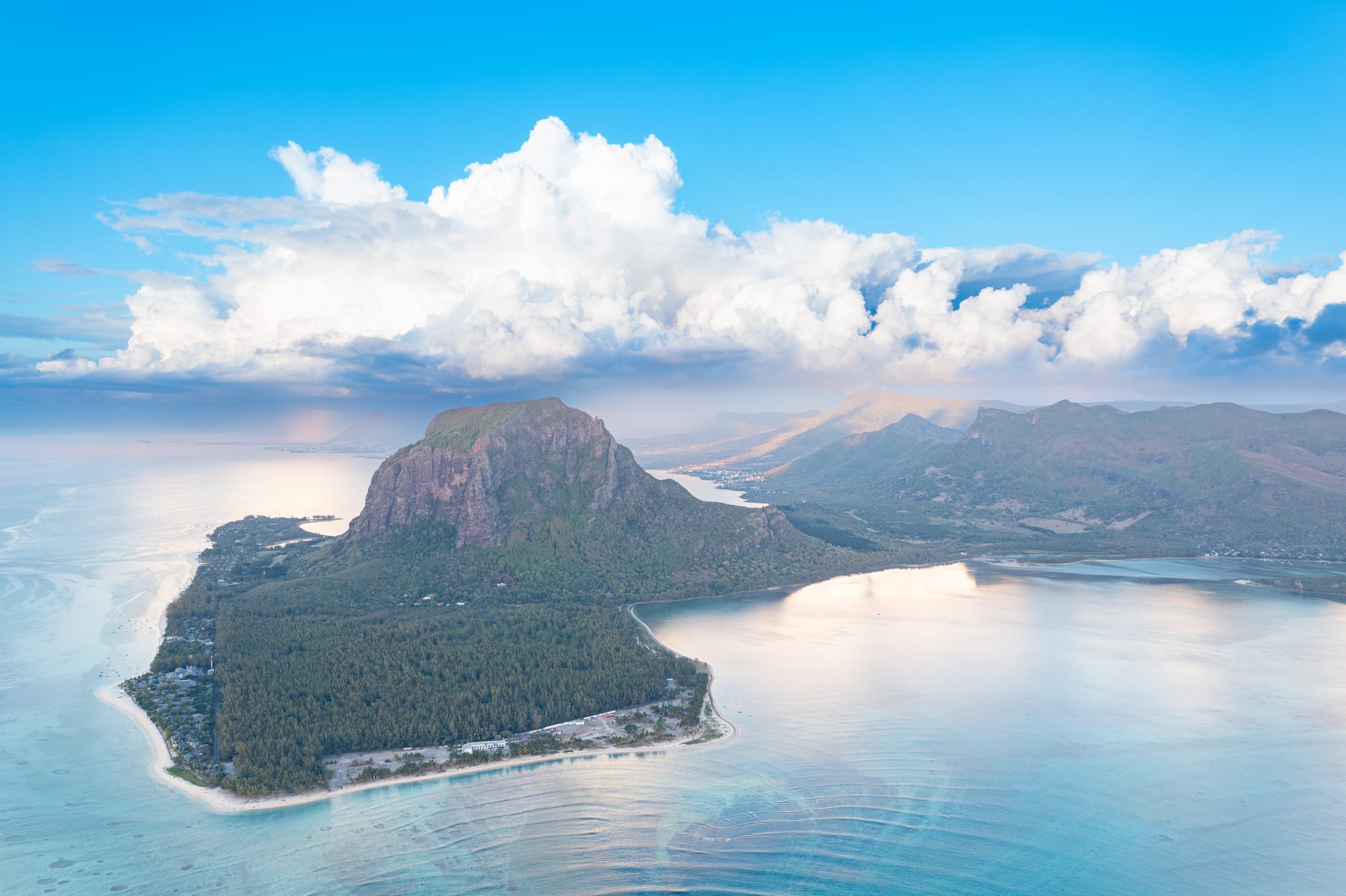
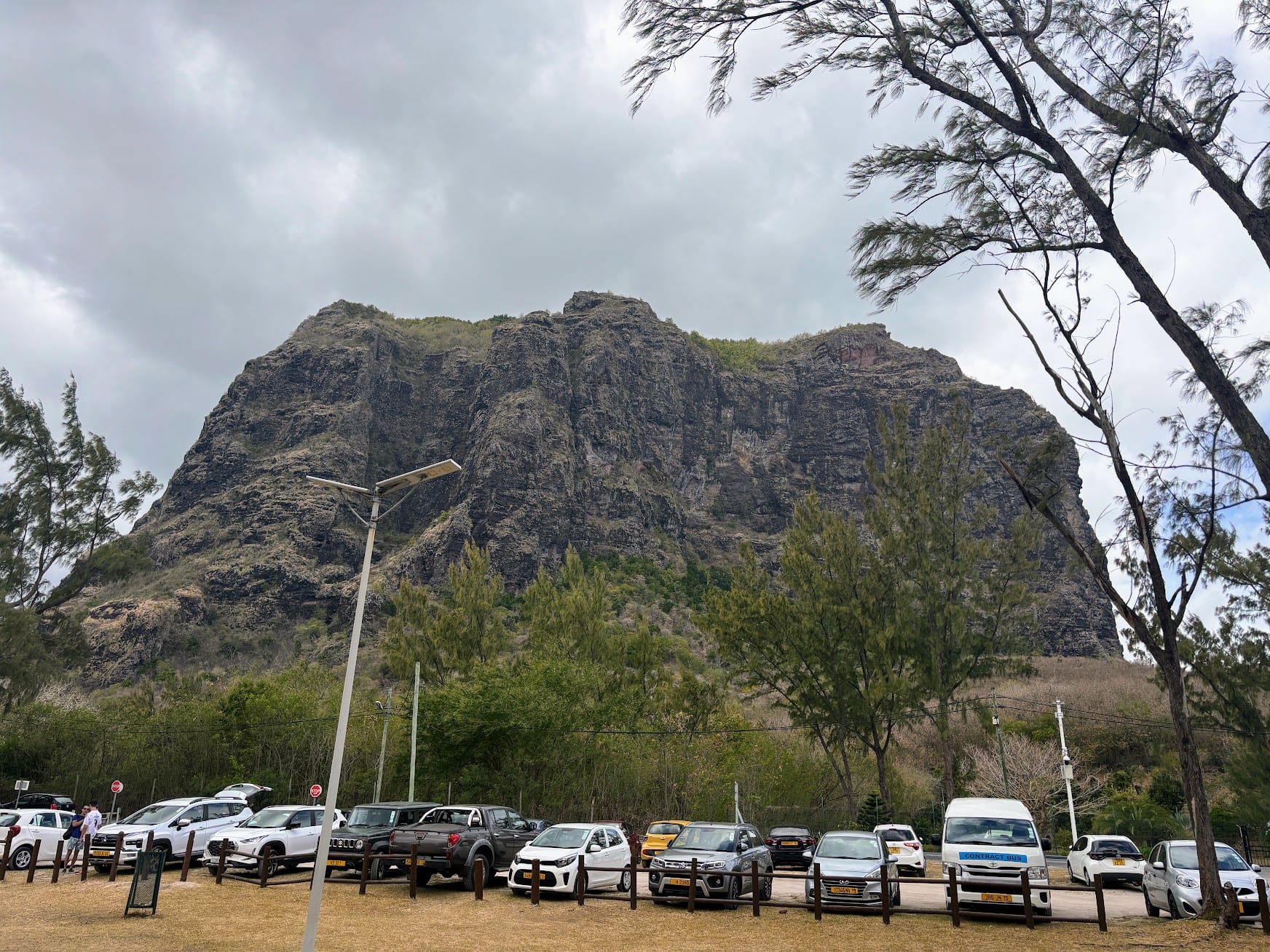
Le Morne, a sheer basalt mountain on a peninsula in the southwest, was used as a refuge by escaped slaves (maroons) who hid in its caves and on its plateau in the early 19th century, some reportedly leaping to their deaths rather than be recaptured when a police party approached in 1835 — misreading the visit as recapture just after slavery had in fact been abolished. It is a UNESCO World Heritage Site and a memorial to that history, as well as one of the island's most photographed lagoon views.
The basalt monolith at its heart rises 556 metres above the lagoon.
2. Chamarel's Seven Coloured Earths
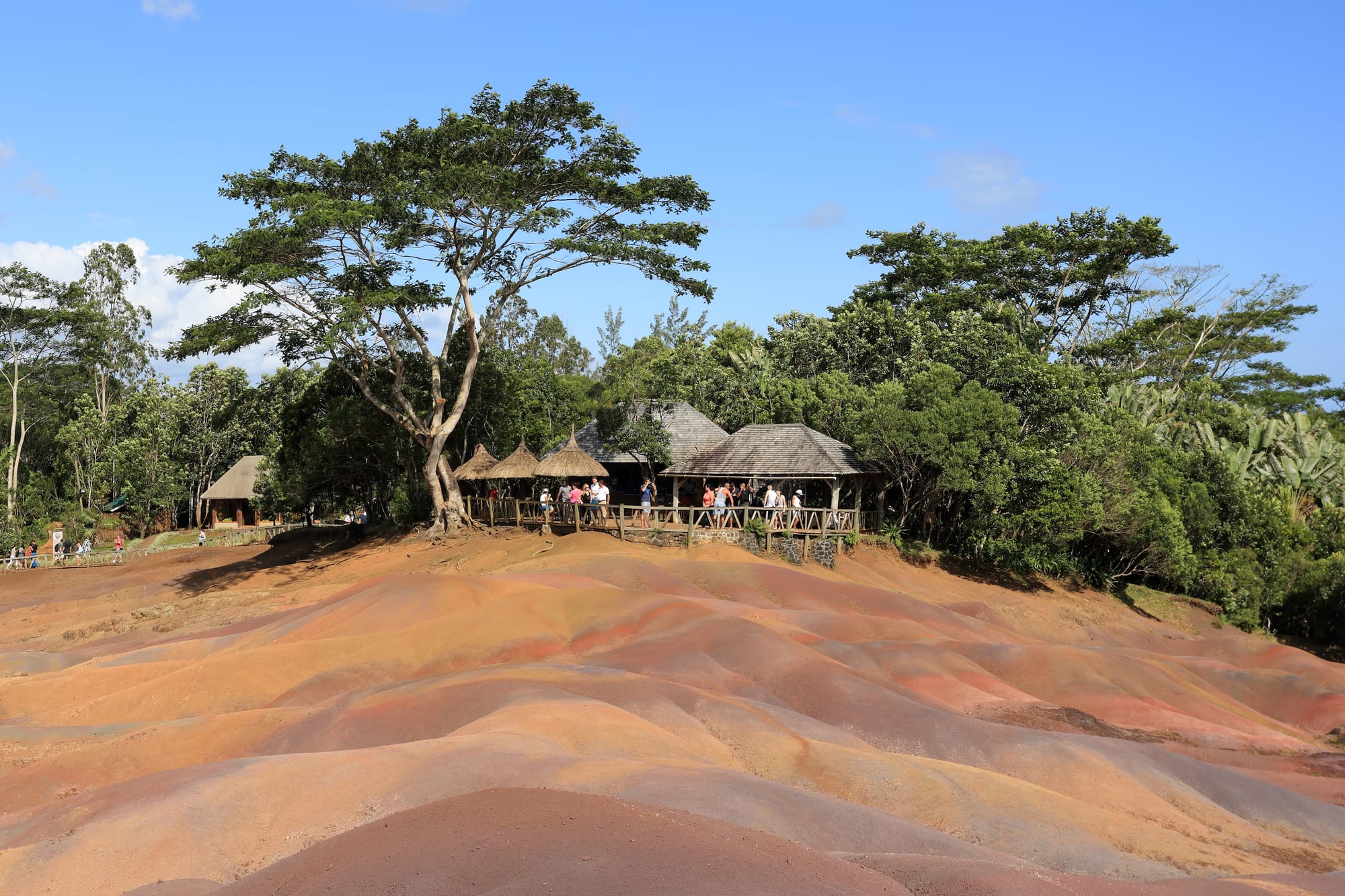
Near the village of Chamarel, volcanic ash has weathered into dunes of sand in distinct colours — reddish-brown, violet, green, blue, purple, yellow, and red — that settle into separate bands rather than mixing, even after heavy rain, for reasons that are still not fully understood. It is one of Mauritius's odder natural sights, small but striking, viewed from a raised boardwalk.
Tortoises can also be seen in the Chamarel area, an easy add-on.
3. Chamarel Falls
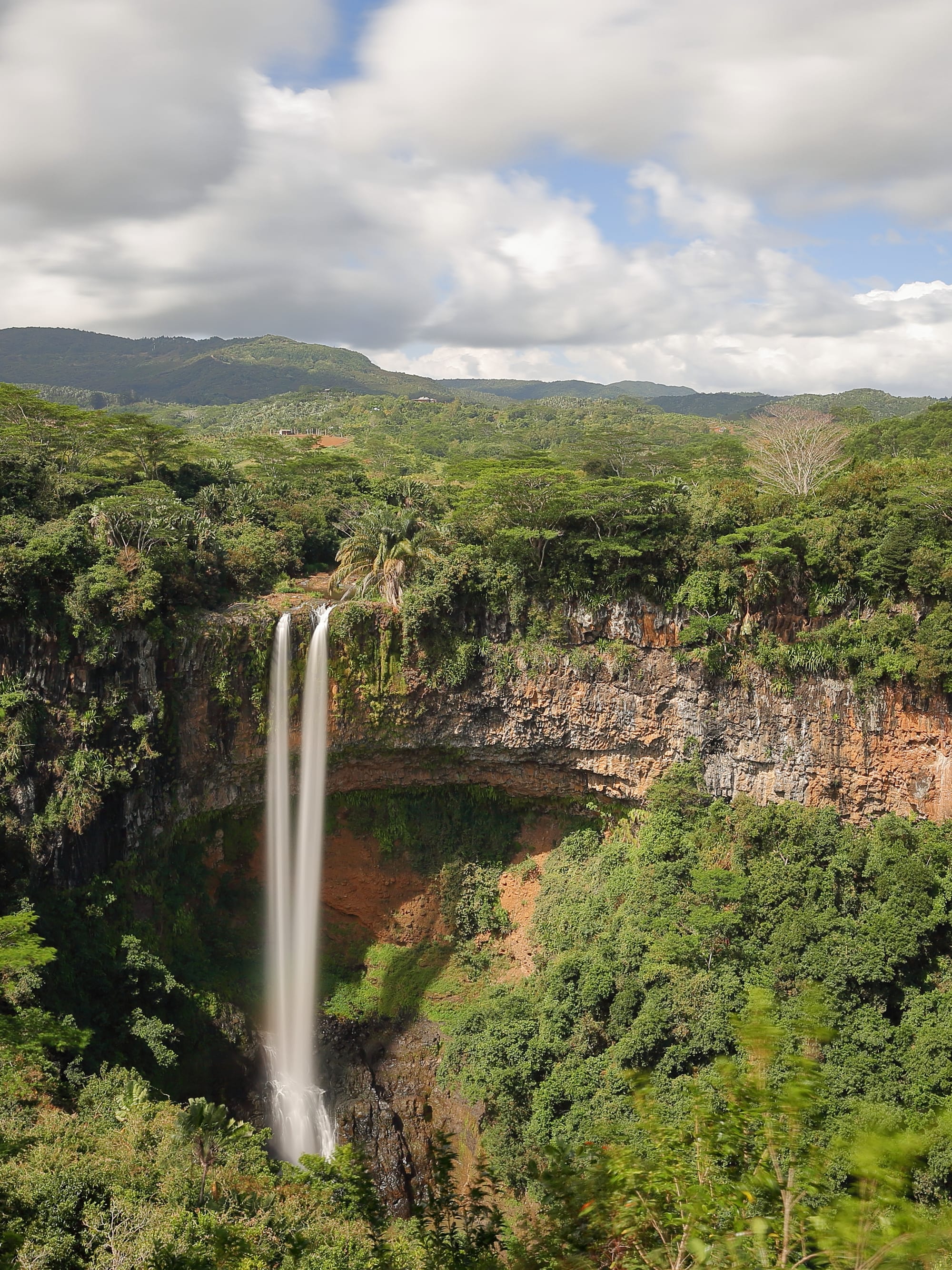
A short drive from the coloured earths, Chamarel Falls drops about 100 metres in a single fall down a vertical cliff into a deep, forested volcanic amphitheatre, viewed from lookouts rather than up close. The surrounding Chamarel area, cooler and greener than the coast, also has a rum distillery open for tastings.
It is usually combined with the Seven Coloured Earths on the same short drive.
4. Black River Gorges National Park
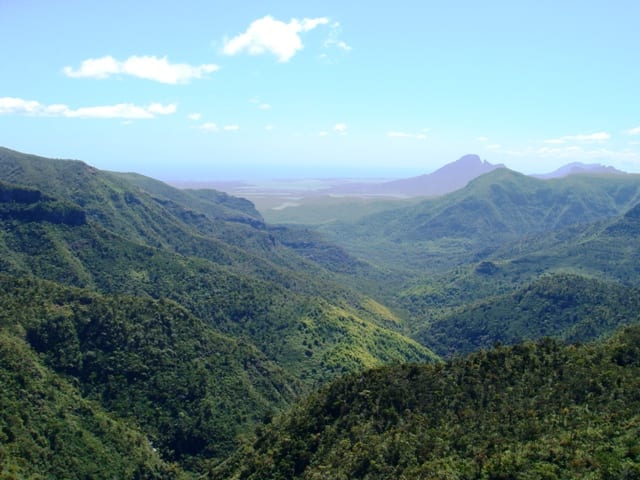
Black River Gorges protects the largest remaining stand of native upland forest in Mauritius — over 65 square kilometres of ravines and rainforest, refuge for endangered endemic birds like the pink pigeon and echo parakeet, brought back from the brink of extinction by intensive conservation programmes. About 60 kilometres of trails lead to waterfalls and viewpoints.
It offers the best hiking on an island otherwise dominated by beach and sugar cane.
5. Port Louis
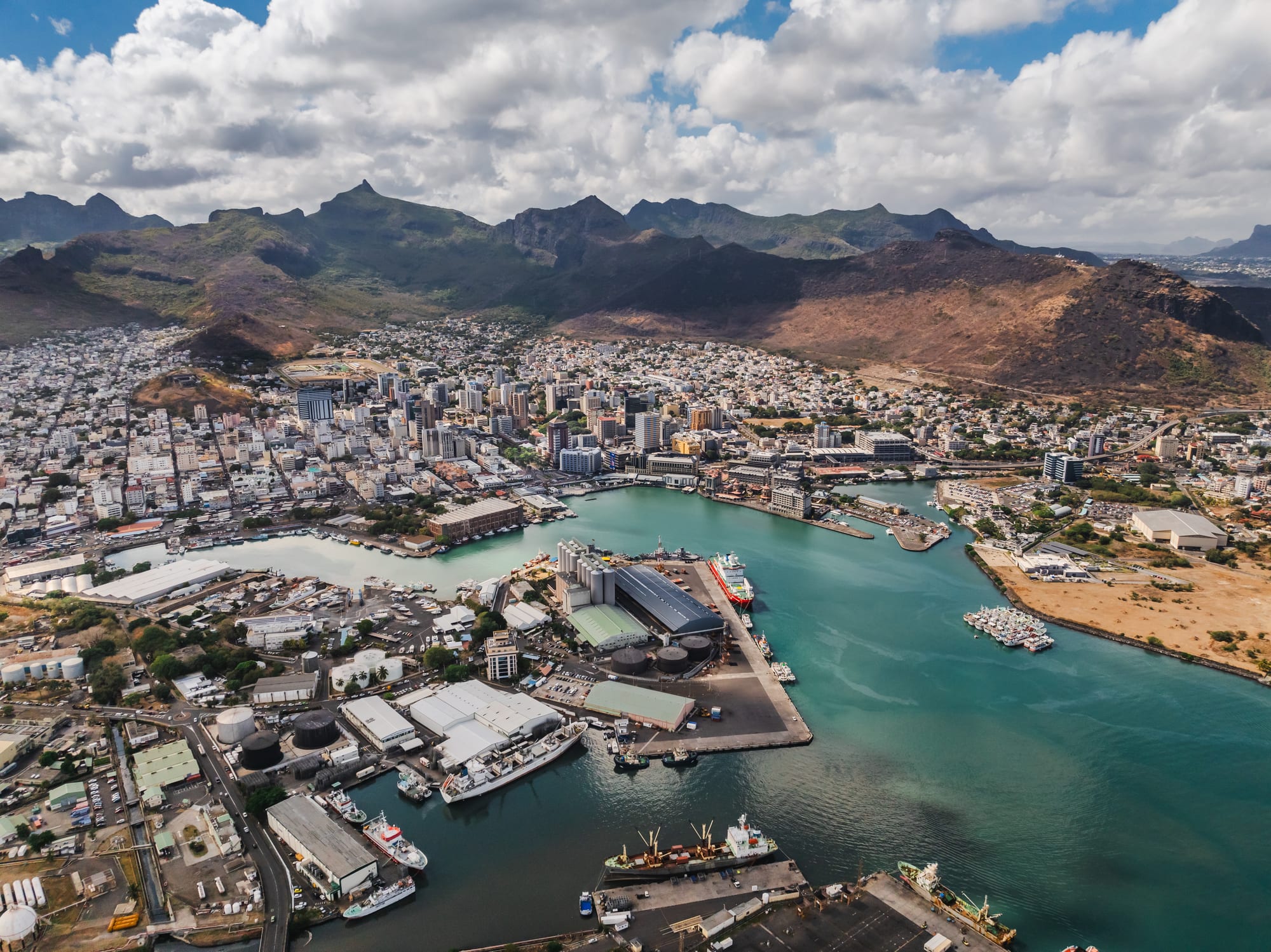
Port Louis, the capital, mixes a modern waterfront (the Caudan development) with the older Central Market, colonial-era Government House, the Champ de Mars racecourse (one of the oldest in the southern hemisphere), and the Blue Penny Museum, home to two of the world's rarest postage stamps. Sharp volcanic peaks rise almost directly behind the city centre.
It is best visited on a weekday, when the markets and offices are in full swing.
6. Île aux Cerfs
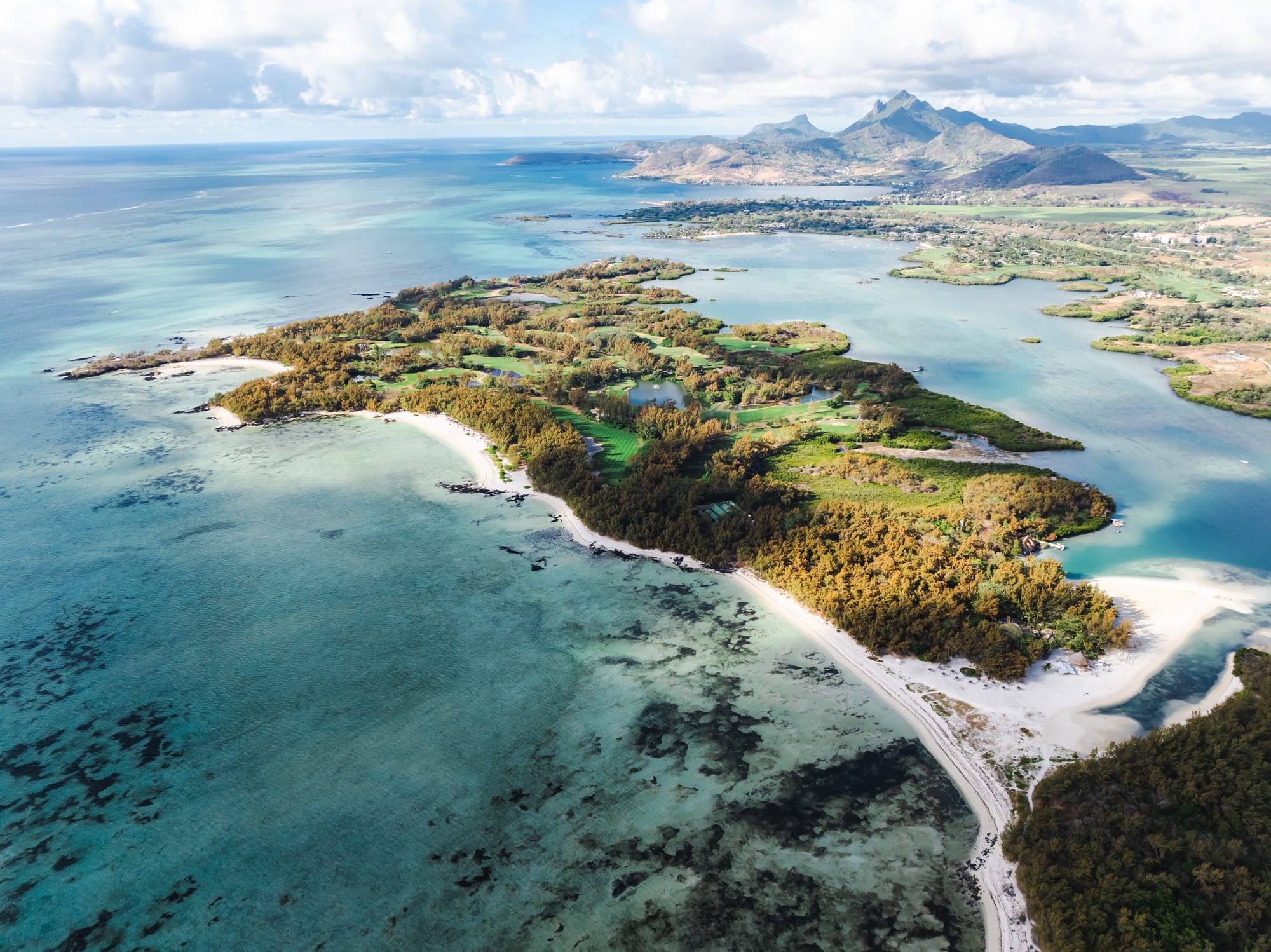
Île aux Cerfs, a small island off the east coast reached only by boat, has some of the most photographed beaches in Mauritius — soft white sand and calm, reef-protected turquoise water, with watersports, a golf course, and beachside restaurants. It is a popular full-day excursion.
It gets busy with day-trip catamarans; an early or overnight visit is quieter.
7. Grand Bassin
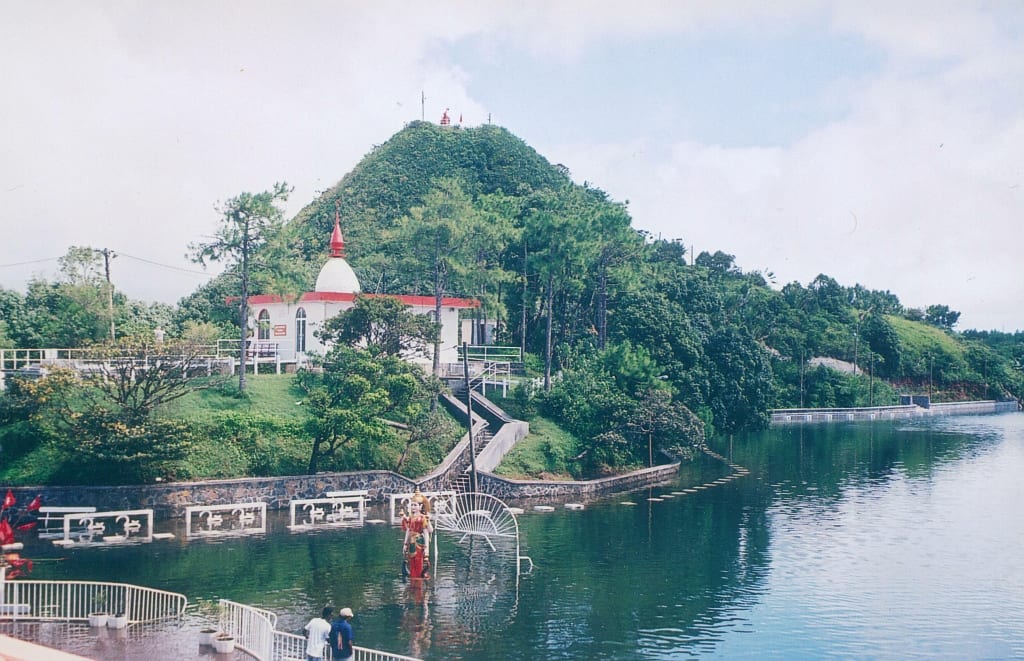
Grand Bassin (Ganga Talao), a crater lake in the highlands, is Mauritius's most important Hindu pilgrimage site — its water considered, by local tradition, to be mystically connected to the Ganges. Temples ring the lake, watched over by a huge statue of Shiva, and each February or March the Maha Shivaratri festival draws close to half a million pilgrims who walk here from across the island.
It is a striking sight even outside festival time, with mist often settling over the water at dawn.
Mauritius suits a week: a few days based on the west or east coast for beaches and Île aux Cerfs, with day trips inland to Chamarel, Black River Gorges, and Grand Bassin, plus a day in Port Louis.