Attractions & Natural Wonders · Morocco
Morocco: Nine Attractions and Natural Wonders
A medieval market square that never stops, an entire town painted blue, one of the world's oldest working tanneries, and dunes rolling into the true Sahara
By Worldlore Editorial · 30 September 2026
Where the Sahara meets the Mediterranean
Morocco, in the far northwest corner of Africa, has been a crossroads of Arab, Berber (Amazigh), African, and European influence for centuries — the closest African country to Europe, separated from Spain by just 14 kilometres at the Strait of Gibraltar. It has about 37 million people, medieval walled cities still fully alive rather than preserved as museums, the High Atlas mountains, and the edge of the true Sahara in its south.
The nine below run from Marrakech through the imperial cities to the desert and coast. Spring and autumn are the most comfortable seasons; summer is very hot inland and in the desert, and the Atlas mountains hold snow into spring.
1. Jemaa el-Fnaa, Marrakech
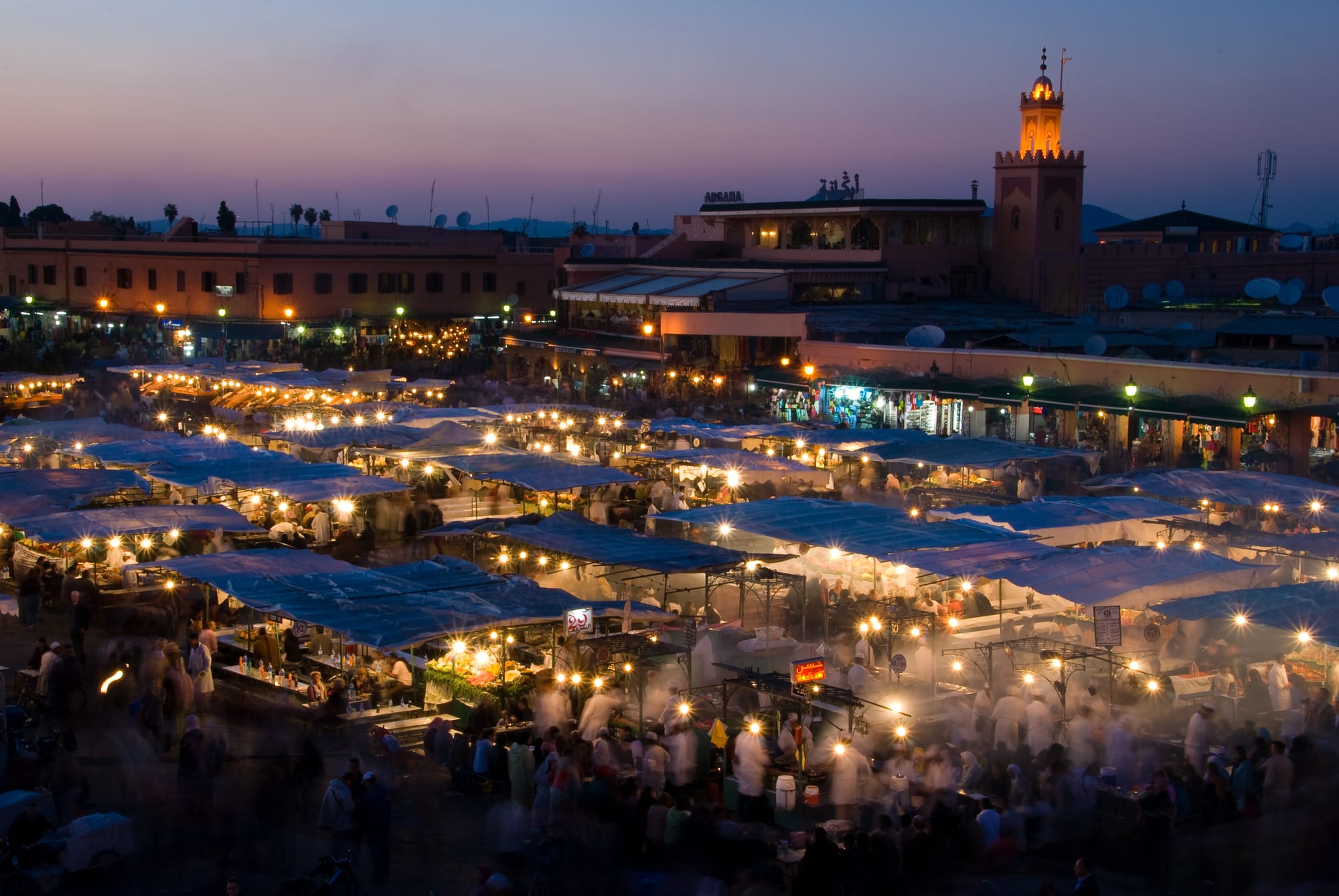
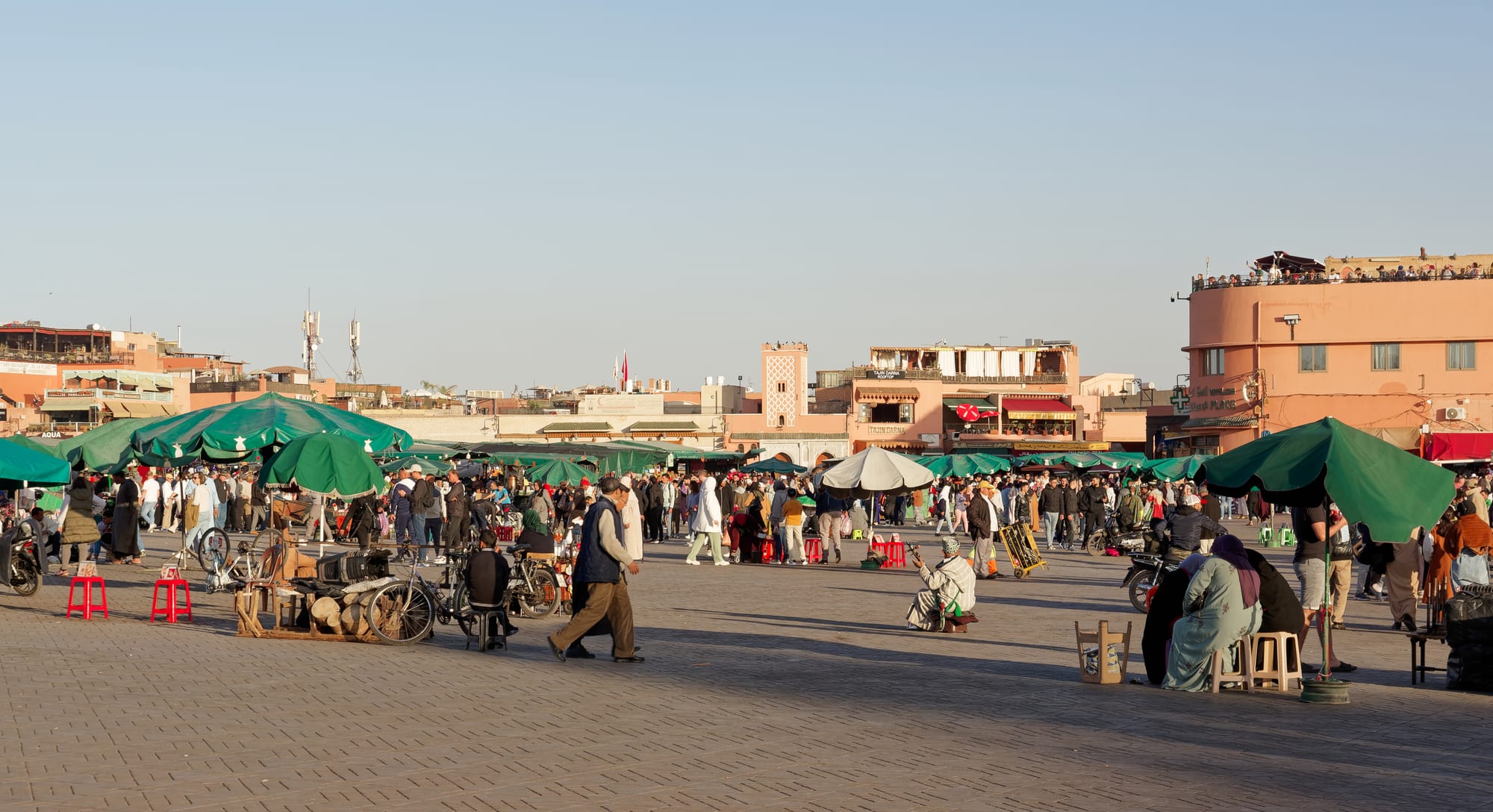
Jemaa el-Fnaa, the great square at the heart of Marrakech's medina, has drawn storytellers, snake charmers, musicians, and food vendors for centuries and is recognised by UNESCO as a "masterpiece of oral and intangible heritage" — it fills after dark with dozens of food stalls. The 2023 earthquake brought down the minaret of the Kharbouch Mosque overlooking the square. The surrounding souks sell everything from spices to leather to lanterns, a maze easy to get pleasantly lost in.
Go by day for the square itself and the souks, and return after dark for the food stalls and full spectacle.
2. The Majorelle Garden
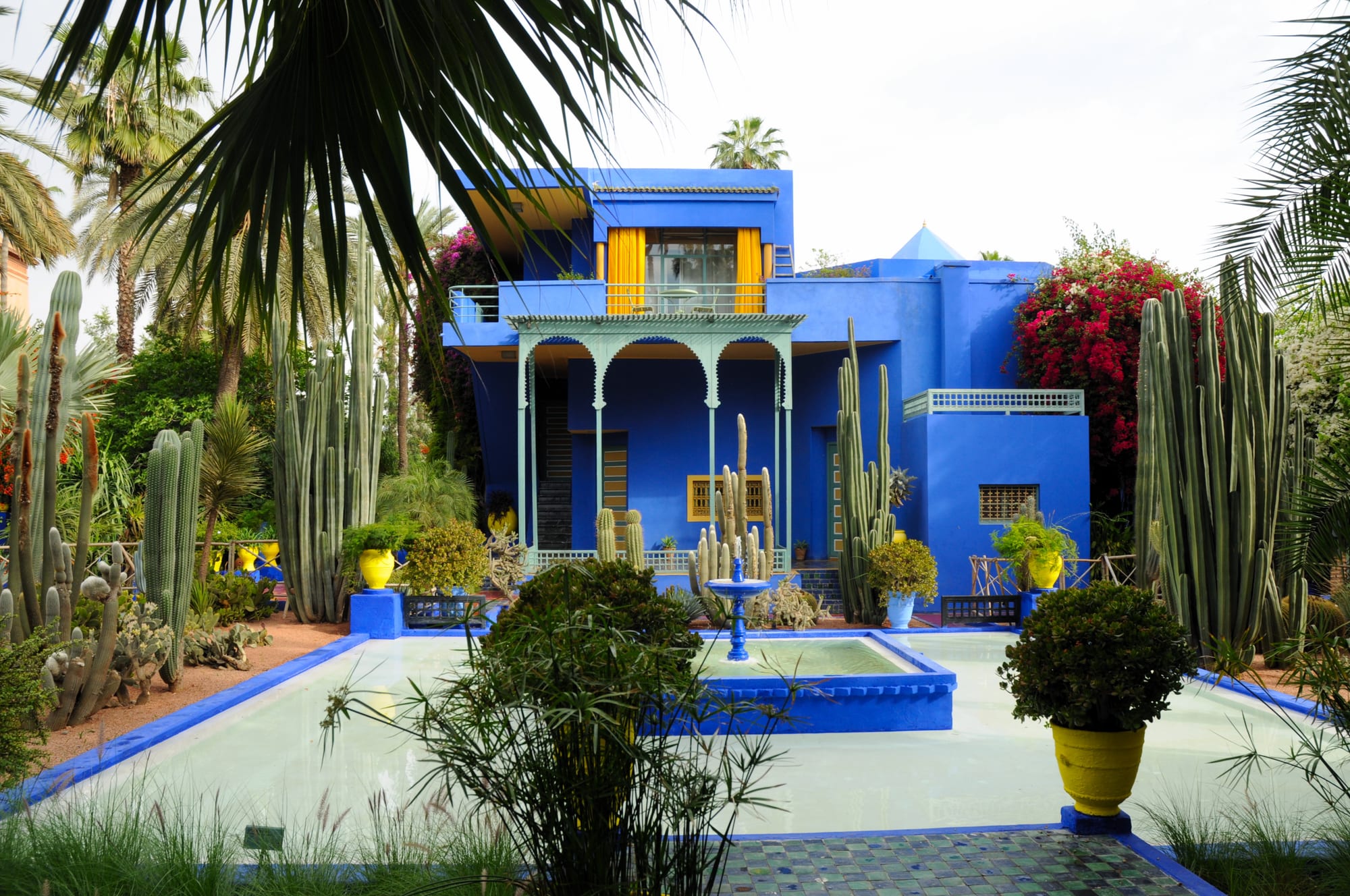
Just outside Marrakech's old walls, the Majorelle Garden was created over four decades from 1923 by French painter Jacques Majorelle, who developed the vivid cobalt "Majorelle Blue" used throughout the villa and grounds. Later owned and restored by fashion designer Yves Saint Laurent (whose ashes were scattered here), it holds cacti, bamboo, and a small Berber museum, and remains one of Marrakech's most popular sights.
3. Chefchaouen
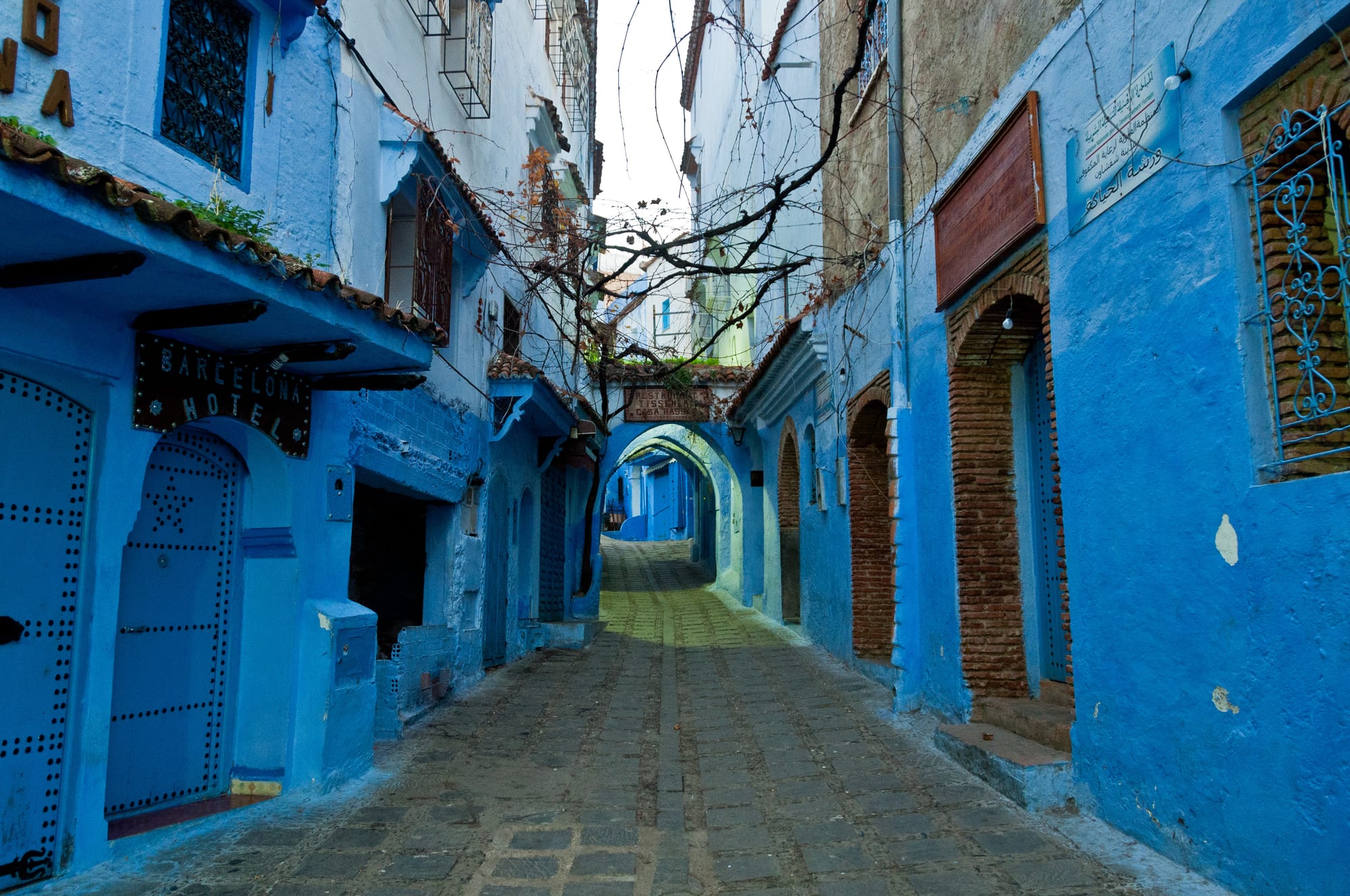
Chefchaouen, a small mountain town founded in 1471, has painted its old medina in shades of blue and white — the reason debated (keeping mosquitoes away, a symbol of the sky and heaven, or, some locals say, a 1970s push to attract visitors) but the effect striking and, in the age of photography, hugely popular. Its cooler mountain air and relaxed pace are a contrast to Morocco's bigger cities.
It sits in the Rif Mountains, a few hours' drive from Fes or Tangier.
4. Fes and the tanneries
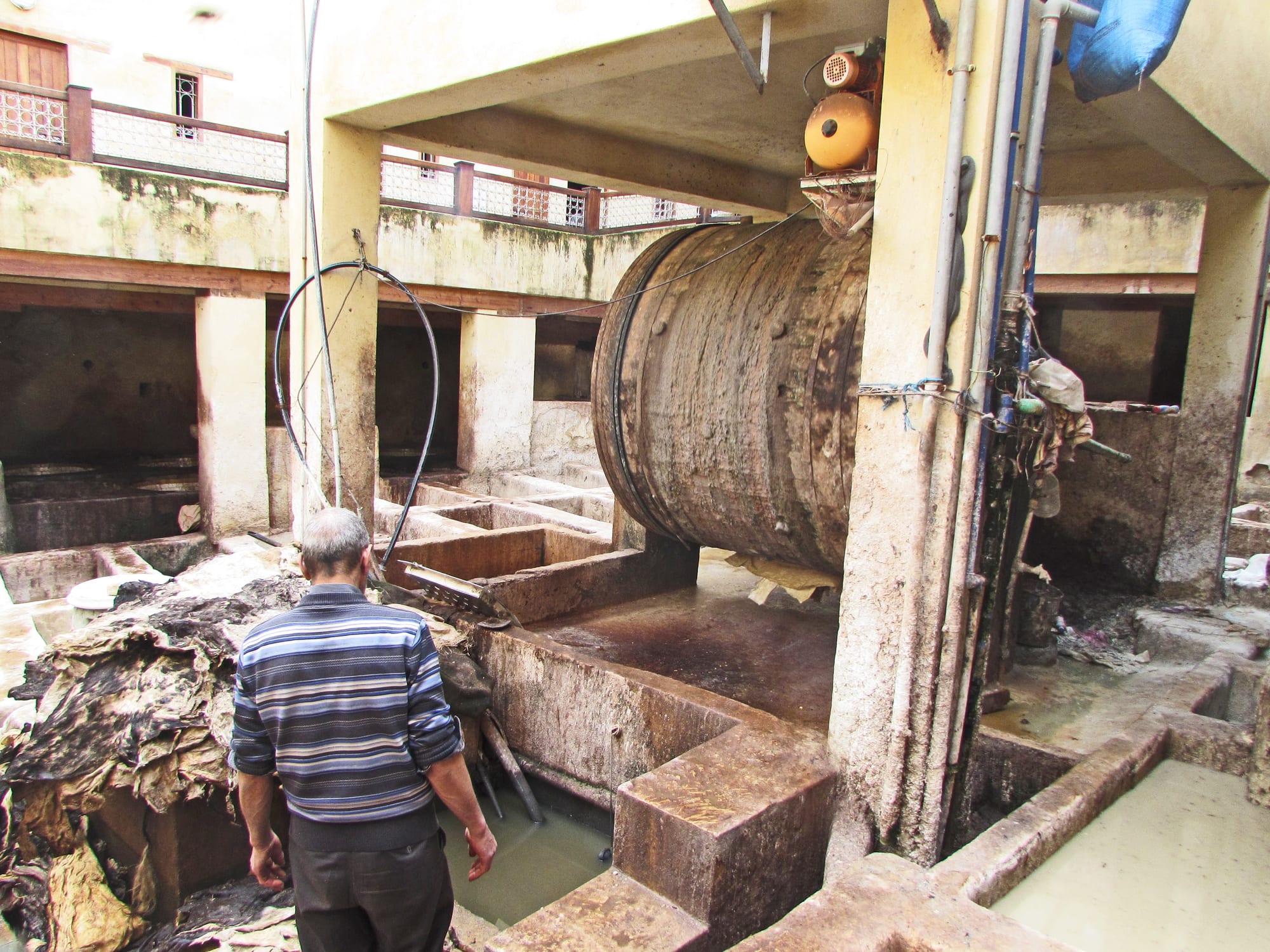
Fes, founded in the late 8th century and one of Morocco's four imperial cities, has one of the world's largest car-free urban areas in its medina, a UNESCO World Heritage Site of countless narrow lanes. Its Chouara Tannery, the city's largest and one of its oldest, still processes hides by hand in a checkerboard of stone dye vats using methods largely unchanged for centuries — best viewed from the terraces of surrounding leather shops (a sprig of mint helps with the smell).
The Al-Qarawiyyin, founded as a mosque in 857–859, is recognised as one of the oldest continuously operating universities in the world.
5. The Sahara at Merzouga
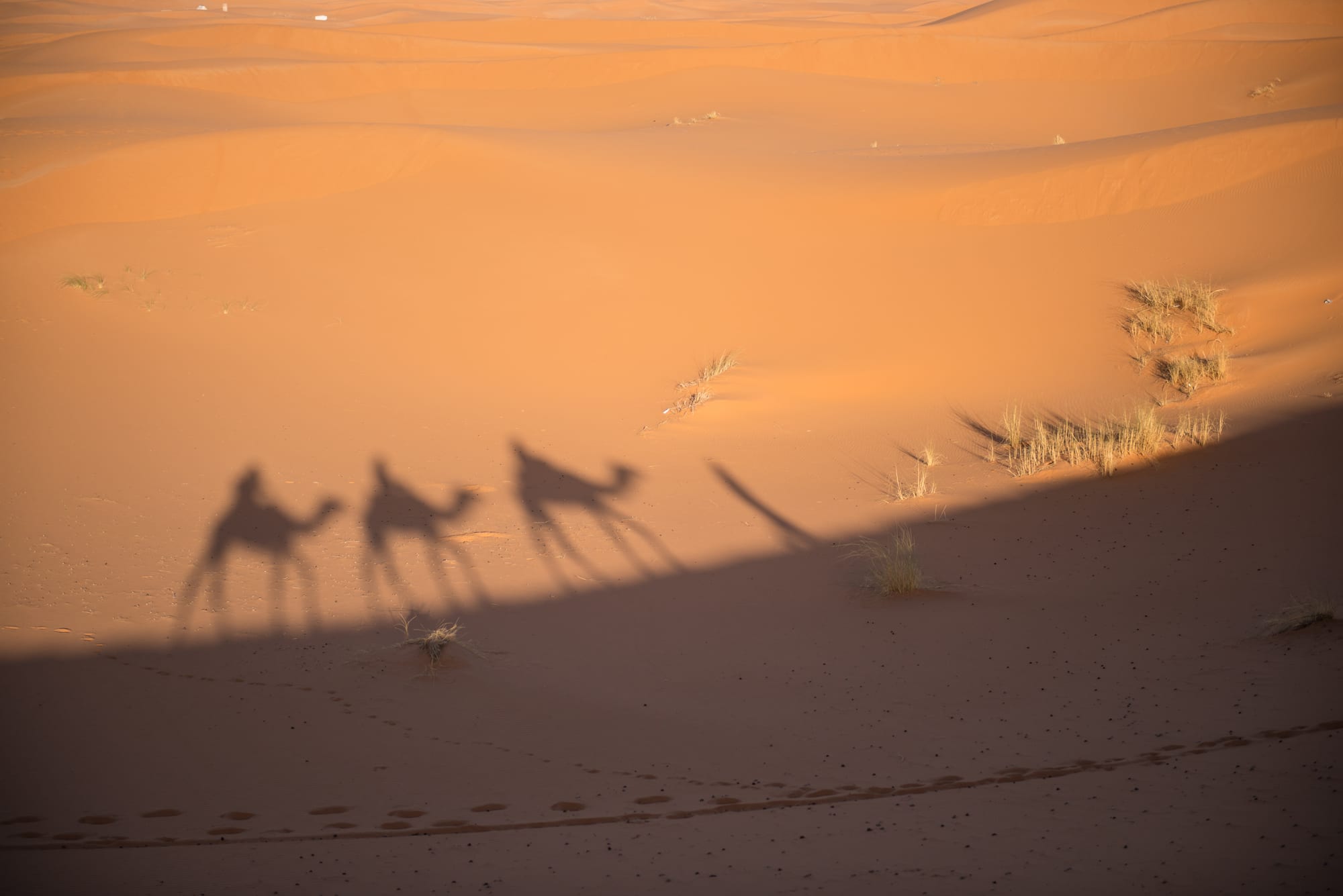
Merzouga, at the end of a long desert road from Fes, sits beside Erg Chebbi, a sea of dunes rising to 150 metres. Camel treks head out at sunset to desert camps for the night, watching sunrise turn the sand from grey to gold to deep orange. The nearby Khamlia villages preserve Gnawa music traditions brought north by trans-Saharan trade and slavery routes.
The overland journey there — over the Atlas mountains, past gorges and palm groves — is as memorable as the dunes themselves.
6. Aït Benhaddou
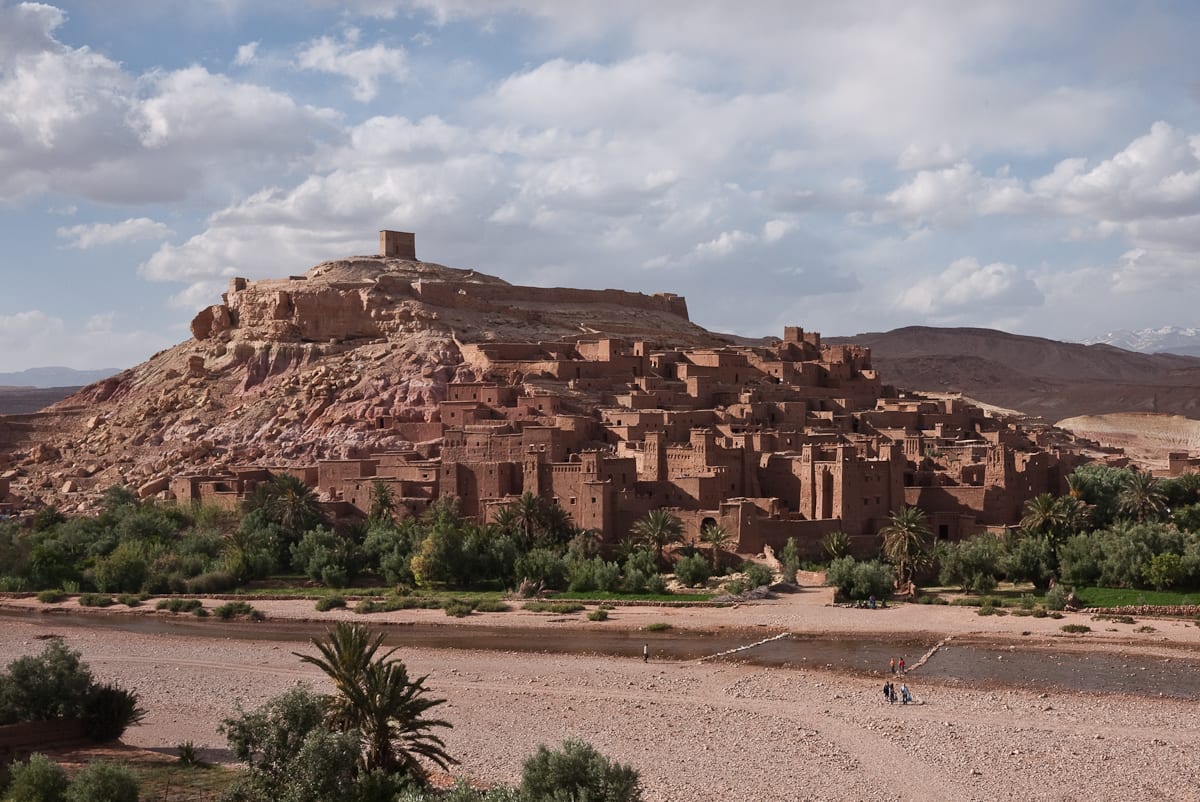
Aït Benhaddou, a UNESCO World Heritage Site on the old trans-Saharan caravan route, is a celebrated example of Moroccan earthen architecture — tightly clustered mud-brick towers and walls on a hillside above a river, still home to a handful of families though most residents moved to a newer village across the water. Its cinematic looks have made it a favourite film location, from Lawrence of Arabia to Gladiator and Game of Thrones.
It is on the main road between Marrakech and the Sahara, an easy stop en route.
7. The Todra Gorge
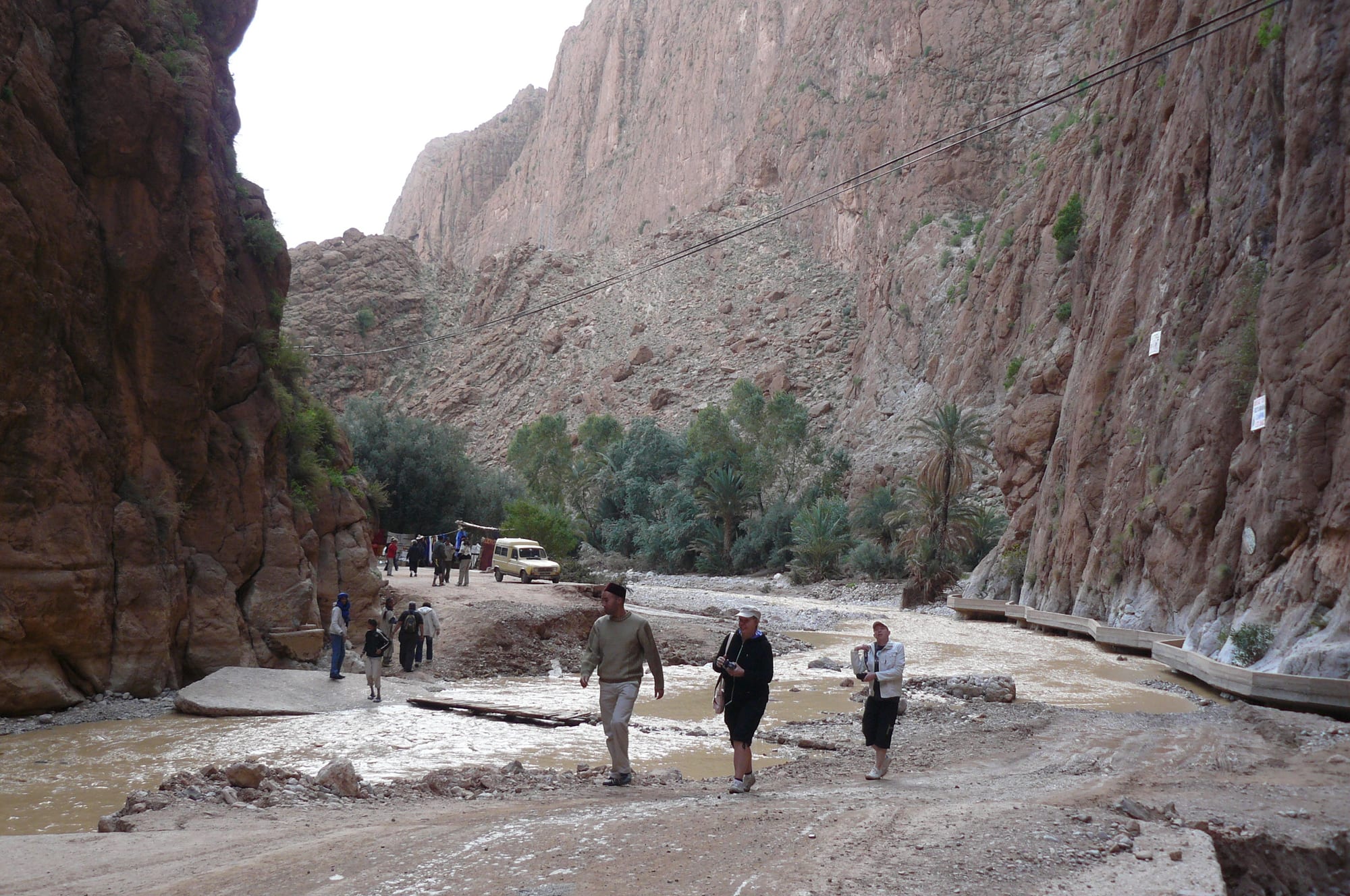
The Todra Gorge, on the southern flank of the High Atlas, narrows to a canyon just 10 metres wide in places between sheer rock walls up to 160 metres high — a striking short walk or drive, with Berber villages and palm groves along the river at its base.
It is a common stop on the overland route between the Dadès Valley and Merzouga.
8. Essaouira
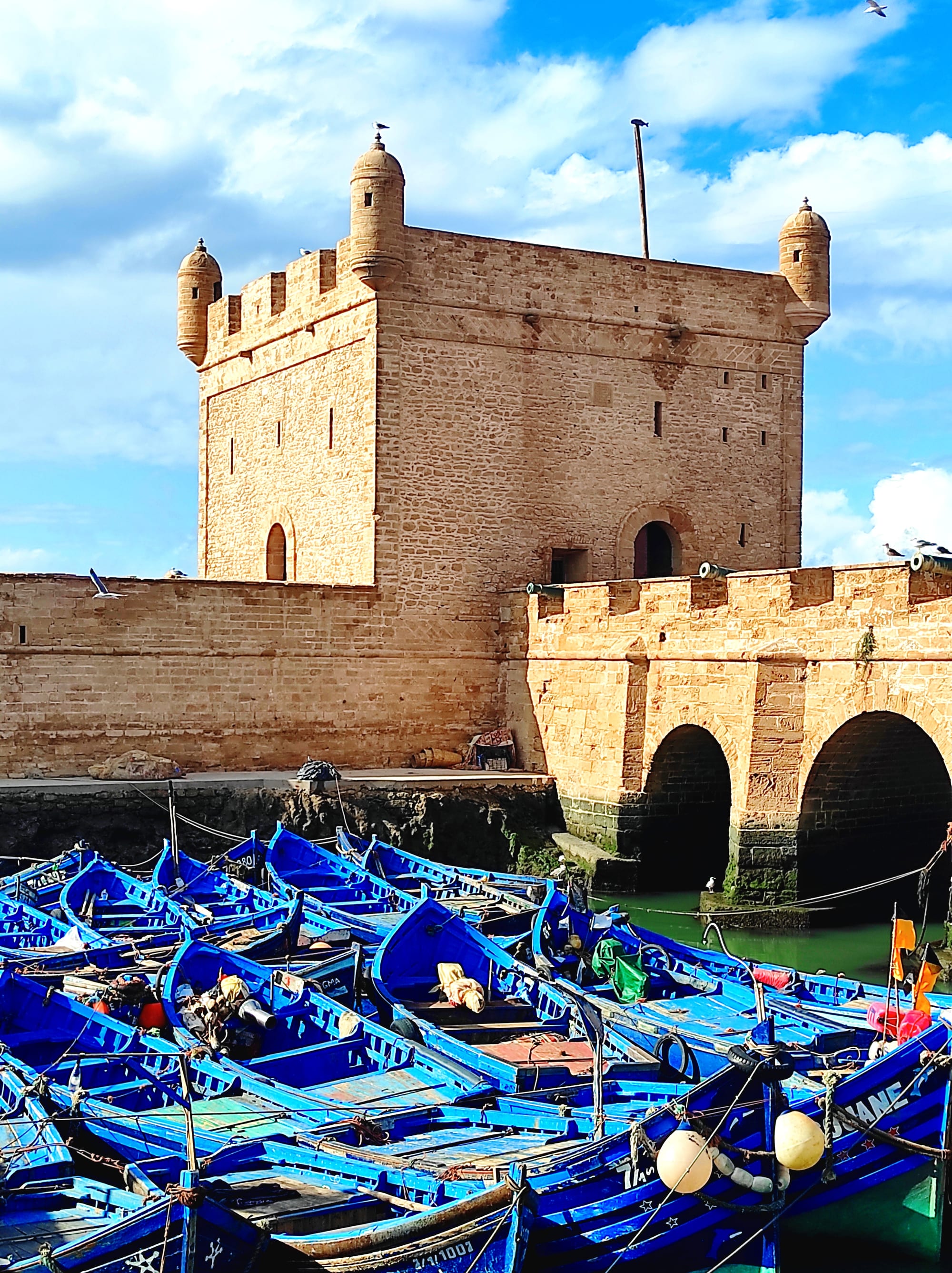
Essaouira, on the Atlantic coast, is a breezy, blue-and-white 18th-century walled port city, a UNESCO World Heritage Site, known for its fishing harbour, ramparts (used as a filming location for Game of Thrones), a laid-back arts scene, and the strong Atlantic trade winds that sweep its bay. Its medina is calmer and less overwhelming than Marrakech's.
It is a few hours' drive west of Marrakech, a popular add-on for a coastal break.
9. The Hassan II Mosque, Casablanca
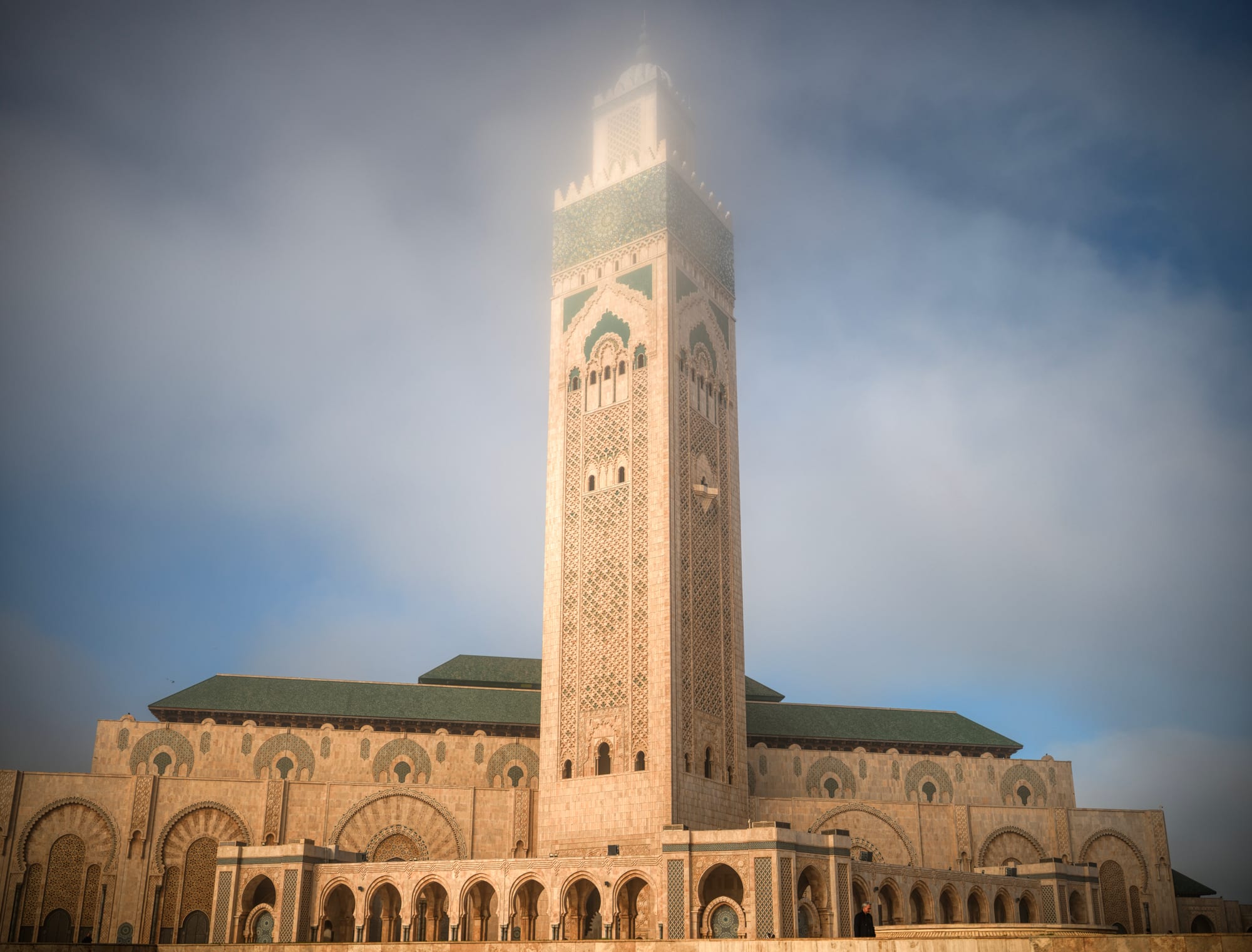
Casablanca, Morocco's largest city and economic capital, is more business hub than tourist destination, but the Hassan II Mosque is reason enough for a stop — completed in 1993, it has the world's second-tallest minaret (210 metres) and a prayer hall built partly over the Atlantic, with a retractable roof and capacity for over 100,000 worshippers. It is open to non-Muslim visitors on guided tours outside prayer times.
Morocco rewards a loop rather than a single base: a classic route links Marrakech, the Atlas and Sahara, and the imperial cities of Fes and Meknes over 10 days to two weeks, with the coast (Essaouira, or Tangier and Chefchaouen in the north) as an add-on.