History · Saint Lucia
Saint Lucia: The Helen of the West Indies
A mountainous island that, by tradition, changed hands between Britain and France fourteen times — a late-settled Carib stronghold, a sugar and banana economy, and a small nation that has produced two Nobel laureates
By Globeway Editorial · 30 September 2026
The island that would not be settled
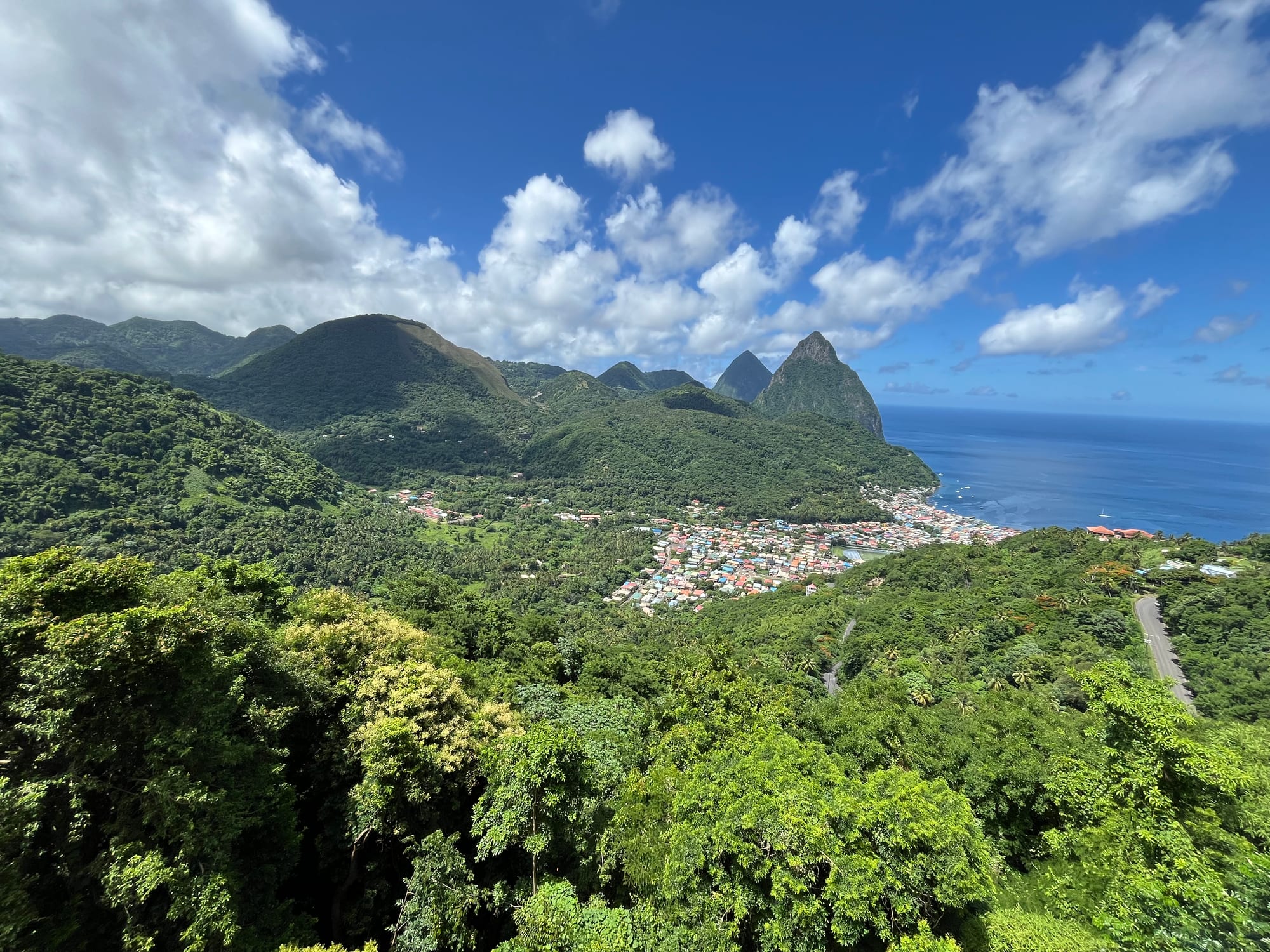
Saint Lucia is a volcanic island in the Windward chain, about 180,000 people, with a spine of rainforested mountains and the twin peaks of the Pitons on its west coast. It was one of the last Caribbean islands Europeans managed to settle, because the Kalinago defended it fiercely, and once it was settled it became a prize that Britain and France passed back and forth so many times — fourteen, by the usual count — that it was nicknamed "the Helen of the West Indies", after Helen of Troy. The French cultural imprint survives in place names, in the Catholic faith, and in the French-based Creole, Kwéyòl, that most Saint Lucians speak.
A short history
- to 1600s
Kalinago Saint Lucia
The island is a stronghold of Carib resistance.
- 1605, 1638
Failed settlements
English attempts are wiped out or driven off.
- 1650s onward
French claims
France establishes a foothold from Martinique.
- 1760s–1814
The tug-of-war
Saint Lucia changes hands repeatedly in the Anglo-French wars.
- 1795–1797
The Brigands' Wars
Freed slaves and republicans fight the British in the hills.
- 1814
British Saint Lucia
France cedes the island for good at the Treaty of Paris.
- 1834–1838
Emancipation
Slavery ends; sugar declines through the 19th century.
- 1950s–1990s
Bananas
The "green gold" export crop dominates the economy.
- 1979
Independence
Saint Lucia becomes sovereign within the Commonwealth.
Caribs, and the contest for the island
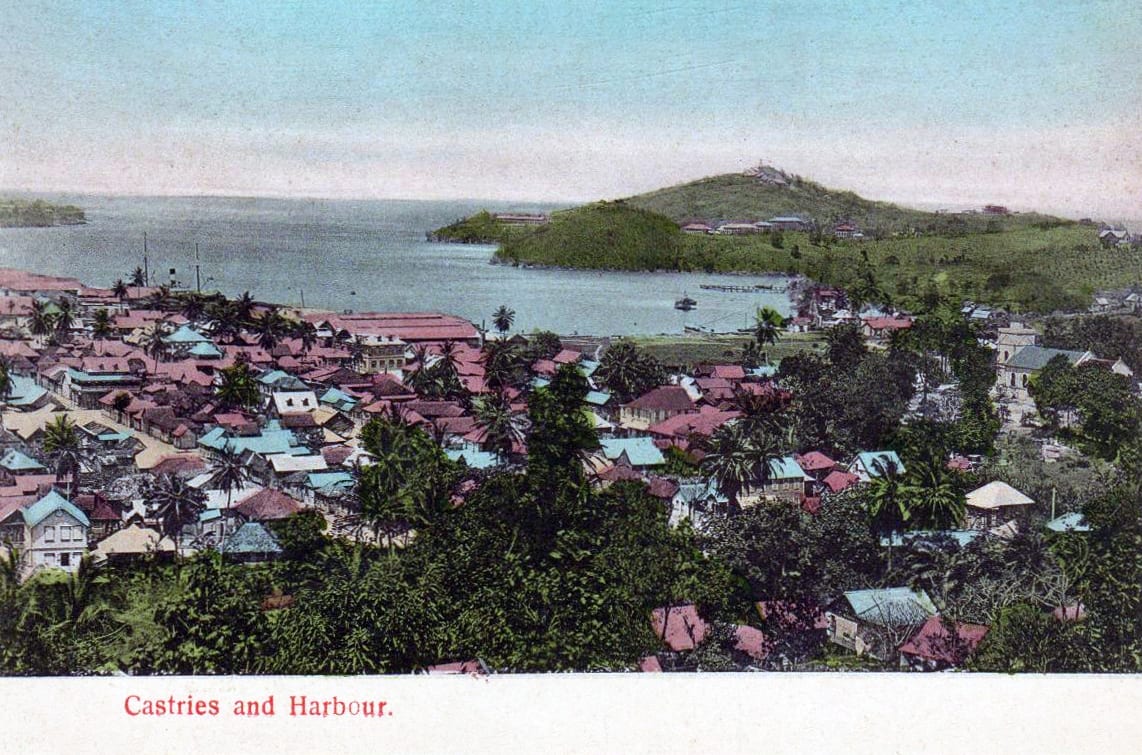
Kalinago communities held Saint Lucia long after neighbouring islands had fallen to Europeans; an English party in 1605 was reduced to a handful of survivors, and a larger attempt at the end of the 1630s was driven off by 1640. The French, operating from Martinique, gradually established settlements from the 1650s and reached accommodations with the Kalinago, and Saint Lucia was drawn into sugar production later and less completely than the flatter islands. From the Seven Years' War onward it became a strategic pawn: its sheltered harbour at what is now Castries was valuable to whichever navy held it, and the 1763, 1783, 1802 and 1814 treaties, plus wartime captures in between, moved it between the two crowns again and again.
Revolution in the hills
The French Revolution reached Saint Lucia directly. When the revolutionary government abolished slavery in the French colonies in 1794, Saint Lucia's enslaved people were briefly freed. Britain captured the island that April to keep the plantations working; the freed people, known as the Brigands, fought back alongside French republicans, drove the British out in 1795, and after a British landing in 1796 waged a guerrilla campaign in the forested interior until many surrendered from 1797, on a promise not to be returned to slavery. Britain returned the island to France in 1802, retook it in 1803, and secured permanent possession in 1814. Emancipation across the British Empire followed in 1834–38.
Sugar, bananas, and independence
Saint Lucian sugar never fully recovered from emancipation and the end of imperial preference, and the island stayed poor, exporting some sugar and, from the 19th century, serving as a coaling port. The transformative crop was the banana, which overtook sugar as the main export by 1957: small farmers grew it on hillside plots for a guaranteed British market, and "green gold" underwrote a generation of modest prosperity and the move to self-government. Saint Lucia became a British associated state in 1967 and fully independent on 22 February 1979, a parliamentary democracy within the Commonwealth. The banana economy was then undercut in the 1990s when the World Trade Organization ruled Europe's preferential access for Caribbean fruit unlawful, forcing a rapid and painful shift toward tourism.
Saint Lucia now
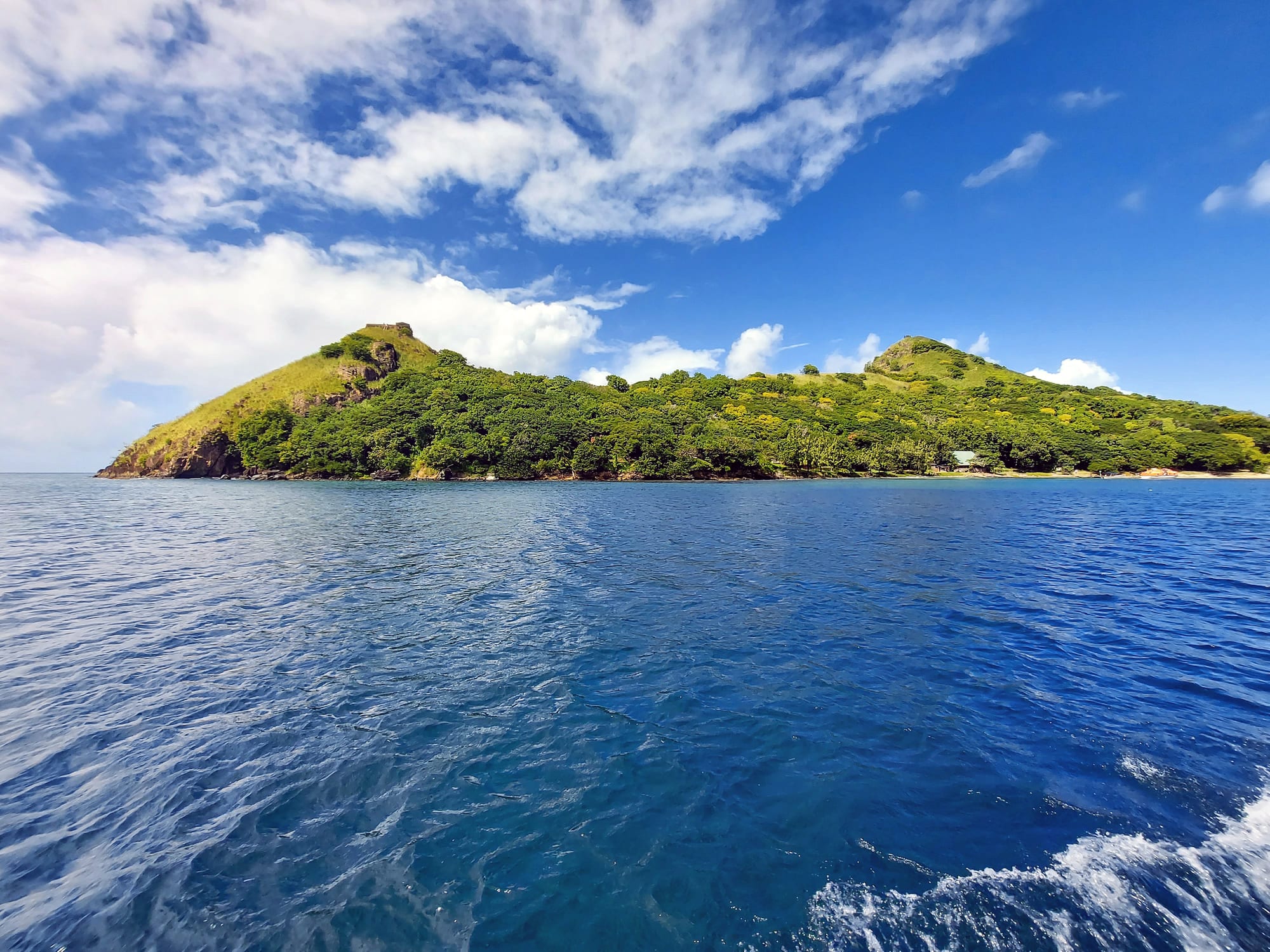
Tourism — cruise calls at Castries, resorts around Soufrière and Rodney Bay — is now the mainstay, alongside some offshore finance and light manufacturing. For an island of its size Saint Lucia has an outsized cultural record: it is the home of the poet and playwright Derek Walcott, who won the Nobel Prize in Literature in 1992, and of the economist Sir Arthur Lewis, who won the Nobel in Economics in 1979 — giving the country the highest ratio of Nobel laureates to population of any sovereign state.
What Saint Lucia carries
Saint Lucia's history is written in its layers: Kalinago resistance that delayed colonisation, a French cultural foundation that more than a century and a half of British rule never erased, an enslaved population that twice fought for its freedom, and an economy that has moved from sugar to bananas to tourism as outside markets dictated. The Kwéyòl language and the Catholic calendar are French; the courts and the parliament are British; and the literature the island has produced has made something distinct out of both.