History · Singapore
Singapore: The Improbable City-State
A small island turned into the British Empire's great Asian entrepôt, overrun by Japan in 1942, separated from Malaysia in 1965, and rebuilt by one party into one of the richest countries on Earth
By Worldlore Editorial · 30 September 2026
A country the size of a city
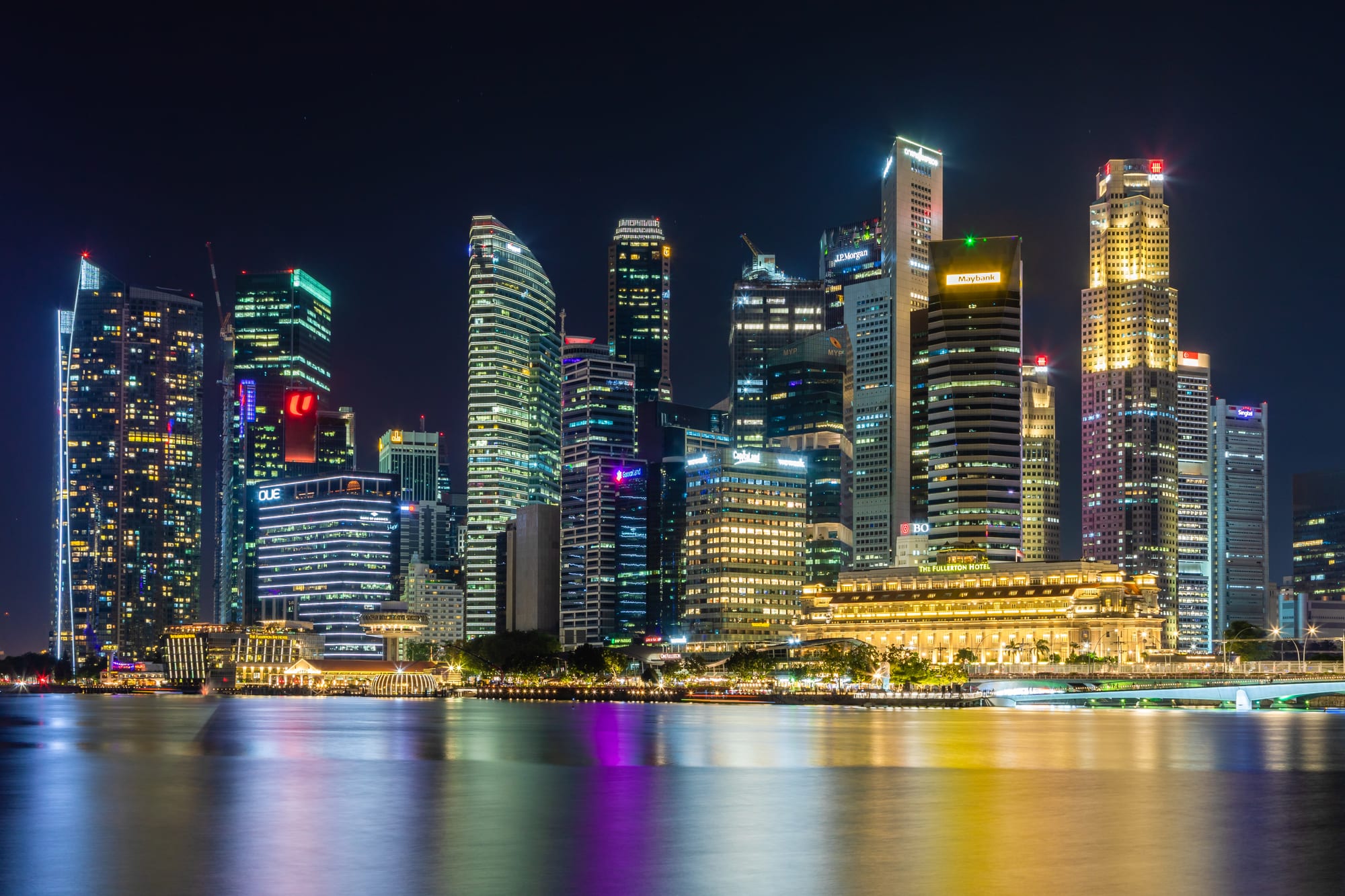
Singapore is a single main island and about 60 islets at the tip of the Malay Peninsula, a little over 700 square kilometres after decades of land reclamation, with about 6 million people — one of only a handful of true city-states in the modern world. It sits astride the Strait of Malacca, through which a large share of world trade passes, and that location is essentially its entire economic history: a place that makes its living by handling other people's goods, money and ships. It became independent suddenly, in 1965, when it separated from Malaysia.
A short history
- 14th century
Temasek / Singapura
A trading settlement on the island; later a Johor outpost.
- 1819
Raffles
The British East India Company establishes a free port.
- 1826–1867
Straits Settlements
Singapore is grouped with Penang and Malacca.
- 1867
Crown colony
Direct British rule; the port booms after the Suez Canal opens in 1869.
- 1942
The fall of Singapore
Japan captures the "impregnable fortress" in a week; occupation follows.
- 1959
Self-government
The People's Action Party wins power under Lee Kuan Yew.
- 1963
Merger
Singapore joins the Federation of Malaysia.
- 1965
Separation
Singapore separates from Malaysia and becomes an independent republic.
- 1965–1990
The Lee era
State-led industrialisation, public housing, one-party dominance.
Raffles's free port
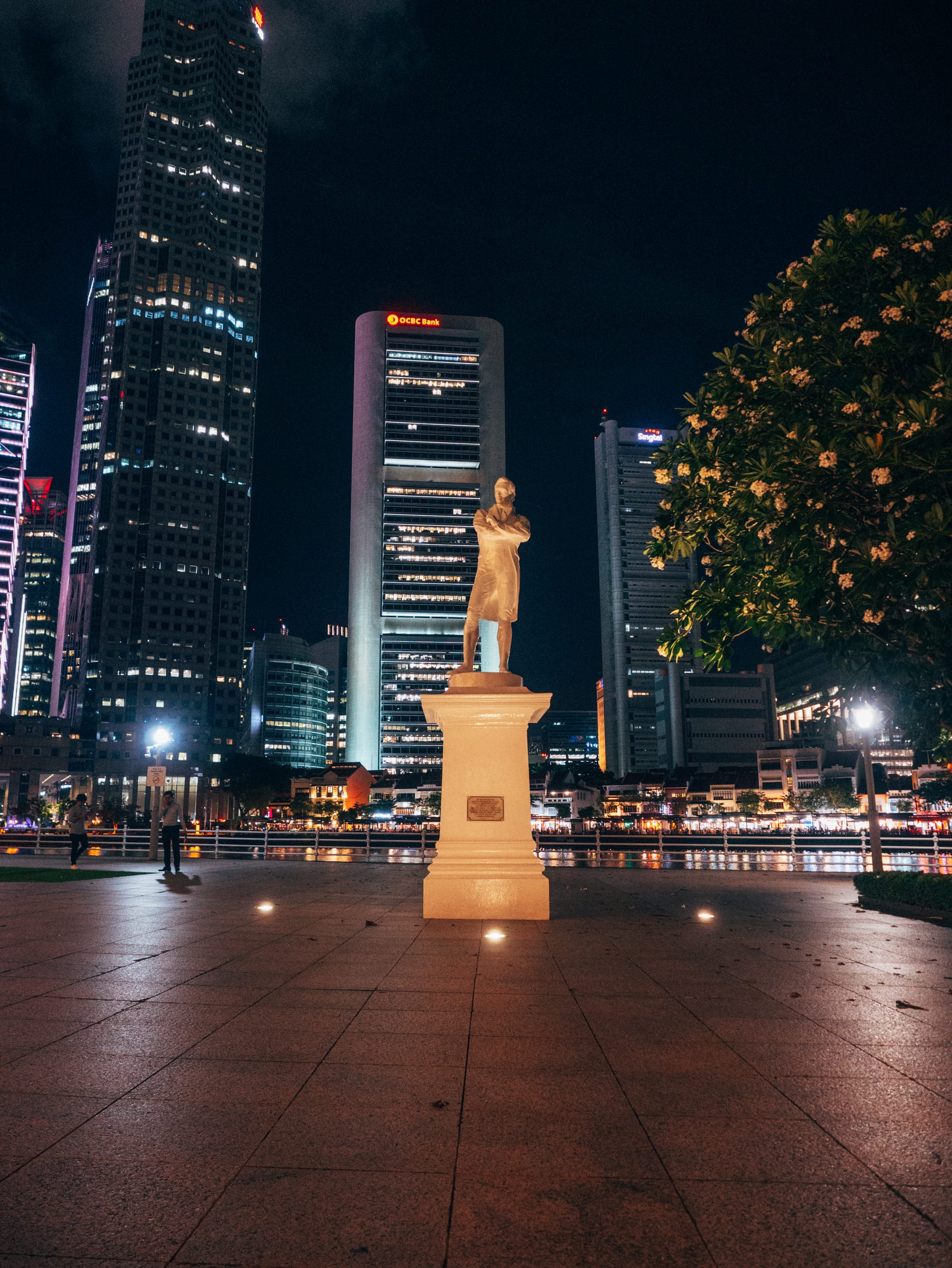
The island had a medieval trading settlement — known as Temasek and then Singapura — and in the early 1800s was a minor part of the Johor sultanate, with a few hundred Malay and Orang Laut inhabitants and some Chinese planters. In 1819 Thomas Stamford Raffles, for the British East India Company, signed a treaty allowing a trading post, and declared it a free port — no duties, open to all comers. Ships and migrants poured in: Chinese from the southern provinces, Indians, Malays, Arabs, and Europeans. Singapore grew into a thriving port, and after the Suez Canal opened in 1869 it became one of the great hubs of British imperial trade, exporting the tin and rubber of Malaya to the world.
The fall, and the road to self-rule
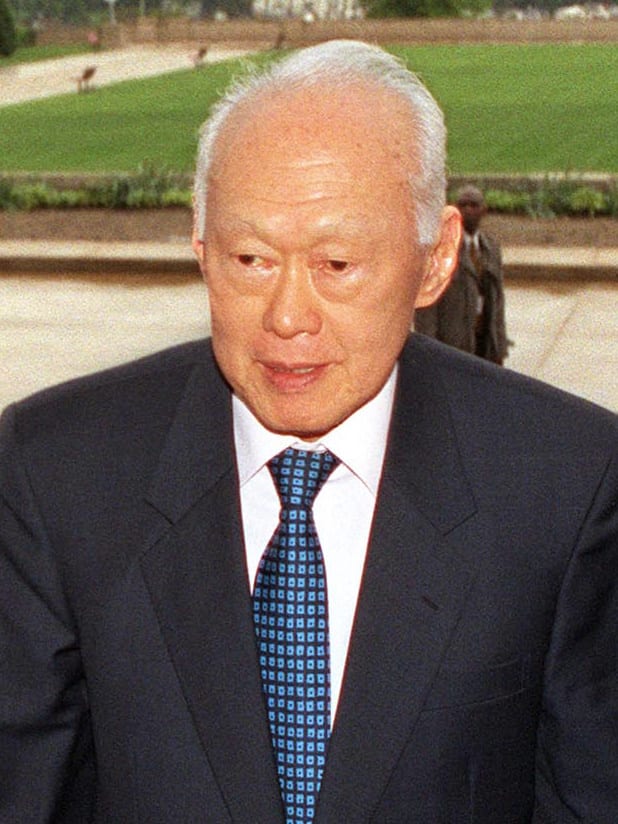
Britain fortified Singapore between the wars as its main Far East naval base, with guns famously said to point only out to sea. In February 1942 a Japanese army advanced down the Malayan jungle the defence had assumed was impassable, and after a week's fighting the British garrison of some 80,000 surrendered — Winston Churchill called it the "worst disaster" in British military history. The three-and-a-half-year occupation was brutal, including the Sook Ching massacre of thousands of Chinese men. Britain returned in 1945 with its prestige broken, and demands for self-government grew. Internal self-rule came in 1959, and the People's Action Party, led by the Cambridge-trained lawyer Lee Kuan Yew, took office.
Merger and separation
Lee's government believed Singapore, with no hinterland, could not survive alone, and campaigned to join the new Federation of Malaysia, which it did in 1963. The union was fraught from the start: disputes over economic policy, over the political role of the PAP on the peninsula, and above all over race, as Malaysia's system of Malay privileges clashed with the PAP's call for a "Malaysian Malaysia" of equal citizens. Communal riots hit Singapore in 1964. Malaysia's prime minister, Tunku Abdul Rahman, opted to resolve the disagreements by separation, which Singapore's finance minister Goh Keng Swee negotiated in secret; a separation agreement was signed on 7 August, and on 9 August 1965 Malaysia's parliament voted 126–0 to separate Singapore; Lee announced it on television, fighting back tears, calling it "a moment of anguish". Long remembered in Singapore as an expulsion, the separation is seen by historians drawing on cabinet papers and the negotiating records released in December 2025 as a more negotiated process.
Building the city-state
The PAP government responded to independence with an aggressive development strategy: courting multinational manufacturers, building a huge public-housing programme that now houses about 80 per cent of citizens, creating a sovereign wealth apparatus, investing heavily in education and English-language schooling, and enforcing order through strict laws, national service, and a managed multiracial policy with quotas in housing estates. Within a generation Singapore moved from a per-capita income comparable to poorer developing countries to one of the highest in the world, with a container port and financial centre of global scale. The cost, critics note, has been a constrained political system: the PAP has won every election since 1959, opposition figures have faced defamation suits and bankruptcy, and civil liberties are limited.
Singapore now
Lee Kuan Yew handed the premiership to Goh Chok Tong in 1990 and then to his son Lee Hsien Loong in 2004; in 2024 Lawrence Wong became only the fourth prime minister, the first born after the founding of modern Singapore. At the 2025 general election, his first as leader, the PAP raised its share of the vote to 65.6 per cent and won 87 of 97 seats, while the opposition Workers' Party kept all ten of its seats. Singapore's challenges are now those of a rich, ageing society: a very low birth rate and heavy reliance on immigration, high living costs, and the strategic delicacy of a mostly ethnic-Chinese state balancing between the United States and China.
What Singapore carries
Singapore's location made it valuable to the British, to the Japanese, and to the global economy, and the island has never had another asset. Separated from Malaysia in 1965 with no resources and a divided population, it was rebuilt by one party into a wealthy, orderly, tightly governed city-state — an outcome its leaders present as vindication of their methods, and its critics as a trade of political freedom for prosperity.