Attractions & Natural Wonders · South Korea
South Korea: Ten Attractions and Natural Wonders
A royal palace guarded by ceremonial changing-of-the-guard, a hillside village painted like a Korean Santorini, and the world's most heavily fortified border, visited today as a strange kind of tourist site
By Worldlore Editorial · 30 September 2026
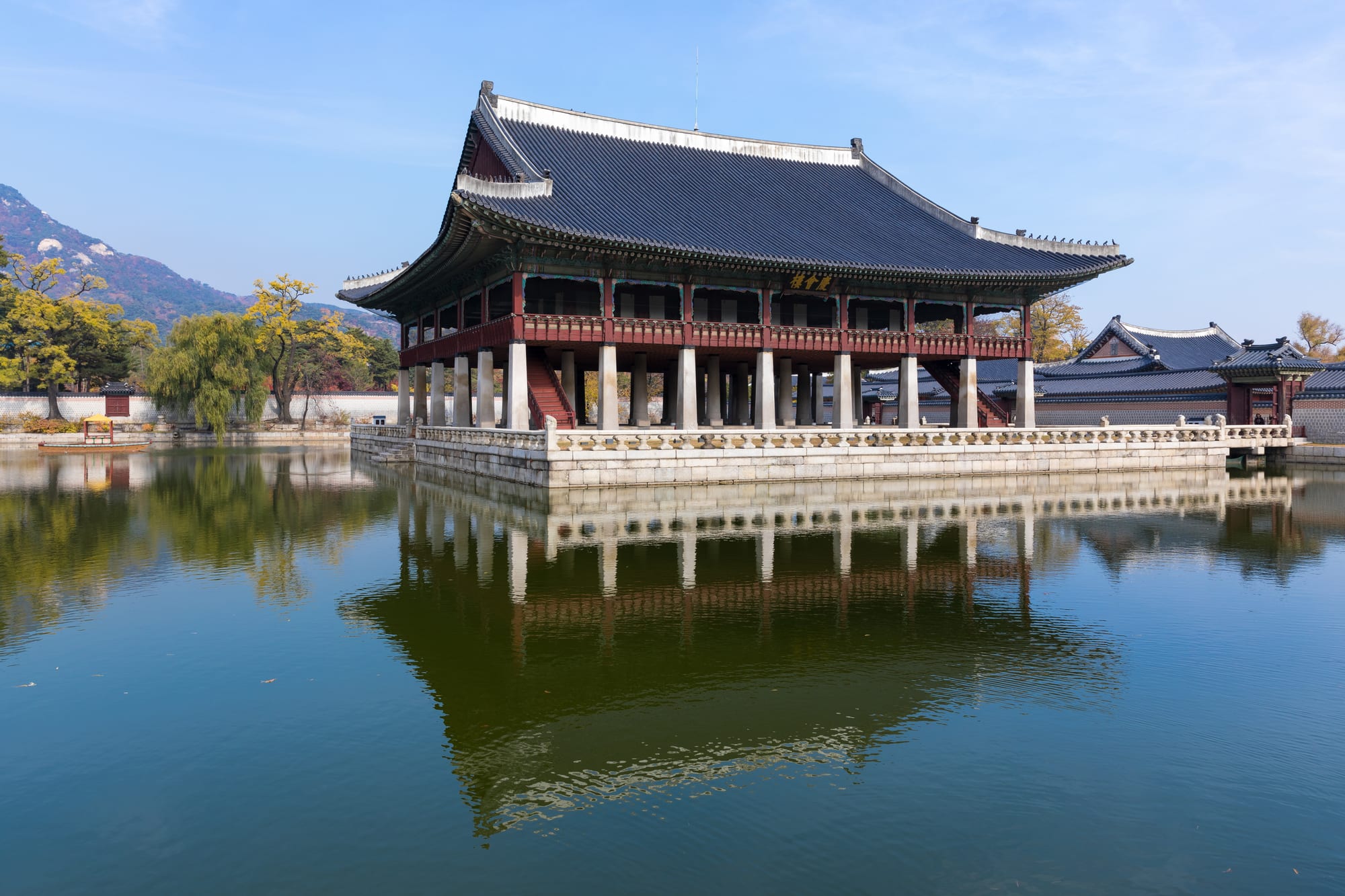
Tradition and technology side by side
South Korea has built one of the most dynamic modern economies and cultural exports in the world (K-pop, Korean cinema and television, and a globally influential food and beauty industry) while carefully preserving centuries of royal, Buddhist, and folk heritage alongside it. Its division from North Korea, formalised by an armistice rather than a peace treaty, remains an unresolved fact of daily life, visible most directly at the heavily fortified border itself.
The ten below run from Seoul to Busan, Jeju Island, Gyeongju, and the mountains and countryside beyond. Spring and autumn generally offer the most comfortable weather.
1. Gyeongbokgung Palace
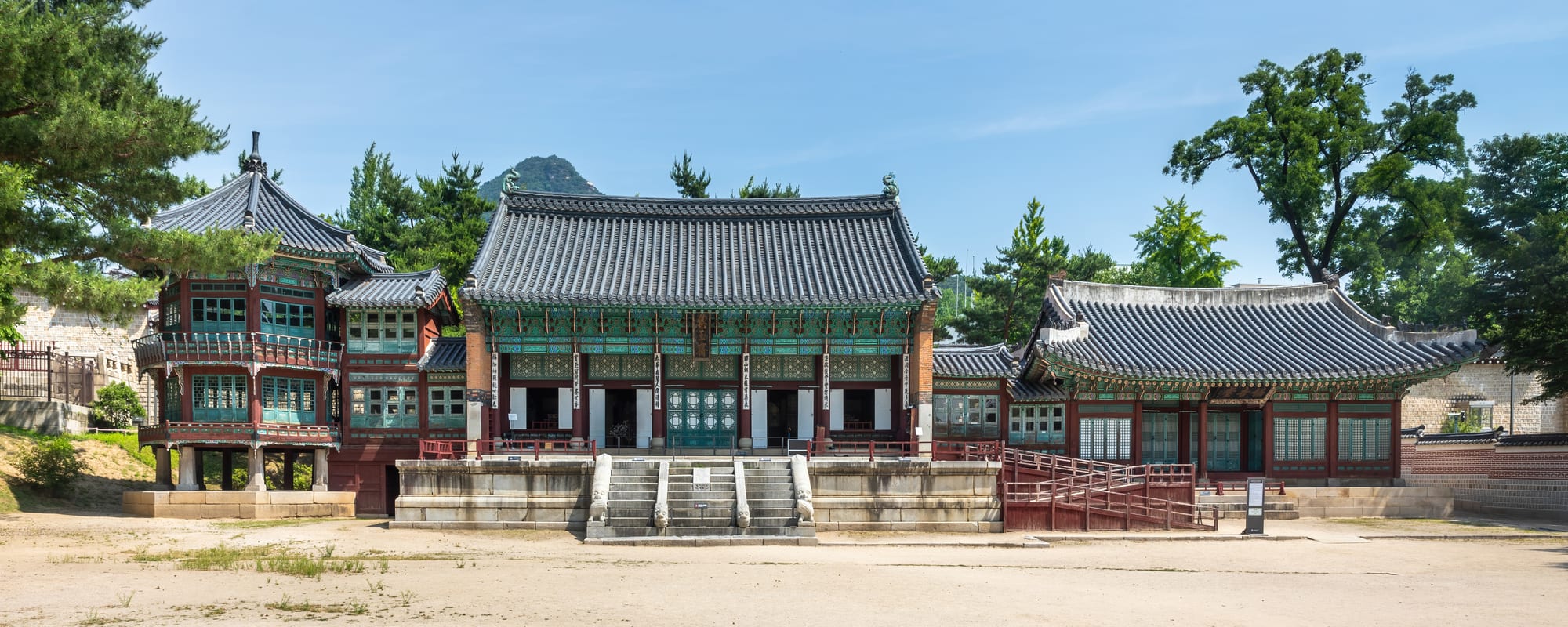
Gyeongbokgung, the first and best known of Seoul's five grand palaces, was built in 1395 as the main royal palace of the Joseon dynasty, burned down during the Japanese invasions of 1592 and rebuilt in the 1860s. A ceremonial changing of the royal guard, performed in colourful traditional dress at the main gate, remains one of the most popular scheduled events for visitors.
2. Jeju Island
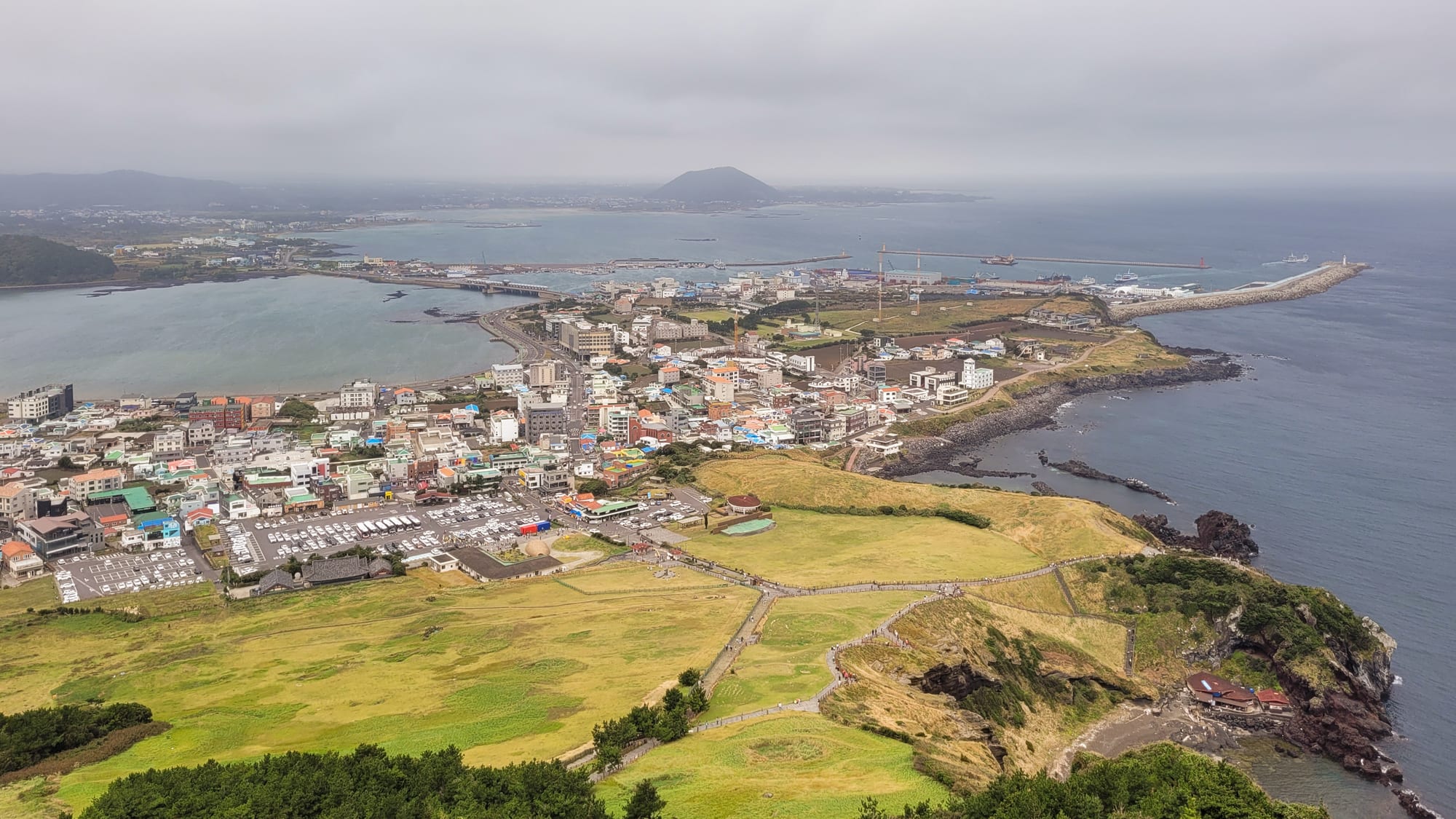
Jeju Island, a volcanic island off South Korea's southern coast, holds the UNESCO World Heritage Site of Jeju Volcanic Island and Lava Tubes (inscribed 2007), which takes in Seongsan Ilchulbong ("Sunrise Peak"), a dramatic tuff cone crater rising from the sea, the Geomunoreum lava tube caves, and Hallasan, South Korea's highest peak. Its distinct dialect, tradition of women free-divers (haenyeo, on UNESCO's intangible heritage list since 2016), and honeymoon-destination reputation give it a character quite different from the mainland.
3. Bukchon Hanok Village
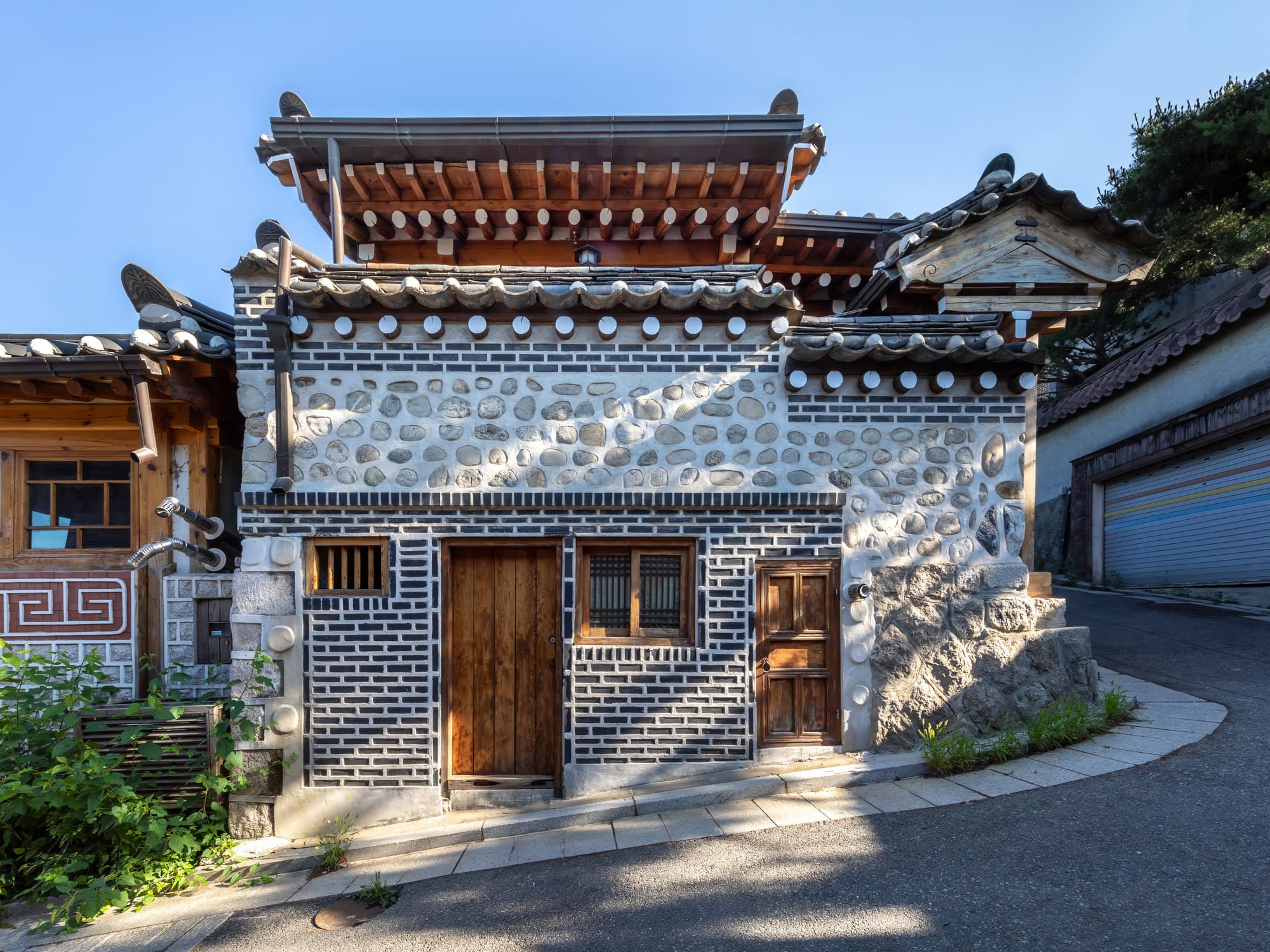
Bukchon Hanok Village, nestled between two of Seoul's grand palaces, preserves hundreds of traditional hanok houses, many dating to the late 19th and early 20th centuries, along steep, narrow lanes, some now converted into guesthouses, tea houses, and cultural centres. Because residents live here, access for non-staying visitors has been limited to daytime hours since late 2024. It offers a rare, still-lived-in glimpse of pre-modern Seoul amid the city's otherwise thoroughly contemporary skyline.
4. Gamcheon Culture Village, Busan
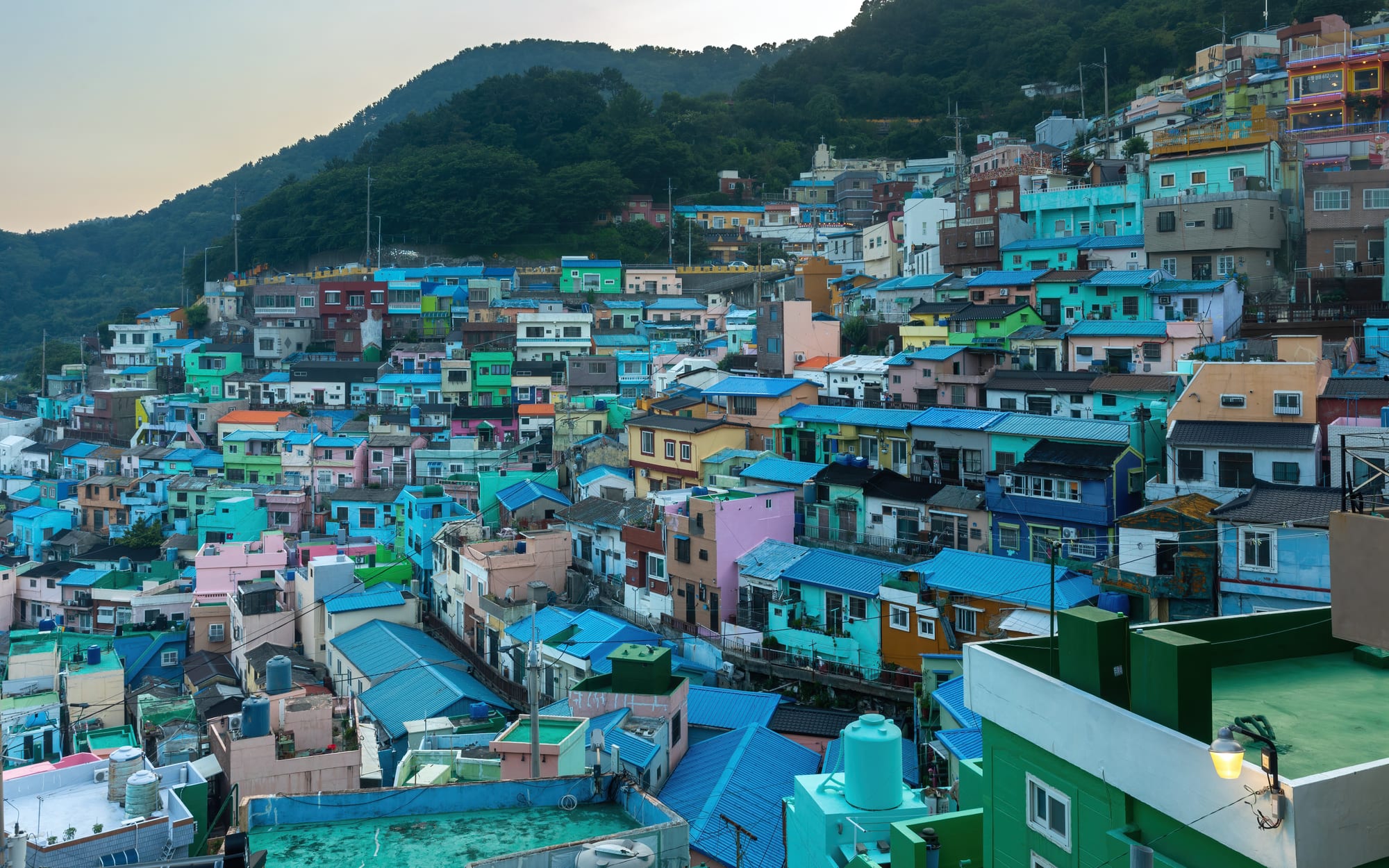
Gamcheon Culture Village, a hillside neighbourhood in the port city of Busan, was built by refugees during the Korean War and later transformed through a 2009 community art project into a maze of brightly painted houses, murals, and small galleries, now nicknamed the "Machu Picchu of Busan" or Korea's own Santorini for its colourful, stacked appearance.
5. The DMZ
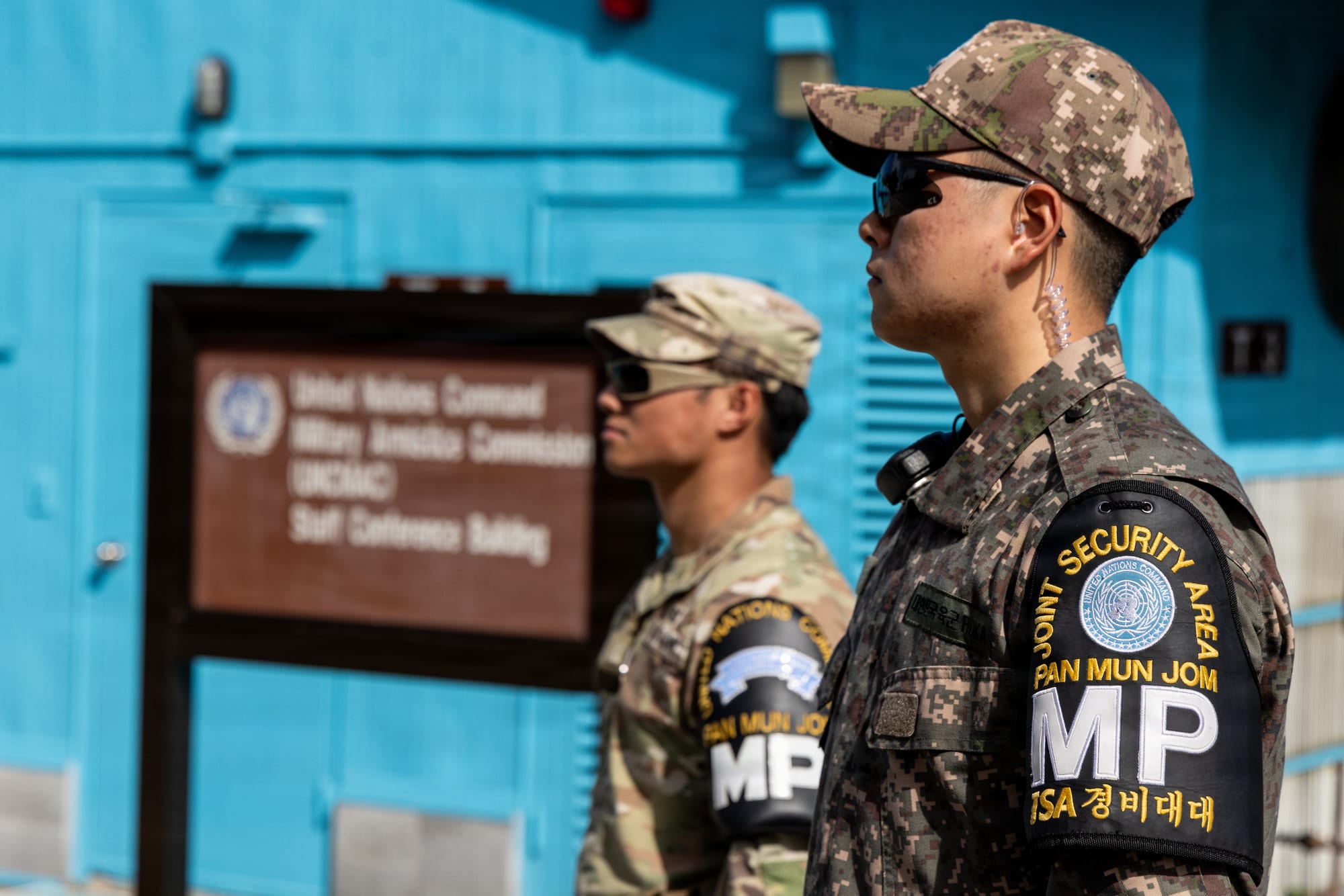
The Demilitarized Zone, the heavily fortified buffer separating North and South Korea since the 1953 armistice, can be visited from the southern side on organised tours to sites such as the infiltration tunnels. Its most famous point, the Joint Security Area at Panmunjom, where soldiers of both sides face each other across the actual dividing line, is one of the most tightly controlled and symbolically loaded tourist sites anywhere in the world; tours there have been suspended or restricted to special groups since 2023.
6. Bulguksa Temple, Gyeongju
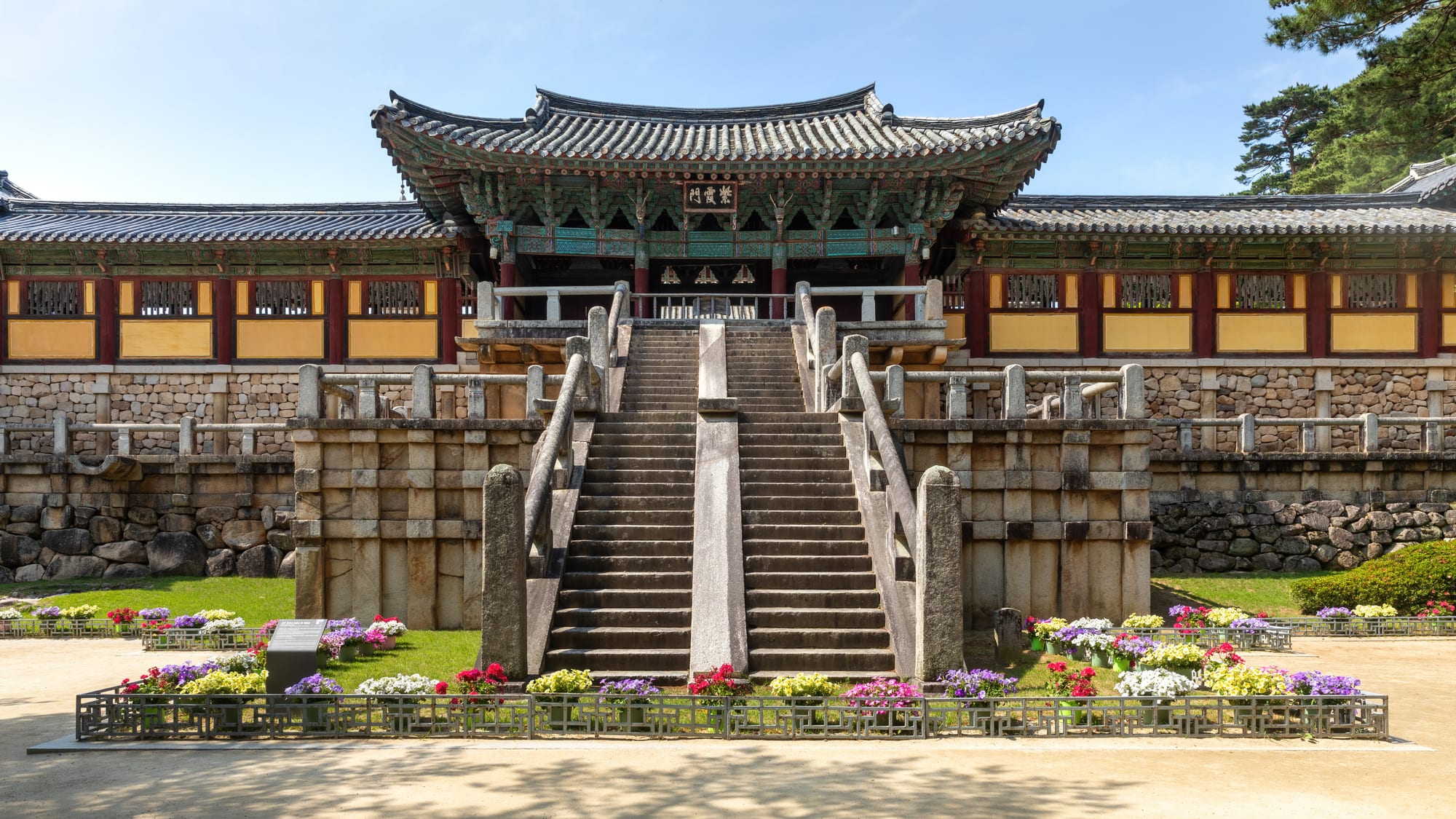
Bulguksa, in the historic city of Gyeongju (former capital of the Silla kingdom), is one of the most significant Buddhist temples in Korea, its 8th-century stone staircases and pagodas, along with the nearby Seokguram Grotto's seated Buddha statue, forming a joint UNESCO World Heritage Site regarded as a high point of Silla-era Buddhist art and architecture.
7. Seoraksan National Park
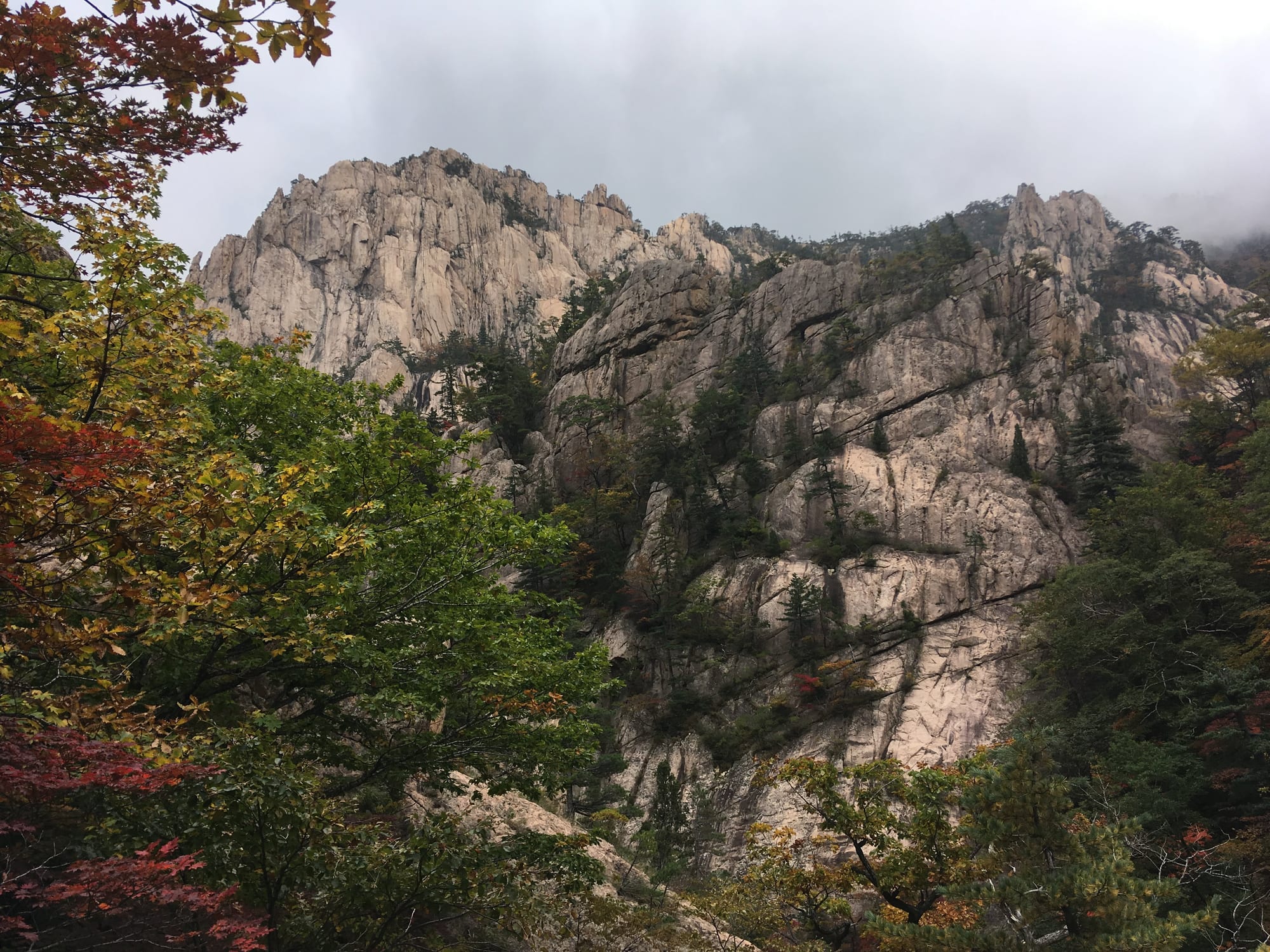
Seoraksan, Korea's most celebrated mountain national park, holds jagged granite peaks, deep valleys, and Buddhist temples tucked into its forests, drawing enormous crowds each autumn when its maple and oak forests turn brilliant shades of red and gold.
A network of well-maintained trails makes the park's dramatic scenery accessible to both serious hikers and casual visitors, and the ancient mountain fortress of Gwongeumseong, about 800 metres up, looks out over the peaks and the East Sea.
8. N Seoul Tower and Namsan
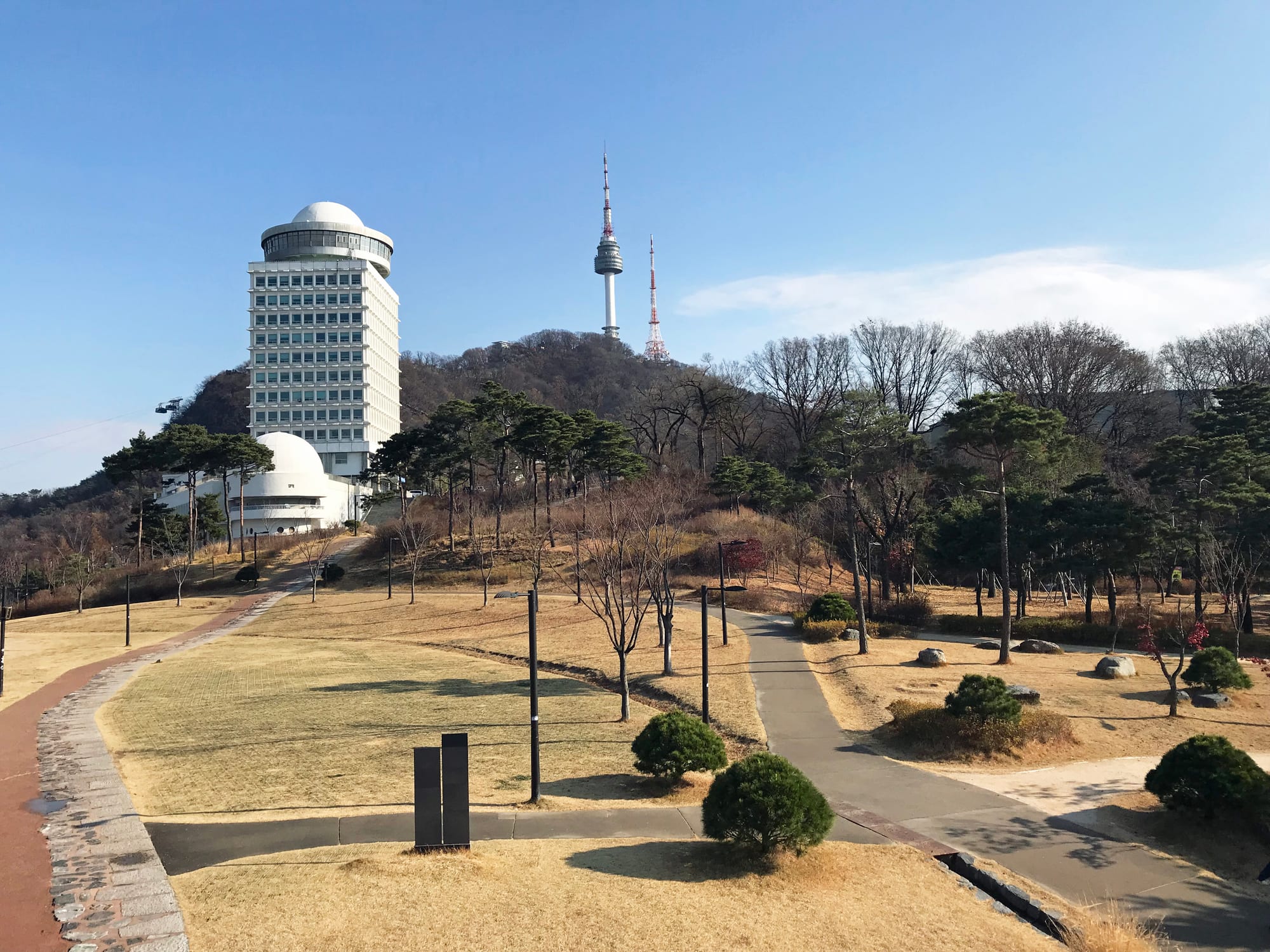
N Seoul Tower, perched atop Namsan Mountain near the centre of the capital, offers panoramic views over all of Seoul from its observation deck, reachable by cable car or a pleasant hike through the surrounding park. Opened to the public in 1980, it has become one of the city's best-known spots for couples.
The mountain park itself, ringed by walking trails and remnants of the old city wall, offers a quiet green escape a short ride from Seoul's busiest districts.
9. Haeinsa Temple
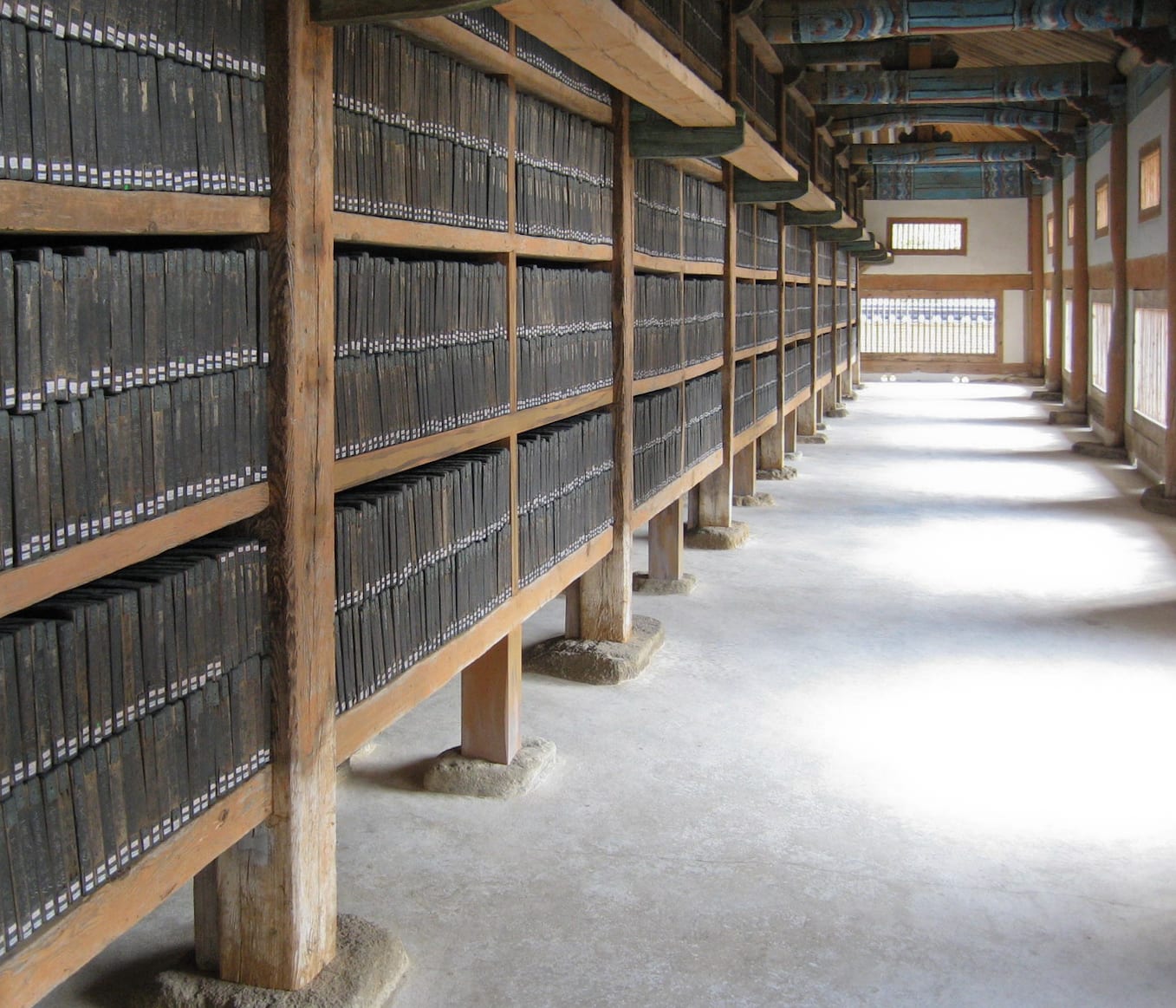
Haeinsa, a mountain temple founded in 802, houses the Tripitaka Koreana: over 80,000 hand-carved wooden printing blocks recording the complete Buddhist canon, carved in the 13th century and preserved in specially designed storage halls whose ventilation system has kept the blocks intact for nearly 800 years.
Its storage halls, the Janggyeong Panjeon, are a UNESCO World Heritage Site (1995) prized for the ingenuity of their natural climate control, while the blocks themselves are on UNESCO's Memory of the World register; Haeinsa remains an active monastery in the mountains of South Gyeongsang Province.
10. The Boseong Tea Fields
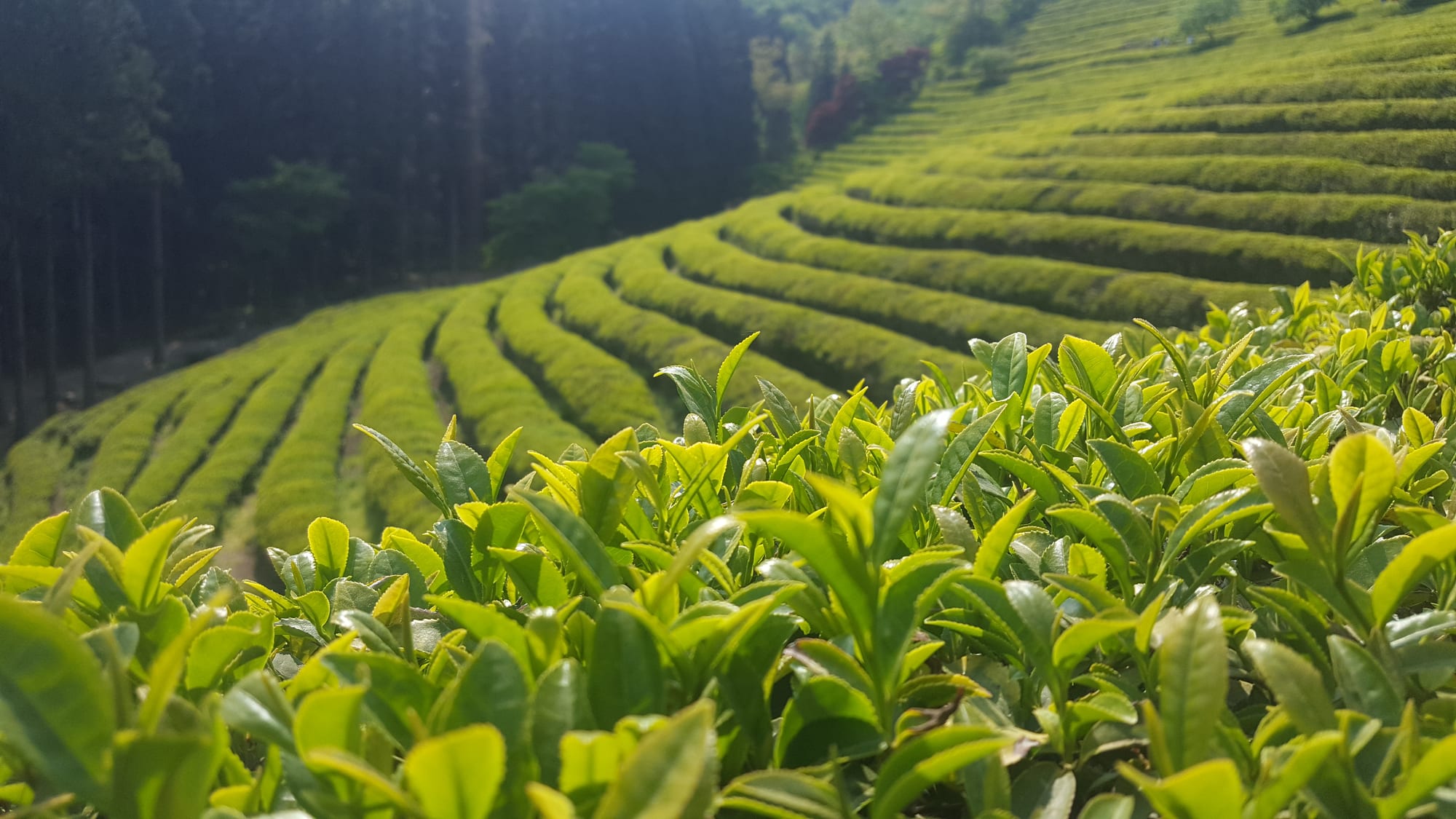
Boseong, on Korea's southern coast, is the country's largest tea-producing area, with its green tea grown across hillsides of neatly curving, terraced tea bushes that have made it one of the country's best-known rural landscapes.
A tea festival each May draws visitors to pick leaves and sample local tea, and the Daehan Green Tea Plantation, the county's largest, is the best-known of the estates.
South Korea suits a week to ten days combining Seoul (with Namsan and a DMZ day trip) with Gyeongju's historic sites and either Busan and the south coast or the mountain scenery of Seoraksan and the southern countryside.