Culture & Customs · Sweden
Sweden: Midsummer, Maypoles and Quiet Modesty
A secular society built on moderation, modesty and first names for everyone, with a calendar of bonfires, maypoles, crayfish parties and candlelit processions that almost everyone still keeps
By Globeway Editorial · 30 September 2026
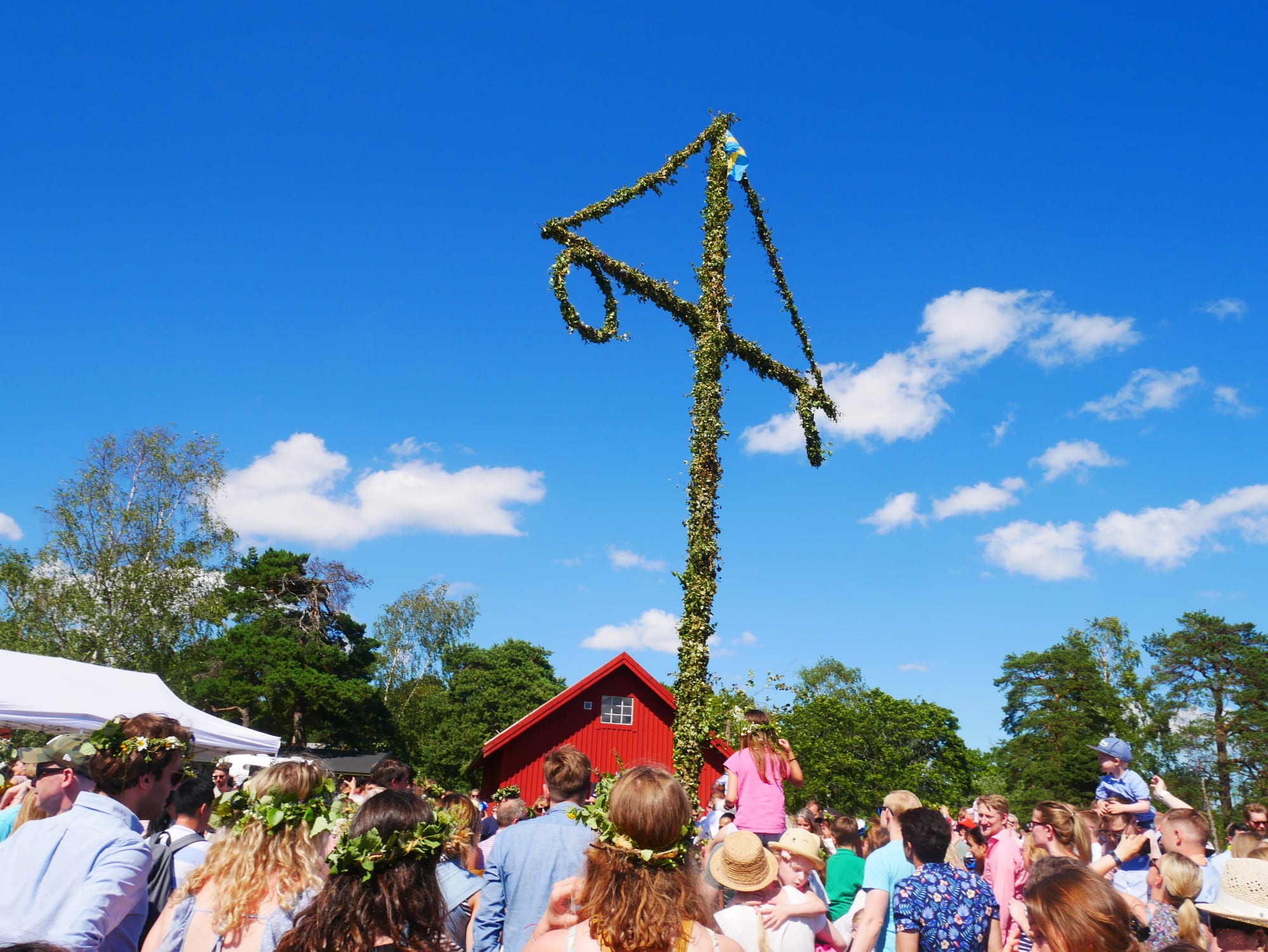
On a Friday in late June, somewhere between the 19th and the 25th, a tall pole wrapped in birch leaves and wild flowers is hoisted upright on a village green. People in home-made flower crowns join hands around it, and before long grown adults are hopping in a circle like frogs, singing "Små grodorna", "The little frogs", with gestures for the ears and tails that real frogs do not have. Later, some will quietly pick seven different flowers, in silence, and put them under their pillow, in the hope of dreaming of a future partner. For a country known for reserve, moderation and tidy consensus, Midsummer Eve is a revealing sight. Swedes take their traditions seriously, but they also keep them light, shared and open to anyone who wants to join in.
Faith, identity and values
Sweden is one of the most secular countries in Europe. The Lutheran Church of Sweden was the state church for centuries, but church and state were formally separated in 2000, and although about half the population still belongs to it, only a small share of its members attend services regularly. Many see religion as a private matter. Membership of other faiths, including Catholic, Orthodox, Muslim, Jewish and Buddhist communities, has grown with immigration. Yet the church remains woven into life's milestones: the majority of funerals are still carried out by the Church of Sweden, and baptisms, weddings and funerals are the occasions when many otherwise non-practising Swedes step inside a church.
A handful of ideas explain a great deal of Swedish behaviour. Lagom, roughly "just the right amount", prizes moderation and balance over excess. Jantelagen, the "law of Jante", names a deep discomfort with anyone who acts as if they are better than others, so boasting and showing off are frowned upon. Equality runs through public life, from the idea of the folkhem, the "people's home" that shaped the welfare state, to everyday manners. Swedes also value privacy and personal space: voices are kept low in public, people keep a respectful distance, and personal matters are rarely shared with strangers.
Allemansrätten, the right of public access, lets anyone walk, camp and pick berries and mushrooms on most land, whoever owns it. It is balanced by a strong sense of responsibility: the only price, as Visit Sweden puts it, is respect for nature and the animals living there. That means keeping well away from people's homes, using existing fire pits, obeying fire bans and taking every scrap of litter home.
The Sámi, whose traditional homeland of Sápmi stretches across the far north and whose livelihoods include reindeer herding, are Sweden's Indigenous people, and the constitution has recognised them as a people since 2011. A publicly elected Sámi Parliament has worked since 1993 for a living Sámi culture, and Sámi National Day, on 6 February, is marked with the Sámi flag, speeches and joik, the traditional Sámi song that seeks to capture the essence of a person, animal or place.
Greetings and meeting people
The usual greeting is a firm handshake with direct eye contact, and most adults shake hands with each person present when they arrive at, and leave, a social gathering. Friends and family often hug instead. "Hej" is the everyday hello and "hej då" the goodbye, and both work in almost any setting.
Swedes use first names with nearly everyone, and titles are kept for very formal occasions. This informality is surprisingly recent. Until the late 1960s, polite Swedish relied on titles and surnames, so that an employee might address the boss in the third person by rank. In 1967, the incoming head of the national health board announced that he would call all his staff by their first names and asked them to do the same, and the informal "du" quickly spread. Today it is the normal, respectful way to address almost anyone, with the royal family among the few exceptions.
Conversation tends to be direct and frank, but modest. Swedes avoid boasting or exaggeration, and silence in a conversation is not seen as awkward, so there is no need to rush to fill a pause. Interrupting is considered rude, since it suggests a lack of real interest in what the other person is saying. Orderly queues are expected everywhere, and almost no excuse justifies stepping in front of someone who arrived first.
Hospitality and being a guest
Visits are usually arranged in advance, and turning up unannounced is uncommon. Punctuality matters a great deal: arriving too early is almost as awkward as arriving late. Shoes are taken off at the door, especially in winter, and hosts often give first-time guests a tour of the house. Coffee, usually black, is offered almost as soon as guests sit down. Gifts are opened when they are received, and it is thoughtful to bring a small present for any children in the household.
At the table, guests are expected to finish what is on their plate, and leaving food is thought impolite. Knife and fork placed side by side show that someone has finished. When glasses are raised for a "skål", people look each other in the eye. Leaving straight after the meal is bad form: guests are expected to stay on for coffee and conversation. The courtesy does not end there, either. The next time guest and host meet, the guest says "tack för senast", "thanks for last time", to acknowledge the hospitality.
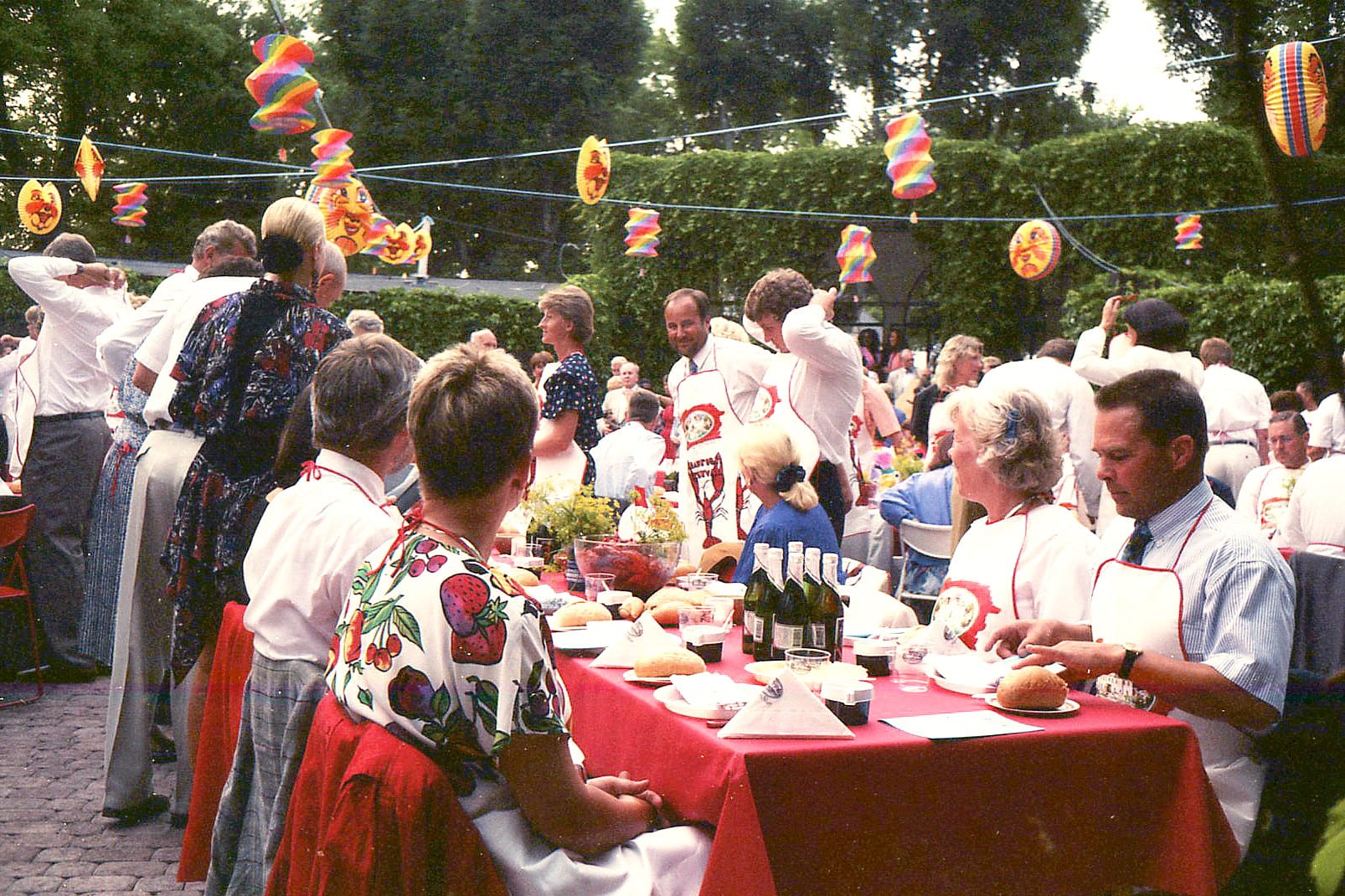
Some occasions have their own manners. At a crayfish party, held from the start of August into September, guests wear paper hats and bibs under strings of paper lanterns, and each round of snaps is downed to a drinking song, "Helan går" being the best known. Here the usual reserve is suspended: slurping the brine from the shells is almost obligatory.
Festivals and life's big moments
The Swedish year is marked by festivals of light and season. On 30 April, Walpurgis Night, people gather around bonfires to bid farewell to the dark months and welcome the spring, with choral singing and springtime speeches. The next day, May Day, has been a public holiday since 1939. Midsummer, on the Friday between 19 and 25 June, is the high point of the summer, celebrated mostly in the countryside with family and friends, with the maypole, flower crowns, dancing, pickled herring, new potatoes, strawberries and snaps. In August and September come the crayfish parties.
On 13 December, in the darkest part of the year, comes Lucia. A girl or young woman in a long white gown leads a procession wearing a crown of lights in her hair, now usually battery candles rather than real ones, followed by attendants and star boys in white with tall cone-shaped hats. They sing the song "Sankta Lucia", which most Swedes know by heart, and S-shaped saffron buns, lussekatter, are handed round with coffee. Processions are held in schools and nurseries, churches, workplaces and care homes. The custom has older roots, but as it is now celebrated it took hold only in the twentieth century, spreading after a Stockholm newspaper began choosing an official Lucia for the city in 1927.
Life's milestones have become less religious but no less marked. Baptism, once near-universal, has fallen sharply, and civil ceremonies now outnumber church weddings. The great rite of passage for young people is studenten, the end of upper secondary school. Graduates in white student caps burst out of school in a rush known as utspringet, into a crowd of parents holding up placards with the graduates' baby photos, before parading through town on flatbed trucks decorated with birch twigs and balloons.
Most funerals are still held by the Church of Sweden, whose parishes also run burial services for the whole population, paid for through a burial fee. A funeral is often followed by a minnesstund, a quiet memorial gathering organised by the family. In recent years favourite pop songs and ballads have often replaced hymns, and a small but growing number of people choose burial without any ceremony at all.
Arts, crafts and music
Sweden's living heritage is recognised by UNESCO in several forms, including summer farming on outlying pastures, the Nordic tradition of clinker-built wooden boats and a programme for keeping storytelling alive. The nyckelharpa network is on UNESCO's register of good safeguarding practices. The nyckelharpa, a bowed instrument with wooden keys, was long built and played by farmers and craftspeople; it is depicted in Swedish churches from the fourteenth century and became a popular folk instrument in Uppland in the seventeenth; after its popularity declined in the mid-twentieth century, enthusiasts, builders and musicians kept the tradition going, and today a network of players, makers and dancers keeps it alive through building, playing, dancing and teaching.
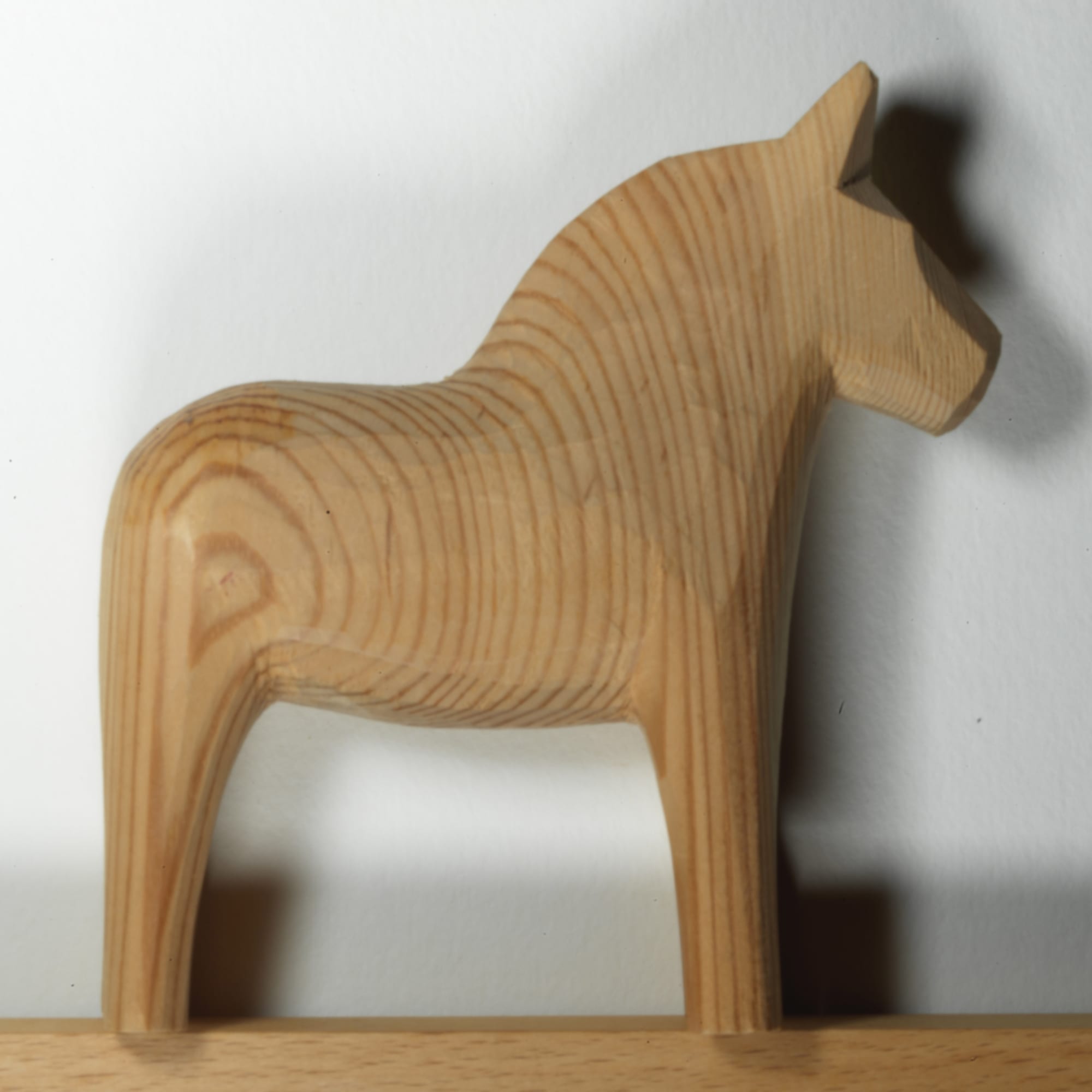
Handicraft, or slöjd, is held in high regard. The best-known example is the Dala horse, a stout wooden horse carved from pine, traditionally painted red and decorated with flowered harness patterns known as kurbits. It began as a winter pastime for woodcutters, who whittled small horses as toys and items to trade, and it has since become a symbol of Sweden as a whole. Sámi handicraft, known as duodji, is another living tradition, taught in workshops and sold by artisans at Sámi National Day celebrations and elsewhere.
Music runs through all of this, from Walpurgis choirs and Lucia songs to the drinking songs of the crayfish table and the joik of the Sámi, and it extends to a modern pop scene that gives the country an outsized place in the world's music.
Dos and don'ts for visitors
- Do shake hands with everyone present on arrival and departure, and use first names.
- Do arrive exactly on time, and don't drop in on people unannounced.
- Do take off shoes at the door when visiting someone's home.
- Do stay for coffee after a meal, and say "tack för senast" at the next meeting with the host.
- Do look people in the eye when raising a glass for a "skål".
- Do keep to the queue and keep voices low in public.
- Don't boast or interrupt; modesty and listening are highly valued.
- Do respect the right of public access: keep away from homes, obey fire bans and take all litter away.
What to take away
Swedish customs rarely call attention to themselves, but together they express a steady belief in equality, moderation and respect for others, and visitors who arrive on time, speak modestly and join in with the singing will find that belief extended to them too.