Culture & Customs · Tristan da Cunha
Tristan da Cunha: Customs of the World's Most Remote Island
Two churches that share their feast days, a community that downs tools together, and a handful of customs, from striped courting socks to masked New Year mummers, kept alive on the most isolated inhabited island on Earth
By Globeway Editorial · 30 September 2026
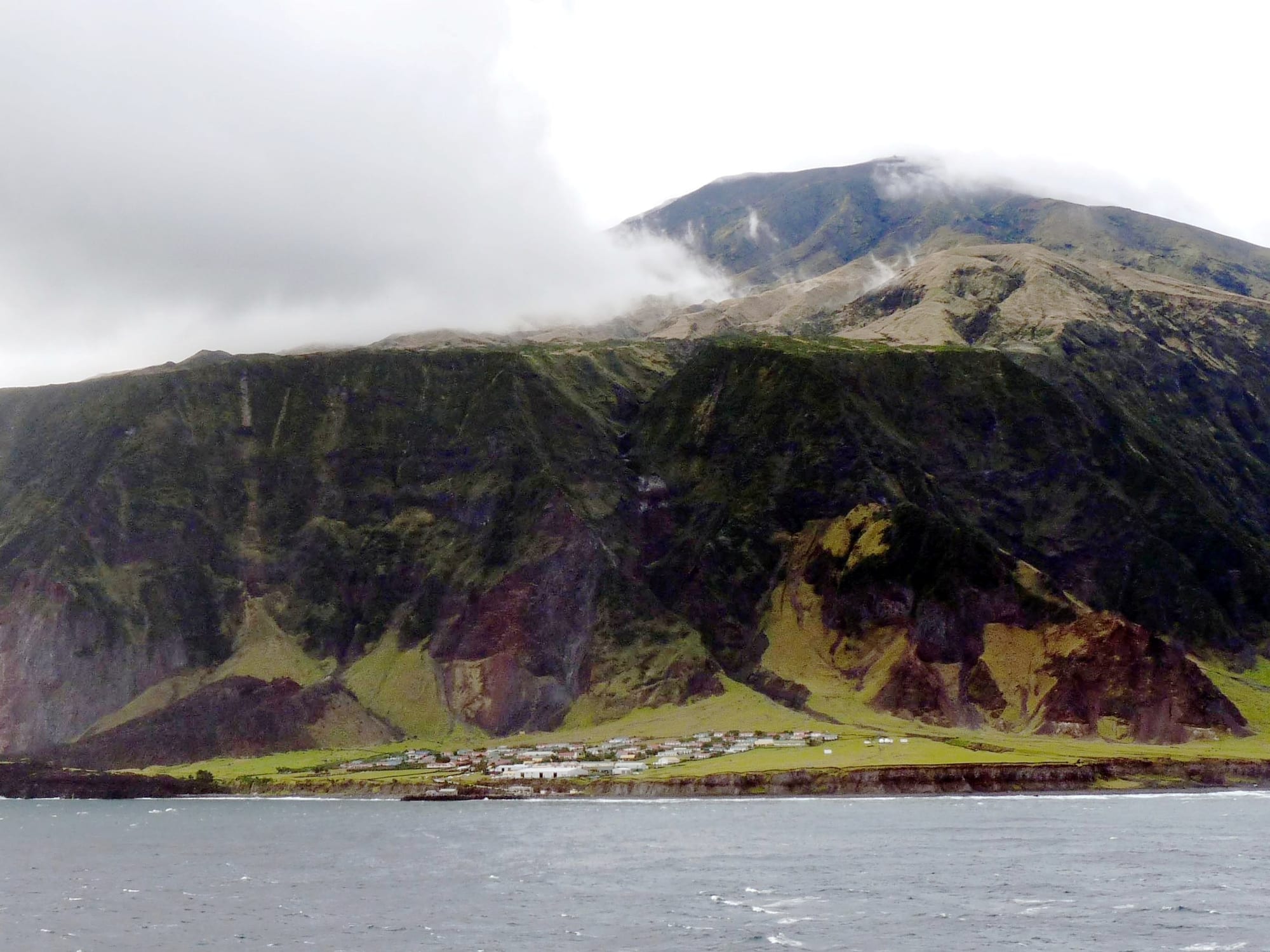
On the last day of December, the settlement on Tristan da Cunha braces itself for the Okalolies. Young men of the island, disguised beyond recognition in masks, old coats and mismatched clothes, roam the village chasing women and children, spraying them with water and hunting for sneaky ways into people's houses. They do not speak, communicating only by hand signals, whistles and whispers, and the place where they dress is a closely guarded secret. Some islanders lock their doors; others throw them open. The custom recalls Europe's old traditions of midwinter mumming, carried to one of the remotest places on Earth, and it says a good deal about the island: a community small enough that everyone knows who is behind each mask, and determined enough to keep its old ways alive regardless.
Faith, identity and values
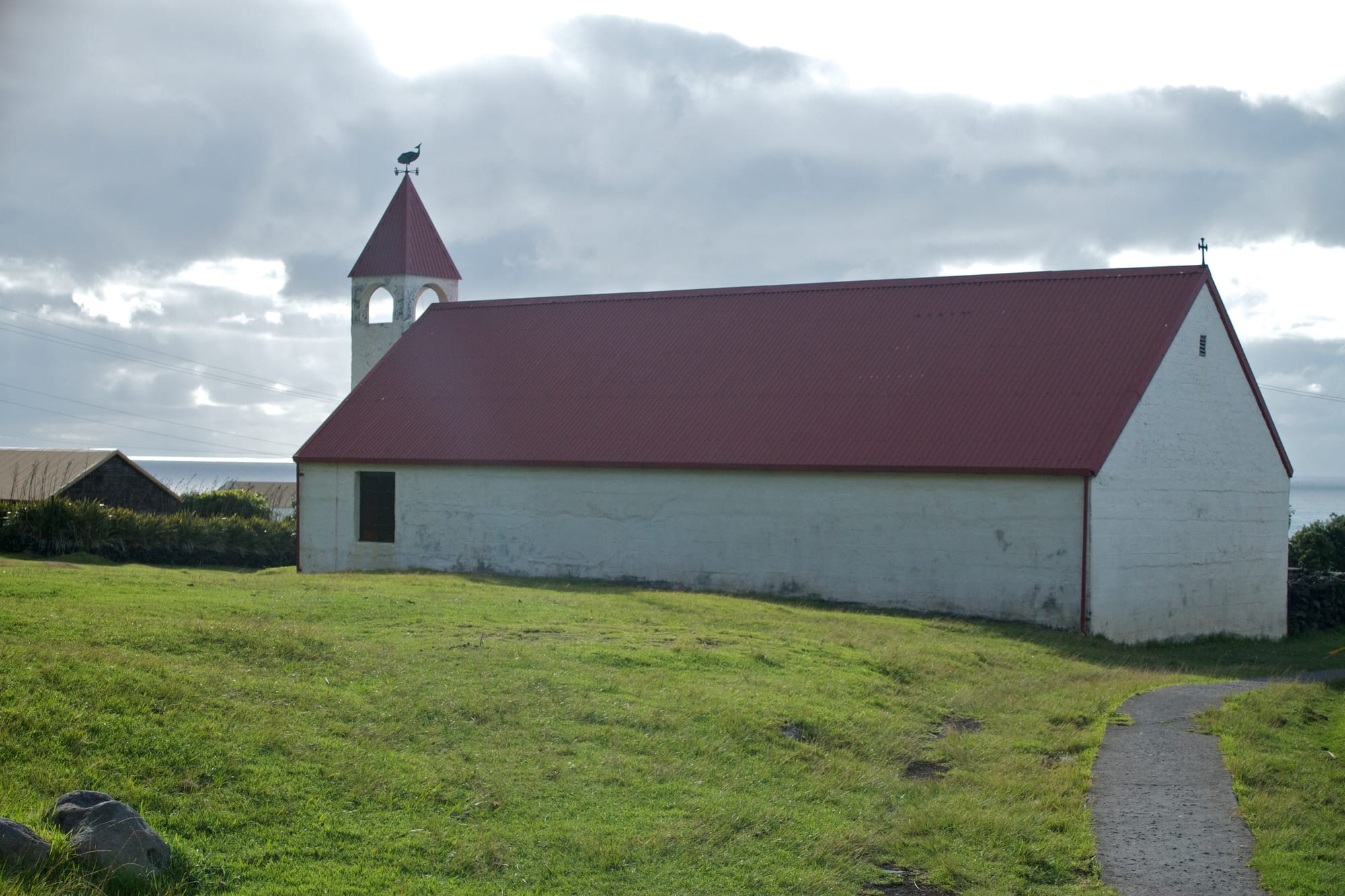
Christianity has been part of the settlement from its first days. According to the island's own religious history, William Glass, the founding settler, instituted daily prayer and Sunday public worship, held at first in the largest house in the village. Glass asked for a clergyman, not least so that marriages could be solemnised and children christened, and from 1851 the Society for the Propagation of the Gospel sent Anglican missionary priests to the island. St Mary's Church, the Anglican church, was dedicated in July 1923 and has been enlarged since; it belongs to the Diocese of Cape Town and serves around four in five islanders.
The Catholic community, around one in five, has its own story. It was kept alive by descendants of Italian settlers and by three Irish sisters who married islanders in 1908, at a time when some Anglican clergy were unwelcoming. For years Catholic prayer centred on a home altar kept by an islander, Agnes Rogers, whose service was later recognised with a papal medal. The present St Joseph's Church was blessed and opened in 1997, and with no resident priest, its Sunday services are led by lay ministers from the community. Relations between the two congregations are close: they take turns to host joint celebrations and commemorations, and the Christmas service of lessons and carols brings both together at St Mary's.
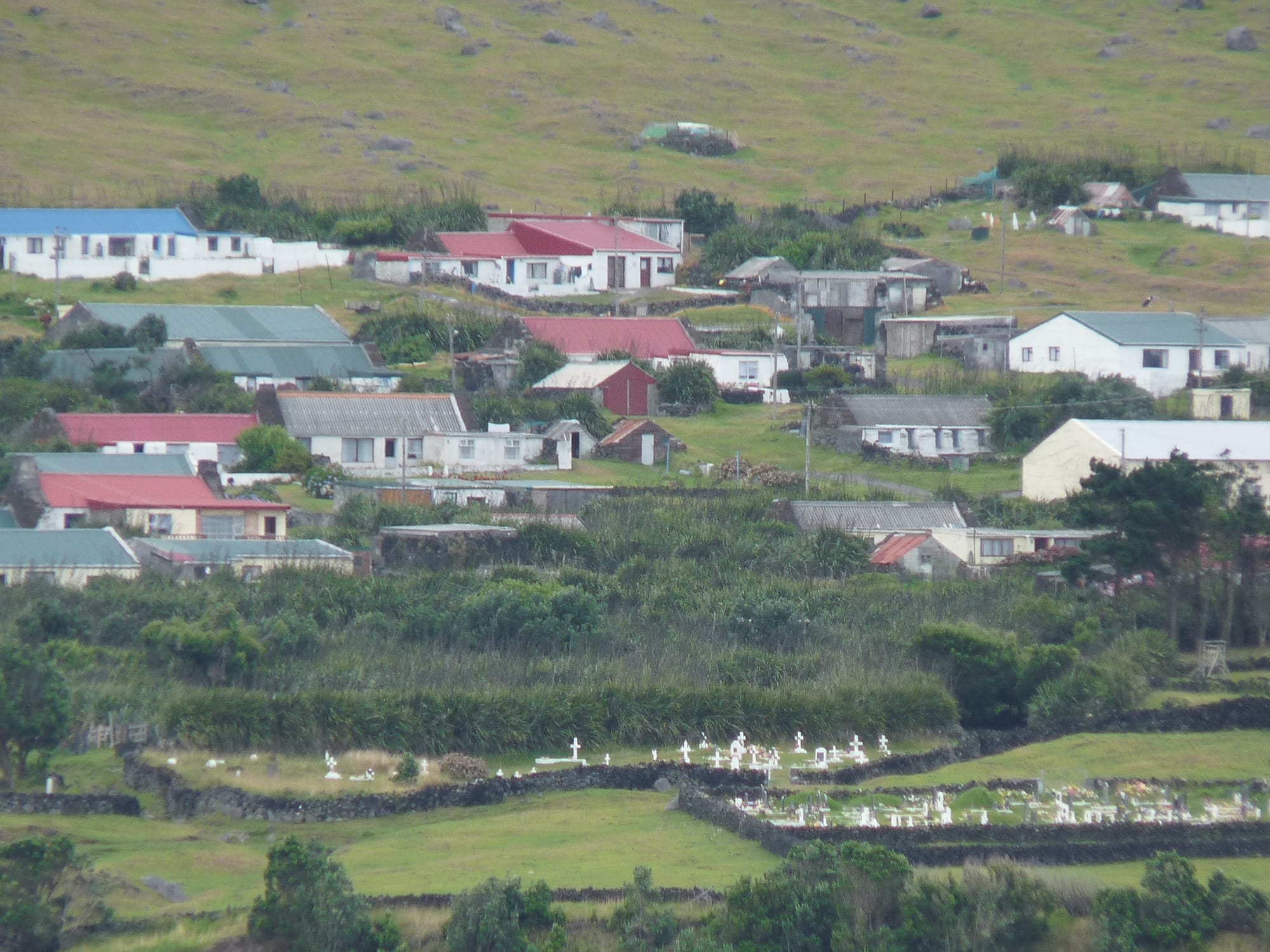
The values beneath island life were described in detail by the Norwegian sociologist Peter Munch, who studied Tristan from the 1930s onwards. As summarised by the Peaceful Societies project at the University of North Carolina Greensboro, he found a people who prized equality and personal integrity, among whom no one held much authority over anyone else, and who kept one another in line not through confrontation but through teasing and gentle ridicule. Quarrels were rare, and cooperation came naturally: it takes a whole crew, after all, to launch a longboat into the swell. That spirit is still visible today. Land is held in common, and on "all hands" days staff from every government department leave their usual work to take on a job together, as they did in 2024 to extend the island's graveyard.
Greetings and meeting people
In a settlement of a couple of hundred people, there are no strangers among the islanders themselves, and a newcomer stands out at once. Visitors are few, and the island's official guidance is frank that, while the hospitality of Tristan's people is famous, islanders can be shy, and resentful of anyone who approaches them with a camera raised or seems to be gathering material to write about them without understanding the place. Courtesy here means taking time to talk before reaching for a camera, and asking first.
The islanders speak English, but an English of their own. The linguist Daniel Schreier describes Tristan da Cunha English as the smallest variety of English in the world and one of the youngest, having developed from the 1820s as the speech of British settlers met that of Saint Helenian women, American whalers and other seafarers who made the island their home. It is spoken by fewer than three hundred people, and visitors will hear it in turns of phrase and pronunciation that set it apart from any English they know.
Hospitality and being a guest
There is no hotel on Tristan. Visitors stay with island families or in a small guesthouse, arranged well in advance through the administration, and the island's reputation for welcoming those who make the long voyage is well earned. The official visitor information notes, though, that this trust has occasionally been abused, which is one reason a visit is treated as something to be planned and approved rather than simply undertaken.
Alcohol is one area where the rules are specific. Imports are controlled, and each visitor may bring only two 750ml bottles of spirits and twelve cans or bottles of beer. Conservation rules are strict too: the island's ecosystems are fragile, and an ordinance governs what may be brought ashore. For visitors, being a good guest largely means fitting in with the community's rhythms, from the Sunday services, which both churches open to visitors, to the days when the fishing flag goes up and much of the island heads for the boats.
Festivals and life's big moments
The Christmas season is the island's main summer holiday. In mid-December, the Anglican and Catholic congregations come together for a service of nine lessons and carols, and on Christmas Eve both churches hold midnight services with nativity scenes. The school stages a Christmas show, the pensioners are given a party with games in Prince Philip Hall, and families sit down to the traditional Christmas dinner of stuffed roast mutton. Then come the Okalolies of Old Year's Night. The NPR report on the custom notes that it appears in writing about the island as early as 1907, and that the name may come from Afrikaans, a sign of Tristan's long links with Cape Town. The Chief Islander told the reporters that much of the island's culture has been lost, and that the Okalolies are a tradition the community wants to keep.
Other fixtures follow through the year. Sheep shearing is an annual fixture. Ratting Day, in winter, is described by the island as one of its most treasured traditions: teams of men, each named after a part of the island, go out with their dogs to hunt the rats that threaten the potato crop and the wildlife, and the tails are counted to decide the prizes, including one for the longest tail and a booby prize, while families gather to share food and friendly rivalry. Anniversary Day, on 14 August, is a public holiday marking the day in 1816 when Britain took possession of the island, now a fairly low-key occasion. King's Day is in effect a village fête, with flower arranging and baking competitions, sack races, darts and a tug of war, rounded off with a reception and a loyal toast.
Weddings are community occasions. Banns are called in church the week before, and the service is held at St Mary's or St Joseph's, with family and friends crowding in. Afterwards, the island's wedding reports describe a thoughtful custom: the newly married couple call on elderly islanders who were unable to attend, before going on for photographs, and the whole community is invited to the evening dance. Cakes are often baked at home and given as gifts.
Death, too, is marked by the whole island. When someone dies, the flag is flown at half-mast, and if it is a weekday, work stops as a mark of respect. After a small service for relatives and friends, the coffin is driven through the village to St Mary's Church, and the clergy and lay ministers lead the mourners in procession to the cemetery. Islanders gather flowers to make wreaths and visit the bereaved family to offer comfort, and graves are tended with fresh flowers at weekends.
Arts, crafts and music
Knitting has been part of island life for nearly two centuries. Wool from Tristan's sheep is carded and hand-spun into a yarn the islanders call "wosted", and knitted into sweaters, known as ganseys, hats, socks and stuffed toys. The best-known pieces are the Love Socks. In the old courting custom described by the island's craft shop, a young woman would knit a pair of socks for an admirer, and the number of stripes told him how she felt: a pattern of two large and six small stripes asked, in effect, "will you be mine?" If the feeling was returned, he might make her a pair of moccasins. The socks are still made today, in island wool striped with brighter colours shipped in from South Africa.
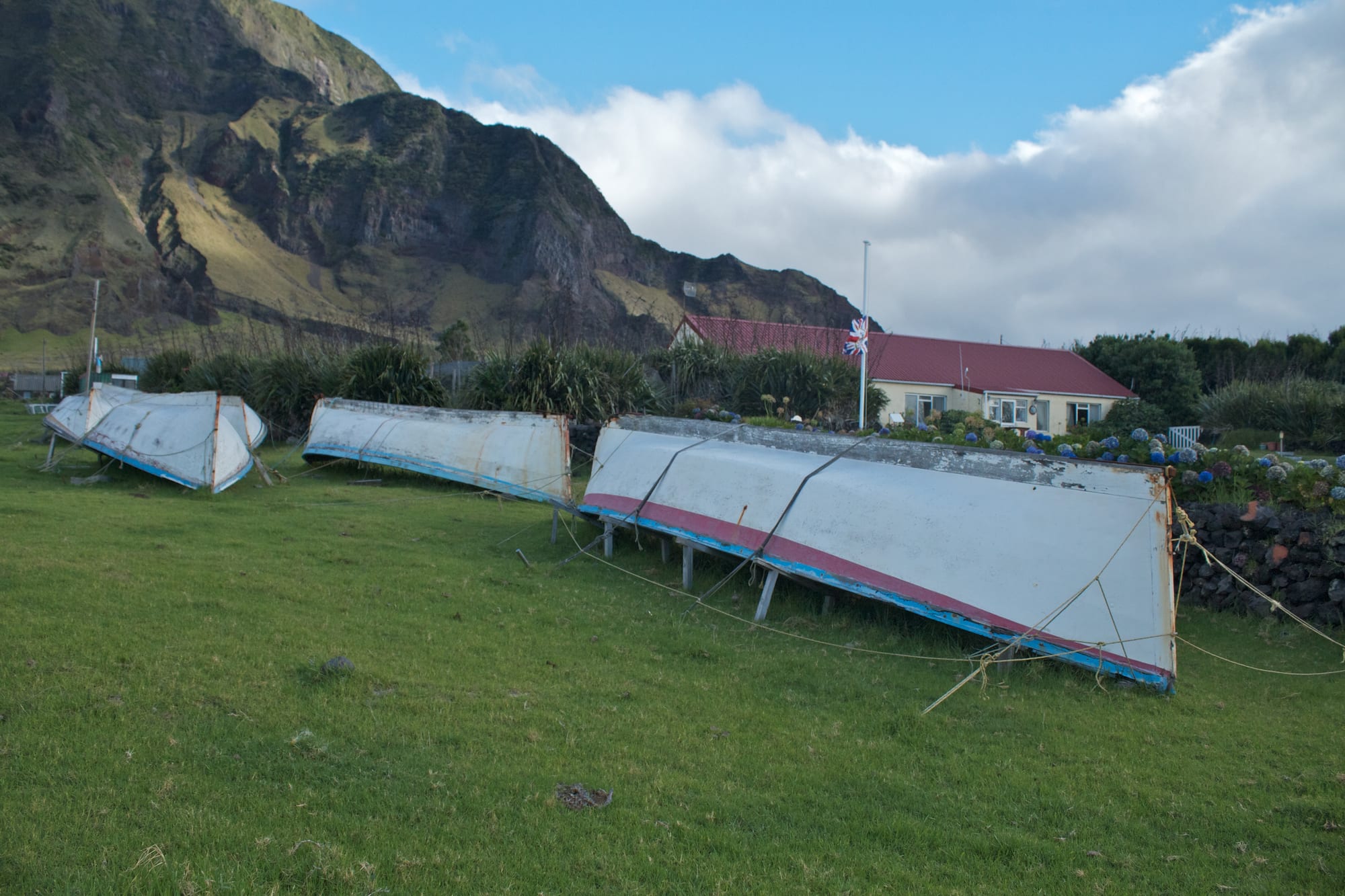
The other signature craft is the model longboat. The island's real longboats were built of canvas stretched over a wooden frame, and the models are made the same way, complete with oars and sails. The full-sized boats themselves, many now retired, are still a familiar sight around the settlement.
Music once held a central place. When Peter Munch's expedition recorded the island's songs in the late 1930s, it found a repertoire of British ballads, sea shanties and American minstrel songs brought by settlers and sailors, and singers of real standing: a song was thought of as belonging to the person who sang it, and others were not supposed to take it over. Holidays, birthdays and other life events were marked with a community feast and a dance, to fiddle and accordion. According to FolkWorks, live singing faded after the war and the upheaval of the 1961 eruption, and recorded music had taken over at dances by the mid-1960s. Some of the old dances survive, among them the Pillow Dance and the Donkey Dance, which were danced to accordion and fiddle at the Tristan da Cunha Association's gathering in 2024.
Dos and don'ts for visitors
- Do ask before photographing islanders; approaching people with a camera raised is likely to cause offence.
- Do join a Sunday service if the timing allows; both St Mary's and St Joseph's welcome visitors.
- Do keep to the alcohol allowance of two bottles of spirits and twelve beers, and respect the island's strict rules on what may be brought ashore.
- Do follow islanders' guidance on the mountain, the coast and the boats; many excursions need a guide and all depend on the weather.
- Do keep a low profile when the flag flies at half-mast; work stops and the whole island is in mourning.
- Do look out for the island's hand-knitted woollens and model longboats, which are made by islanders and often made to order.
- Don't take the island's famous hospitality for granted; a visit is by permission, and trust once lost is hard to rebuild in so small a place.
What to take away
Tristan da Cunha's customs are few and home-made, from striped socks to masked mummers, but each one carries the same quiet message: on an island this small and this far from anywhere, everything worth doing is done together.