Culture & Customs · Tuvalu
Tuvalu: Faster and Louder in the Maneapa
A Christian nation by its own constitution, a meeting hall at the heart of every island, and a dance-song that starts in a hush and ends in a roar — the customs of one of the world's smallest countries
By Globeway Editorial · 30 September 2026
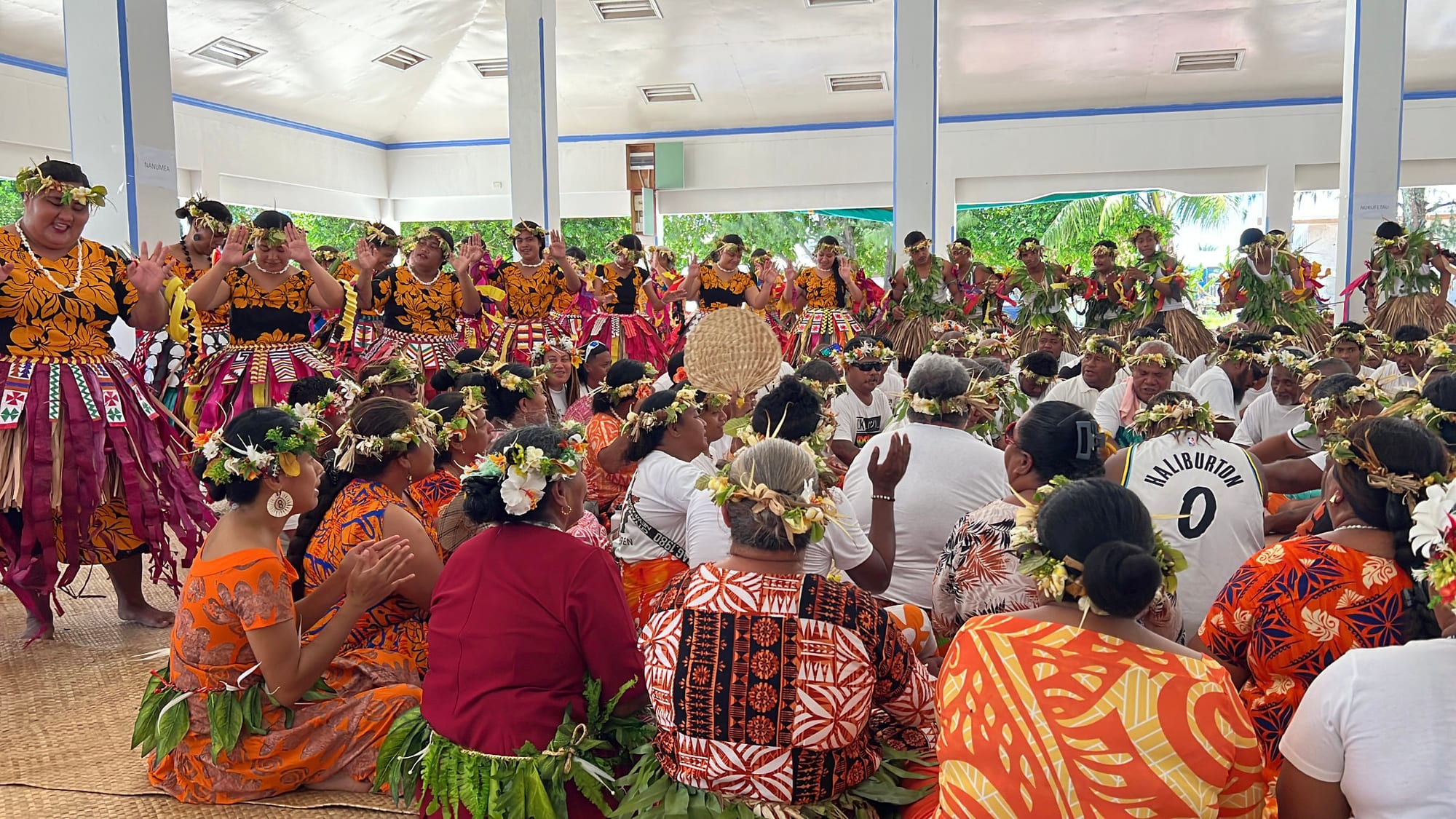
Inside an open-sided meeting hall, several dozen people sit cross-legged on mats around a low wooden box. At first everything is quiet, heads bowed. A single voice starts a verse, the others join in, and three lines of dancers in garlands and fibre skirts rise to their feet. Men strike the box with open palms, a young man beats a biscuit tin with two sticks, and with every repetition the song grows faster and louder until a whistle blows, the whole hall surges to a climax and then, all at once, stops dead. After a moment of silence come cheers. This is the fatele, and it captures much of what matters in Tuvalu: a community gathered in its own hall, everyone with a part to play, and a shared performance valued more than any single performer.
Faith, identity and values
Tuvalu describes itself in the preamble to its constitution as "a Christian nation", and faith is woven through public life. Around 86 per cent of the population belongs to the Ekalesia Kelisiano Tuvalu, the Congregational Christian Church of Tuvalu, which is by law the state church and holds the privilege of leading special services at major national events. Smaller numbers belong to the Seventh-day Adventist and Brethren churches, with a few Catholics, Bahá'ís, Muslims and others. The national motto, "Tuvalu mo te Atua" — Tuvalu for the Almighty — appears on the national emblem and in the anthem.
Christianity reached the islands in 1861, when a deacon from the Cook Islands named Elekana drifted ashore after being caught in a storm, and pastors trained by the London Missionary Society in Samoa followed. For decades Samoan pastors held great influence, and the pastorate is still a prestigious calling, supported locally by deacons and lay preachers. The church's reach goes well beyond Sunday worship: according to the US State Department's religious freedom reporting, it limits social and sports activities on Sundays and encourages modest dress in villages, and the government has kept a short nightly pause in public activity in the capital so that church members can observe evening prayers.
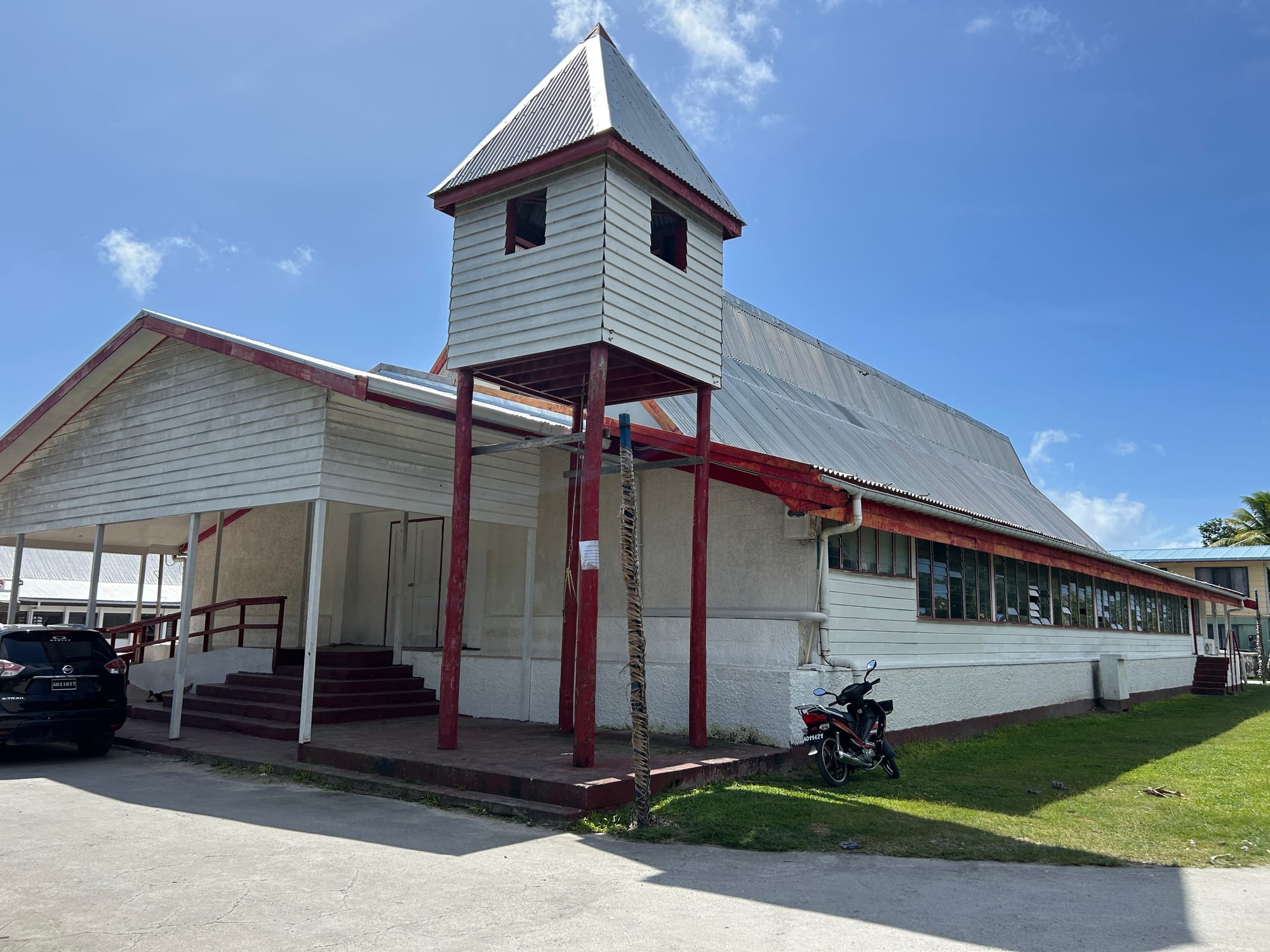
Alongside the church stands the older authority of the island community. Each island has its traditional assembly, the falekaupule, which meets in the island's meeting hall and remains central to decisions, dispute settlement and ceremony; chiefs, known as aliki, still carry ceremonial and social weight, even though missionary and colonial influence reduced their political power. The law allows these traditional councils to withhold permission for religious groups to meet publicly if they are judged to threaten the island's values and culture, and several islands have used that power to discourage minority groups.
Loyalty runs first to family and island. Guidance prepared for New Zealand's Ministry for Children notes that each family is linked to one or more islands, each with its own church, and that the bond with one's island is often felt more strongly than simply being Tuvaluan. Land is inherited within families and is both an asset and a mark of standing. The values most often named are love and mutual support within the family, respect, humility and a readiness to help those in need. Anthropologists describe social life as sociable and informal on the surface, with a strong preference for keeping relations smooth: disagreements tend to be handled indirectly, and gossip, shaming and public admonition have long done more to keep order than open confrontation.
Greetings and meeting people
The everyday greeting is "tālofa", a close relative of the Samoan word, while "fakatālofa atu" is a more formal greeting. A visitor to a home may be welcomed with "ulufale mai" — "come in". "E ā koe?" asks how someone is, "fakafetai" means thank you, "tulou" serves as "excuse me", and "tofa" is goodbye. A few words of Tuvaluan, even imperfectly pronounced, are generally received warmly; English is an official language and widely understood.
Respect is shown through the body as much as through words. Traditionally, people of lower status should not cross directly in front of those of higher status or touch their heads, and older people and those with titles are treated with particular deference. Public speaking in the formal sense — the oratory that opens and closes community occasions — has traditionally been the role of older men. Within families, women contribute fully to discussion, though men are usually the ones who make decisions.
Some relationships carry customs of their own. The relationship between a woman and her male first cousins, or a man and his female first cousins, is regarded as tapu, and such cousins traditionally avoided one another; today they are still expected to keep conversation to what is necessary. At the same time, these cousins can take a leading role in protecting and supporting each other's children. For a visitor, the practical lesson is simply that family relationships in Tuvalu carry obligations that may not be obvious from outside, and that tact and a little reserve go a long way.
Hospitality and being a guest
Tuvalu's national culture policy lists the country's "renowned welcoming ceremonies" among the core of its heritage, and a formal welcome is one of the most memorable experiences a visitor can have. Guests are received in the meeting hall, where people sit on mats spread over the floor, and the occasion brings together a feast, formal speeches and performance. At the end of a welcoming feast comes the alofa, the presentation of performances and of gifts — typically mats and handicrafts — to the visitors. Such gifts are received with thanks and treated with care, since they represent many hours of a community's work.
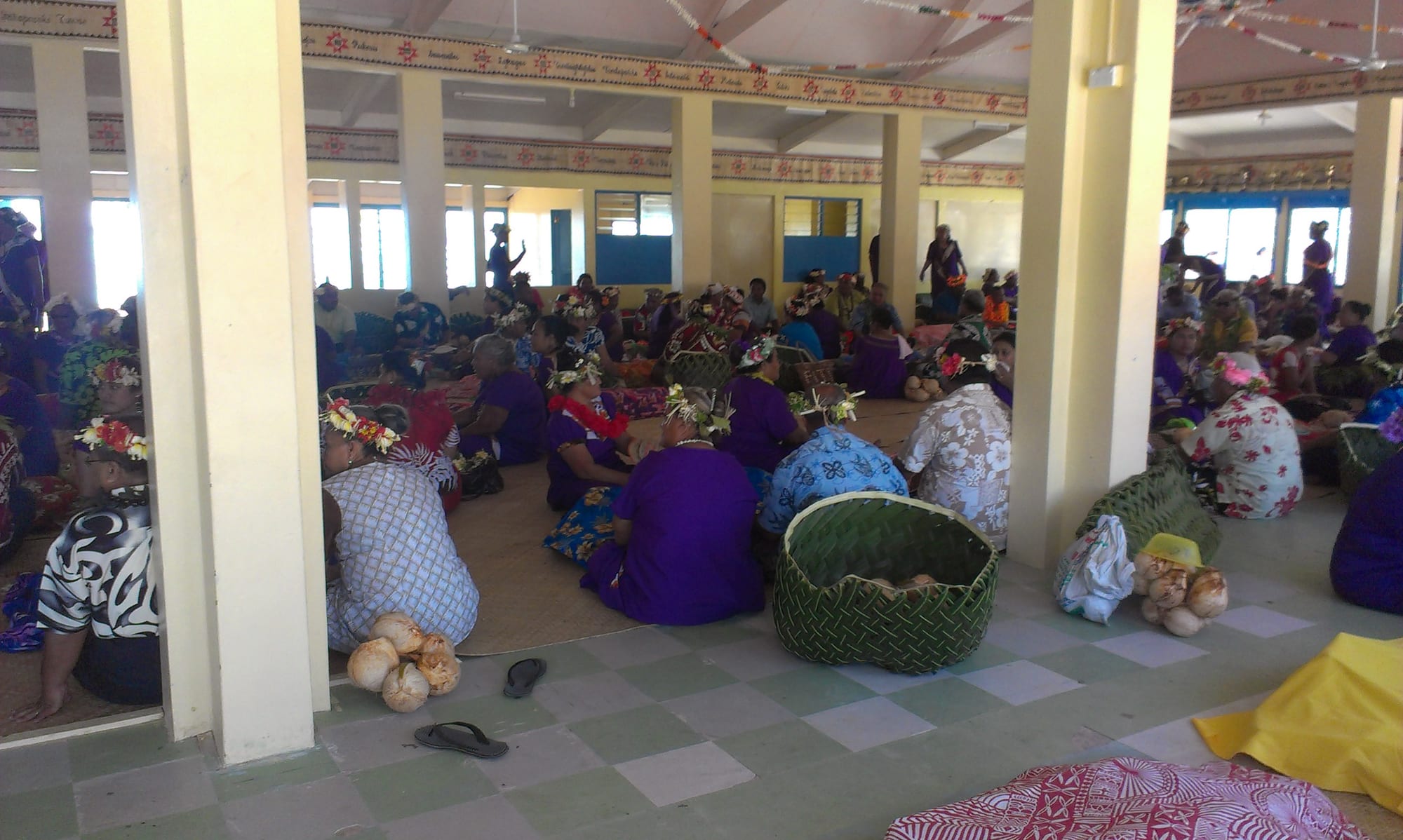
Feasts are large-scale versions of everyday meals, with the addition of pork and chicken and, occasionally, rarer treats, and they are usually organised collectively. Many island communities are divided into two or more "sides", known as feituu, which compete with each other in games and fishing and share the work of gift exchanges and communal projects — so a feast is as much a demonstration of a community's organisation and generosity as a meal. The phrase "kai mālosi" is the Tuvaluan equivalent of "enjoy your meal".
In homes and in the meeting hall alike, the expected manners are those of modesty and attentiveness: dressing respectfully and following the hosts' lead on where to sit and when to begin. The church's influence on dress is long-standing — missionaries introduced more covered clothing than the islands' earlier styles — and conservative dress remains the norm, especially in villages and on Sundays.
Festivals and life's big moments
The religious calendar shapes the year. Christmas is the longest celebration — anthropologists have noted festivities lasting several weeks and drawing on a great deal of a community's resources. Gospel Day, a public holiday in May, marks the arrival of Christianity in 1861. Independence Day on 1 October, marking independence from Britain in 1978, brings a state ceremony, the raising of the flag and a parade. Individual islands also hold their own celebrations commemorating founding ancestors and the arrival of the missionaries.
Preparation for a child's life can begin before birth. A special mat, the epa faliki, is woven from pandanus for a baby before it is born; it is where the infant will lie while being fed and cared for, and its pattern and colours are said to carry the child's genealogy, identity and hopes for the future. The weaver is a senior woman of the family. Children are cared for by a wide circle of relatives, and it has long been common for children to be adopted within the extended family, often by grandparents or by a brother or sister without children of their own.
Marriage is regarded as one of the most important rites of passage, since it legitimises children and creates links of kinship that bear on land rights. Weddings are organised by the families concerned, and the relatives of all four parents of the couple contribute labour, food and gifts, especially pandanus mats and clothes. Many are celebrated in the island meeting hall, which is sometimes freshened for the occasion with lase, a whitewash made from burnt coral and water.
Funerals are among the most important of the life-cycle rituals. Rather than using large shared cemeteries, many families bury their dead on their own land, often close to the house, so that those who have died remain part of the family's daily life. Graves are typically marked with stones, crosses or plaques, sometimes fenced, and decorated with flowers on anniversaries and special days.
Arts, crafts and music
The fatele is Tuvalu's most cherished musical tradition and a symbol of what it means to be Tuvaluan. It developed in its present form after the arrival of Christianity, blending Indigenous and European elements, and is usually performed in the maneapa or falekaupule meeting hall. The heart of the ensemble is the pusa, a hollow wooden box covered with mats and struck by several players at once; around it sit the singers, men and women together, and in front of them stand the dancers, whose arm and upper-body movements act out the words. Each song lasts only a few minutes, but a performance may run through an afternoon or all night. The tradition is shared with neighbouring Tokelau, but the fatele is above all identified with Tuvalu.
Celebrations, from church festivals to weddings, are often marked with a fatele, and when important guests are present the master of ceremonies may open the floor for visitors to stand up and join in. Older dance forms, the fakanau and fakaseasea, are also part of the repertoire, while church hymns and string bands are Tuvalu's other main musical traditions.
Performance costume is itself a craft. Dancers wear a titi tao skirt layered over a titi kaulama, a top known as teuga saka, and head wreaths known as fau, along with armbands and wristbands. Weaving is the principal material art: mats, baskets and fans, often decorated with dyed fibres, together with shell necklaces, are made for daily use as well as for gifts, and canoe building and the making of fish hooks are longstanding skills. Tuvalu's government lists these handicrafts, the fatele, the alofa presentation of gifts, community fishing and the cultivation of pulaka in pits among the country's living cultural heritage. The country joined UNESCO's convention on intangible cultural heritage in 2017 and has served on the convention's intergovernmental committee.
Dos and don'ts for visitors
- Do greet people with "tālofa" and say "fakafetai" for thank you; a few words of Tuvaluan are warmly received.
- Do dress modestly, especially in villages, at church and at community events.
- Do keep Sundays quiet; worship comes first, and social and sporting activities are limited on that day.
- Do accept gifts and invitations graciously at a welcoming feast, and follow the hosts' lead on where to sit and when to begin.
- Do stand up and join a fatele if the master of ceremonies invites guests onto the floor — it is meant as a welcome.
- Don't walk directly in front of elders or people of standing, and avoid touching anyone's head.
- Don't assume Western norms apply in law: sex between men is illegal in Tuvalu, with penalties of up to 14 years in prison.
What to take away
Tuvalu's customs rest on the same foundations as its best-loved dance — faith, family, island and a community that performs together — and visitors who arrive modestly, greet warmly and join in when invited will find themselves drawn into the circle.