Culture & Customs · United Arab Emirates
United Arab Emirates: The Quarter-Filled Cup
A small Emirati citizenry rooted in Bedouin and seafaring tradition, hosting one of the most international populations on earth, where coffee is poured by rule, the majlis is open to all comers, and conservative laws shape public life
By Globeway Editorial · 30 September 2026
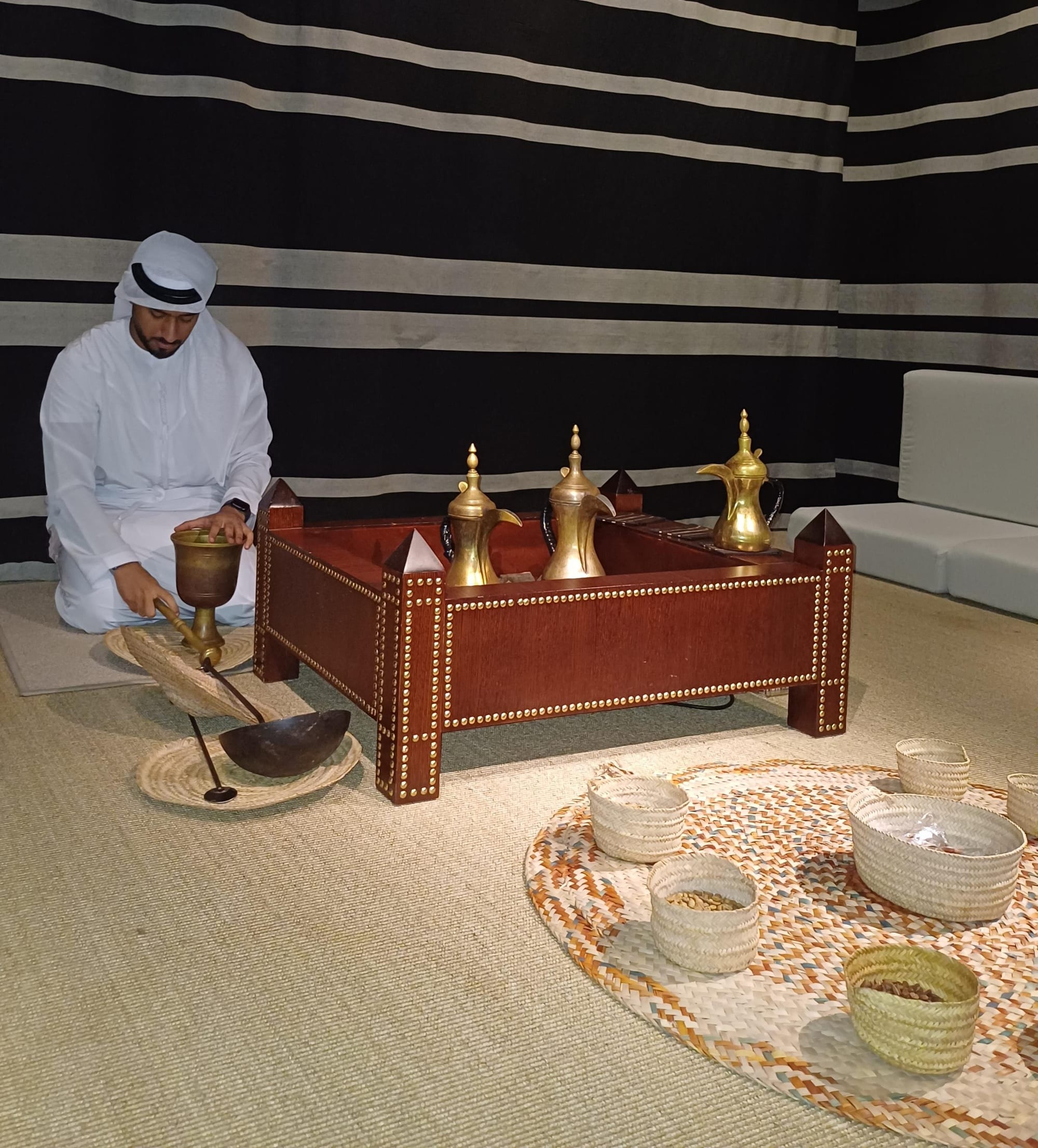
In a majlis, the long reception room lined with cushions, a young man moves among the guests with a brass coffee pot held in his left hand, thumb pointing to the top, and small cups in his right. He serves the oldest and most important guest first. Each cup is filled only a quarter of the way, with coffee lightly spiced with cardamom, and is refilled as soon as it is empty, until the guest gives the cup a small shake to say that they have had enough. It is a quiet ritual, over in minutes, but it carries the heart of Emirati manners: generosity offered without fuss, respect shown in the order of things, and a set of understood signals that make everyone feel at ease.
Faith, identity and values
Islam is the state religion and the frame of public life. According to the US State Department's 2023 religious freedom report, only around 11 per cent of the roughly ten million residents are Emirati citizens, and more than 85 per cent of citizens are Sunni Muslims, with most of the rest Shia. The remaining nine in ten residents come from around the world, above all South and Southeast Asia, and the last census to record religion found about three-quarters of the whole population to be Muslim, with Christians, Hindus, Buddhists, Sikhs and others making up the rest. Churches and temples operate openly, but Islam sets the rhythm of the week and the year. The call to prayer sounds five times a day, Friday is the most important day for congregational prayer, and the holy month of Ramadan changes working hours and public behaviour for everyone.
Emirati identity is rooted in the desert and the sea: in Bedouin herding and poetry on one side, and in fishing, trading and pearl diving on the coast on the other. Family, and beyond it the wider tribe, remains the foundation of social life. Emirati men generally wear the white kandura, a long robe, with a head cloth, and Emirati women the black abaya over their clothes. Tradition is treated as something to be actively kept alive, and the country has placed an unusually long list of customs on UNESCO's registers of intangible heritage.
Communication tends to be courteous and indirect. The cross-cultural consultancy Commisceo notes that a "yes" may signal acknowledgement rather than agreement, that outright refusals are usually softened or avoided, and that hierarchy and trust shape how openly people speak. Criticism, particularly of the country's rulers or of religion, is a serious matter socially and legally.
Greetings and meeting people
The standard greeting is "As-salaam alaikum", "peace be upon you", answered with "Wa alaikum as-salaam". Greetings are unhurried, with polite enquiries about health and family before any business, and the most senior person present is greeted first. Titles and family names are used until an invitation to be less formal.
Handshakes are made with the right hand, which is used for all giving and receiving; the left is considered unclean. Contact between men and women calls for care, so in mixed company it is best to wait for a woman to offer her hand.
The majlis is where much of social life happens. UNESCO, which lists it jointly for the UAE, Oman, Qatar and Saudi Arabia, describes it as a "sitting place" where people gather to discuss local affairs, exchange news, receive guests and be entertained, and where communities resolve disputes, pay condolences and hold wedding receptions. Women have their own majlis. Children learn manners there informally, accompanying their elders and absorbing the art of conversation and the oral poetry recited in it.
Hospitality and being a guest
Hospitality is a point of honour, and Arabic coffee, gahwa, is its emblem; UNESCO first inscribed it in 2015, jointly with neighbouring Arab states, as "a symbol of generosity", and the listing was extended to further countries in 2024. Its rules are precise. According to Abu Dhabi's Department of Culture and Tourism, the server holds the coffee pot, the dallah, in the left hand, and the guest receives and returns the cup with the right. The most important or oldest guest is served first, and the cup is filled only a quarter full. It is usual to drink at least one cup but not more than three, and a gentle shake of the cup signals that the guest has finished. Coffee usually comes with dates. Declining it entirely can seem cold, and accepting refreshments is itself a courtesy.
At a meal, the host sets the pace and guests follow. Food is eaten and passed with the right hand. Gifts are not expected at a first meeting, but a small, thoughtful present is welcome as a friendship develops. Alcohol and pork products are never suitable.
Outside the home, visitors are guests of a society whose public norms are written into law. The UK government's travel advice asks women to cover shoulders and knees in public and to avoid transparent clothing, and swimwear belongs only on beaches and at pools. Women visitors are not expected to cover their hair except in mosques, where both men and women cover arms and legs and women wear a headscarf. Public displays of affection are frowned upon, and kissing in public can lead to arrest. Swearing and rude gestures, including online, are illegal. Alcohol is served in licensed venues, but it is illegal to drink or be drunk in any public place; the legal drinking age is 21 in Abu Dhabi and Dubai, and drinking or possessing alcohol is illegal in Sharjah.
Festivals and life's big moments
Ramadan is the heart of the religious year. Muslims fast from dawn to sunset, evenings are given over to breaking the fast with family and friends, and working hours shorten. Non-Muslims are not expected to fast, but they are expected to avoid eating, drinking, smoking or chewing gum in public during daylight, including in a car, to avoid loud music and dancing, and to dress with particular care. The month ends with Eid al-Fitr, and Eid al-Adha follows some ten weeks later; both are public holidays, marked with prayers and family visits.
A fortnight before Ramadan, on the fifteenth night of the month of Sha'ban, comes Haq Al Laila, "for this night". Children in traditional dress carry colourful cloth bags from door to door, singing for nuts and sweets. Once a street-to-street custom, it is now also celebrated in schools and offices.
The national calendar centres on 2 December, the founding of the federation in 1971, celebrated as National Day or Eid Al Etihad with flags, fireworks and public celebrations across the country. Commemoration Day, on 30 November, honours those who have died in service of the country and is marked with a minute of silence.
Weddings are large family affairs. The bride's henna, applied before the wedding with its own rituals and gatherings, and the zaffa, the joyful musical procession that accompanies the couple into married life with drums, singing and the throwing of sweets and flowers, have both been added to UNESCO's lists in recent years, the zaffa jointly with several other Arab countries.
Funerals follow Islamic practice, and burial takes place as soon as possible, preferably on the day of death. There follows the azza, up to three days in which the bereaved family receives condolences, usually with men in the majlis and women in a separate room. As The National has described it, a visitor announces their arrival with "as-salaam alaikum", shakes hands with everyone seated, and offers the family the words "azam Allah ajrak", "may God increase your reward", before sitting for a while. Refreshments are served, and only good things are said of the person who has died.
Arts, crafts and music
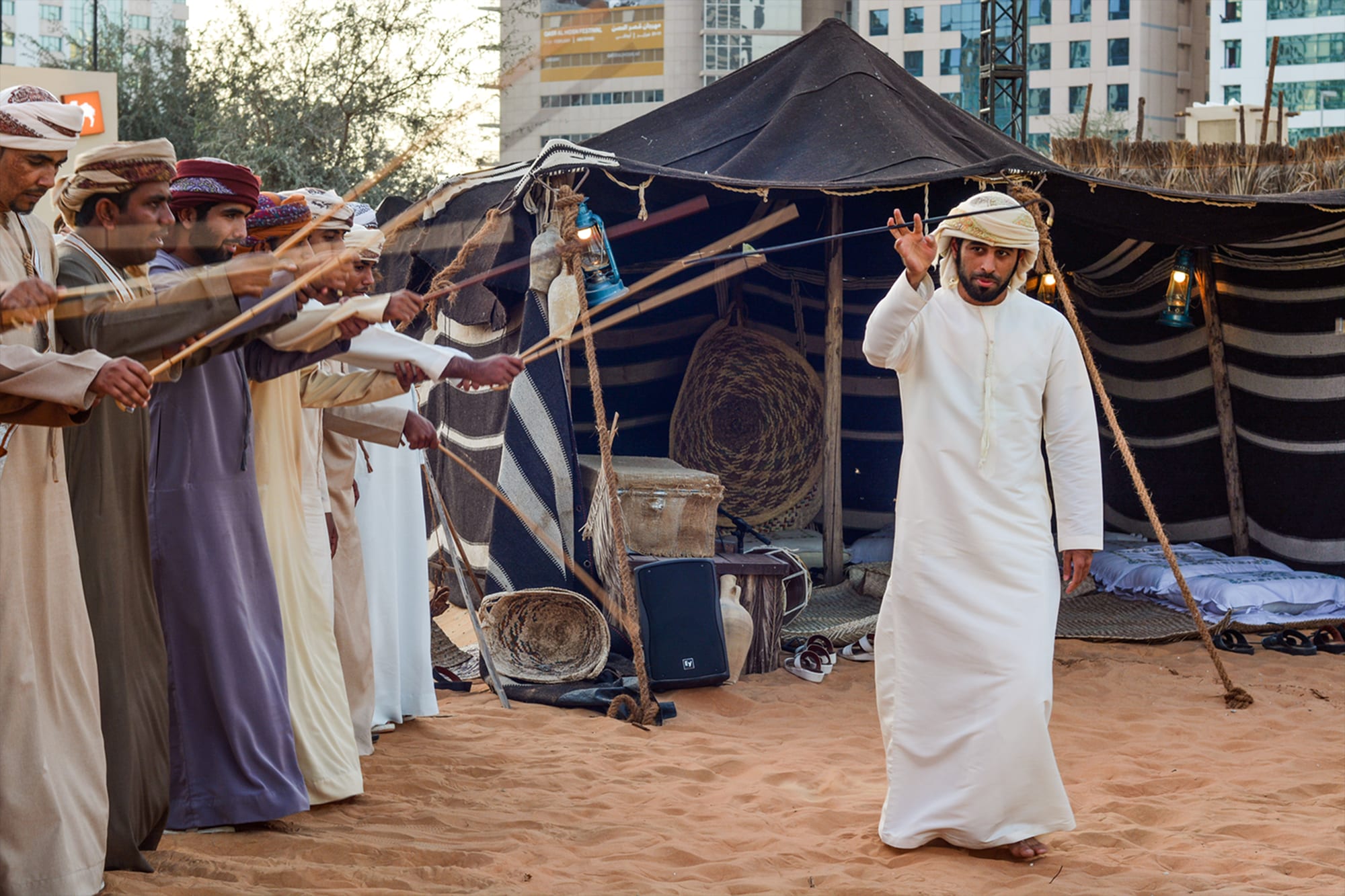
Poetry holds a special place in Emirati culture, above all Nabati poetry in the spoken Arabic of the Gulf, passed on through recitation in the majlis. Performance often combines verse with music and movement. In the Ayyala, which UNESCO lists for the UAE and Oman, two rows of men face each other holding thin bamboo canes that stand for spears or swords, moving their heads and canes in time with large and small drums, tambourines and cymbals while chanting poetry, in a performance that recalls a battle. Other performers move around the rows, sometimes throwing a sword or rifle into the air and catching it, and in the UAE girls in traditional dress stand at the front tossing their long hair from side to side. It is performed at weddings, national celebrations and other festive occasions.
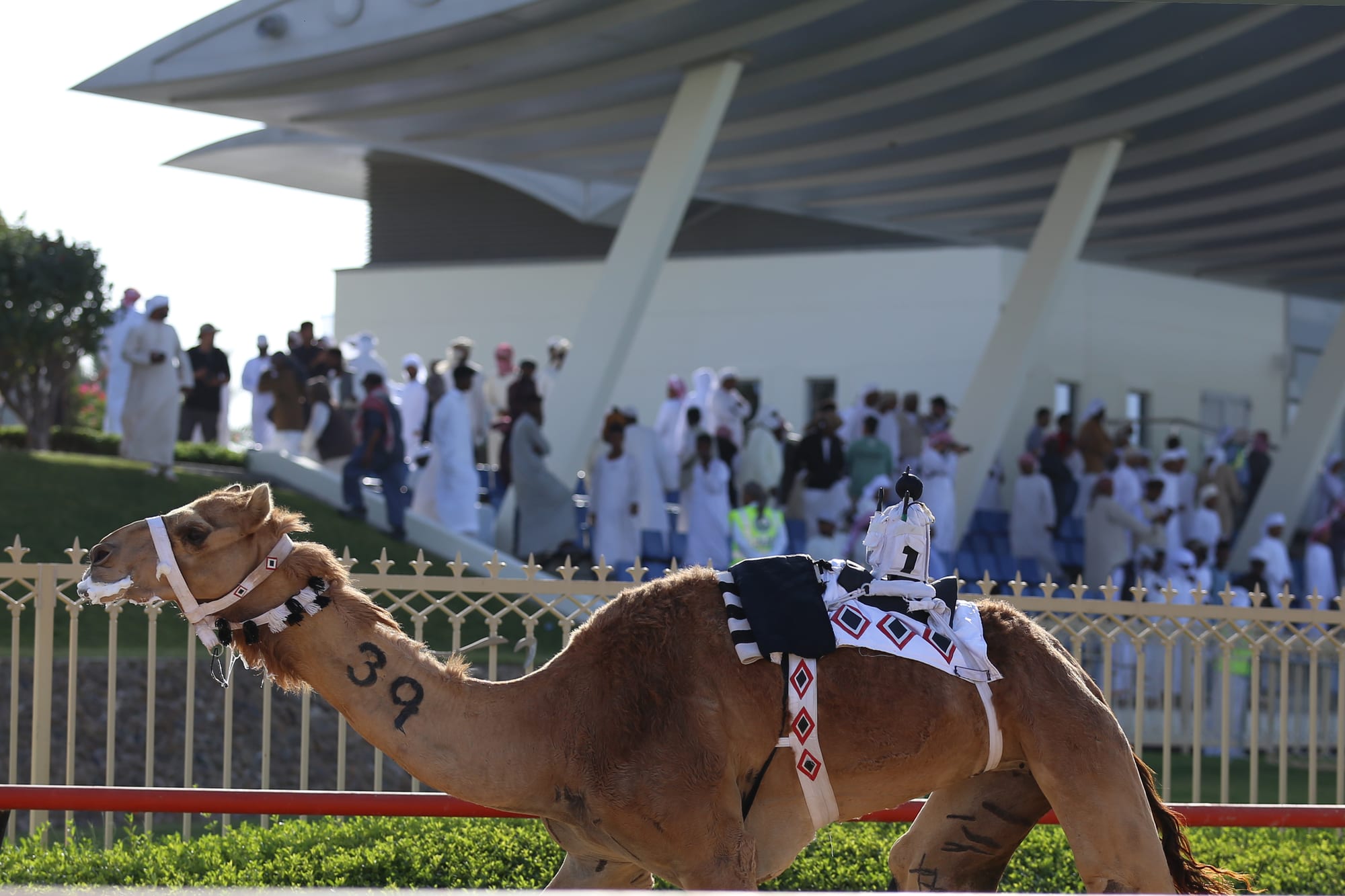
Heritage sports carry the same weight. Falconry, inscribed on UNESCO's list alongside many other countries, and camel racing, listed for the UAE and Oman, are both living traditions with devoted followings and a place in national festivals. Traditional crafts have also been recognised by UNESCO, among them Al Sadu weaving, Al Talli embroidery and the making of the bisht, the cloak worn by men over the kandura. Arabic calligraphy remains an honoured art, visible in mosques, public buildings and contemporary galleries alike.
Dos and don'ts for visitors
- Do check the latest government travel advice before and during any trip; the UAE has been affected by the 2026 war involving Iran, and sharing footage or unverified accounts of attacks online can lead to prosecution.
- Do dress modestly in public, covering shoulders and knees, keep swimwear for the beach and pool, and cover arms, legs and (for women) hair when visiting a mosque.
- Do use the right hand to greet, eat, give and receive, wait for a woman to offer her hand before shaking it, and accept at least one cup of coffee, giving the cup a small shake when finished.
- Don't eat, drink, smoke or chew gum in public in daylight during Ramadan, or play loud music.
- Don't drink alcohol or appear drunk in any public place; alcohol is for licensed venues only, and is banned entirely in Sharjah.
- Don't photograph people without their permission, or photograph government and military buildings.
- Don't kiss or show affection in public, swear or make rude gestures, including online; all can lead to arrest or deportation.
- Do be aware that there is zero tolerance of drugs, including some medicines and CBD products, and that same-sex relations are illegal.
What to take away
Behind the modern skyline, the Emirates are still governed by old courtesies of the majlis and the coffee pot, and a visitor who dresses and behaves with restraint in public will find those courtesies extended with real generosity.