Culture & Customs · Venezuela
Venezuela: The Blessing Asked at the Door
A largely Catholic country of saints, drums and dancing devils, where the young ask their elders for a blessing, guests are warmly expected to linger, and family holds together across borders
By Globeway Editorial · 30 September 2026
A teenager heads for the front door. Before it closes behind them, they turn back towards their grandmother and call out a single word: "¡Bendición!" Without looking up, she answers "Dios te bendiga" — God bless you — and perhaps makes the sign of the cross in the air. The exchange takes a second and happens many times a day, on leaving the house and on coming home, with parents, grandparents, aunts, uncles and godparents. Small children learn it before they can say much else, their hands pressed together as they ask. Few customs say as much about Venezuela in so little: respect for elders, a Catholic inheritance worn lightly, and a family that expects to be greeted and blessed at every coming and going.
Faith, identity and values
Venezuela has no official religion, but Catholicism, brought by Spanish missionaries in the sixteenth century, runs deep through the country's customs. A 2011 survey recorded about 71 per cent of Venezuelans as Catholic and 17 per cent as Protestant, with the rest largely unaffiliated, and Cultural Atlas notes that Protestant and especially Pentecostal churches have grown, drawing many who were raised Catholic. For a large share of Catholics, faith is expressed less through weekly Mass than through the rhythm of the year: Christmas, Holy Week, the feast days of patron saints and the processions that carry images of Christ, the Virgin and the saints through the streets.
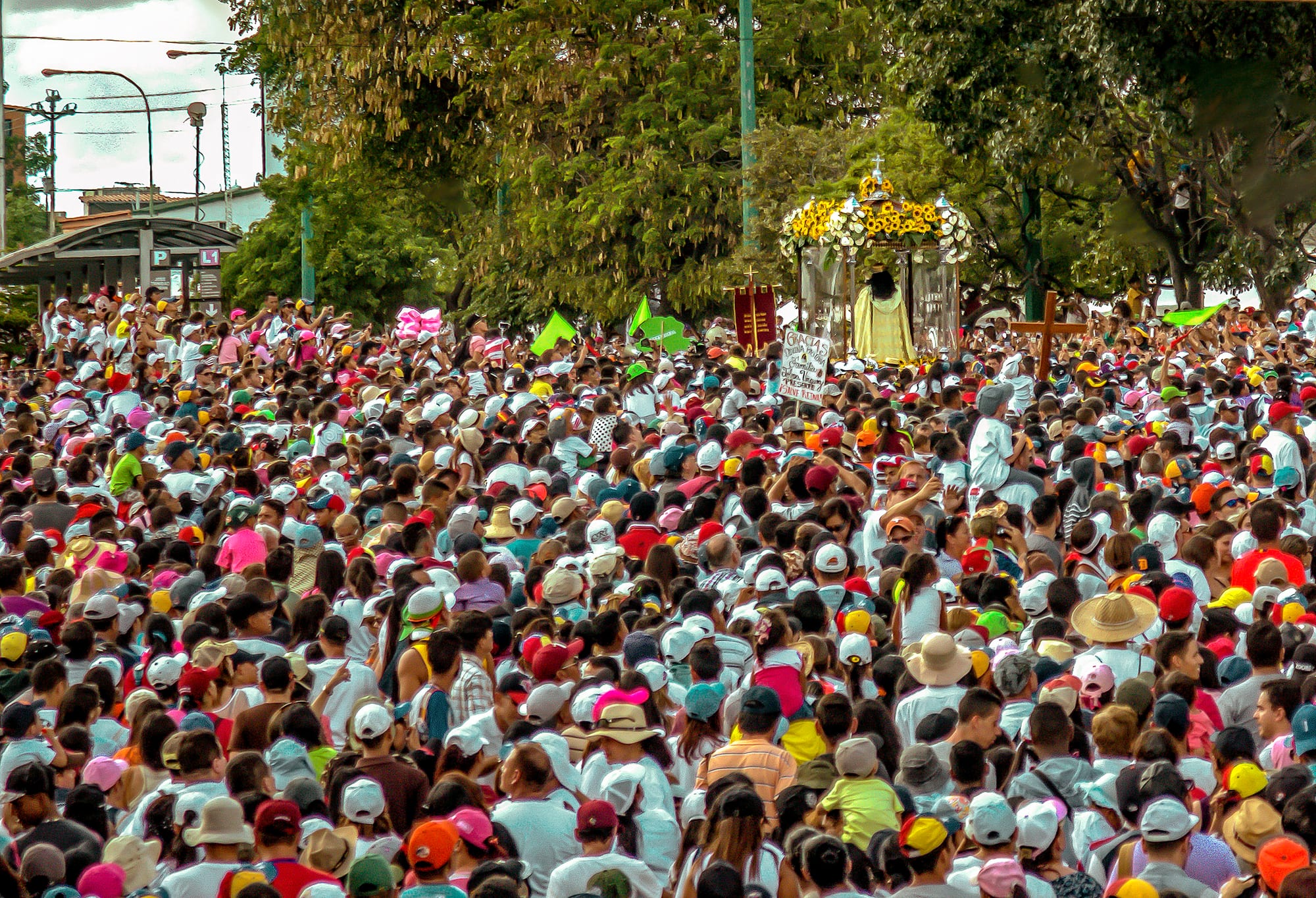
Alongside the churches sits a broad world of popular devotion. Folk practices mixing Catholic veneration of saints with spiritism and older beliefs are found across social classes, often kept private. The best known is the cult of María Lionza, a figure from Venezuelan legend venerated as a goddess, whose followers hold rituals to summon spirits. Santería, which blends Yoruba religion with Christianity and spiritism, also has a following. Many Venezuelans move between these worlds without feeling any contradiction.
Beneath faith lie shared values. Family comes first, and it is a wide family: godparents, usually close friends of the parents, are counted as relatives, and adult children often live at home until they marry or can support themselves. Care flows both ways across the generations, and elderly parents usually move in with their children rather than into institutional care. Mothers and grandmothers hold real authority in the home. Simón Bolívar, the Liberator, is the great unifying figure of national identity, standing for fairness and equality. Warmth, spontaneity and a taste for dark, self-mocking humour help people make light of hard circumstances — and circumstances have been hard. Years of economic and political crisis have scattered families abroad: the UN-backed R4V platform counted nearly seven million Venezuelan refugees and migrants in Latin America and the Caribbean alone in 2026. The year brought fresh upheaval too: a United States military intervention in January, in which President Nicolás Maduro was captured and Vice President Delcy Rodríguez became acting president, and two earthquakes in June that killed thousands in the north. Through it all, staying in close touch with relatives, near and far, is now part of daily life.
Greetings and meeting people
On first meeting, people shake hands and hold eye contact, which is taken as a sign of respect and attention. Once acquaintance turns into friendship, greetings grow warmer: an abrazo, a hug with a pat on the shoulder, between men, and a single kiss on the right cheek when a woman is greeting or being greeted. In business, a cheek kiss is fine if the other person begins it. The same gestures are repeated on parting, and it is good manners to greet the eldest person in a group first and to say goodbye to each person individually rather than with a wave to the room.
Titles matter until they are waived. People are addressed as Señor or Señora with their surname until they invite the use of first names. The everyday greetings are "buenos días", "buenas tardes" and "buenas noches", and the bendición described above is a family custom rather than something expected of visitors, though it is widely understood.
Conversation is lively and animated, often with several people talking at once, and physical contact between friends of the same gender, a hand on the arm or around the shoulder, is normal; pulling away can seem cold. Venezuelans tend to be open about their feelings but may take a long, storytelling route to a point. A few gestures are best avoided: pointing at someone with one finger is impolite, and the circle made with thumb and forefinger to mean "okay" elsewhere carries an offensive meaning. Appearance is also read as respect, and people take care to be neatly dressed in public.
Hospitality and being a guest
Hospitality is generous, even in lean times, and coffee is its first sign: a guest is rarely in a home for long before a small cup is offered. Timekeeping differs by setting. Punctuality matters at work, but for a party or a meal at home it is normal to arrive somewhat late, and turning up exactly on time may catch hosts still getting ready. Gatherings are elastic in other ways too. Friends sometimes bring along people who were not invited, known jokingly as arroceros, and this is generally accepted, while children come along to adult events and may fall asleep as the evening carries on. A small gift, such as wine or something homemade, is appreciated. Shoes stay on indoors.
At the table, everyone waits until all are seated and the host says "buen provecho" before starting. Hands should stay visible, resting on the table, though elbows should not. Anyone eating should offer a share to those who have nothing, and whether to clear the plate or leave a little depends on the household, so it is worth watching what others do. The usual toast is "¡salud!", to health. Drinking is a normal part of social life, but drunkenness is frowned upon. Two small superstitions are worth knowing: passing the salt directly from hand to hand is thought to bring bad luck and even a quarrel, and knives are avoided as gifts because they suggest cutting a friendship. When eating out, men have traditionally paid for women.
Festivals and life's big moments
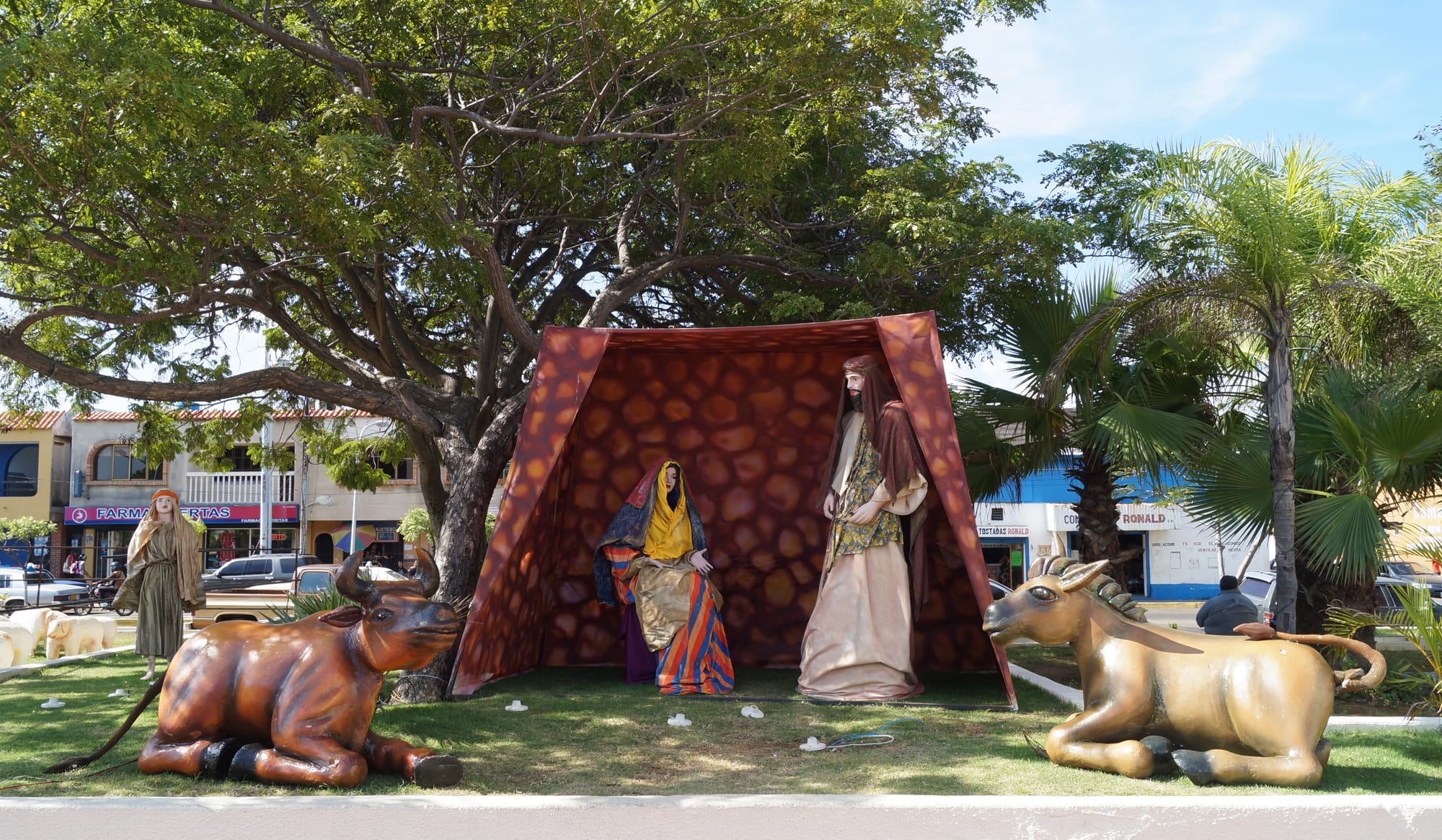
The Christmas season is the most loved time of year. From 16 to 24 December, parishes hold the misas de aguinaldo, nine dawn Masses traditionally celebrated at about five in the morning. Unusually for Advent, a season usually kept in a more subdued mood, they are filled with festive music: gaitas and villancicos, or Christmas carols. Large nativity scenes are set up in churches, and after Mass the congregation shares coffee, hot chocolate, cake or pan de jamón. Some parishes have moved the services later in the day because of safety concerns.
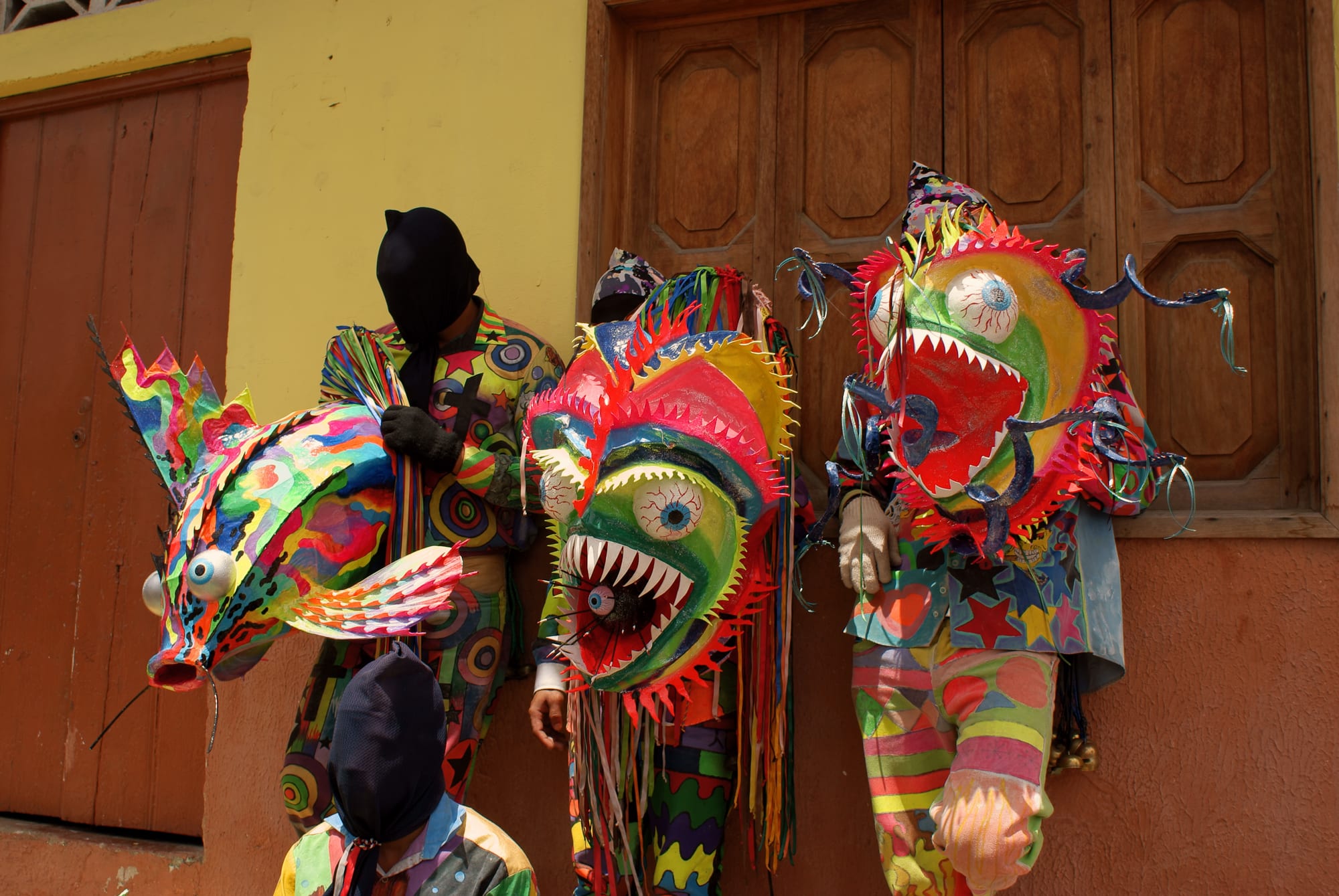
Several of Venezuela's religious festivals are on UNESCO's list of intangible cultural heritage. The most striking are the Dancing Devils of Corpus Christi, held by confraternities in small communities of the central coast. Dancers in masks, each group with its own style, dance backwards through the streets as an act of penitence while a priest carries the Blessed Sacrament. They wear crosses, scapulars and blessed palm leaves for protection, and the day ends with the devils surrendering to the Sacrament, a sign of good triumphing over evil. The dancers, called promeseros, keep a lifelong promise, and women organise much of the ritual, from the spiritual preparation of children to preparing food.
In Afro-Venezuelan communities, the festive cycle of Saint John the Baptist runs from early May to mid-July, with drumming, singing, dancing and processions carrying the saint's image. The most important dates are 23 and 24 June, and on 24 June the image is baptised in the local river. For its followers, the cycle is a remembrance of enslaved ancestors and a celebration of freedom. The Parranda de San Pedro and the carnival of the mining town of El Callao are also on UNESCO's list, and carnival and Holy Week are observed nationwide.
Family milestones follow Catholic tradition. A girl's fifteenth birthday, her quinceañera, is a major celebration marked with gifts. Before a wedding, some men still ask the woman's father for her hand, a custom called pedir la mano. Only a civil ceremony makes a marriage legal, but most couples also hold a religious one. When someone dies, family and friends gather for the velorio, a wake held through the night before the burial. Prayers and the rosary are said, visitors often come in turns, and cups of coffee are served to keep the mourners company until morning. It is common for prayers to continue in the novenario, nine days of prayer for the dead after the funeral.
Arts, crafts and music
Music runs through Venezuelan life, and its best-loved folk form is the joropo, inscribed on UNESCO's list in 2025. Born from the meeting of Indigenous, African and European traditions, it combines music, sung poetry and dance, with lyrics about love, nature, humour and daily life. The instruments vary by region but typically include the harp, the cuatro, a small four-stringed guitar, the maracas, the violin and the accordion. Couples dance it holding each other at a slight distance, starting in a waltz position, and joropo parties can go on for many hours. Children learn it at home and in joropo schools, along with the traditional dress that goes with it. The work songs of the plains, which Venezuela shares with Colombia, are on UNESCO's list of heritage in need of urgent safeguarding.
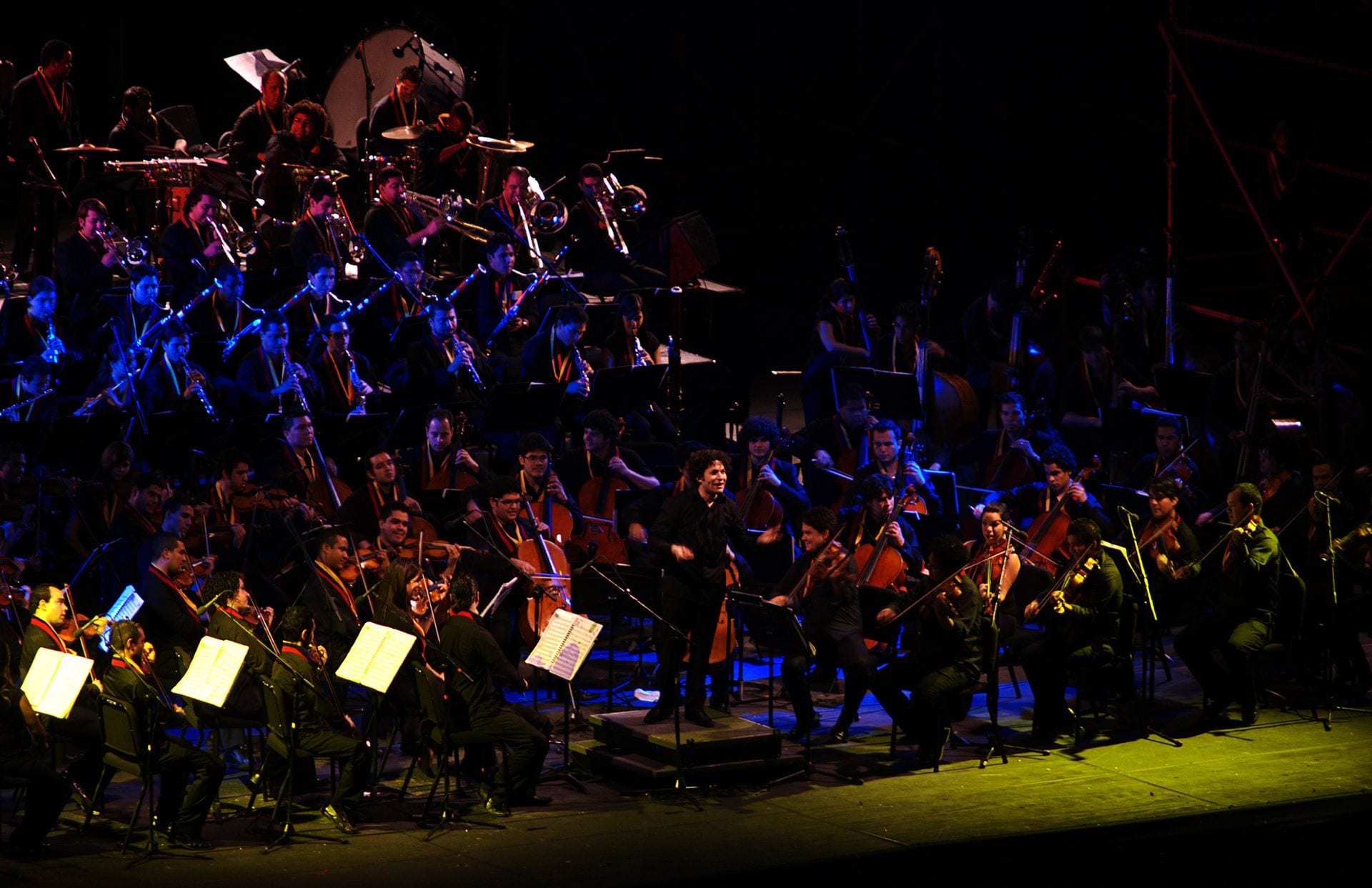
Venezuela is also known worldwide for a very different musical achievement. In 1975, José Antonio Abreu began the work that became El Sistema, a national network of youth and children's orchestras and choirs aimed particularly at children from poorer families, with playing music together used as a means of social integration. It grew to involve hundreds of thousands of young people in orchestras across the country. Its flagship is the Simón Bolívar Symphony Orchestra, and its best-known product is the conductor Gustavo Dudamel.
Popular music is just as present, from salsa, merengue and bolero to reggaeton, and for the millions of Venezuelans living abroad it is one of the strongest links with home. Crafts carry the same mix of faith and festival: the painted devil masks of Corpus Christi, each confraternity with its own distinctive style, are among the most recognisable objects of Venezuelan folk art.
Dos and don'ts for visitors
- Do check the latest government travel advice before any trip; most governments advise against all or all but essential travel to Venezuela, and the earthquakes of 24 June 2026 badly damaged Caracas, La Guaira state and the main airport at Maiquetía.
- Do greet the eldest person first, and say goodbye to each person individually when leaving.
- Do use Señor or Señora with a surname until invited to use first names.
- Do dress neatly; care over appearance is read as a mark of respect.
- Do wait for everyone to be seated and for the host's "buen provecho" before eating, and keep hands visible on the table.
- Don't pass the salt from hand to hand or give knives as gifts; both are thought to bring bad luck.
- Don't point at people with one finger or use the thumb-and-forefinger "okay" sign, which is offensive in Venezuela.
- Don't photograph police, soldiers or security installations, and stay away from demonstrations.
What to take away
Venezuelan customs rest on warmth and on family — the blessing asked at the door, the coffee offered to every guest, the long night of the wake — and they have held firm through hard years, at home and among the millions who have carried them abroad.