History · Western Sahara
Western Sahara: The Last Colony
A stretch of Atlantic desert the size of Britain — a Spanish colony until 1975, then claimed by Morocco and Mauritania, fought over with the Polisario Front, and still, half a century later, the only African territory on the UN's list of non-self-governing territories
By Worldlore Editorial · 30 September 2026
An unfinished decolonisation
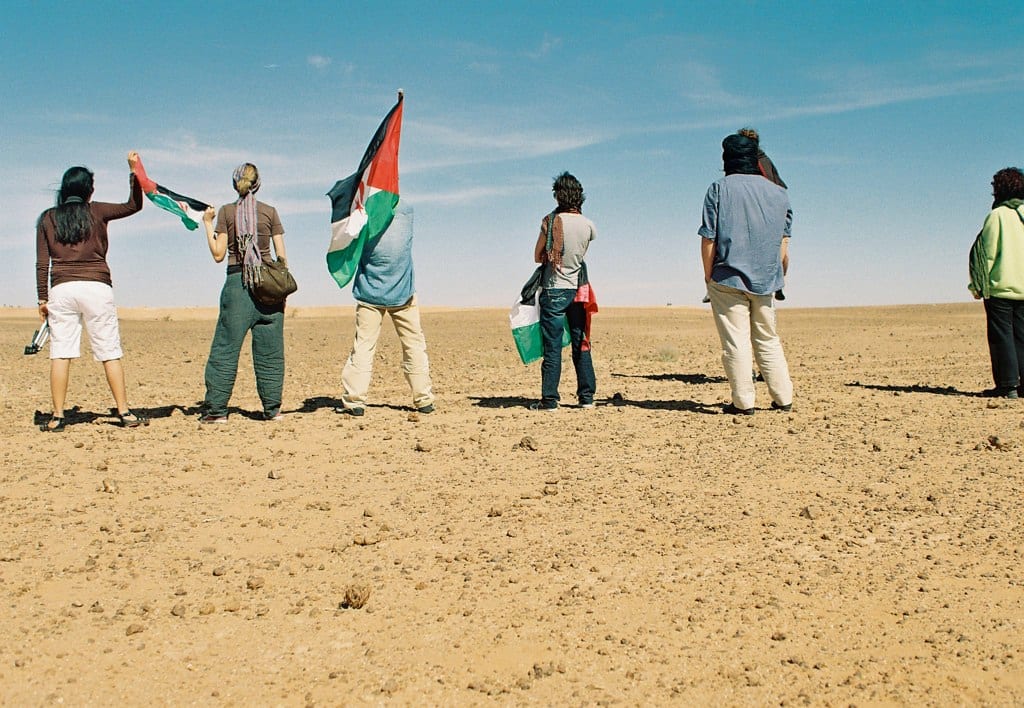
Western Sahara is a sparsely populated territory of Atlantic coast and Saharan interior, roughly the size of the United Kingdom, with perhaps 600,000 people. Its status is disputed: Morocco controls about four-fifths of it and considers it an integral part of the kingdom; the Polisario Front, backed by Algeria, proclaims it the Sahrawi Arab Democratic Republic (SADR) and controls the rest. The United Nations still lists it as a "non-self-governing territory" whose decolonisation is incomplete — the only such case in Africa, which is why it is often called "Africa's last colony". This account outlines the history and attributes the competing claims rather than adjudicating them.
A short history
- to 1800s
The Sahrawi tribes
Nomadic Arab-Berber (Hassaniya-speaking) tribes; no centralised state.
- 1884
Spanish claim
Spain declares a protectorate over the coast at the Berlin Conference era.
- 1934–1958
Spanish Sahara
Spain consolidates control of the interior.
- 1965
UN decolonisation call
The UN begins pressing Spain to decolonise.
- 1973
Polisario founded
A Sahrawi liberation movement launches an armed struggle against Spain.
- 1975
The turning point
The ICJ opinion; the Green March; the Madrid Accords; Spain withdraws.
- 1975–1991
The war
Morocco and Mauritania invade; Polisario fights on; Mauritania withdraws in 1979.
- 1991
Ceasefire
A UN mission (MINURSO) is deployed to organise a referendum.
- 2020
Ceasefire ends
Fighting resumes at low intensity along the Wall.
The Sahrawi and Spanish Sahara
The territory's people, the Sahrawi, are Hassaniya Arabic-speaking tribes of mixed Arab and Berber (Sanhaja) descent, historically nomadic camel herders and traders who moved across the western Sahara without regard to later colonial borders. There was no unified Sahrawi state, though the tribes had their own assemblies and, around the turn of the 20th century, resisted French and Spanish encroachment under leaders such as Ma al-Aynayn. Spain claimed the coast in 1884 and slowly extended control inland, occupying the interior only in 1934 and reasserting it after a 1956–58 uprising; it developed the huge phosphate deposits at Bou Craa and rich Atlantic fisheries, and did little else. As decolonisation swept Africa, the UN from 1965 repeatedly called on Spain to decolonise the territory and let its people decide their future.
1975: the Green March and the war
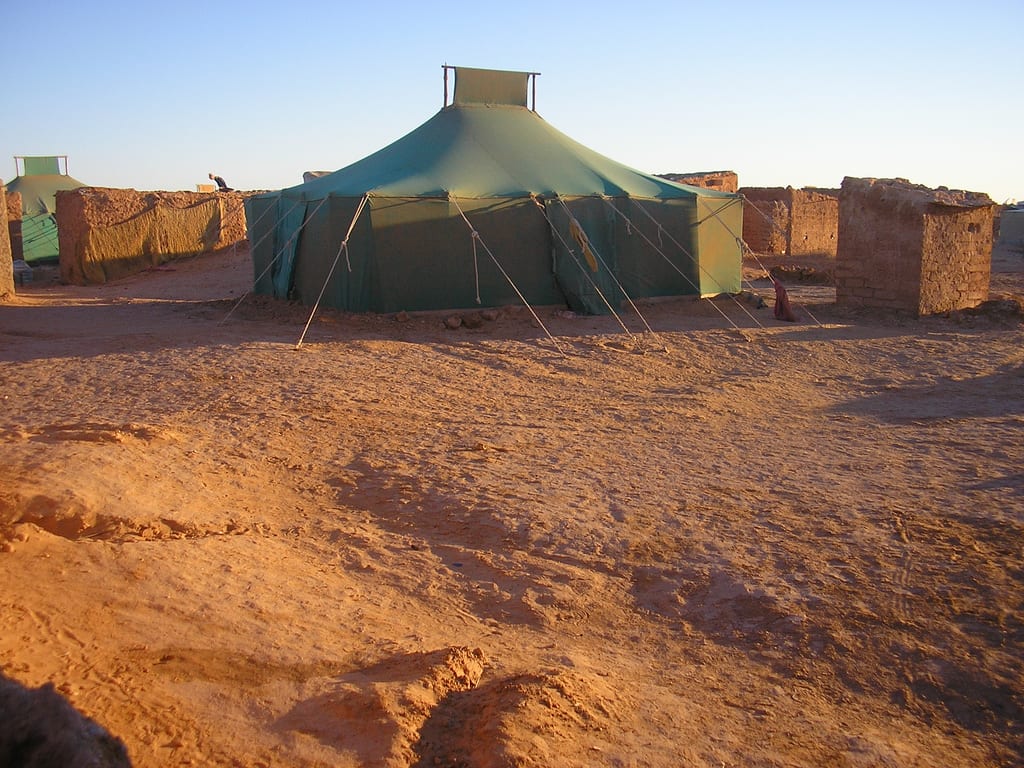
1975 was decisive. In October the International Court of Justice, asked by Morocco to rule that the territory had been Moroccan before colonisation, found that while some tribes had ties of allegiance to the Moroccan sultan and to Mauritania, there were no ties of territorial sovereignty that would override the population's right to self-determination. The same day King Hassan II announced the "Green March": on 6 November some 350,000 unarmed Moroccan civilians began crossing the border to claim the territory. With Spain's dictator Franco dying, Spain signed the Madrid Accords in November, agreeing to withdraw and hand administration to Morocco and Mauritania — an arrangement the UN has never recognised as transferring sovereignty. As Spain left in early 1976, Morocco and Mauritania divided and occupied the territory; the Polisario Front, which had been fighting Spain since 1973, declared the SADR and, armed and hosted by Algeria, fought both. Tens of thousands of Sahrawis fled to camps around Tindouf in Algeria, where many remain.
Ceasefire and stalemate
Mauritania, exhausted, made peace with Polisario and withdrew in 1979; Morocco promptly annexed its zone. Through the 1980s Morocco built the Berm — a fortified sand wall, eventually over 2,700 kilometres long, backed by minefields and radar — that pushed Polisario's forces into the barren strip along the Algerian and Mauritanian borders and secured the useful western part, including Bou Craa and the coast. A UN-brokered ceasefire in 1991 established MINURSO, a peacekeeping mission whose central task was to organise a referendum on independence or integration with Morocco. That vote has never been held: the parties could not agree on who was eligible to vote, and Morocco later withdrew its support for any option that included independence, offering instead autonomy under Moroccan sovereignty. Polisario and the SADR — a member of the African Union, recognised by dozens of states, though not by the UN or the Arab League — reject autonomy without a vote on independence.
Western Sahara now
The dispute has hardened. In 2020 Polisario declared the ceasefire over after a Moroccan military operation reopened a road at the southern border, and low-intensity skirmishing along the Wall resumed. The same year the United States recognised Moroccan sovereignty over the territory in exchange for Morocco normalising relations with Israel. Spain shifted in 2022 to backing Morocco's autonomy plan as the basis for a settlement, France said in 2024 that the territory's future lies within Moroccan sovereignty, and the United Kingdom backed the plan in 2025. In October 2025 the UN Security Council referred to the autonomy proposal as a basis for negotiations, saying genuine autonomy "could represent a most feasible outcome"; Polisario continues to demand a vote that includes independence, and the UN still lists the territory as non-self-governing. Morocco has invested heavily in infrastructure, housing and subsidies in the territory and settled large numbers of Moroccans there; human-rights groups report restrictions on pro-independence expression and protest. The economy runs on phosphates, fishing, and, increasingly, renewable energy and farming projects.
What Western Sahara carries
Western Sahara is the piece of the decolonisation map that was never filled in. In 1975, as Spain left, a UN-supervised vote on the territory's future was within reach; the Green March, the Madrid Accords and the war that followed overtook it, and fifty years later the referendum the UN keeps calling for has still not happened. The Wall, the camps and the frozen conflict are what a decolonisation left unfinished looks like.