💰 Budget
The mountains are cheaper than Sydney, but prices climb at weekends and in school holidays, when guesthouses and hotels fill with visitors from the city; midweek rates can be much lower. Walking, the lookouts and the national park cost nothing, while the cliff railways and cave tours are the main paid attractions. Food is mostly modest, with pub meals and bakeries at the cheap end.
- Daily Budget Midrange
- USD 170–290 (guesthouse or hotel room, café breakfasts and restaurant dinners, a hire car, tickets for the cliff railways)
- Daily Budget Shoestring
- USD 70–120 (hostel dorm, self-catering, the train from Sydney and local buses, lookouts and bushwalks)
Weekend rooms in Katoomba, Leura and Blackheath are often booked out well ahead; travelling up by train and walking from the station avoids parking altogether.
📅 Best Time to Visit
Autumn, from March to May, brings clear air, cool days and the turning of the exotic trees planted in the gardens. Spring runs the waterfalls hard and opens the gardens. Winter is cold and often foggy, with log fires, mid-winter Christmas dinners and occasional snow. Summer is mild by Australian standards but can be humid, with afternoon storms and bushfire risk in dry years.
⏳ Suggested Number of Days
Many visitors come up from Sydney for a single day, which is enough for the main lookouts. Staying overnight adds early morning light, an evening in the town and time for a long walk. Three or four days suit walkers and anyone wanting the neighbouring towns and the caves as well.
- First Visit
- 1–2 days
- With Surroundings
- 3–4 days
🚆 Transportation
Trains on the Blue Mountains line run from Sydney's Central station through the day, taking about two hours to Katoomba and continuing to Blackheath, Mount Victoria and Lithgow, so the towns can be strung together without a car. Local buses link the station with Echo Point, Leura and Scenic World, and a hop-on hop-off tourist bus loops the lookouts. A car gives the most freedom for the Megalong Valley, Blackheath and the caves, but the Great Western Highway is the only road through and it is slow when the city traffic returns on Sunday afternoons.
Cliff-top car parks fill early at weekends, and the walk from Katoomba station to Echo Point takes around half an hour, uphill on the way back.
🛬 Airport & Station Connections
Katoomba is about a hundred kilometres west of Sydney. Trains from Central station take roughly two hours and stop in the middle of town; driving on the M4 motorway and the Great Western Highway takes about an hour and a half to two hours, longer in holiday traffic. Coaches and tour buses run from Sydney daily, and Sydney Airport is the nearest airport, on the far side of the city.
🚶 Walkability
The town centre is compact and best walked, though Katoomba Street is a steady hill and Echo Point is a couple of kilometres from the station. Cliff-top paths connect the lookouts between Katoomba and Leura almost continuously, and stairways such as the Giant Stairway drop hundreds of steps into the valley, which makes the return climb hard work. Pavements can be slippery in frost and fog.
🛡️ Safety
Katoomba is a safe town, and the risks are those of cliff country. Unfenced lookouts, wet rock and loose sandstone cause serious falls every year; mobile coverage is patchy in the valleys; and the weather changes fast, with cold, rain and fog arriving quickly at this altitude. Bushfire is a real summer hazard — the surrounding parks burned extensively in 2019 and 2020 — and tracks close after storms and rockfalls.
Stay behind the fences at lookouts, carry water, warm layers and a torch on any walk into the valley, leave word of the intended route with someone, and check track closures and fire danger ratings before setting out. Check current official travel advice before travelling.
🌦️ Climate
A cool temperate mountain climate, several degrees colder than Sydney because of the altitude, with high rainfall and frequent cloud that sits in the valleys. Seasons are reversed from the northern hemisphere: summer runs from December to February and winter from June to August. Snow falls in most winters, on about five days a year, but rarely settles for long.
- Summer
- mild from December to February, typically 13–23°C, with afternoon thunderstorms, occasional hot spells and days of low cloud
- Winter
- cold from June to August, typically 0–10°C, with frost, fog, log fires and the chance of snow
🤝 Local Customs
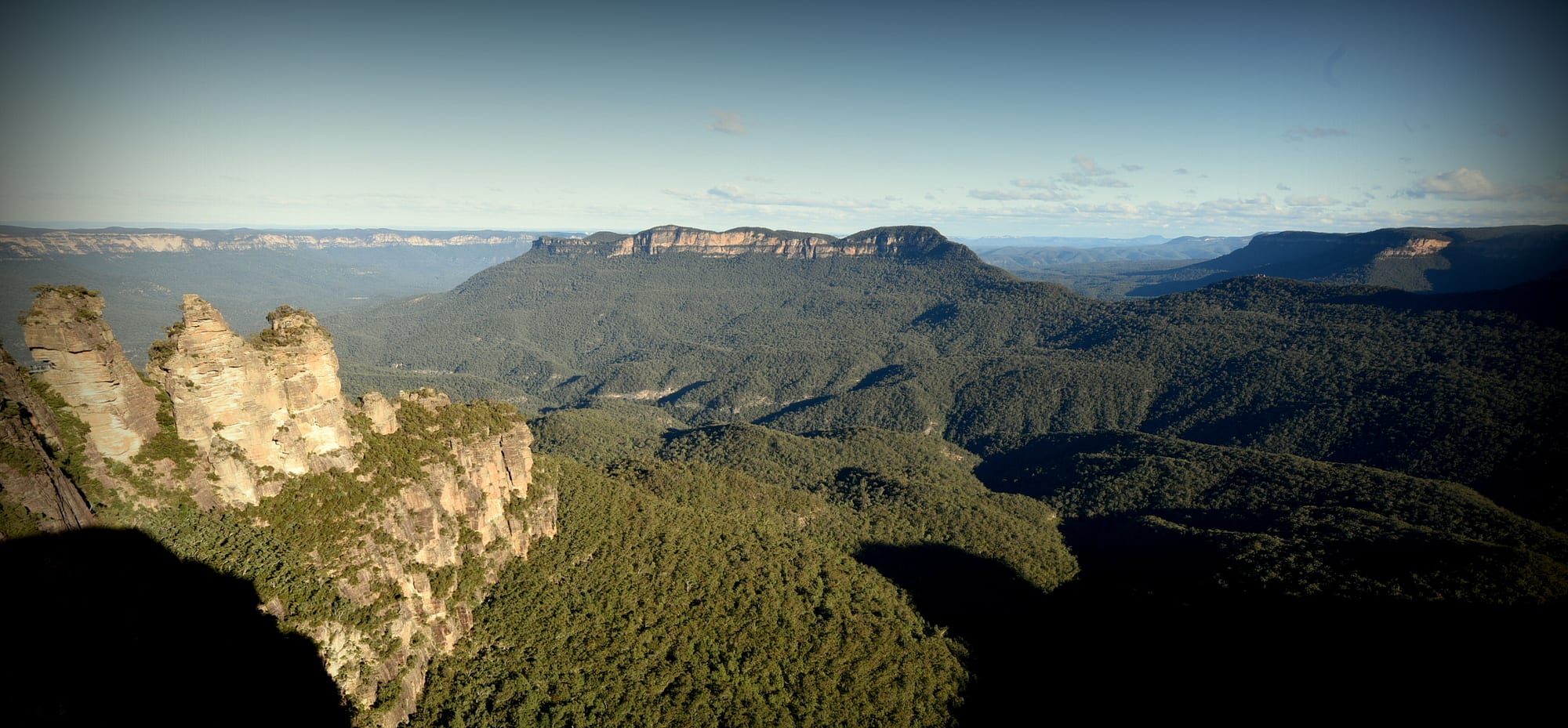
Manners are those of country New South Wales: informal, first names, and a nod or a greeting exchanged with other walkers on the tracks. Tipping is not required. The mountains have a long-standing artistic and alternative community alongside retirees and Sydney commuters, and residents are protective of the bush around them. This is Gundungurra and Darug country, and the Three Sisters formation is culturally significant to the Gundungurra people.
Keep to formed tracks, carry all rubbish back out, do not feed cockatoos or possums, and dress in layers — visitors regularly arrive from Sydney without warm clothes.
💳 Common Payment Methods
The currency is the Australian dollar. Cards and phone payments are taken almost everywhere, including at cafés and on trains and buses, and card surcharges of a percent or two are common. A little cash is handy at markets and small stalls. ATMs are on the main street, and displayed prices include the ten per cent goods and services tax.