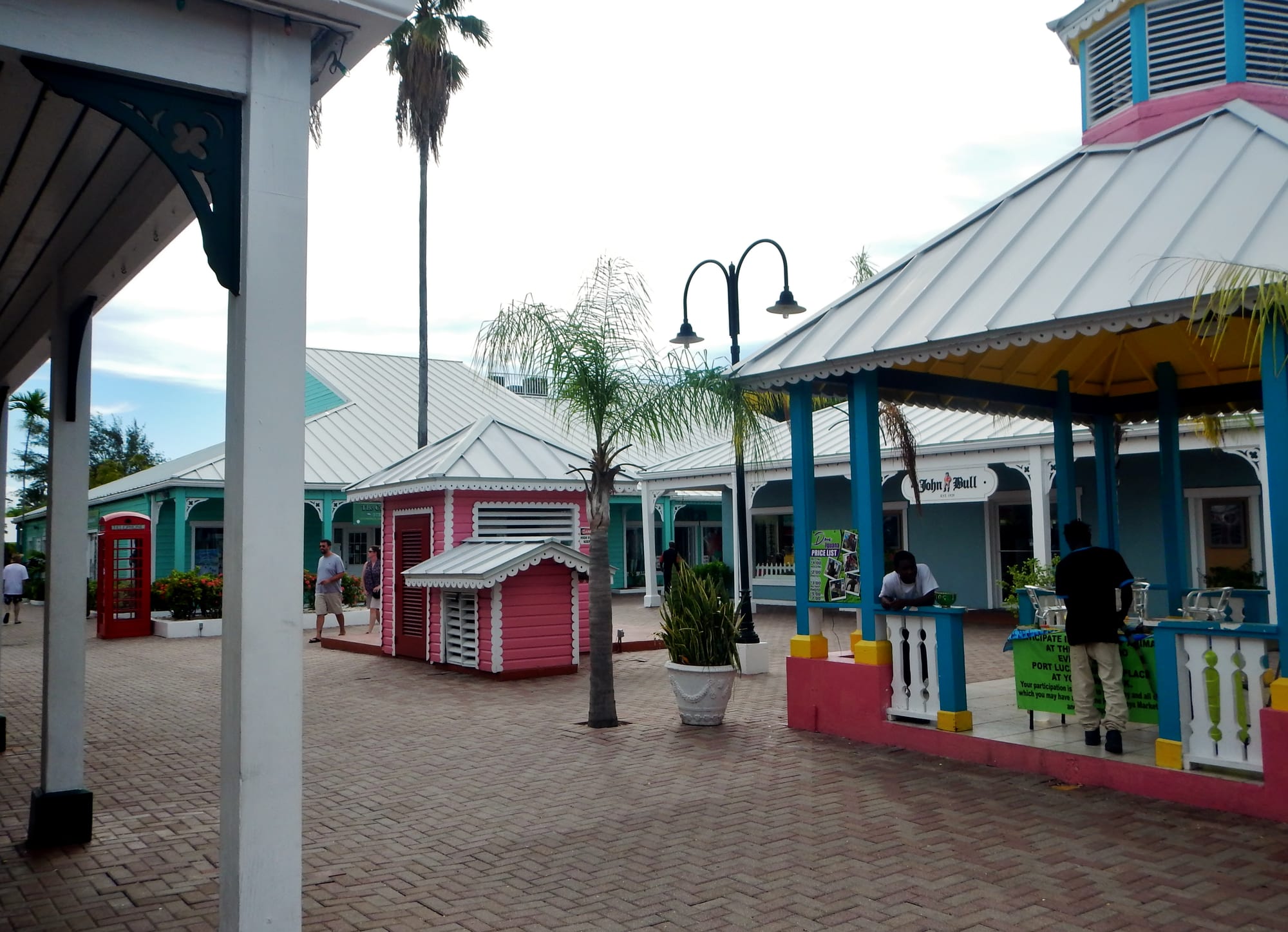
Brick-paved square of pastel pink and green clapboard shops and a pavilion with palm trees at Port Lucaya Marketplace

The Bahamas

Freeport

Shops and pavilions around the square of Port Lucaya Marketplace in Lucaya, Freeport. (qwesy qwesy / Wikimedia Commons · CC BY 3.0)

The second city of the Bahamas, on Grand Bahama, created from pine forest and swamp after 1955 as a planned free trade zone run by a private port authority. Its seaside suburb of Lucaya holds most of the hotels, beaches and marinas; hurricanes, above all Dorian in 2019, have repeatedly set the city back.

Neighbourhoods

  • Lucaya
    • First-time visitors
    • Beaches
    • Nightlife

    The seaside suburb on the south shore where most of the island's hotels stand, facing the Northwest Providence Channel. Port Lucaya Marketplace and its marina are the tourist hub, with shops, restaurants, bars and the tour desks, and the socialising centres on Count Basie Square.

    Open in Maps
  • Downtown Freeport
    • Local life
    • Business district

    The inland centre of the planned city, where residents work and shop, away from the resort life of Lucaya. The older International Bazaar shopping venue closed after the hurricanes of 2004.

    Open in Maps
  • Taino Beach and the south shore
    • Beaches
    • Quiet and residential

    The whole south side of the island is beach, among them Taino Beach, home of the most popular weekly fish fry, and Xanadu Beach.

    Open in Maps

Things to do

Parks and nature

  • Rand Nature Centrepark

    A 100-acre national park in Freeport, established in 1992 and named after James Rand, created as the first nature education centre to protect Grand Bahama's habitats.

    Open in Maps
  • Garden of the Grovespark

    The former private garden of the city's founder, Wallace Groves.

    Open in Maps
  • Peterson Caypark

    A small isle about 300 yards off the shore of Grand Bahama, counted among the island's national parks.

    Open in Maps

Beaches and the water

  • Taino Beachbeach

    A south-shore beach, best known for its fish fry.

    Open in Maps
  • Xanadu Beachbeach

    One of the beaches along the island's south shore.

    Open in Maps
  • Diving from Lucayaattraction

    Lucaya is home to one of the world's first destination dive operations, and dive shops offer wreck, shark and cave dives.

    Open in Maps

Markets

  • Port Lucaya Marketplacemarket

    The main shopping venue for visitors, a square of shops, restaurants and bars beside the marina, where boat trips and tours can be arranged.

    Open in Maps

Short trips from the city

  • Lucayan National Parkpark

    A park established in 1982 whose five ecological zones run from the pine forest to the south shore and Gold Rock Beach, with an underwater cave system of about 6.4 miles of charted tunnels.

    Open in Maps
  • West Endneighborhood

    The island's oldest and westernmost town, generally regarded as its capital, a Prohibition-era rum-running port and site of Grand Bahama's first major resort and first commercial airport in the late 1940s.

    Open in Maps

Eat and drink

Long-standing places and food districts in Freeport. Hours, ratings and directions come from your maps app, always current.

Food districts and markets

  • Taino Beach fish frymarket

    The most popular of the island's fish fries, held on the beach on Wednesday evenings, with fried fish, conch and music.

    Open in Maps
  • Port Lucaya Marketplace restaurantsneighborhood

    Bahamian and international restaurants and bars around the marina and Count Basie Square.

    Open in Maps
  • Downtown Freeportneighborhood

    Everyday local restaurants and takeaways serving conch, fried fish and peas 'n' rice to residents.

    Open in Maps

Experience Freeport

History

Grand Bahama was one of the least developed islands of the Bahamas until the mid-20th century, with a population of around 500. The Lucayans had called it Bahama, and after the Spanish enslaved them the island stayed almost empty for centuries; during American Prohibition West End served as a waystation for liquor bound for the United States, and in the late 1940s a British holiday company built the island's first major resort and first commercial airport there.

Freeport began in 1955, when the Virginian financier Wallace Groves, who had lumber interests on the island, was granted 50,000 acres of pineyard, swamp and scrub with a mandate to develop it. Under the Hawksbill Creek Agreement of August 1955 the Grand Bahama Port Authority runs the free trade zone, and businesses there were promised freedom from taxes, first to 1980 and later to 2054. Settlements such as Smith's Point, Pinder's Point and Lewis Yard grew around the planned city, and the resort suburb of Lucaya rose along the south shore.

Hurricanes Frances and Jeanne in 2004 began a long run of setbacks: recovery took nearly a decade, and the International Bazaar and a neighbouring resort and casino closed. Matthew struck in 2016, and in early September 2019 Hurricane Dorian, a Category 5 storm, stalled over Grand Bahama, raising storm surges of 12 to 18 feet, killing eight people on the island and damaging or destroying nearly half its homes. In 2024 the government and the Port Authority were in dispute over money the government said the authority owed.

Culture & Customs

Freeport is a young city without the centuries of history of Nassau, and much of its older Bahamian life survives in the settlements around it, such as Smith's Point, Pinder's Point and Eight Mile Rock. Church congregations, family gatherings and the weekly fish fry at Taino Beach are the social anchors.

The Lucayans are remembered in the names of Lucaya and Lucayan National Park, and evidence of these pre-Columbian inhabitants has been found on the island. Lucaya itself has a resort culture of its own: Count Basie Square is the centre of nights out, and Port Lucaya is a popular spring-break destination. Water is central to local life, from fishing and boating to diving — Lucaya is home to one of the first destination dive operations in the world.

Freeport and Lucaya together form one city, which is often promoted as Freeport/Lucaya and is the second largest city in the Bahamas.

Daily Life

Freeport is the second most populous city in the Bahamas, and with Lucaya it forms the country's second largest urban area. The economy rests on the free trade zone, the container port and shipping, and tourism, which draws more than a million visitors a year but has shrunk since the hurricanes of 2004. Several cruise ships call each week, and most hotels are in Lucaya along the south shore.

The city was built around the car, with wide roads and low-density subdivisions spread across former pine forest; older settlements such as Eight Mile Rock, stretched along eight miles of rocky shore, lie to the west. Daily life has been shaped by repeated hurricanes: Dorian destroyed up to 13,000 homes on the island and almost wrecked the airport, which the government bought in 2021 as part of the recovery. The long relationship between the Port Authority and the national government remains a matter of public debate.

Food

Freeport eats like the rest of the Bahamas, with seafood at the centre: conch salad, cracked conch and conch fritters, fried and grilled fish, and spiny lobster, served with peas 'n' rice, baked macaroni and coleslaw.

The fish fry is the city's great food ritual. The best known is held every Wednesday evening on Taino Beach, where stalls fry fish and conch to order and residents and visitors stay late into the evening for the music. Port Lucaya Marketplace has many international restaurants for visitors, while everyday Bahamian cooking is found in the takeaways and small restaurants of downtown and the older settlements.

Breakfasts bring souse, a lime-and-pepper broth, with johnnycake, and guava duff, a boiled pudding with guava folded into the dough and served with a sauce, is the classic dessert. Kalik and Sands beer and Bahamian rum are the standard drinks, and rum cocktails are a fixture of Lucaya's bars.

Planning tools

Budget

Like the rest of the Bahamas, Freeport is expensive because almost everything is imported. Taxis are the main cost for anyone without a hire car, because the city and its beaches are spread out.

Daily Budget Midrange
USD 300–600 (hotel in Lucaya, restaurants, a dive or boat trip, car hire)
Daily Budget Shoestring
USD 130–200 (guesthouse, fish fries and takeaways, shared taxis)

Agree taxi fares before setting off; a hire car makes the national parks and quieter beaches far easier to reach.

Best Time to Visit

Mid-December to mid-April brings the most reliable weather along with the highest prices. May and early June are a good-value shoulder. Late summer and autumn are hot and wetter, and Grand Bahama has been hit hard by hurricanes in that season.

Suggested Number of Days

Two or three days are enough for Lucaya, the beaches and a nature park. Four or five allow diving, boat trips and the far ends of the island. Cruise passengers usually have a single day in port.

First Visit
2–3 days
With Surroundings
4–5 days

Transportation

Freeport was planned around the car, and distances between downtown, Lucaya and the beaches are long. Taxis wait at the main tourist stops and agree a flat rate before the trip, based on distance and the number of passengers; tour buses run sightseeing trips. Hiring a car is the easiest way to reach the parks and the ends of the island. Traffic drives on the left.

Agree the taxi fare before the trip starts.

Airport & Station Connections

Grand Bahama International Airport, in Freeport, has domestic flights from other islands and international flights from the United States and Canada. Hurricane Dorian almost completely destroyed it in 2019, and the Bahamian government bought it in 2021. Lucaya lies about 105 miles east-north-east of Fort Lauderdale, and an international ferry links Freeport with Florida; cruise ships call weekly at the harbour terminal, and domestic ferries serve other islands.

Walkability

Lucaya is pleasant on foot: the marketplace, marina and beach hotels are close together. The rest of the city is spread out along wide roads, and getting between Lucaya, downtown and the beaches needs a taxi or a car.

Safety

The Family Islands are very safe and quiet. Nassau needs more care: there is significant gun and gang violence, but it is concentrated in specific residential districts away from the tourist areas, and armed robberies and thefts targeting visitors do occur. In Freeport, ordinary care with valuables and at night applies.

Avoid isolated beaches after dark, use taxis at night, and follow evacuation advice during hurricanes. Check current official travel advice before travelling.

Climate

Warm all year, with average temperatures around 80°F; temperatures seldom fall below 60°F, and the sea stays between about 72°F and 78°F. Freeport set the national record high of 98.1°F in August 2026. The hurricane season runs from June to November.

Summer
hot and humid, with frequent showers — the national record high of 98.1°F was set here in August 2026 — and a risk of hurricanes from June to November
Winter
warm and drier, seldom below 60°F, with occasional cool northerly spells

Local Customs

English is spoken everywhere, and Bahamian dialect is the everyday speech. Many hotels and restaurants add a service charge to the bill, so check before tipping again. Church and family are central to local life, especially in the older settlements around the city.

Ask before photographing people. Traffic drives on the left.

Common Payment Methods

The Bahamian dollar is pegged one-to-one to the US dollar, and US dollars circulate freely. Cards are accepted in hotels, Port Lucaya and most restaurants, and there are ATMs in town; carry cash for taxis, fish fries and small vendors.