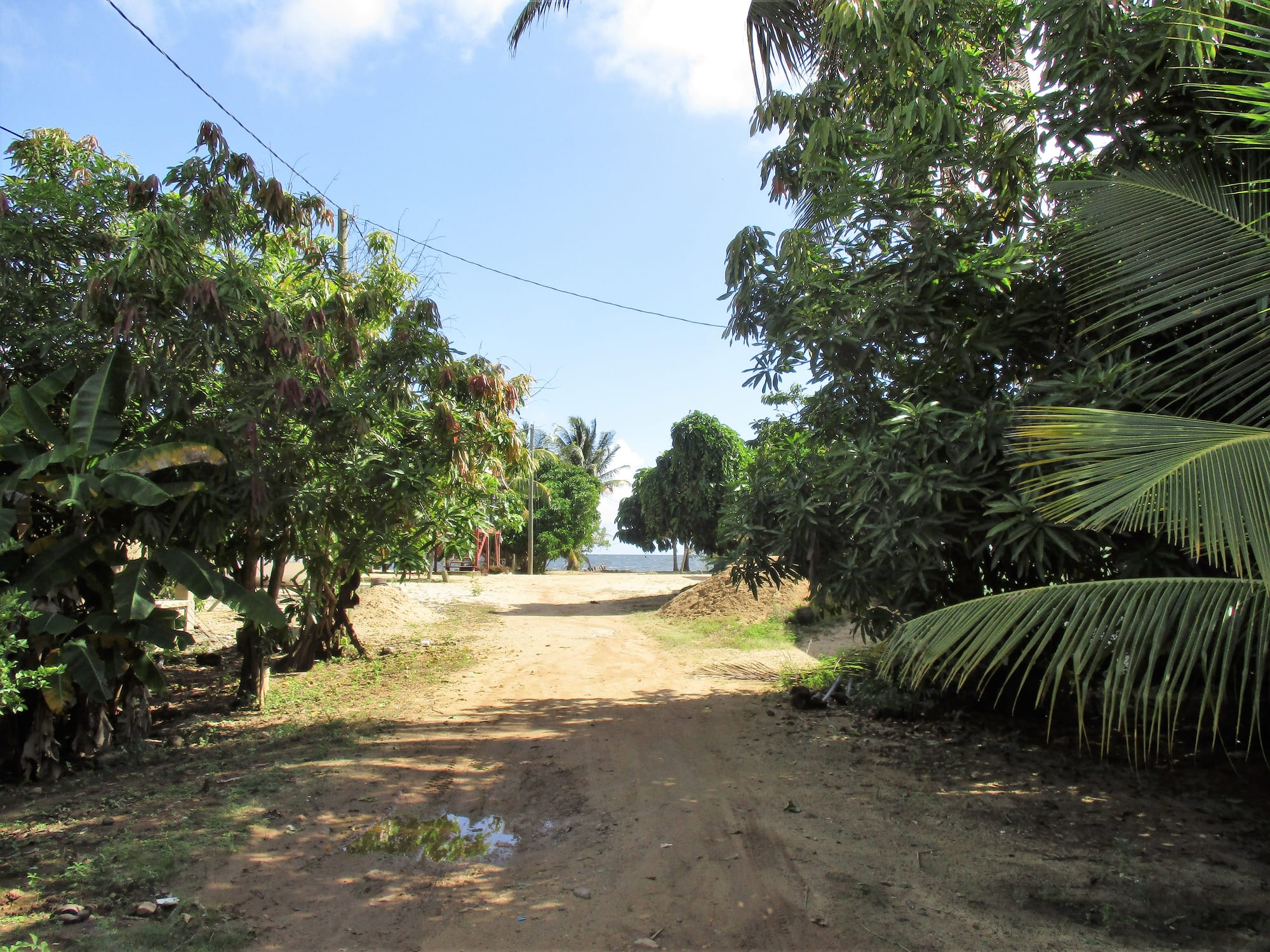
A sandy lane between mango trees, banana plants and palms in Hopkins, leading to a glimpse of the blue sea

Cayo, Placencia & the South, Belize

Hopkins

A sandy lane through Hopkins leading down to the Caribbean shore. (Pitxiquin / Wikimedia Commons · CC BY-SA 4.0)

A Garifuna fishing village strung along a long beach on the Stann Creek coast, between the Caribbean Sea and the Maya Mountains. Founded in 1942 to replace a village destroyed by a hurricane, it keeps Garifuna drumming, dance and cooking alive while living increasingly from small-scale tourism, reef trips and the jaguar reserve inland.

Neighbourhoods

  • Northside (Baila)
    • Garifuna culture
    • Local life
    • Beaches

    The northern half of the village, near the junction with the road in from the Southern Highway. Shops, small restaurants and guesthouses stand close to the beach, and the drumming centre is on this side of the village.

    Open in Maps
  • Southside (False Sittee)
    • Beaches
    • Quiet stays

    The southern half of the village along the same beach road, with guesthouses, cafés and places to rent bicycles and motorbikes.

    Open in Maps
  • The resort strip towards Sittee River
    • Resorts
    • Diving

    South of the village the road runs past self-contained beach resorts on the way to the small settlement of Sittee River. Some can arrange dives and tours, and golf carts are available for the ride to the village.

    Open in Maps

Things to do

In the village

  • Hopkins beachbeach

    The long beach that the whole village follows for about three miles, with fishing boats pulled up on the sand, palms and quiet swimming.

    Open in Maps
  • Lebeha Drumming Centerattraction

    A village drumming centre where Garifuna drummers play on weekends and visitors can take drumming lessons.

    Open in Maps

Short trips from the village

  • Cockscomb Basin Wildlife Sanctuarypark

    Founded in 1986 as the first protected area for the jaguar, covering about 150 square miles of forest on the eastern slopes of the Maya Mountains, with trails, rivers for tubing and waterfalls.

    Open in Maps
  • Mayflower Bocawina National Parkpark

    A national park established in 2001 north of Hopkins, with forest trails, waterfalls for swimming and small Maya ruins.

    Open in Maps
  • Sittee Riverpark

    The river and small village just south of Hopkins, known for birdwatching and canoe trips, including guided night trips.

    Open in Maps
  • Dangrigaattraction

    The capital of the Stann Creek District and the largest settlement in southern Belize, known as the 'culture capital of Belize' for its part in punta music and Garifuna culture.

    Open in Maps
  • South Water Caye Marine Reservepark

    The second-largest marine reserve in Belize, part of the barrier reef system off the Stann Creek coast, visited on snorkelling and diving trips.

    Open in Maps
  • Glover's Reefpark

    One of Belize's three atolls, on the outer edge of the barrier reef, reached on full-day dive trips from Hopkins.

    Open in Maps

Seasonal events

  • Garifuna Settlement Day19 November

    A public holiday marking the settlement of the Garifuna in Belize after their exile by the British, celebrated above all in nearby Dangriga with parades, street music and traditional dancing.

Eat and drink

Long-standing places and food districts in Hopkins. Hours, ratings and directions come from your maps app, always current.

Hopkins classics

  • Garifuna kitchensneighborhood

    Small family restaurants serve hudut, tapado and other Garifuna dishes, often cooked to order, alongside the Belizean standards.

    Open in Maps
  • Seafood on the beach roadneighborhood

    Cafés and beach bars along the village's main road serve fresh fish, including coconut-crusted fish, and lobster and conch in season.

    Open in Maps
  • Village barsneighborhood

    Beach bars and small local bars, marked by their Belikin signs, with punta rock for dancing at night.

    Open in Maps

Experience Hopkins

History

The Garifuna, descendants of Carib and African peoples exiled by the British from St Vincent in 1797, reached the coast of what is now southern Belize in the early 19th century and settled in fishing villages along the shore. Their communities lived from the sea, small farms and the forests behind the coast.

Hopkins itself is a young village. It was founded in 1942 to replace Newtown, a village further up the coast that had been devastated by a hurricane, and it lies on the shore very close to the Sittee River. The village is divided into two parts, the Northside, known as Baila, and the Southside, known as False Sittee, stretching in a line along the beach.

Hopkins is connected to the Southern Highway by a road about four miles long. In recent decades visitors have come for its beach, its Garifuna culture and the reef offshore, and the protection of the Cockscomb Basin in 1986 as the first protected area for the jaguar gave the area an inland draw as well. Guesthouses opened in the village and resorts along the coast to the south, and the village lives increasingly from tourism.

Culture & Customs

Hopkins is one of the main centres of Garifuna culture in Belize, alongside Dangriga and Seine Bight. At the 2010 census about 70 per cent of its people were Garifuna, and the Garifuna language is still spoken in homes and on the street. The language, music and dance of the Garifuna are recognised by UNESCO.

Drumming is at the heart of village life. Drummers play at weekends and a drumming centre gives lessons; the rhythms accompany punta, the best-known Garifuna dance, danced at funerals, on beaches and in parks. Punta rock, which electrified the traditional rhythms, is played for dancing in the village at night. The dügü, an ancestral healing ceremony, is still practised in Garifuna communities on this coast.

Garifuna Settlement Day on 19 November marks the community's settlement in Belize and is celebrated above all in Dangriga, with parades, street music and traditional dancing. The rest of the year the pace is slow and neighbourly, and visitors are welcome when they respect the village as a home.

Daily Life

The 2010 census counted about 1,600 people in Hopkins. Most are Garifuna, with smaller numbers of people of mixed descent, Creoles, Mestizos, Maya and white residents.

Fishing remains part of the economy, with boats pulled up on the beach, but tourism now provides much of the work: guesthouses, cabins, restaurants, bars, bicycle and motorbike hire, dive shops and guiding on the reef and in the forest.

The village has grocery and liquor stores but no fuel station, which is at Sittee River, a village of 439 people in 2010, about five miles to the south. Local handicrafts and wood carvings made from the wood of local trees are sold in the village. Most people get around on foot or by bicycle, and a bus to Dangriga calls in the morning. As across the region, many people work outdoors from early morning, and evenings centre on the beach, the drums and the bars.

Food

Garifuna cooking is the village's own. Hudut is fish, often whole snapper, cooked in a broth of coconut milk with onions and herbs and served with mashed plantain on the side; it is eaten at midday and is very filling. Tapado, another Garifuna seafood dish, is also served. Both take time to prepare, and small restaurants often cook them to order. Ereba, a flat bread of grated and strained cassava, is eaten with fish or with bundiga, a plantain gravy.

Seafood comes fresh from the village boats: coconut-crusted fish and lobster and conch in their open seasons. Belizean standards — rice and beans cooked in coconut milk, stew chicken, fried plantain and potato salad — are widely served, and the village also has pizza, Indian food and cafés serving coffee and breakfast.

Marie Sharp's habanero sauce, a national emblem, is made in the Stann Creek valley, and its factory north of Dangriga is a short trip from the village. Belikin beer and rum are the usual drinks, taken at the beach bars at sunset.

Planning tools

Budget

Hopkins has a wide range, from simple guesthouses and cabins in the village to expensive beach resorts to the south. Diving from here is relatively good value, but trips to the reef, the atolls and the inland reserves are the main costs.

Daily Budget Midrange
USD 140–280 (beach hotel or resort, restaurants, a dive or reserve trip)
Daily Budget Shoestring
USD 50–85 (guesthouse or cabin, local cooking, bicycle hire)

Few buses come into the village itself, so arrange transport for day trips with a guesthouse or hire a motorbike or car.

Best Time to Visit

The dry season, roughly late November to May, is the most reliable for the beach and the reef. Garifuna Settlement Day on 19 November is celebrated above all in nearby Dangriga. The wet season runs from June to November, and September and October carry the highest hurricane risk.

Suggested Number of Days

Two to four days give time to settle into the village's pace, with a day or so on the reef or in the forest. Allow five or six for both the reef and the inland reserves at an unhurried rhythm.

First Visit
2–4 days
With Surroundings
5–6 days

Transportation

The village stretches in a line along the beach and is easy to cover on foot or by bicycle, which several shops and hotels rent; golf carts are available at the resorts to the south, and motorbikes can be hired for trips further afield. The nearest fuel is at Sittee River, south of the village.

Fill the tank before heading south on the Southern Highway, where fuel stations are few.

Airport & Station Connections

Hopkins lies about 4 miles east of the Southern Highway, whose turn-off is at mile 10. Buses heading south to Placencia or Punta Gorda drop passengers at the junction, and a morning bus links the village with Dangriga. The nearest airstrip is at Dangriga, with small-plane flights from Belize City, followed by a drive to the village.

Walkability

Within the village everything is reachable on foot along the beach road, though the village stretches for about three miles, so walking end to end takes time; bicycles can be rented in the village.

Safety

Belize has a high overall homicide rate, but the violence is almost entirely gang-related and concentrated in specific parts of Belize City that visitors have no reason to enter. The tourist areas — the cayes, Cayo, Placencia, Hopkins — are comparatively safe, with the usual petty theft and occasional robberies. Mosquitoes can be a nuisance.

Keep valuables out of sight, take a light after dark on unlit stretches of road, and use licensed guides for reef and forest trips. Check current official travel advice before travelling.

Climate

Hot and humid on the coast, tempered by sea breezes. The figures below are those given for the region as a whole, not for Hopkins itself.

Summer
wet season (roughly June to November): 81–91°F and humid across the region, with heavy rain and a hurricane risk
Winter
dry season: 75–86°F in the region's lowlands, with sea breezes on the coast

Local Customs

Hopkins is a Garifuna community first and a resort second. Greet people before asking anything, ask before photographing anyone — above all at drumming sessions and ceremonies — and keep swimwear for the beach. Garifuna, Kriol and English are all heard in the village.

Drummers who play for visitors expect a tip, and the drumming centre asks for one.

Common Payment Methods

The Belize dollar is pegged at two to one to the US dollar, and US dollars are accepted almost everywhere, often with change in Belize dollars. Resorts and dive shops take cards, but small restaurants, shops and bars mostly want cash, so it is worth bringing enough.