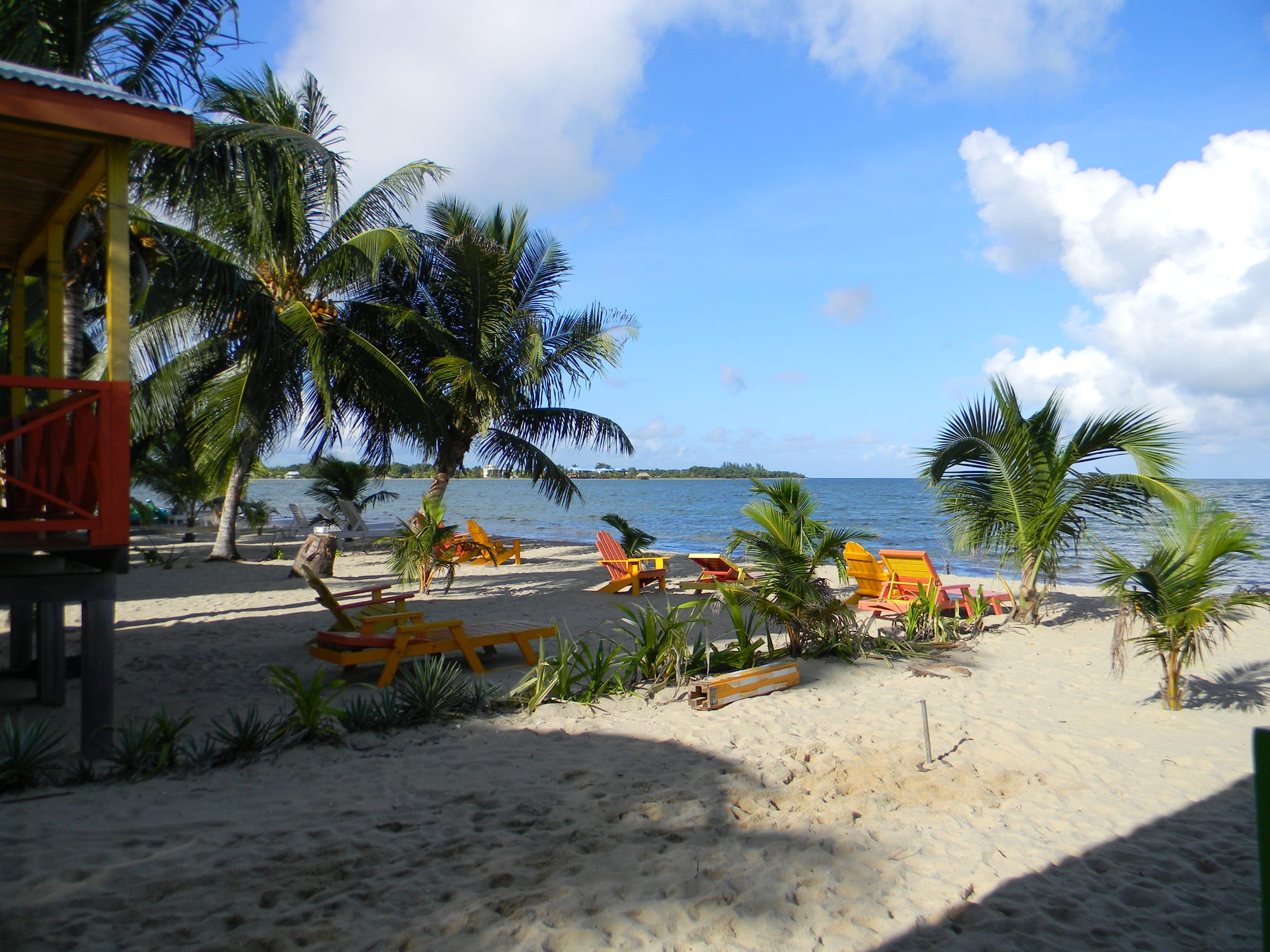
Pale sand beach with coconut palms and bright wooden loungers facing calm blue sea, with a wooded shore on the horizon

Cayo, Placencia & the South, Belize

Placencia

The beach front at Placencia, on the Stann Creek coast of Belize. (Laslovarga / Wikimedia Commons · CC BY-SA 3.0)

A small village at the southern tip of the Placencia Peninsula, a long strip of sand between the Caribbean Sea and a lagoon on the Stann Creek coast. Once a fishing village, it turned to tourism in the late 20th century, was rebuilt after Hurricane Iris in 2001, and is now a beach resort and the base for boat trips to the southern reef and cayes.

Neighbourhoods

  • Placencia Village
    • First-time visitors
    • Beaches
    • Best for food

    The village at the southern tip of the peninsula, where most shops, bars, guesthouses and tour and dive operators stand along the Sidewalk and the main road. The beach runs along the sea side, and boats leave from the lagoon side for the cayes and the mainland.

    Open in Maps
  • Seine Bight
    • Garifuna culture
    • Local life

    A mainly Garifuna village of 1,310 people at the 2010 census, a few miles north of Placencia, whose early settlers named it after seine fishing and the bend in the coast. Many families live from fishing, hunting and home-grown vegetables, and some of the peninsula's resorts stand nearby.

    Open in Maps
  • Maya Beach
    • Quiet stays
    • Beaches

    A tiny community further up the peninsula, about a mile and a half long, of homes, small resorts, a couple of grocery stores, a few bars and restaurants and an art gallery. It is quieter than the village, which is a short drive south.

    Open in Maps

Things to do

Beaches and the village

  • The Sidewalktrail

    A narrow concrete pedestrian path that serves as the village's main street, running most of the length of Placencia to the shore, lined with gift shops, beach bars and cabanas.

    Open in Maps
  • Placencia beachbeach

    The long white-sand beach on the eastern side of the peninsula, with palms, beach bars and places to swim along the village front.

    Open in Maps
  • Placencia Lagoonpark

    The long, narrow bay on the western side of the peninsula, a nursery for rays, with mangroves and sea-grass beds explored by canoe or kayak for birds, dolphins and manatees.

    Open in Maps

Short trips from the village

  • Laughing Bird Cayepark

    A small island off Placencia, a national park since 1991, named after the laughing gulls that once bred there and a common destination for snorkelling trips.

    Open in Maps
  • Gladden Spit and Silk Cayes Marine Reservepark

    A marine reserve on the barrier reef off Placencia, created in 2003 and managed by a community organisation, where snapper gather to spawn around the full moons and whale sharks come to feed.

    Open in Maps
  • Ranguana Cayebeach

    A two-acre private island just off the barrier reef, visited on day trips from the village for kayaking, paddleboarding and fishing.

    Open in Maps
  • Monkey River Townattraction

    One of the last purely Creole villages in Belize, at the mouth of the Monkey River, reached by boat trips that look for howler monkeys and manatees upriver.

    Open in Maps
  • Cockscomb Basin Wildlife Sanctuarypark

    The rainforest reserve on the mainland, protected for its jaguars, with marked trails, rivers and waterfalls beneath the Maya Mountains.

    Open in Maps

Seasonal events

  • Whale-shark seasonaround the full moons, April to July

    Whale sharks gather to feed off Gladden Spit while snapper spawn there, and boat trips leave from Placencia to swim with them.

  • Easter WeekEaster, March or April

    The Easter holiday week, one of the events the village hosts, likened to a spring break in Florida.

Eat and drink

Long-standing places and food districts in Placencia. Hours, ratings and directions come from your maps app, always current.

Placencia classics

  • Seafood on the Sidewalkneighborhood

    Beach bars and small kitchens along the Sidewalk serve the catch of the day — fish tacos, ceviche, shrimp, smoked fish — and lobster and conch in season.

    Open in Maps
  • Belizean cooking on the main roadneighborhood

    Simple cafés near the bus stop and along the main road serve rice and beans, stew chicken, burritos, garnaches, salbutes and fresh juices.

    Open in Maps
  • Beach barsneighborhood

    Bars on the sand are the evening gathering places, pouring Belikin beer and One Barrel and coconut rums, some with live bands.

    Open in Maps

Experience Placencia

History

Before the Europeans came, the Maya lived on the peninsula, and archaeological evidence suggests they made salt here and traded it along the coast. Spanish sailors on the southern coast named the point Punta Placentia, "Pleasant Point". In the 17th century English Puritans, originally from Nova Scotia and Providence Island, settled here, but their community died out in the 1820s during the Spanish American wars of independence.

Several families resettled the peninsula in the late 1800s, and Placencia grew into a village that lived from the sea. Further up the peninsula, the early settlers of Seine Bight, now a mainly Garifuna village, named it after seine fishing and the bend of the shore. For much of the 20th century Placencia earned its living from fishing, and the narrow footpath that served as its main street became its best-known feature.

From the late 20th century tourism took over. On 8 October 2001 Hurricane Iris struck southern Belize with winds of 145 mph and damaged nearly 95 per cent of the buildings in Placencia. Developers bought up land as values fell, and in the years since the peninsula has been steadily built up with resorts, holiday homes and new businesses, while property prices have kept rising.

Culture & Customs

Placencia is a mixed village. At the 2010 census the largest groups were Creole and Mestizo, with smaller numbers of people of mixed descent, white residents, Mopan and Q'eqchi' Maya, Garifuna and East Indians. Seine Bight, a few miles north, is a historic Garifuna settlement.

The village still carries the identity of a fishing settlement, and fishing guides, sailors and boatmen are central to its life; two of the largest sailing charter fleets in Belize are based here. Saltwater fly fishing for permit, tarpon and bonefish is a draw, and whale-shark trips to Gladden Spit run around the full moons from April to July.

Placencia hosts a lobster festival and the Placencia Peninsula Arts Festival, and Easter Week, likened to a spring break in Florida. Maya Beach, up the peninsula, has an art gallery. The pace is slow and informal, with beach bars, live bands and the Sidewalk at the centre of social life.

Daily Life

The 2010 census counted about 1,500 permanent residents in Placencia village and about 3,500 on the whole peninsula, citizens and expatriates together. Visitors add to these numbers, above all in the high season.

The economy, once built on fishing, now depends on tourism: guesthouses and resorts, dive shops, sailing charters, fishing guides, restaurants and bars, along with construction and property sales. Across the lagoon, the larger village of Independence and Mango Creek, with about 4,000 people in 2010, has schools and a college used by families from around the area.

Life in the village centres on the Sidewalk and the main road. Drinking water is piped in from an artesian well on the mainland, and the airstrip crosses the peninsula from east to west. Small planes to Belize City, buses to Belmopan and a water taxi across the lagoon to Independence link the village with the rest of the country. Development on the peninsula has kept growing since 2001, and property values have kept rising with it.

Food

Seafood is the heart of Placencia's food. Snapper, grouper and other fish come straight off the boats, and lobster and conch are eaten in their open seasons. Fish tacos, shrimp cocktails, burritos and smoked fish and chicken are standard beach-bar fare.

Everyday Belizean cooking is close at hand too: rice and beans cooked in coconut milk with stew chicken, fried plantain and potato salad at lunchtime, and garnaches, salbutes and burritos at small cafés near the bus stop. Garifuna cooking, the tradition of nearby Seine Bight, brings hudut, fish in a coconut broth served with mashed plantain, and ereba, a cassava bread made from grated cassava.

To drink there is Belikin beer, including a stout, One Barrel rum and local coconut rum, often taken at a beach bar at sunset, as well as fresh fruit juices. Italian restaurants, a gelato shop and a Belgian café add variety, and the resorts on the peninsula have their own restaurants.

Planning tools

Budget

Placencia has a wide range, from simple cabins and guesthouses in the village to expensive beach resorts on the peninsula. Seafood dinners, dive trips, sailing and boat tours to the cayes are the main costs, and the flight from Belize City costs more than the bus but saves many hours.

Daily Budget Midrange
USD 150–280 (beach hotel, seafood dinners, a snorkel or dive trip)
Daily Budget Shoestring
USD 55–90 (cabin or guesthouse, local cafés, buses and the water taxi)

Tour and snorkel options are fewer in the low season, so ask around the village for which trips are running.

Best Time to Visit

The dry season, roughly late November to May, has the most sun and the calmest sea; the whale-shark trips run around the full moons from April to July. The rains are heavier from June to November, and September and October carry the highest hurricane risk — Hurricane Iris struck the village in 2001.

Suggested Number of Days

Placencia is a place to slow down, so most stays are at least three or four days, allowing for a day lost to wind or rain on the water. Five to seven days leave time for longer boat trips and the mainland reserves.

First Visit
3–4 days
With Surroundings
5–7 days

Transportation

The village is walked easily, and taxis are needed mainly for the airstrip. Buses, golf carts and bicycles reach Seine Bight and Maya Beach further up the peninsula. Boats are the way to the cayes, the reef and the lagoon.

Bring reef-safe sunscreen and insect repellent for boat and snorkel trips.

Airport & Station Connections

Placencia Airport, a paved strip crossing the peninsula, has small-plane flights from Belize City with Tropic Air and Maya Island Air and is about ten minutes from the village. Buses run to the village from Belmopan, and from the south travellers take a bus to Independence and Mango Creek and a short water taxi across the lagoon.

Walkability

Excellent within the village: the Sidewalk is a pedestrian-only path and everything sits close together. The peninsula is 18 miles long, so Seine Bight and Maya Beach need a bicycle, cart or taxi.

Safety

Belize has a high overall homicide rate, but the violence is almost entirely gang-related and concentrated in specific parts of Belize City that visitors have no reason to enter. The tourist areas — the cayes, Cayo, Placencia, Hopkins — are comparatively safe, with the usual petty theft and occasional robberies. The tap water comes from an artesian well on the mainland and is drinkable; mosquitoes and sun are the everyday nuisances.

Keep valuables out of sight on the beach, use licensed guides for boat trips, and follow storm warnings in the hurricane season. Check current official travel advice before travelling.

Climate

Hot and humid on the coast, with a sea breeze that usually takes the edge off the heat. The figures below are those given for the region as a whole, not for Placencia itself.

Summer
wet season (roughly June to November): 81–91°F and humid across the region, with heavy rain and a hurricane risk
Winter
dry season: 75–86°F in the region's lowlands, with sea breezes on the coast

Local Customs

The mood is relaxed, but the village is a home as well as a resort: swimwear belongs on the beach rather than on the main road or in shops, and a greeting before a question is expected. Kriol, English and Spanish are all spoken, and Garifuna in Seine Bight.

Ask before photographing people, and never stand on or touch the coral when snorkelling or diving.

Common Payment Methods

The Belize dollar is pegged at two to one to the US dollar, and US dollars are accepted almost everywhere, often with change in Belize dollars. Hotels, dive shops and many restaurants take cards; buses, the water taxi and small cafés need cash.