💰 Budget
Maun is the cheapest place in northern Botswana to sleep and eat and the most expensive place to leave. Campsites, backpacker lodges and town cafés cost little; the moment a trip involves a light aircraft, a guided drive into Moremi, park fees or a mobile camping safari, the price rises steeply, and Delta camps are quoted in US dollars per person per night. Fuel, vehicle hire and supplies are the other big items.
- Daily Budget Midrange
- USD 250–630 (a town or riverside lodge, guided day trips and a scenic flight, or a mobile camping safari)
- Daily Budget Shoestring
- USD 65–130 (a campsite or backpacker lodge, town food, a shared mokoro trip and park fees)
Shared mokoro and day trips booked in town cost far less than fly-in camps; stock up on food and fuel here, since prices rise and choice disappears beyond the town.
📅 Best Time to Visit
June to October is the classic season, when the flood from Angola is high, the bush is thin and game concentrates on permanent water; September and October are excellent for wildlife and very hot. The green season from December to March is cheaper, good for birds and newborn animals, and brings malaria risk and tracks that flood or close.
⏳ Suggested Number of Days
Two or three days are enough for the town and a trip into the water. Five to seven allow a longer stay in the Delta or a camping trip through the reserves. Flight schedules, park bookings and the state of the sand roads shape the length of a visit more than anything else.
- First Visit
- 2–3 days
- With Surroundings
- 5–7 days
🚆 Transportation
Maun is spread out along the river, and distances are too long to walk comfortably; shared combis run along the main roads, taxis can be hired by the trip, and lodges collect guests. Self-drivers use 4x4s from the hire yards in town, and light aircraft from the airport are the normal way into the Delta. Donkey carts and livestock share the roads.
Combis run along fixed routes rather than to a timetable and thin out after dark, so a taxi or lodge transfer is the practical way back in the evening.
🛬 Airport & Station Connections
Maun Airport sits beside the town centre and has daily scheduled flights to destinations in Botswana and South Africa as well as the light aircraft serving the Delta camps. By road, the tarred A3 runs east to Nata, about 300 km away and three to four hours, continuing to Francistown, and another tarred road runs south-west to Ghanzi and the Namibian border. Buses and combis cover both.
🚶 Walkability
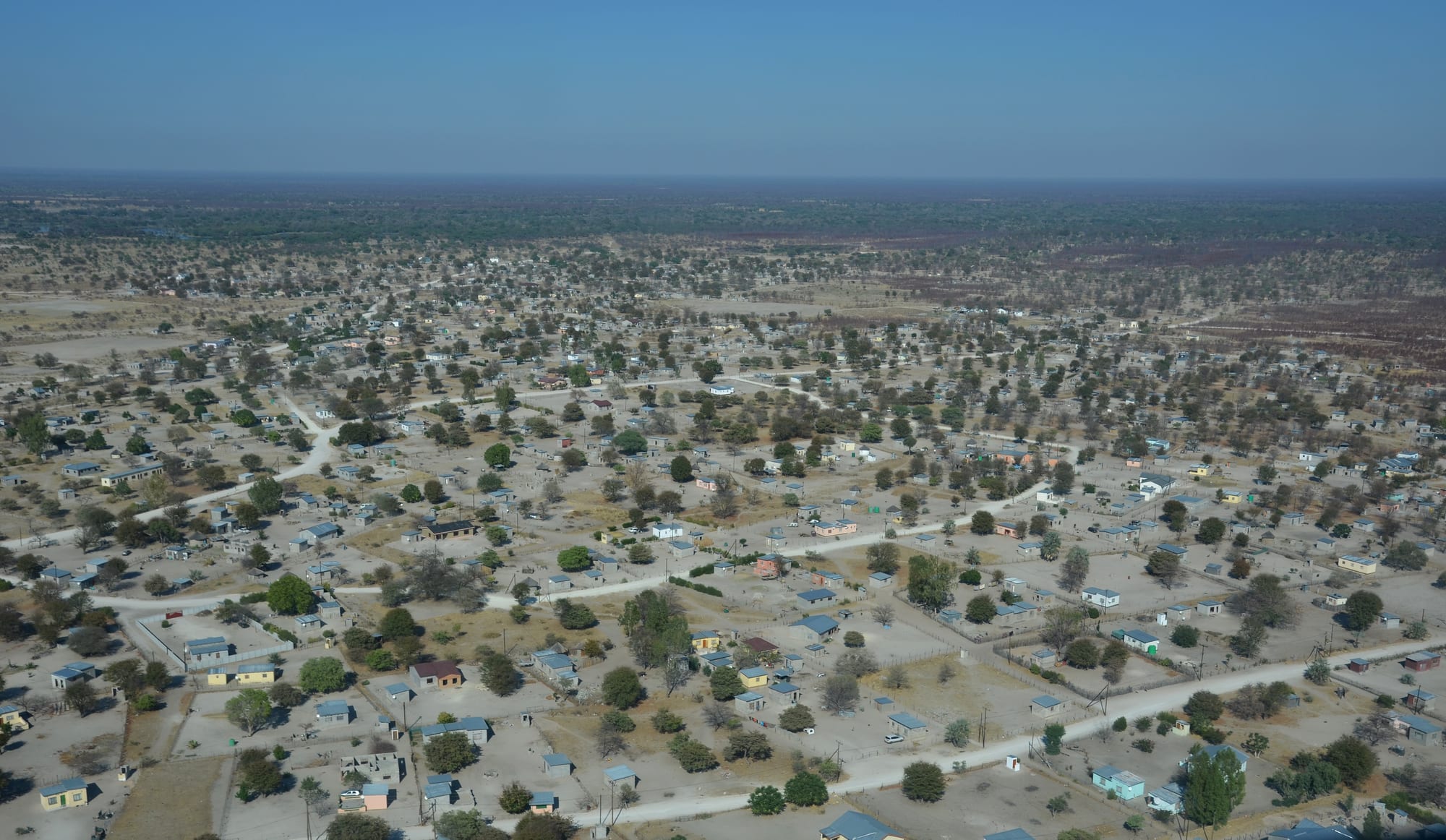
The central area around the malls, the rank and the airport is easily walked in twenty minutes, and much of it is on pavement. Beyond that the town stretches for kilometres along sandy roads with little shade, heavy traffic and no continuous footpaths, so most journeys need a vehicle. Walking near the river after dark is not advisable because of hippos and crocodiles.
🛡️ Safety
Maun is generally safe, with petty theft the usual problem rather than violence; bags and valuables need watching at the rank, the malls and busy campsites. The serious risks belong to the surroundings: hippos and crocodiles in the Thamalakane, elephants and buffalo on the roads outside town, malaria in and after the rains, and heat.
Take malaria precautions, never walk in unfenced camps after dark without an escort, keep well back from elephants and follow guides' instructions in a mokoro. Check current official travel advice before travelling.
🌦️ Climate
Hot and semi-arid, with thunderstorm rains from about November to March and a long dry season. Southern-hemisphere summer falls in December to February, and October, before the rains break, is the hottest month. The Delta's flood arrives out of step with the rain, peaking in the dry winter.
- Summer
- hot and humid, roughly 30–40°C by day, with afternoon storms and green bush
- Winter
- dry and clear, about 25–28°C by day, with chilly nights around 5–10°C and cold early starts in open vehicles
🤝 Local Customs
Maun mixes a Batawana village with an international safari industry. Setswana greetings — dumela mma, dumela rra — are the normal opening, elders are greeted first, and dress in town is modest even though camps are casual. The kgotla is a working institution, not a sight. Guides and polers are professionals whose instructions are followed exactly, and asking before photographing people is expected.
Tipping guides, polers, pilots and camp staff is customary and usually done in cash at the end of a trip; alcohol is sold under restricted hours and drinking in public is frowned on.
💳 Common Payment Methods
The currency is the Botswana pula. Maun has banks, ATMs and supermarkets, and cards work in the malls, lodges and fuel stations, though safari operators often quote and settle in US dollars. Cash in pula is needed for combis, stalls, tips and park gates, and should be drawn here, as there is nothing beyond the town.