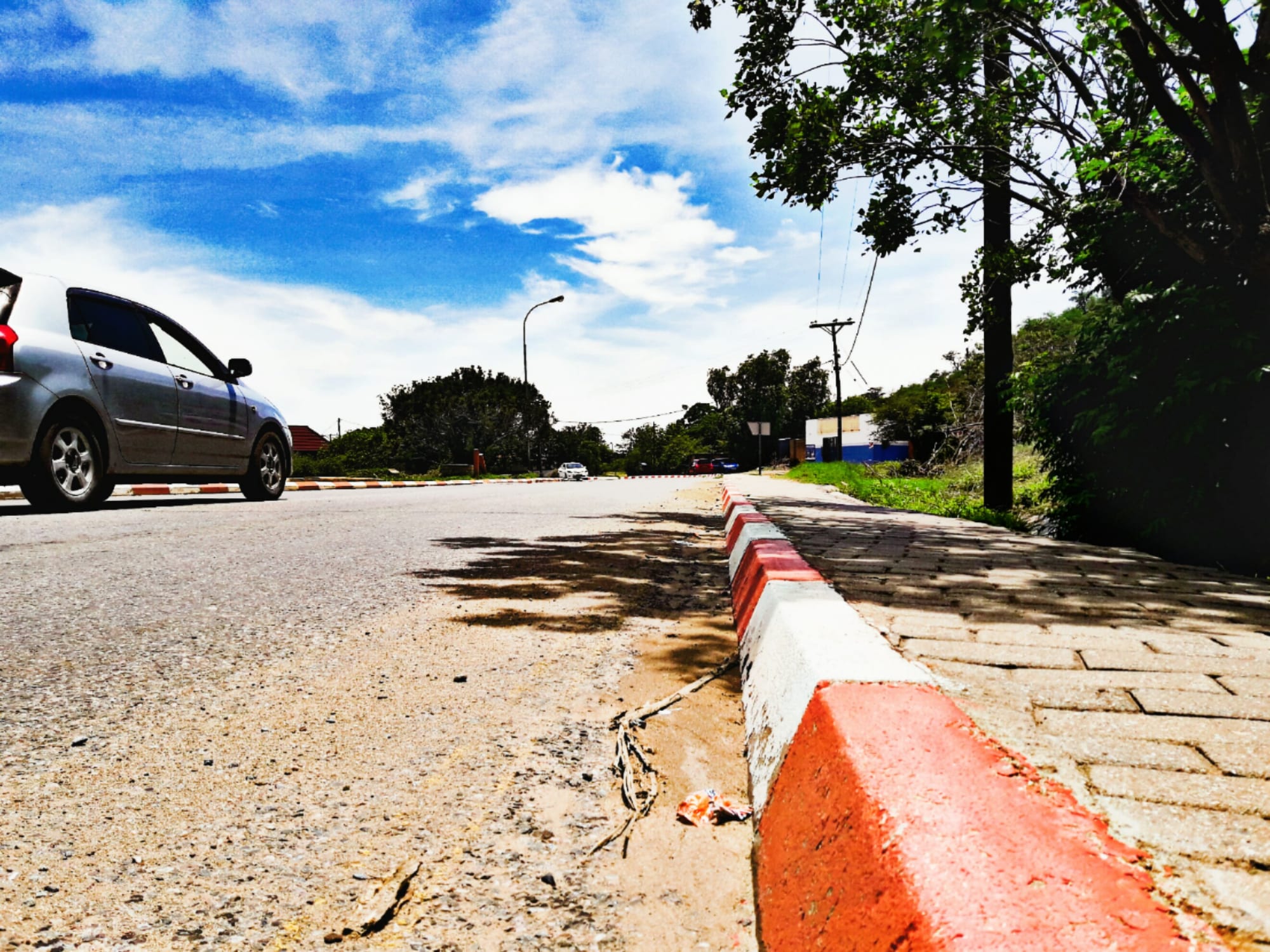
A wide tarred street in Serowe with a parked car, kerbstones painted red and white, trees and low buildings under a blue sky

Francistown & the Central District, Botswana

Serowe

A quiet street in Serowe, the Bangwato capital in Botswana's Central District. (ThusoMotlasuping / Wikimedia Commons · CC BY-SA 4.0)

The capital of the Bangwato in eastern Botswana, spread below a hill in the Central District and one of the largest villages in the country. Khama III moved his people here in 1902, and it remains the home of the Khama family, with the royal graves on the hill, a memorial museum, a working kgotla and a rhino sanctuary in the bush to the north.

Neighbourhoods

  • The hill and the old centre
    • First-time visitors
    • History
    • Views

    The oldest part of the village lies around the hill where the royal graves stand, with the main kgotla, the memorial museum and the old mission church close by. Streets here are shaded and busy on weekday mornings, and the hill gives the best view over the spread of rooftops.

    Open in Maps
  • The main road and the shops
    • Shops and banks
    • Close to transport
    • Everyday life

    The tarred road through the village carries the shops, supermarkets, banks, government offices and the bus and combi rank. It is where people from the surrounding lands come to trade, and the one part of Serowe that feels like a town rather than a village.

    Open in Maps
  • The outer wards
    • Quiet and residential
    • Local life

    Serowe spreads for kilometres in fenced family compounds, each ward with its own headman and kgotla, mixing block houses, rondavels, goats, cattle kraals and small fields. The pace is slow, and the edges of the village fade into cattle posts and thornbush.

    Open in Maps

Things to do

The royal village

  • Khama III Memorial Museummuseum

    A museum opened in 1985 in a village house of about 1910, covering the history of the Bangwato and the Khama family, with photographs, correspondence, archives and natural history displays.

    Open in Maps
  • The royal graves on the hilllandmark

    The Royal Cemetery on the hill above the village, the burial ground of the Bangwato ruling house, with the graves of Khama III and Seretse Khama and a wide view over Serowe.

    Open in Maps
  • The main kgotlalandmark

    The Bangwato assembly ground in the old centre, where meetings, cases and public announcements are still held under the trees rather than staged for visitors.

    Open in Maps

Wildlife and short trips

  • Khama Rhino Sanctuarypark

    A community-run sanctuary in Kalahari sandveld about 25 km north of the village, holding white and black rhino along with antelope, zebra and birdlife around its waterholes.

    Open in Maps
  • Old Palapyelandmark

    The site of the Bangwato capital before Serowe, abandoned in 1902, with stone house foundations and the shell of the London Missionary Society church.

    Open in Maps
  • Swaneng Hill Schoolattraction

    The secondary school founded on the edge of the village in the 1960s by Patrick van Rensburg, an experiment in combining education with practical work that influenced schooling across the country.

    Open in Maps

Eat and drink

Long-standing places and food districts in Serowe. Hours, ratings and directions come from your maps app, always current.

Eating in the village

  • Takeaways and stalls on the main roadneighborhood

    The eating places along the main road and around the bus rank serve the standard Botswana plate — pap or rice with beef, goat or chicken stew and greens — along with fat cakes, grilled meat and chips.

    Open in Maps
  • The village market and general dealersmarket

    Traders and shops sell sorghum and maize meal, beans, vegetables, dried phane in season, and household goods, drawing people in from the lands and cattle posts around the village.

    Open in Maps

Drinks and gatherings

  • Bars and bottle storesneighborhood

    Bottle stores and small bars around the main road sell lager and Chibuku sorghum beer, and traditional home-brewed drinks are still made in the compounds for weddings and funerals.

    Open in Maps

Experience Serowe

History

Serowe is a young village with an old people behind it. The Bangwato, a Tswana chiefdom, ruled this part of the country from Shoshong and then from Palapye during the nineteenth century, moving as water, grazing and firewood ran short. In 1902 Khama III, their Christian ruler and one of the three chiefs who travelled to London in 1895 to keep Bechuanaland out of the hands of the British South Africa Company, moved his capital to the well-watered ground beneath the granite hill here, and the whole population moved with him.

The village grew into one of the largest in Botswana, laid out in wards around the royal kgotla, with families keeping homes in the village, fields at the lands and cattle at distant posts. Khama III died in 1923, and the Royal Cemetery on the hill above the village, the burial ground of the Bangwato ruling house, holds his grave and those of his family.

His grandson Seretse Khama was born in Serowe in 1921. His marriage in 1948 to Ruth Williams, an Englishwoman, provoked a crisis: under pressure from South Africa, Britain exiled him for years before he was allowed to return, renouncing the chieftainship. He founded a political party, led Bechuanaland to independence as Botswana in 1966 and served as its first president until his death in 1980, when he too was buried on the hill above the village. The Khama family has remained central to the village and to national politics ever since, and the kgotla here still carries weight beyond the district.

Culture & Customs

Serowe is the ceremonial heart of the Bangwato, and its kgotla is a functioning institution rather than a survival: disputes are heard, government policy is explained and argued over, and decisions are talked through until a consensus is reached. Each ward has its own headman and its own smaller kgotla, and a family's standing is tied to its ward, its cattle and its ancestors. Respect for elders, unhurried greetings and careful, indirect speech are noticed here.

The village is also a literary place. Bessie Head, born in South Africa, came to Serowe as a teacher in 1964 and stayed until her death in 1986, making the village the subject of Serowe: Village of the Rain Wind and the setting of novels including When Rain Clouds Gather, Maru and A Question of Power. Patrick van Rensburg's Swaneng Hill School, founded in the 1960s, brought a movement of self-help education and brigades that trained young people in trades.

Church life is strong, with the mission congregations that grew from Khama III's conversion alongside newer churches, and Sunday singing carries across the wards. Choral music, the setapa dance and traditional dress appear at kgotla occasions and national holidays, and weddings and funerals remain the great social events, attended by hundreds and lasting days.

Daily Life

Serowe is Botswana's third largest village, larger than many of the country's towns, though it keeps a village's shape: compounds and cattle kraals rather than blocks of flats, spread over a very wide area of sandy ground below the hill.

Work is mostly government and services — the council, schools, the hospital, the tribal administration — along with shops, transport, building and a good deal of informal trade. Cattle remain the backbone of family wealth, kept at posts out in the sandveld and tended by hired herders or relatives, and many families still plough sorghum and maize at the lands in the rains, so the village empties a little in the ploughing season. Younger people leave for Gaborone, Palapye's university or the mines and return for holidays and funerals.

The day begins before sunrise, slows through the heat, and picks up in the late afternoon when livestock come home and the bars and shops fill. Recurring concerns are unemployment among school leavers, drought and the cost of feeding cattle, water supply across such a large settlement, and the pull of the nearby towns. Serowe's hospital, banks and secondary schools serve a much wider area of villages and cattle posts.

Food

Serowe eats what central Botswana eats. Bogobe, the porridge of sorghum or maize meal, is the base of nearly every meal, served with a relish of beef, goat or chicken stew, morogo greens, or dikgobe, samp and beans. Beef is taken seriously in a village built on cattle, and seswaa — beef or goat boiled long and pounded soft with salt — is the dish of weddings, funerals and kgotla gatherings, cooked in three-legged pots by men over open fires and served in great quantity.

Phane, the mophane caterpillars gathered after the rains, are bought dried by the cupful and fried with onion and tomato or eaten as a dry snack. Madila, thick soured milk from the cattle posts, is eaten with porridge; biltong keeps meat through the dry months; and melons, beans and pumpkin leaves come in from the lands in a good season. Marula fruit is eaten fresh and brewed into a light, sweet drink, and wild berries are gathered in the bush around the village.

Around the bus rank and the main road, takeaways sell fat cakes, grilled meat, chips and sweet tea through the day. Bottle stores and bars supply lager and Chibuku sorghum beer, and bojalwa, the home-brewed sorghum beer made in the compounds, still belongs to family and kgotla occasions.

Planning tools

Budget

Serowe is inexpensive. Guesthouses and small lodges in the village cost a fraction of safari prices, food from the shops and takeaways is cheap, and buses and combis along the A1 corridor cost little. The main extras are museum entry, transport out to the rhino sanctuary and its entry and camping fees, and a hire car for anyone without their own transport.

Daily Budget Midrange
USD 130–320 (a lodge, a hire car or driver, sanctuary fees and a guided game drive)
Daily Budget Shoestring
USD 35–70 (a village guesthouse or camping at the rhino sanctuary, market and takeaway food, buses and combis)

Camping at the Khama Rhino Sanctuary is cheaper than a room in the village, and the museum and the walk up the hill cost very little.

Best Time to Visit

April to September is dry, mild by day and cold at night, and is the easiest time for walking the village and for game viewing at the sanctuary, where animals gather at waterholes. The rains from November to March bring green bush, birds and heat, and the ploughing season fills the lands. October is dry and very hot.

Suggested Number of Days

A day or two covers the village, the hill and the museum at an unhurried pace. Adding the rhino sanctuary or the ruins to the east takes two or three. Distances within the village and the availability of transport matter more to the length of a stay than the number of sights.

First Visit
1–2 days
With Surroundings
2–3 days

Transportation

Serowe is very spread out, so walking works within a ward but not across the village. Shared combis and taxis run along the main roads and between the wards, and buses connect Serowe with Palapye, Francistown and Gaborone from the rank in the centre. The rhino sanctuary and the outlying lands need a car, a taxi hired for the trip, or a lift.

Combis leave when full rather than to a timetable, so travel in the morning; the last connections out of the village run in the late afternoon.

Airport & Station Connections

The village lies about 45 km west of Palapye on the A1, the main road between Gaborone and Francistown, and is reached by a tarred spur. Francistown is roughly 200 km north and Gaborone about 300 km south, three to four hours by road, with buses and combis on both routes. There are no scheduled flights; the nearest are at Gaborone and Francistown.

Walkability

The old centre, with the museum, the kgotla and the foot of the hill, is easily walked, and the climb to the graves takes a short, steep half hour. Beyond that Serowe covers a very large area of sandy tracks with little shade and few pavements, and distances between wards are long. Walking after dark is limited by patchy street lighting and loose livestock.

Safety

Serowe is a calm village with low levels of crime, and visitors attract curiosity rather than trouble; ordinary care with valuables and money is enough. The practical hazards are traffic on the road to Palapye, cattle and donkeys wandering onto it at night, the heat, and dehydration on the walk up the hill.

Drive only in daylight, carry extra water and recovery gear onto the pans, and tell someone the route. Check current official travel advice before travelling.

Climate

Hot and semi-arid, with thunderstorm rains from about November to March and a long dry season from April to October. Southern-hemisphere summer falls in December to February, and winter nights in June and July can approach freezing while days stay warm and clear.

Summer
hot, roughly 32–38°C by day, with humid afternoons and evening storms
Winter
dry and sunny, about 22–27°C by day, with cold nights and morning frost in some years

Local Customs

This is the seat of a chiefly house and a conservative village, and manners matter more here than in a tourist town. Greetings in Setswana — dumela mma, dumela rra — open every conversation, elders are addressed first, and hats are removed and voices lowered at the kgotla and at the royal graves, which are a burial place rather than a monument. Modest dress is expected, and funerals, which fill whole weekends, are private family occasions.

Ask before photographing people, the kgotla or the graves; tipping is not expected in the village, though guides at the sanctuary are usually tipped.

Common Payment Methods

The currency is the Botswana pula. Serowe has banks, ATMs and supermarkets that take cards, which makes it an easier place to draw cash than the smaller villages around it. Stalls, combis and small shops work in cash, and cash should be carried for the rhino sanctuary and anything off the main road.