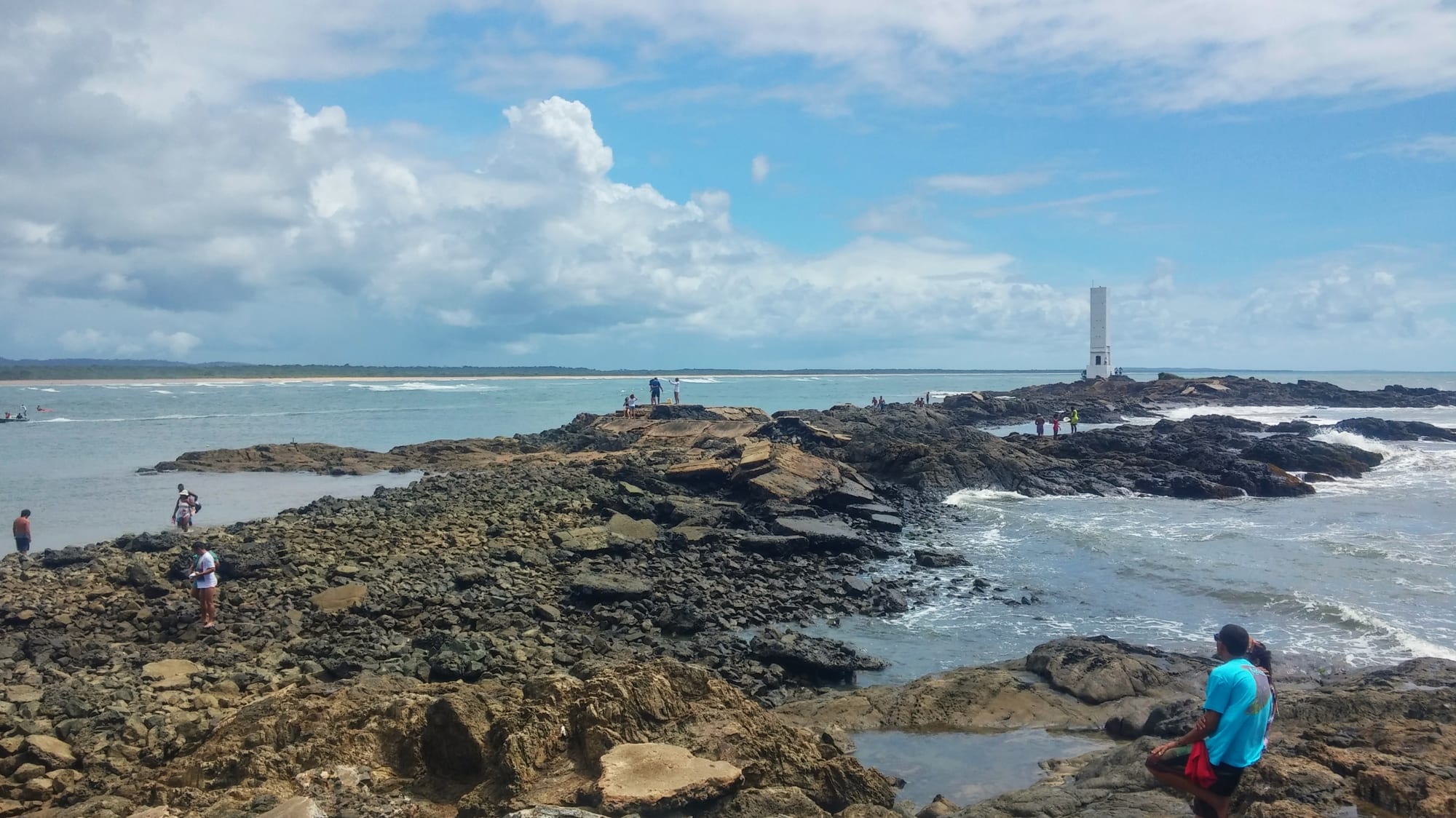
Dark rocks running out into the sea towards a white lighthouse tower, with people walking on the rocks under a cloudy blue sky

Bahia, Brazil

Itacaré

The rocky point and lighthouse at Praia da Concha, Itacaré. (Samory Pereira Santos from Salvador, Brazil / Wikimedia Commons · CC BY-SA 2.0)

A small town on the southern Bahia coast where the Rio de Contas meets the Atlantic, about 70 km north of Ilhéus. Once a Jesuit mission village and then a cocoa port, it was left isolated when the harbour silted up and the cocoa crop failed, and has since become a surfing and ecotourism town between forest-backed coves and the Serra do Conduru.

Neighbourhoods

  • Historic centre and riverfront
    • Historic district
    • Local life

    The old town along the mouth of the Rio de Contas, where the houses and warehouses of the cocoa era still line the waterfront. Boats leave from here up the river, and the streets are quieter and more local than the beach districts.

    Open in Maps
  • Rua Pedro Longo
    • First-time visitors
    • Best for food
    • Nightlife

    The town's main street of restaurants, shops, surf schools and tour agencies, closed to traffic in the late afternoon and evening since 2017, when it becomes a pedestrian promenade. It is the easiest base for walking to both the town and the beaches.

    Open in Maps
  • Praia da Concha
    • Beaches
    • Families

    The town beach by the lighthouse, with a district of pousadas and holiday houses behind it. The surf beaches to the south are a short walk away.

    Open in Maps

Things to do

Beaches

  • Praia da Conchabeach

    The town beach, with a rocky point and a lighthouse at one end.

    Open in Maps
  • Praia da Tiriricabeach

    A surf beach that has hosted the Brazilian leg of the World Surf League in several seasons.

    Open in Maps
  • Praia da Ribeirabeach

    A cove beach near town, the starting point of the trail to Prainha.

    Open in Maps
  • Prainhabeach

    A small beach reached on a forest trail from Ribeira, past two waterfalls, kept open to the public on foot after a local campaign against attempts to charge for access.

    Open in Maps
  • Itacarezinho Beachbeach

    A palm-backed beach 3.5 km long about 15 km south of town, used for swimming, surfing and walks, with a small waterfall that falls from the forest straight onto the sand.

    Open in Maps

Forest and rivers

  • Serra do Conduru State Parkpark

    A state park created in 1997 to protect regenerating Atlantic Forest in the hills behind the coast; about two-fifths of it lies within the municipality.

    Open in Maps
  • Cachoeira do Cleandropark

    Waterfalls and swimming pools on the river, reached by a short boat ride from town, where a small stall sells coconuts, cachaça, chocolate and cacao beans.

    Open in Maps

Short trips from the town

  • Maraú peninsulaattraction

    The peninsula to the north, in the cocoa region, known for its beaches.

    Open in Maps
  • Ilhéusattraction

    The cocoa-era city founded in 1534, about 70 km south along the coast road, the home town of the writer Jorge Amado.

    Open in Maps

Seasonal events

  • New Yearlate December to early January

    The town fills with visitors for the New Year holidays, the busiest time of the year.

  • CarnivalFebruary or early March

    Carnival brings crowds of revellers to the town and its beaches.

Eat and drink

Long-standing places and food districts in Itacaré. Hours, ratings and directions come from your maps app, always current.

Itacaré classics

  • Rua Pedro Longoneighborhood

    The pedestrian evening street with many of the town's restaurants, from Bahian seafood to Italian and Arabic kitchens.

    Open in Maps
  • Historic centre waterfrontneighborhood

    Restaurants and bars along the riverfront avenue of the old town, a quieter place for moqueca and fish.

    Open in Maps
  • Tapiocas in the centrecafe

    Tapiocas, crêpes of cassava starch with sweet or savoury fillings, are sold in small cafés in the town centre.

    Open in Maps

Experience Itacaré

History

The name Itacaré comes from Old Tupi and means "stone caiman". Tupiniquim people lived here when Europeans arrived in the 16th century, and the coast formed part of the captaincy of São Jorge dos Ilhéus, founded in the 1530s. The Jesuit Luís da Grã founded a chapel dedicated to Saint Michael, and the settlement that grew around it became São Miguel da Barra do Rio de Contas; it was officially recognised as a vila in 1732. In the early colonial period the coast was a haunt of Dutch and Portuguese pirates, and the area supplied brazilwood for European dyes and cassava flour to feed the enslaved workers of the sugar plantations around Salvador. The town took its present name in 1931.

Its great boom came with cocoa in the 19th and early 20th centuries, when it grew rapidly as a port shipping beans from the plantations inland to Europe; the houses and warehouses of that era still line the riverfront. The expansion of Ilhéus and the road and rail networks reduced its trade, the harbour silted up, and two dams built upriver in the 1960s made it harder for larger ships to enter. The witches' broom blight devastated the region's cocoa in the 1980s.

Isolation preserved the landscape. Because cocoa here was grown under the shade of the Atlantic Forest, in the cabruca system, the forest still runs down to the sea. The opening of the Estrada Parque from Ilhéus in 1998 brought tourism and new neighbourhoods, and the town now lives mainly from it.

Culture & Customs

Itacaré remains a Bahian town in its culture. Capoeira is a strong presence, with several groups whose rodas and training sessions draw visitors, and many come specifically to join them. Local people, of mixed Indigenous, African and European descent, are known as the nação grapiúna, whom Jorge Amado called the captivating people of this land.

Surfing has shaped the town's second identity. Surf schools work from the main street, and Praia da Tiririca has hosted the Brazilian leg of the World Surf League. Alongside the surfers came hikers and ecotourists, and the town is now a popular destination for all three.

The change from a quiet farming town to a resort has brought tension as well as income. Residents fought a long campaign against landowners and developers who tried to charge for access to beaches, and Prainha and São José are now open to walkers free of charge. New Year and Carnival bring the biggest crowds, when the town fills with revellers.

Daily Life

About 27,700 people lived in the municipality at the 2022 census, and the 2024 estimate put the figure at about 29,300. Roughly half live in the rural interior, among farms and forest along the river and the hills behind the coast, rather than in the town itself.

Tourism is the economy: ecotourism alone accounts for more than 90 per cent of local output. Pousadas, restaurants, surf schools, guides and boat operators employ much of the town. Two protected areas cover part of the municipality, the Serra do Conduru State Park and the Baía de Camamu Environmental Protection Area, created in 2002.

The day follows the sea and the sun. Surfers are out early, the beaches fill by late morning, and when Rua Pedro Longo closes to traffic in the late afternoon the town gathers there to eat and walk. The busy summer and the quiet months between holidays make for a seasonal income, and growth has pushed new neighbourhoods out along the roads since the highway arrived.

Food

Itacaré eats the food of the Bahian coast: moqueca, fish or shrimp stewed in coconut milk and dendê palm oil with peppers, tomato and coriander, served with rice and pirão, a thick fish gravy with cassava flour. Shrimp cooked in coconut is on the menu in town, and fish and seafood from the coast fill most menus.

Cocoa built the region, and the stall at the Cleandro waterfalls sells fresh and dried cacao beans and chocolate. Chocolate-making is a growing trade around Ilhéus.

Tapioca, a crêpe of cassava starch filled with cheese, coconut or other fillings, is a common snack, and acarajé, the black-eyed pea fritter fried in dendê and filled with vatapá and shrimp, comes from the same Bahian kitchen. As elsewhere on this coast, the catch of the day shapes much of what restaurants serve. The town also has Italian, Arabic and vegetarian restaurants, and coconut water, fruit juices and caipirinhas made with cachaça are the drinks of the beach.

Planning tools

Budget

Itacaré has pousadas for every budget, from simple guest houses in town to secluded places in the forest behind the beaches. Meals on Rua Pedro Longo and in the centre are moderately priced. Surf lessons, boat trips and guided walks add to the bill, and prices climb sharply over New Year and Carnival.

Daily Budget Midrange
USD 80–170 (beach pousada, restaurant dinners, a surf lesson or boat trip)
Daily Budget Shoestring
USD 30–55 (hostel or simple pousada, set lunches and tapiocas, walking to the beaches)

The town beaches and the trail to Prainha can be reached on foot without paying for a tour.

Best Time to Visit

The coast is warm all year. September to March is the sunniest period, and the summer holidays from New Year to Carnival are the busiest and most expensive. The southern autumn and winter bring more showers but fewer visitors and often good surf.

Suggested Number of Days

Three or four days is enough for the town, its beaches and the forest close by. Five days to a week allows trips along the coast and up the river; surfers and those learning to surf usually stay longer.

First Visit
3–4 days
With Surroundings
5–7 days

Transportation

The town and the five nearest beaches are easily reached on foot, and bicycles and e-bikes can be hired. Beaches further south and the waterfalls are reached by car, taxi or on guided trips, and boats run up the river from the waterfront.

Some beaches are reached only by forest trails; carry water and avoid walking them alone or after dark.

Airport & Station Connections

The nearest airport is Ilhéus Jorge Amado Airport, about 3 km from the centre of Ilhéus; from there the coastal road runs about 70 km north, under two hours by bus. From Salvador the usual route is the ferry across the bay to Bom Despacho and a bus of about five hours onward. The Estrada Parque between Ilhéus and Itacaré, opened in 1998, ended the town's isolation.

Walkability

Itacaré is compact and pleasant on foot, and Rua Pedro Longo becomes a pedestrian street each evening. The nearest beaches are a short walk from the centre, while the more remote coves are reached by trails through the forest, some steep and muddy after rain.

Safety

Brazil has high rates of crime, including violent crime, and it is the main practical concern for visitors — though very unevenly distributed. Itacaré is a small resort town, but the regional advice applies: theft is the main risk, especially on deserted beaches and isolated trails. Surf beaches can have strong currents.

Walk to the remote beaches in company and in daylight, leave valuables behind, and swim only where the sea is calm or lifeguards are present. Check current official travel advice before travelling.

Climate

Tropical and warm all year, with a sea breeze and rain spread through the seasons. Seasons are southern-hemisphere — summer is December to February.

Summer
hot and humid, around 26–32°C, and sunnier than winter
Winter
warm, around 22–28°C, with more frequent showers

Local Customs

Itacaré is relaxed and informal, with Bahian residents alongside visiting surfers, hikers and ecotourists. Capoeira groups train in town, and visitors are welcome to watch and often to join sessions. A service charge is usually added to restaurant bills.

Swimwear belongs on the beach rather than in shops and restaurants in town; ask before photographing people, and respect the line-up and local surfers in the water.

Common Payment Methods

The currency is the Brazilian real (R$). Cards and Pix are accepted in most pousadas and restaurants, but cash helps at beach stalls, for boat trips and at small shops. Foreign cards do not work in every ATM.