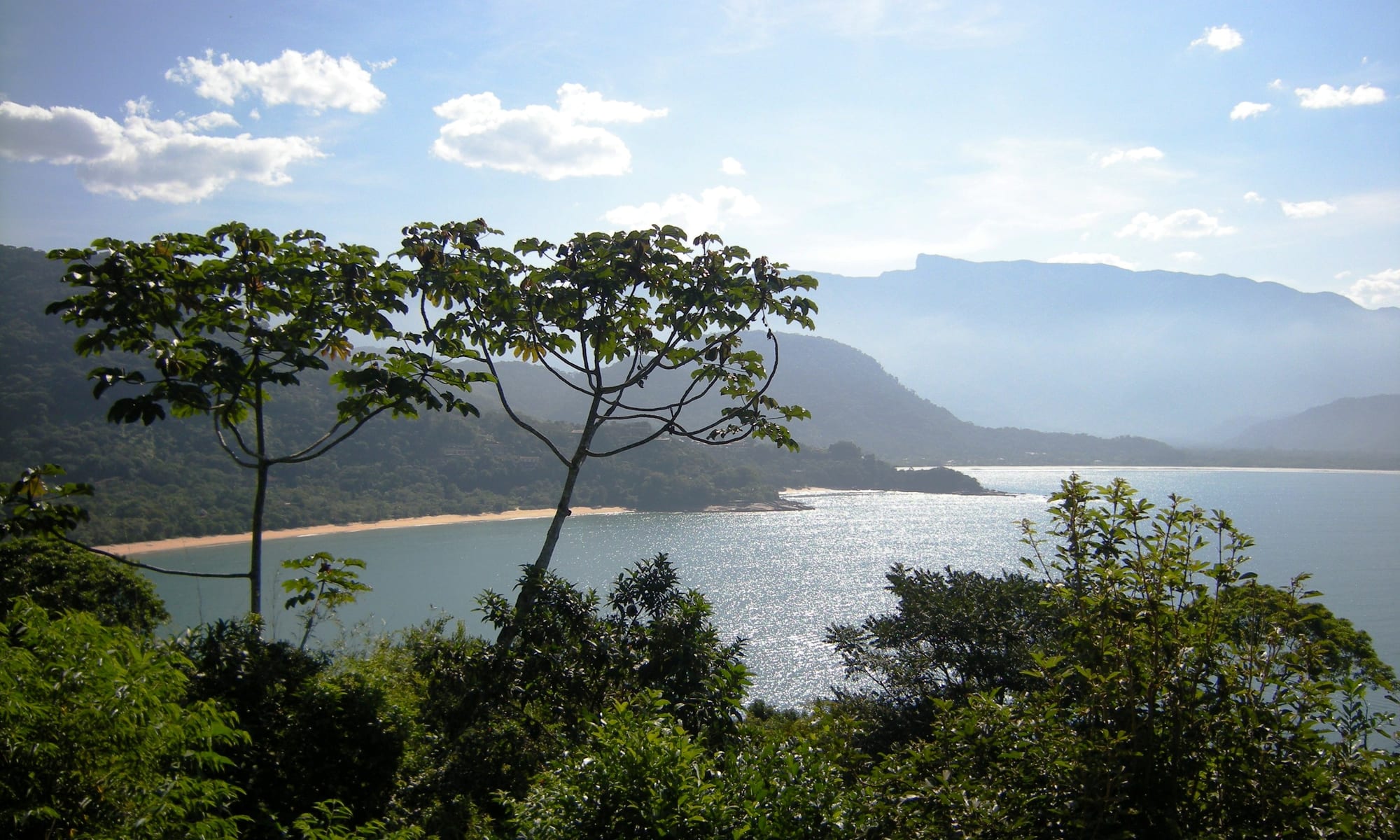
A curving sandy beach and calm bay below forested hills, with a flat-topped mountain ridge in the distance

São Paulo, Brazil

Ubatuba

Praia Vermelha do Sul and neighbouring beaches on the forested coast of Ubatuba. (Carla404 / Wikimedia Commons · CC BY-SA 3.0)

A coastal town on the Tropic of Capricorn at the northern end of São Paulo state's shore, where the forested Serra do Mar drops to some hundred kilometres of coast and more than eighty beaches. The site of a 16th-century peace between Jesuits and the Tupinambá, it is now a holiday town known for surfing, caiçara culture, sea turtles and frequent rain.

Neighbourhoods

  • Centro and Itaguá
    • First-time visitors
    • Restaurants
    • Close to public transport

    The town centre and the seafront of Itaguá beside it, with the bus station, shops and the sea-turtle centre. The central beach is better for an evening walk or a drink than for swimming.

    Open in Maps
  • The south coast
    • Beaches
    • Families
    • Boat trips

    South of the centre, a chain of beaches from the busy Praia Grande, with its surf and long sand, to sheltered Enseada and Lázaro, with calm water, holiday houses and the marina at Saco da Ribeira, where boats leave for Anchieta Island.

    Open in Maps
  • The north coast
    • Surfing
    • Nature
    • Quiet and residential

    North of town the Rio–Santos road runs past surf beaches such as Itamambuca and Félix, the waterfalls of Prumirim and smaller, wilder coves backed by forest, with fewer services and a much quieter pace out of season.

    Open in Maps
  • Picinguaba
    • Caiçara villages
    • Hiking
    • Nature

    The northernmost district on the border with Paraty, a village and beach within the Serra do Mar State Park's Picinguaba unit, with footpaths through the Atlantic Forest, rivers and beaches.

    Open in Maps

Things to do

Beaches

  • Praia Grandebeach

    The town's most popular beach, about 4 km south of the centre, more than 2 km of wide sand with waves good for surfing.

    Open in Maps
  • Praia de Itamambucabeach

    A beach about 15 km north of the centre that hosts international surfing competitions.

    Open in Maps
  • Praia do Lázarobeach

    A sheltered beach on the south coast known for its calm water.

    Open in Maps

Turtles and the sea

  • Projeto TAMARattraction

    The Ubatuba base of Projeto TAMAR, Brazil's national sea-turtle conservation project, on Itaguá beach.

    Open in Maps
  • Ubatuba Aquariumattraction

    A public aquarium in the town.

    Open in Maps

Forest and islands

  • Ilha Anchieta State Parkpark

    An island named after the Jesuit José de Anchieta, a prison until 1955 and the scene of a great prisoner rebellion in the 1950s, a nature reserve since 1977, with the ruins of the penal colony and beaches reached by schooner.

    Open in Maps
  • Prumirim Waterfalltrail

    A series of waterfalls in the forest about 19 km north of the centre, reached by a short trail from the Rio–Santos road.

    Open in Maps
  • Serra do Mar State Parkpark

    One of the largest remaining continuous areas of Atlantic Forest, covering 83 per cent of the municipality, with its Picinguaba and Cunha-Indaiá units reached from Ubatuba.

    Open in Maps

Short trips from the town

  • Picinguabaattraction

    The last beach of Ubatuba before Paraty, home to the research centre of the Serra do Mar State Park and footpaths through the forest.

    Open in Maps
  • Paratyattraction

    The colonial port across the border in Rio de Janeiro state, whose historic centre and surrounding natural areas are a UNESCO World Heritage Site.

    Open in Maps

Seasonal events

  • Festa de São Pedro PescadorJune

    A fishermen's festival with almost a century of tradition, with a sea procession of boats and canoes from the Rio Grande de Ubatuba since 1954, a blessing of the fish-hooks, music and food stalls.

  • Festa do Divino Espírito SantoJuly

    A Catholic festival celebrated for more than 150 years across the town, held in July to coincide with the mullet run, when tainha grilled over coals is the festival dish.

Eat and drink

Long-standing places and food districts in Ubatuba. Hours, ratings and directions come from your maps app, always current.

Ubatuba classics

  • Itaguá seafrontneighborhood

    The central seafront strip of restaurants, bars and kiosks, the place for fish, seafood and an evening drink by the water.

    Open in Maps
  • Beach kiosks of the south coastneighborhood

    Kiosks and simple restaurants on Praia Grande and the beaches around it serving fried fish, prawns and caipirinhas.

    Open in Maps

Experience Ubatuba

History

The coast here was Tupinambá land, and the village of Iperoig stood near today's town. In the 16th century the Portuguese enslaved Tupinambá families for the sugar plantations around São Vicente, and the Tupinambá answered with the Tamoio Confederation, a military alliance backed by the French of France Antarctique in Guanabara Bay. In 1563 the Jesuits José de Anchieta and Manuel da Nóbrega travelled to Iperoig to make peace. Anchieta stayed for months as a hostage while Nóbrega returned to São Vicente with the chief Cunhambebe to settle the terms of the Peace of Iperoig — often called the first peace treaty in the Americas. With peace made, the Portuguese went on to destroy France Antarctique and keep the land.

Unlike the Tupinambá of Guanabara and Cabo Frio, much of Iperoig's population stayed, and on 28 October 1637 the village was raised to a town, Vila Nova da Exaltação à Santa Cruz do Salvador de Ubatuba. In the 18th century Ubatuba Bay became the busiest port of the captaincy of São Vicente, and through the 19th century the town grew rich on its port trade.

In the 20th century Anchieta Island offshore served as a prison until 1955, the scene of a great prisoner rebellion in the 1950s, and in 1977 it became a nature reserve. The Serra do Mar State Park now covers most of the municipality, and the Rio–Santos road links the town to both cities; tourism has made Ubatuba one of the best-known beach destinations of São Paulo state.

Culture & Customs

Caiçara culture is at the heart of Ubatuba's identity: canoe fishing, the cycle of the mullet run, festivals of Portuguese origin and a distinctive coastal cooking. The town also has quilombola and Indigenous communities, and today it draws on all these traditions alongside its few surviving historic buildings, some of them listed by the state heritage body.

Religious festivals mark the year. The Festa de São Pedro Pescador, in June, has nearly a hundred years of tradition, and since 1954 has included a sea procession of boats and canoes from the Rio Grande de Ubatuba and a blessing of the fish-hooks for a good year's fishing. The Festa do Divino Espírito Santo, celebrated for more than 150 years, falls in July rather than at Pentecost, to coincide with the mullet run, and grilled tainha is its dish. Pilgrimages to the shrine of Our Lady of Aparecida set out from the central parish at the end of the year.

Surfing is the other culture. Ubatuba is designated by state law as São Paulo's surf capital, and more than ten important contests are held off its beaches each year. The town is also known for its birdlife, with more than 565 species recorded.

Daily Life

Ubatuba had about 93,000 people in the 2022 census, in a large municipality of more than 700 square kilometres, 83 per cent of it inside the Serra do Mar State Park. The town has two districts, the seat and Picinguaba, and most people live in the narrow strip between the mountains and the sea, along the Rio–Santos road.

Tourism drives the economy. Ubatuba is one of fifteen municipalities that the state classifies as coastal resorts, which brings extra state funding for tourism, and much of the local workforce is in hotels, restaurants, shops, construction and services for holiday homes. Fishing continues in the caiçara communities, and the University of São Paulo's Oceanographic Institute runs a research base here.

The year swings between two extremes. In the January and February holidays and on long weekends the town fills, the central beaches are packed and the coast road jams; for much of the rest of the year, especially midweek, the town is quiet and some remote beaches are almost deserted. Rain, landslide risk on the slopes and the pressure of building on the forest are constant concerns.

Food

Ubatuba's cooking is caiçara cooking, built on fish, cassava and bananas. One local speciality is azul-marinho, fish served with a pirão of cassava flour and green bananas. Fish is often served with pirão, a thick porridge of cassava flour, alongside rice and beans.

The mullet run in the cooler months is the high point of the fishing year. Tainha grilled over coals is the main dish of the July Festa do Divino, and the June fishermen's festival also falls in the mullet season. In the restaurants of Itaguá and the beaches, the menu runs to grilled and fried fish, prawns, squid and moqueca, fish stewed in a clay pot with tomato, onion and coriander.

Beach food is simple: fried fish and prawn portions shared over cold beer, pastéis, coconut water and fresh juices from the kiosks. The caipirinha, made with cachaça, lime and sugar, is the standard drink.

Planning tools

Budget

Ubatuba is a holiday town for families from São Paulo and the Paraíba valley, and prices swing with the season. In January, February and on holidays rooms are expensive and the roads congested; on weekdays the rest of the year it is much cheaper and quiet. A car adds to costs but saves time on a long, spread-out coast.

Daily Budget Midrange
USD 90–180 (inn near the beaches, seafood dinners, a schooner trip, a hire car or taxis)
Daily Budget Shoestring
USD 35–60 (hostel or campsite, per-kilo lunches, local buses)

Out of season, places far from the centre may have nowhere open to eat, so check before booking a remote stay.

Best Time to Visit

Summer, December to March, is the beach season but also the rainy season, and it often rains. June to August is drier and quieter, though cooler, with averages below 20°C. April, May and September to November are a good balance of weather, prices and space.

Suggested Number of Days

Two or three days give time for a few beaches and a forest walk. Allow four to six to explore the far north and south of the long coastline or to combine Ubatuba with the rest of the north coast. Rain is likely, so a spare day helps.

First Visit
2–3 days
With Surroundings
4–6 days

Transportation

The beaches are strung along about 100 km of coast on the Rio–Santos road, and a car is the easiest way to explore them. Local buses reach most districts, but services to remote beaches are infrequent and may stop at a nearby village rather than the beach. Schooners and boats leave from Saco da Ribeira for the islands.

Cycling between beaches means riding on the edge of the Rio–Santos road, which is not safe.

Airport & Station Connections

Most visitors arrive by road on the Rio–Santos Highway. Buses run from São Paulo's Tietê terminal, and there are direct buses from Rio de Janeiro, Paraty, São José dos Campos and Taubaté. A bus from Guarulhos airport runs to Caraguatatuba, about 43 km away. The small Gastão Madeira airport near the centre is used mainly by charter and private flights.

Walkability

The centre and Itaguá seafront are flat and easy to walk, and some neighbouring beaches are linked by short coastal trails. The coast as a whole is far too long to cover on foot, and the Rio–Santos road has little room for pedestrians.

Safety

Brazil has high rates of crime, including violent crime, and it is the main practical concern for visitors — though very unevenly distributed. Ubatuba is calmer than the big cities, but theft on beaches and from cars happens. Heavy summer rain can close the coast road and cause landslides, as in São Sebastião in 2023, and surf beaches can have strong currents.

Take nothing of value to the beach, swim where lifeguards are posted, heed warnings during heavy rain, and use repellent against dengue and biting insects. Check current official travel advice before travelling.

Climate

A tropical rainforest climate with no dry season: about 2,500 mm of rain falls a year, most of it in summer, and paulistas joke about 'Ubachuva', rainy Ubatuba. Summer is December to February. The mountains keep the air humid all year.

Summer
hot, humid and frequently rainy; the record high is about 41°C
Winter
mild and drier, with averages below 20°C; the coldest month still averages about 18°C or more

Local Customs

The traditional people of the coast are the caiçaras, fishing families of mixed Indigenous, African and Portuguese descent, and quilombola and Indigenous communities also live in the municipality. Surf culture is strong, and beach life is informal; a shirt is expected in shops and restaurants. Restaurants usually add a 10 per cent service charge.

Respect fishing gear and boats on the sand, take rubbish home from remote beaches, and keep to marked trails in the state park.

Common Payment Methods

The currency is the Brazilian real (R$). Cards and the instant Pix transfer system are accepted in most shops, restaurants and inns, but some cash is useful for kiosks, boat trips and remote beaches.