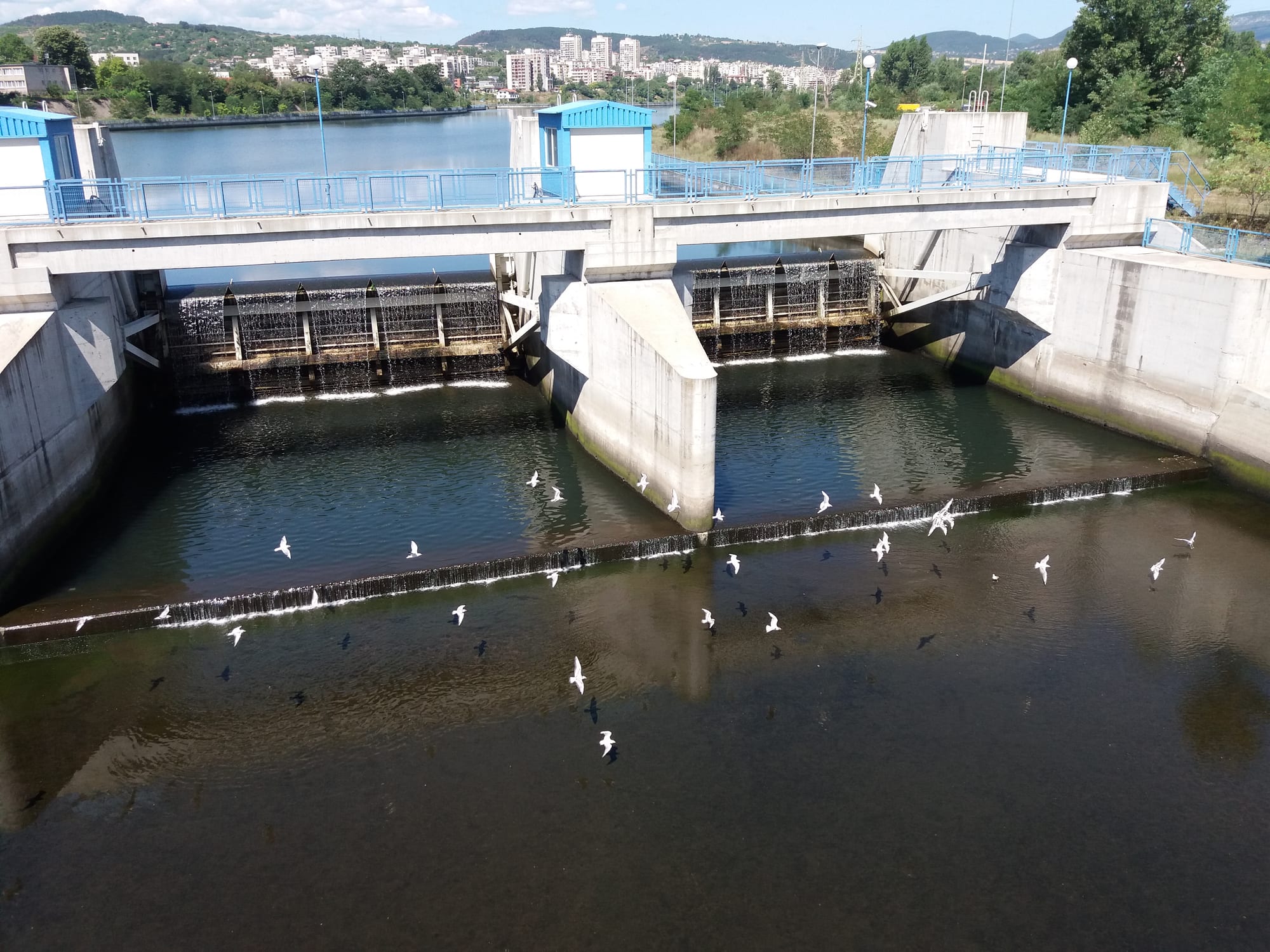
Gulls flying over the sluice gates of a weir on a river, with apartment blocks and green hills of the town behind

Plovdiv & the Rhodopes, Bulgaria

Kardzhali

The Water Mirror weir on the Arda river in Kardzhali, with the town beyond. (TodorBelomorski / Wikimedia Commons · CC BY-SA 4.0)

A town in the low eastern Rhodopes of southern Bulgaria, on both banks of the Arda between two large reservoirs. Thracian sanctuaries and medieval fortresses surround it, Perperikon among them; under the Ottomans it was a small trading town, and today it is the centre of the province with the highest proportion of ethnic Turks in Bulgaria.

Neighbourhoods

  • Town centre and the old town
    • First-time visitors
    • Markets
    • Close to public transport

    The busy centre north of the Arda, around the market and the 19th-century Central Mosque, where the tomb of the town's founder stands. The Regional Historical Museum, the theatres and most shops and restaurants are within walking distance.

    Open in Maps
  • The Arda and the Water Mirror
    • Riverside walks
    • Water sports

    The river runs through the middle of town, its banks reshaped by the Water Mirror, a weir completed in 2009 that holds back a calm stretch of water for rowing and recreation, with promenades along both sides.

    Open in Maps
  • Veselchane
    • Historic sites
    • Quiet and residential

    The quarter on the high right bank of the Arda, home to the medieval monastery of St John the Forerunner and the old Veselchane bridge, where the waters of the Studen Kladenets Reservoir reach at their highest.

    Open in Maps
  • Kardzhali Reservoir shore
    • Lakes and fishing
    • Summer evenings

    About 3 km north-west of the centre, the crescent-shaped reservoir draws anglers, rowers and swimmers, and in summer open-air restaurants and bars line its shore.

    Open in Maps

Things to do

Landmarks and museums

  • Regional Historical Museummuseum

    One of the largest museums in southern Bulgaria, in the old konak of around 1870 with Moroccan-style arches, holding Neolithic finds and the treasures of Perperikon and Tatul, icons and folk costume.

    Open in Maps
  • Monastery of St John the Forerunnerlandmark

    A fortified early Christian monastery in Veselchane with roots in late antiquity, once the seat of a medieval bishopric, restored in 2000 with a new bell tower.

    Open in Maps
  • Central Mosquelandmark

    A large mosque near the market, built in 1812 and rebuilt in 1874, whose yard holds the grave of Kardzhali Ali, said to have given the town its name.

    Open in Maps
  • Monyaklandmark

    A 12th-century fortress on a hill above the left bank of the Arda, mentioned in Fourth Crusade chronicles as Chastel de Moniac, which guarded the eastern approach to the town.

    Open in Maps

Lakes and the river

  • Kardzhali Reservoirpark

    The second-largest reservoir by volume in Bulgaria, the top of the Arda hydropower cascade, used for rowing, fishing and water sports, and stocked with large wels catfish.

    Open in Maps
  • Studen Kladenets Reservoirpark

    A 29 km reservoir downstream of the town, known for its fishing, with the ruins of the Monyak and Vishegrad fortresses in its western part.

    Open in Maps
  • Kardzhali Pyramidsviewpoint

    A small badland near the village of Zimzelen, about 5 km from town, where white pillars of volcanic tuff have eroded into groups known as the Mushrooms and the Stone Wedding.

    Open in Maps

Short trips from the town

  • Perperikonlandmark

    An ancient Thracian sacred city cut into a 470-metre rocky hill about 15 km north-east of town, the largest megalithic ensemble in the Balkans, later a fortified medieval city.

    Open in Maps
  • Tatullandmark

    A village near Momchilgrad beside a Thracian rock sanctuary topped by a truncated pyramid, with two carved sarcophagi; finds date the earliest settlement to around 4000 BC.

    Open in Maps
  • Utroba Cavelandmark

    A Thracian cave sanctuary near the village of Ilinitsa, shaped like a womb, where sunlight through a slit in the rock reaches a carved altar, thought to have been a fertility shrine.

    Open in Maps
  • The Stone Mushroomsviewpoint

    Rock formations about 2.5 metres tall near the village of Beli Plast on the road to Haskovo, protected since 1974, where eagles and Egyptian vultures can be seen.

    Open in Maps

Seasonal events

  • Kardzhali Day21 October

    The town's holiday, marking its liberation in the First Balkan War in 1912, celebrated with concerts and commemorations since 1937 and with an annual cultural week.

  • Eid at the Central Mosquedates follow the Islamic calendar

    Hundreds of worshippers gather at the Central Mosque for Eid al-Fitr and Eid al-Adha, the two great festivals of the Muslim year.

Eat and drink

Long-standing places and food districts in Kardzhali. Hours, ratings and directions come from your maps app, always current.

Kardzhali classics

  • Börekrestaurant

    Börek, a filled pastry made with layers of filo dough, one of the pastries of Bulgarian cooking alongside banitsa.

    Open in Maps
  • Lake restaurantsrestaurant

    Open-air restaurants on the dam and boat restaurants on the reservoir, where diners can choose a live fish for their meal.

    Open in Maps

Food districts and markets

  • Kardzhali marketmarket

    The producers' market north of the river, rebuilt in the late 2000s, with fruit and vegetables from the surrounding farms.

    Open in Maps
  • Town centre restaurantsneighborhood

    Restaurants, grills and cafés around the centre and along the river, serving Bulgarian and Turkish dishes.

    Open in Maps

Experience Kardzhali

History

People have lived around Kardzhali since the Neolithic, and the hills of the eastern Rhodopes were a heartland of the Thracians, who built rock sanctuaries dedicated to the gods of the sun and the earth. The greatest of them, Perperikon, stands on a rocky hill north-east of the town; Tatul and the Utroba Cave, where a ray of noon sunlight enters a womb-shaped chamber, are nearby. In the Byzantine period the area was the centre of a Christian eparchy, Achridos, and the fortified monastery of St John the Forerunner grew on the right bank of the Arda. In the medieval Bulgarian state the settlement was known as Zherkovo, guarded by the fortresses of Vishegrad and Monyak on either side of the river.

Under Ottoman rule the town grew on the trade routes but stayed small. In the 18th century brigands used it as a hideaway and supply point, and it took its present name from their leader, Kırca Ali. After the Congress of Berlin in 1878 it joined autonomous Eastern Rumelia, but it was returned to the Ottoman Empire after the union of 1885. On 21 October 1912, during the First Balkan War, Bulgarian troops took the town, and the date has been its holiday since 1937.

Kardzhali became the centre of a new province in 1949. Turkish emigration continued throughout the 20th century, peaking in 1989 when the state's forced assimilation campaign, the "Revival Process", drove many ethnic Turks to Turkey. In December 1989 and January 1990 the town saw protests over the restoration of minority rights, and Turkish students boycotted schools until the ban on their mother tongue was lifted.

Culture & Customs

Kardzhali Province has the highest proportion of ethnic Turks of any Bulgarian province. In the town itself a Bulgarian majority, many of them Muslim Pomaks, lives alongside a large Turkish community, while the wider municipality has a Turkish majority; both languages are heard on the streets. The municipal government is largely in the hands of the Movement for Rights and Freedoms, the party most associated with the Turkish community. The Central Mosque near the market draws hundreds for daily prayers and the two Eids, while the medieval monastery of St John the Forerunner was restored in 2000 with a new bell tower.

For a town of its size, Kardzhali has a busy cultural life: two drama theatres, named after Dimitar Dimov and Kadrie Lyatifova, a puppet theatre, an art gallery, and a historical museum with one of the most extensive exhibitions in southern Bulgaria. The town hosts the Perperikon international arts festival and a national children's literature competition, and its town clock is unusual in Bulgaria for playing revolutionary songs every hour.

Football is followed closely. FK Arda Kardzhali, founded in 1924, plays in the First League, the top tier of Bulgarian football, at the Arena Arda. The long-distance Sultans Trail walking route passes the reservoir, the town centre and many surrounding villages, and the lakes draw anglers from across the country.

Daily Life

About 42,000 people lived in Kardzhali at the end of 2025, and the wider municipality, which includes 117 villages, had about 68,000 at the 2011 census. The population has fallen since the end of communism, as both Bulgarians and Turks left during the hard years of the post-communist transition, the Bulgarians for other parts of the country or abroad and the Turks mainly for Turkey.

The old industrial economy has gone. Kardzhali was once a centre of tobacco processing and of metallurgy based on the lead and zinc ores of the area; the large lead and zinc complex outside town closed, and its two chimneys were demolished in 2016. Today retail and services make up the largest share of the local economy, and the province has one of the highest shares of people working in agriculture in Bulgaria. Tourism, built on Perperikon and the lakes, is seen as a promising sector.

Daily life centres on the market and the streets around the mosque, the promenades along the Arda and, in summer, the reservoir shore, where families swim, fish and eat in the open-air restaurants. Erol Myumyun has been mayor since 2023, succeeding Hasan Azis, who held the post for two decades.

Food

Kardzhali's cooking combines Bulgarian and Turkish traditions. Pastries include börek, made with layers of filo dough, and Bulgarian banitsa, and Ottoman cooking left dishes such as baklava, moussaka and kyufte in Bulgarian cuisine. Bulgarian staples are everywhere: shopska salad under grated sirene cheese, grilled kebapche and kyufte, and gyuvech, with yoghurt and ayran at many meals.

The reservoirs supply fish. Kardzhali Reservoir was stocked with wels catfish in the 1970s, and specimens of up to 100 kg are found there today, along with carp and perch; rudd is caught in large numbers at Studen Kladenets. Boat restaurants on the lake let diners choose a live fish for their meal, and open-air restaurants on the dam serve drinks and food through the summer.

The producers' market north of the river sells fruit and vegetables from the surrounding farms. Rakia, the national spirit, is often drunk with salads as an appetiser, and Bulgarians are great coffee drinkers.

Planning tools

Budget

Kardzhali sees few foreign visitors and is cheap even by Bulgarian standards. Rooms, meals and buses cost little, and the main expense is getting to the Thracian sites and fortresses outside town, most easily by hire car or taxi.

Daily Budget Midrange
USD 65–120 (comfortable hotel, restaurant meals, a hire car or taxis to Perperikon and Tatul)
Daily Budget Shoestring
USD 30–50 (guesthouse or simple hotel, börek and grill meals, buses)

Combine Perperikon and Tatul on one trip with a car; the riverside promenades and the reservoir shore are free.

Best Time to Visit

May, June, September and October are warm without the full heat of summer, and suit the hill climbs to Perperikon and the fortresses. July and August are hot, but the reservoirs draw swimmers and anglers and the lakeside restaurants are open.

Suggested Number of Days

One or two days cover the town and its nearest sights. Three or four allow time for the Thracian sanctuaries and fortresses spread across the eastern Rhodopes, which are reached on slow, winding roads, and longer still for those who want to fish or walk.

First Visit
1–2 days
With Surroundings
3–4 days

Transportation

The centre is compact enough to walk. Taxis are the easy way to the reservoir shore and the outer quarters. The Thracian sites, fortresses and villages are thinly served by public transport, so a car or taxi is the practical way to reach them.

Allow extra time on eastern Rhodope roads, which are narrow and twisting, and drive them in daylight.

Airport & Station Connections

There is no commercial airport in town; Plovdiv's airport is the nearest, mostly for charter flights, and Sofia Airport has far more connections. Kardzhali is about 260 km south-east of Sofia and about 50 km from Haskovo. Buses run from most major Bulgarian cities, and a road leads south over the Makaza pass to Komotini in Greece.

Walkability

The town centre, the market, the mosque, the museum and the riverside promenades are all within easy walking distance on mostly level ground. Veselchane and the fortress hills involve steep climbs, and the reservoir shore is a longer walk or a short taxi ride.

Safety

Bulgaria is a safe country for visitors, with low levels of violent crime. In Kardzhali the practical risks are winding roads, steep and rocky paths at Perperikon and the fortresses, and summer heat on exposed hilltops.

Carry water and wear good shoes for the rock sites, and drive mountain roads in daylight. Check current official travel advice before travelling.

Climate

Kardzhali lies in the low eastern Rhodopes and has a hot-summer Mediterranean climate, close to a humid subtropical one. Summers are hot and sunny, with the most sunshine in June, July and August, and winters are cold.

Summer
hot and sunny — across inland Bulgaria summer days often reach 28–35°C
Winter
cold — across Bulgaria's lowlands winter days are around −2 to 4°C

Local Customs

Kardzhali has a mixed population: ethnic Turks, Bulgarian Christians and Bulgarian-speaking Muslims (Pomaks) live side by side, and both Bulgarian and Turkish are spoken. Bulgarians often shake the head for 'yes' and nod for 'no'. Mosques and churches are both active places of worship.

Dress modestly in mosques and churches, visit mosques outside prayer times, and ask before photographing people.

Common Payment Methods

The currency is the euro, which replaced the lev on 1 January 2026. Cards are widely accepted in Bulgaria, but cash is useful at the market, in small cafés and in the villages around.