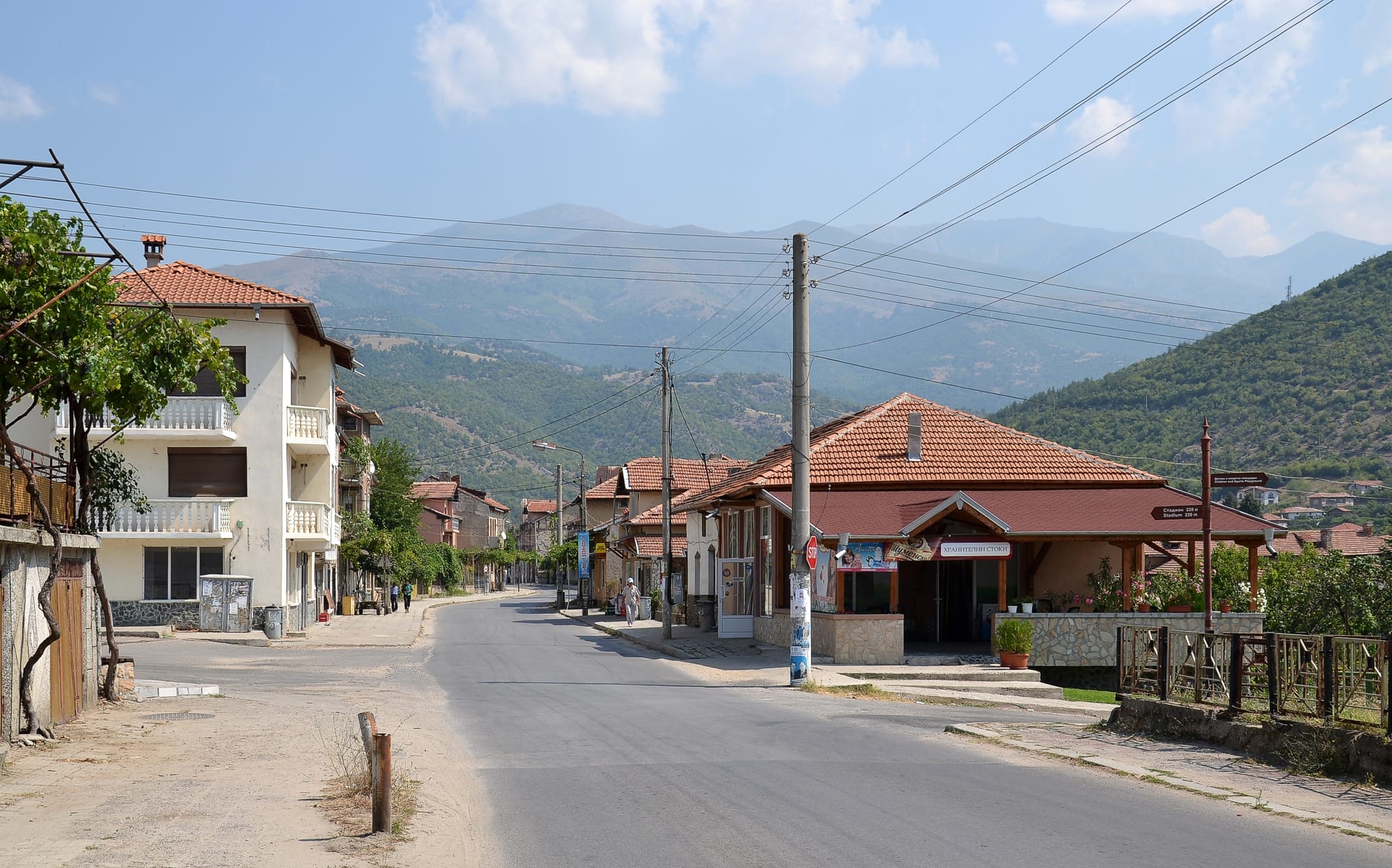
A quiet street of tiled-roof houses in the small town of Rila, with forested mountain ridges rising behind

Sofia, Rila & the West, Bulgaria

Rila

A street in the town of Rila, below the Rila Mountains. (Pudelek (Marcin Szala) / Wikimedia Commons · CC BY-SA 3.0)

A small town on the Rilska River at the foot of the south-western Rila Mountains, the nearest settlement to Rila Monastery, which lies 20 km up the valley. Owned by the monastery in the Middle Ages, it is now a quiet municipal centre at the entrance to the Rila Monastery Nature Park.

Neighbourhoods

  • Rila town
    • Quiet and residential
    • Local life

    The small municipal centre on the banks of the Rilska River, where the valley road to the monastery begins. Its houses and churches include a number of listed buildings, and the directorate of the Rila Monastery Nature Park has its office here.

    Open in Maps
  • Rila Monastery
    • First-time visitors
    • Historic sites
    • Mountain walks

    The monastery complex 20 km up the valley, a settlement of its own within the municipality, with souvenir shops by the east entrance, a bakery and a few restaurants nearby. Guests can stay overnight in simple monks' quarters, and the monastery is a trailhead for long mountain walks.

    Open in Maps

Things to do

Rila Monastery

  • Rila Monasterylandmark

    Founded in the 10th century and rebuilt between 1834 and 1862 after a fire, the largest and most famous Orthodox monastery in Bulgaria, a UNESCO World Heritage Site since 1983, which drew 900,000 visitors in 2008 alone.

    Open in Maps
  • Main church of the monasterylandmark

    Built between 1834 and 1837 with five domes, a gilded carved iconostasis and frescoes finished in 1846 by masters from Bansko, Samokov and Razlog.

    Open in Maps
  • Hrelyo's Towerlandmark

    One of the two oldest buildings in the complex, a tower of 1334–35, to which a belfry was added in 1844.

    Open in Maps
  • Church History Museummuseum

    The monastery's museum, known above all for Rafail's Cross, a wooden cross carved by a monk with 104 religious scenes and 650 miniature figures.

    Open in Maps
  • Cave of St John of Rilatrail

    The cave where the hermit lived before the monastery was built, reached by a walk of about 20 minutes.

    Open in Maps

Mountains and nature

  • Stob Earth Pyramidsviewpoint

    Hoodoos up to 12 metres high near the village of Stob, conical to mushroom-shaped rock formations at the foot of the Rila range.

    Open in Maps
  • Malyovitsatrail

    A 2,729-metre peak in north-western Rila, the cradle of Bulgarian rock climbing and mountaineering, reached on one of the classic trails from the monastery.

    Open in Maps
  • Seven Rila Lakestrail

    A staircase of glacial lakes between 2,100 and 2,500 metres, the most visited group of lakes in Bulgaria, reached on a long walk from the monastery and visited mainly in July and August.

    Open in Maps

Short trips

  • Rila Monastery Nature Parkpark

    One of the largest nature parks in Bulgaria, about 252 square kilometres of forests, mountain meadows, alpine ground and 28 glacial lakes, most of it owned by the monastery.

    Open in Maps

Eat and drink

Long-standing places and food districts in Rila. Hours, ratings and directions come from your maps app, always current.

Rila classics

  • Monastery Bakerycafe

    A small, popular stand by the monastery selling monastery bread, mekitsi, the fried yoghurt-dough flatbreads, and locally produced yoghurt.

    Open in Maps
  • Restaurants by the monasteryrestaurant

    A few restaurants close to the monastery serving Bulgarian dishes to visitors.

    Open in Maps

Experience Rila

History

The valley was settled long before the monastery. Thracians and then Romans lived here, and the place was known in antiquity as Sportela and then Roligera; the settlement itself traces its beginnings to the late 2nd or early 3rd century. In the Middle Ages it lay within the Bulgarian Empire, and in the 14th century the village was a feudal possession of Rila Monastery, perhaps the Driska named in Tsar Ivan Shishman's Rila Charter. Ottoman tax registers of 1576 record it as İrlie.

The monastery that shaped the town's history was founded during the reign of Tsar Peter I (927–969) by the followers of the hermit Ivan of Rila, who lived alone in a cave in the mountains. It was rebuilt on its present site in the first half of the 14th century, when the Hrelyo Tower was raised, and through the centuries of foreign rule it served as a store of Bulgarian language and culture. Fire destroyed most of it in 1833, and it was rebuilt between 1834 and 1862 with money from wealthy Bulgarians across the country. Revolutionaries including Vasil Levski, Gotse Delchev and Peyo Yavorov hid there.

In 1845 the Russian Slavist Viktor Grigorovich, travelling from Melnik to the monastery, passed through 'the large village of Rilo' and noted its church of the Archangel and its Bulgarian school; American missionaries in 1859 counted about 200 houses. The rural municipality of Rila was formed in 1883, and the monastery became a national historical monument in 1976 and a UNESCO World Heritage Site in 1983.

Culture & Customs

Rila lies in Shopluk, the country of the Shopi, known across western Bulgaria for their dialect and fast, stamping dances, but its identity is bound up with the monastery up the valley. Rila Monastery, the largest in Bulgaria, is a working community of monks and a popular place of pilgrimage, and St Ivan of Rila, the patron saint of the Bulgarian people, is commemorated there on 18 August and 19 October.

The monastery is also the country's greatest monument of Revival art. The frescoes of its main church, finished in 1846, are the work of many painters from Bansko, Samokov and Razlog; the gilded iconostasis took five years to carve; the church holds icons from the 14th to the 19th century; and the monastery museum keeps Rafail's Cross, a single piece of wood carved by a monk into 104 religious scenes with 650 miniature figures. The striped arcades of the courtyard show a Mamluk influence that spread through the Ottoman world after the conquest of Egypt.

In the town itself, the old Babinska mahala quarter is protected as an ensemble of 27 architectural monuments, among them houses and the Church of the Archangel Michael, and the Church of St Nicholas is listed separately. Visitors to the monastery are expected to dress modestly and behave quietly, and many Bulgarians come as pilgrims rather than tourists.

Daily Life

About 1,900 people lived in Rila at the end of 2025. The town is the administrative centre of Rila Municipality, which also takes in the villages of Smochevo, Pastra and Padala and the monastery itself, and it houses the directorate of the Rila Monastery Nature Park, most of whose land belongs to the monastery.

Life is small-town and slow, shaped by the river, the mountains and the road up the valley, which carries visitors bound for the monastery. The town keeps a secondary school, and a small mineral spring, its alkaline water emerging at 36°C, rises within its bounds. Of the town's churches, St Nicholas dates from 1885 and keeps a rare piece of medieval church embroidery, a liturgical cloth of the epitaphios type.

Days start early and are organised around school, municipal work and the rhythm of the seasons. Summer brings walkers heading for the nature park's trails, while winter quiets the valley, though pilgrims still make the journey to the monastery on its feast days.

Food

Rila eats in the style of the Shopluk countryside: plain, hearty food built on vegetables, beans, cheese and grilled meat. Shopska salad, diced tomato, cucumber and pepper under grated white sirene cheese, takes its name from Shopluk and is often eaten as an appetiser with a glass of rakia, the fruit brandy. Bean soup (bob chorba), grilled kebapche and kyufte, and banitsa, the layered filo pastry with cheese and egg, are the everyday staples.

At the monastery, the small bakery stand is the best-known place to eat. It sells monastery bread, locally made yoghurt and mekitsi, rounds of yoghurt dough that are deep-fried and often dusted with icing sugar or served with jam, honey or white cheese. There are only a few full restaurants near the monastery, serving Bulgarian dishes to the day visitors.

Honey is a staple of Bulgarian cooking, and yoghurt, which carries the country's name in its bacterial culture, appears at almost every meal.

Planning tools

Budget

Rila is one of the cheaper corners of western Bulgaria. Entry to the monastery is free, and simple meals and rooms cost little. Most of the cost of a visit is transport, especially for those who come on a tour or by taxi.

Daily Budget Midrange
USD 85–160 (comfortable guesthouse, restaurant meals, a hire car or a day tour from Sofia)
Daily Budget Shoestring
USD 40–65 (simple room or monastery lodging, bakery and tavern meals, buses)

A hire car or a tour is often the easiest way to combine the monastery with the Stob pyramids in one trip.

Best Time to Visit

May, June, September and October suit the monastery and the lower valley, with mild weather and fewer visitors than high summer. July and August are the months for the high walks to the lakes and peaks. Winter is cold and snowy but the monastery stays open, and the feasts of St John of Rila fall in August and October.

Suggested Number of Days

One day is enough for the town and the monastery. Two to four days allow for walks in the nature park and the mountains above; weather and snow on the high trails decide how much can be reached.

First Visit
1 day
With Surroundings
2–4 days

Transportation

Buses run to Rila town from Sofia, Dupnitsa and Blagoevgrad, but as of 2025 no public bus ran all the way to the monastery, so the last 20 km need a car, a taxi or a tour. Daily tour buses run from Sofia, some stopping at Boyana Church on the way.

Allow a full day for the monastery from Sofia, and check return times before relying on a bus from the town.

Airport & Station Connections

Sofia Airport is the usual arrival point for foreign visitors, and the monastery lies 117 km south of the capital. Rila town is 34 km from Dupnitsa and 65 km from Kyustendil, and most visitors arrive by car or on a tour from Sofia.

Walkability

The town is small and walkable, and the monastery complex is compact, with the hermit's cave a short walk away. The two are 20 km apart along the valley road, too far to walk for most visitors.

Safety

Bulgaria is a safe country for visitors, with low levels of violent crime. Around Rila the hazards are in the mountains: sudden summer storms, deep snow in winter, and long, high trails.

Check mountain weather and hut availability before high walks, and carry warm layers even in summer. Check current official travel advice before travelling.

Climate

A mountain climate that cools quickly with height. The Rila range holds snow from December to April and stays cool in summer, when sudden storms are a risk on the peaks.

Summer
warm in the valley and cool on the peaks; even in the hottest spells, temperatures around the monastery do not exceed about 36°C
Winter
cold, with heavy snow in the mountains; temperatures around the monastery have fallen as low as -25°C

Local Customs

Rila Monastery is a working community of monks and a place of pilgrimage, and visitors are expected to behave quietly. Tips are not added to the bill, and 5–10 per cent is usual where service is good. Bulgarians often shake the head for 'yes' and nod for 'no'.

Cover shoulders and knees at the monastery, keep voices low in the church, and ask before photographing inside it.

Common Payment Methods

The currency is the euro, which replaced the lev on 1 January 2026. Cards are accepted in some places, but cash is useful for the bakery, small shops, taxis and the souvenir stalls at the monastery.