💰 Budget
Varna is a working city as well as a resort, so prices stay closer to city levels than in the big resort towns. Rooms in the centre and the northern resorts cost most in July and August, when visitors and seasonal workers crowd into the city; food, buses and museums remain inexpensive. Beach clubs and resort bars are the main extravagance.
- Daily Budget Midrange
- USD 90–170 (city or resort hotel, seafood dinners, museum tickets, taxis or a day trip)
- Daily Budget Shoestring
- USD 40–70 (hostel or private room, grills and bakeries, city buses)
Book summer rooms early; the Sea Garden, the city beaches and the walk through the old centre cost nothing.
📅 Best Time to Visit
June and September give warm weather and swimming without the July and August crowds. High summer is hot, sunny and busy, with the festival season and the beach clubs in full swing. Varna's autumns are long and mild, which suits the museums and the city's streets. Winter is quiet, but Varna remains a working city all year.
⏳ Suggested Number of Days
Two or three days cover the old centre, the museums and the seafront. Allow four to six for the northern resorts, the monastery and stone columns outside the city or time on the beach; summer visitors often stay longer for the sea alone.
- First Visit
- 2–3 days
- With Surroundings
- 4–6 days
🚆 Transportation
Most sights are concentrated in the compact old centre and the Sea Garden, which are easy on foot. A municipal network of buses and trolleybuses covers the rest of the city, with tickets from machines at stops or on board, to be validated when boarding; several lines run north to the resorts and Golden Sands, and others cross the bridge to Asparuhovo and Galata. Taxis are plentiful.
Use a known taxi company or app rather than unmarked cabs, and agree the fare or check the meter before setting off.
🛬 Airport & Station Connections
Varna Airport, the third-largest in Bulgaria, lies about 10 km from the centre near Aksakovo, with many summer flights; bus 409 links it to the city centre and the northern resorts. The central railway station is within walking distance of the centre, and trains and buses run to Sofia — direct trains take about 7½ to 8½ hours. Motorways run towards Sofia and Burgas, and cruise ships call at the passenger terminal in the port.
🚶 Walkability
Good in the centre: a pedestrian zone runs from the cathedral square to the main entrance of the Sea Garden, and both are within walking distance of the railway station and the port. The beach alley and the park's long avenues are pleasant walks. The resorts to the north and the districts across the bay are too far to reach on foot.
🛡️ Safety
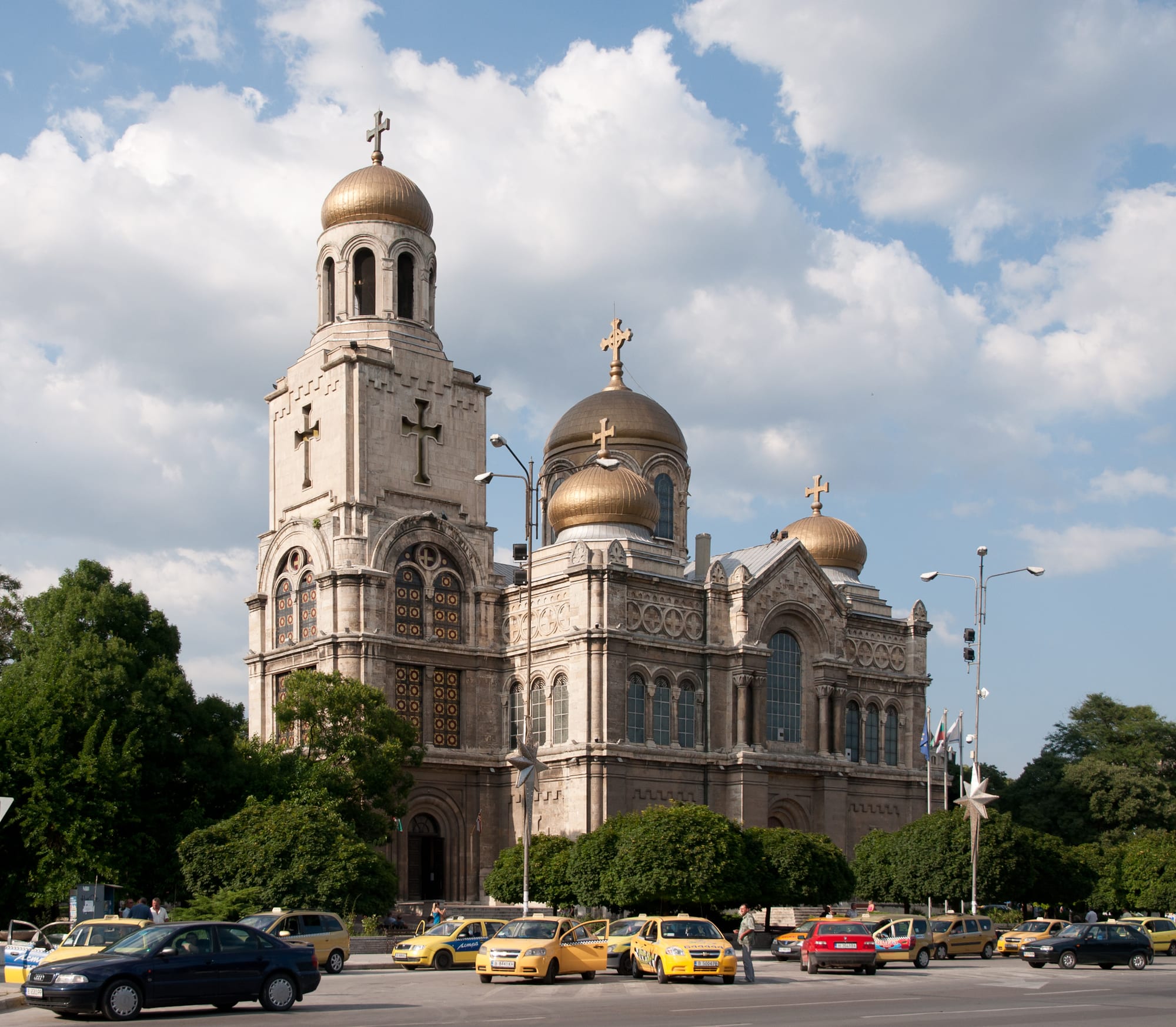
Bulgaria is a safe country for visitors, with low levels of violent crime. In Varna the usual city precautions apply: watch for pickpockets in crowded places, particularly around the cathedral, and for taxi overcharging.
Avoid people offering to change money on the street, use reputable taxis, and swim on guarded beaches. Check current official travel advice before travelling.
🌦️ Climate
A mild climate tempered by the sea, with sunny summers moderated by breezes and long, mild autumns. Summer lasts from early May until early October. Winters are cool, and snow is possible in the coldest months, though it can quickly melt.
- Summer
- warm and sunny, usually 27–30°C by day and 17–18°C at night
- Winter
- cool, about 6–7°C by day and 0°C at night, with occasional snow
🤝 Local Customs
Tips are not added to bills; leaving 5–10 per cent in restaurants is usual if the service was good. Bulgarians often shake the head for 'yes' and nod for 'no', which can cause confusion. Varna is proud of its maritime identity and its role as a festival city.
Dress modestly in churches and ask before photographing services; ask before photographing people.
💳 Common Payment Methods
The currency is the euro (EUR). Bulgaria adopted the euro on 1 January 2026, replacing the lev, and the euro has been the sole currency since 1 February 2026. Cards are widely accepted in restaurants, shops and hotels, there are plenty of ATMs, and cash is useful for small kiosks and markets.