💰 Budget
Kep is inexpensive apart from the crab, which is priced by weight and can make a seafood dinner the largest item of the day. Guesthouses are cheap and a few boutique hotels in restored villas are much dearer; a boat to Rabbit Island, a scooter or a tuk-tuk for the day are the other regular costs.
- Daily Budget Midrange
- USD 60–140 (boutique hotel or island resort, restaurant meals, boat trips and guided tours)
- Daily Budget Shoestring
- USD 20–35 (guesthouse room, market and stall food, a rented scooter or shared tuk-tuk)
Cash machines are limited here, so draw money in Kampot, and agree the price of crab by the kilo before it is cooked.
📅 Best Time to Visit
November to April brings dry, calm weather, clear water and the salt fields in production, and is the busiest stretch for Cambodian holidays. May to October is wet, with heavy rain, rough seas that can stop boats to Rabbit Island, green countryside and far fewer visitors.
⏳ Suggested Number of Days
One or two nights covers the town itself, which is small and slow. Three or four suits anyone adding the island, the countryside inland and the neighbouring river town. Bad weather at sea is the usual reason to allow extra time.
- First Visit
- 1–2 days
- With Surroundings
- 3–4 days
🚆 Transportation
The town is spread along several kilometres of coast road, so tuk-tuks and motorbike taxis do most of the work, and many visitors rent a scooter or a bicycle for the national park loop and the pepper farms. Minivans and shared taxis link Kep with Kampot, Phnom Penh and the Vietnamese border crossing at Ha Tien, and boats run from the pier to Rabbit Island.
Agree tuk-tuk fares in advance, and check the last boat back from Rabbit Island before crossing for the day.
🛬 Airport & Station Connections
Most people arrive by road: about forty minutes from Kampot, three to four hours from Phnom Penh by bus, minivan or shared taxi, and a short hop from the Vietnamese border at Ha Tien. The nearest airport with regular flights is at Sihanoukville, some two and a half hours west, and a limited passenger service on the Phnom Penh–Sihanoukville railway, reopened to travellers in 2016, crosses the province.
🚶 Walkability
The beach, the promenade and the headland make a pleasant flat walk of a couple of kilometres, but Kep is strung out: the crab market, the beach and the hillside hotels are far enough apart that most people ride between them. Hill lanes are steep, pavements are patchy, and there is little lighting after dark.
🛡️ Safety
Kep is one of the calmest places on the Cambodian coast, and serious crime is rare. The practical risks are scooter accidents on the coast road, strong sun and jellyfish at times, slippery paths in the national park, and mosquitoes carrying dengue in the wet season. Some ruined villas are unstable and on private land.
Wear a helmet, take water and repellent on the park trail, and treat abandoned buildings as unsafe and private. Check current official travel advice before travelling.
🌦️ Climate
Tropical and monsoonal, with a dry season from November to April and heavy rain from May to October. Sea breezes make the coast a little more comfortable than inland Cambodia, and the wettest months bring storms off the gulf.
- Summer
- hot and humid, about 28–34°C, with heavy rain and occasional storms from May to October
- Winter
- dry and warm, about 24–32°C, with calm seas and clear evenings
🤝 Local Customs
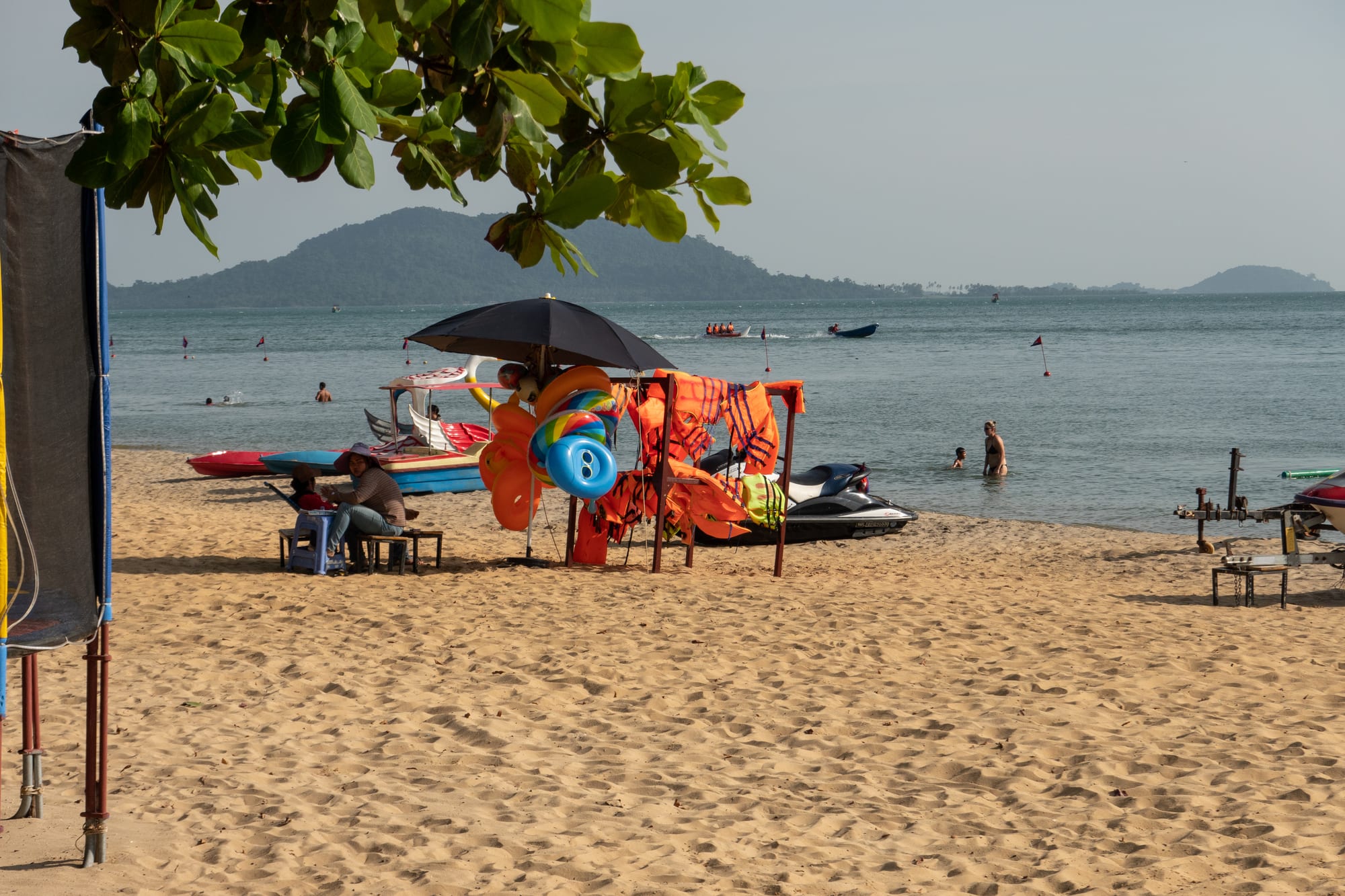
Kep is a family resort for Cambodians, and swimwear stays on the beach; most local women swim in clothes. Greetings are made with palms together, shoes come off in homes and pagodas, and shoulders and knees are covered at temples. Asking before photographing crab sellers, fishers or salt workers is expected.
Tipping is not expected but is welcomed by boat crews and drivers; keep noise down in residential lanes at night, and buy pepper directly from farms rather than roadside resellers if provenance matters.
💳 Common Payment Methods
Prices are given in US dollars and Cambodian riel, with riel used for change and small purchases. Cash is the norm; a small number of cash machines serve the town, cards are accepted only by hotels and larger restaurants, and the crab market and boats are cash-only.