💰 Budget
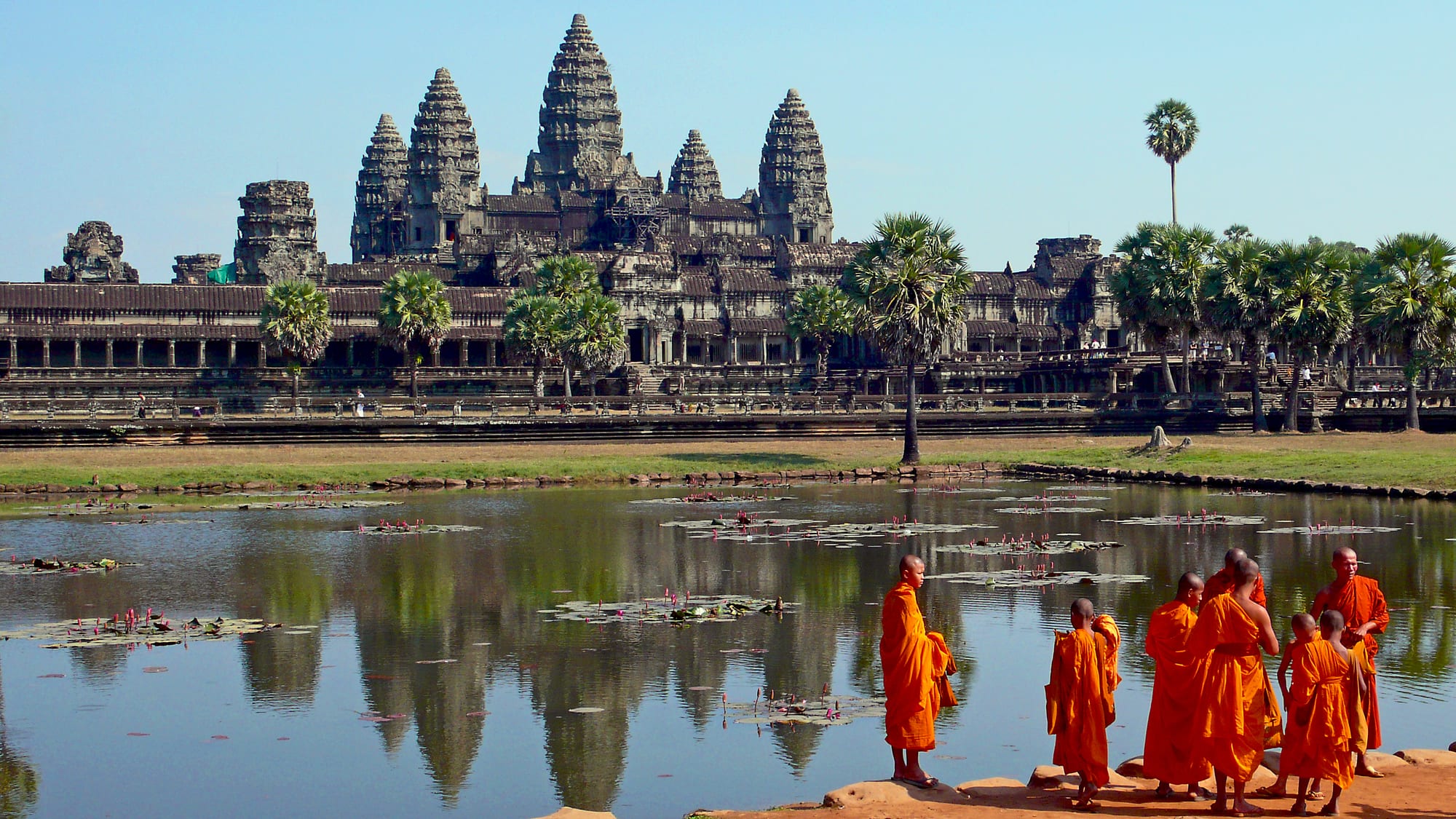
Cambodia is inexpensive. Local food, guesthouses, and transport cost little; the main fixed cost is the Angkor Archaeological Park pass. The US dollar is used for almost everything, with the riel serving as small change. Cards are accepted in tourist hubs; carry cash elsewhere.
- Angkor Pass
- A park pass is required for Angkor and is the main fixed cost of a visit; buy it at the official ticket office and never from touts
- Daily Budget Midrange
- USD 60–120 (hotel, restaurants, a private driver, guided temple days)
- Daily Budget Shoestring
- USD 25–40 (guesthouse, local food, buses, shared tuk-tuks)
✈️ Visa Requirements
Most nationalities need a visa, available as an e-visa online or on arrival at the airports and main land borders, valid for 30 days and extendable. Bring a passport photo and US dollars in cash for the visa-on-arrival fee. Since January 2025 everyone flying in must also submit the online e-Arrival Card within seven days before arrival.
- Typical Validity
- 30-day tourist visa (e-visa or on arrival), extendable
Use the official e-visa site to avoid look-alike sites that charge extra.
🛡️ Safety
Cambodia is generally safe for visitors, with violent crime against tourists uncommon. The everyday risks are bag-snatching by passing motorbike in Phnom Penh, road accidents, and petty scams. Rural areas near the Thai border and some remote tracks still hold unexploded ordnance and landmines from the war years. Cambodian and Thai forces fought along their shared border in 2025: heavy clashes from 24 July, a ceasefire on 28 July, renewed fighting in December and a further ceasefire on 27 December that remained in effect as of May 2026, with sporadic incidents since. Hundreds of thousands of civilians on the two sides were displaced. Check current official travel advice, especially for anywhere near the Thai border.
- Border
- Thailand closed its crossings with Cambodia during the 2025 crisis and, as of September 2026, the land crossings between the two countries remain suspended, so do not count on entering or leaving by land there.
- Landmines
- Stick to marked paths and cleared areas in the northwest and along old front lines.
- Scam Compounds
- Cambodia has become a base for large-scale online scam compounds; UN and Amnesty International reporting links them to trafficking and forced labour, often through job offers that bring people into the country.
Wear bags across the body and away from the traffic side, and be cautious with drinks and gambling scams in nightlife areas.
🌦️ Climate
Tropical monsoon. The dry season runs roughly November to April, cooler and more comfortable early on, then very hot in March and April. The wet season, May to October, brings heavy afternoon rain, a green landscape, and, late in the season, flooding around the Tonlé Sap and Mekong.
- Wet
- May–October, humid, heavy but usually short downpours
- Hot Dry
- March–April, often 35–40°C
- Cool Dry
- November–February, 24–32°C, low humidity
🚆 Transportation
Cambodia has three commercial airports. Phnom Penh is served by Techo International Airport, which opened south of the city in September 2025 and replaced the old Phnom Penh International Airport as the capital's hub; the others are Siem Reap–Angkor International Airport and Sihanoukville. A slow train links Phnom Penh with the south coast, and a north-western line runs towards Battambang and Sisophon. Most travel is by comfortable intercity bus or minivan, or by private car with driver. In towns, tuk-tuks and ride-hailing apps (PassApp, Grab) are the way around.
Angkor is best covered with a hired tuk-tuk or car and driver for the day; distances between temples are large.
📅 Best Time to Visit
November to February for the most comfortable weather and clear skies at Angkor, which is also the busiest and priciest time. The wet season is green, quieter, and cheaper, with the Tonlé Sap at its fullest, at the cost of daily rain.
- Events
- Khmer New Year in mid-April; the Water Festival (Bon Om Touk) in Phnom Penh around November
💱 Currency
Cambodia runs on the US dollar in practice; prices are quoted in dollars and ATMs dispense them. The Cambodian riel (KHR) is used for amounts under a dollar, at an unofficial rate of about 4,100 to the dollar. Small US notes of one, two and five dollars have been withdrawn from wide circulation since 2020, so small change comes in riel.
- Cards
- Accepted in Phnom Penh and Siem Reap; cash elsewhere
- Symbol
- $ / ៛
- Currency Code
- USD in daily use; KHR — Cambodian riel for small change
💬 Language
Khmer is the official language, written in its own script and, unlike Thai, Lao and Vietnamese, not a tonal language. English is widely spoken in Siem Reap, Phnom Penh, and the tourist trade; French lingers among some older people; and Chinese is increasingly heard in business.
- English
- Common in tourist areas; limited in the countryside
- Official Language
- Khmer