History
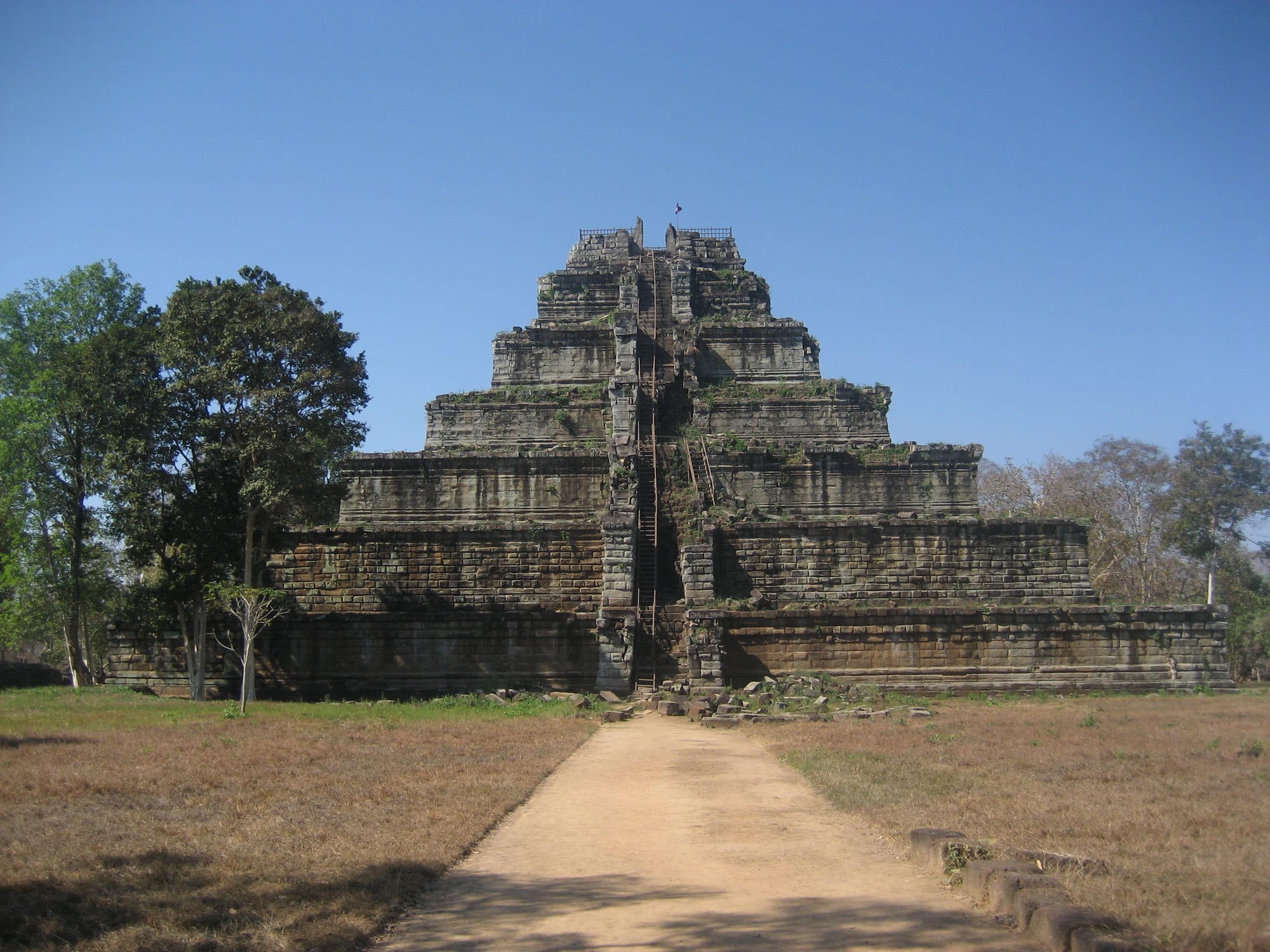
The north was an important part of the Khmer Empire. Jayavarman IV moved the capital from Angkor to Koh Ker, then called Lingapura or Chok Gargyar, in the 920s, and built a city of brick and sandstone temples there before the court returned to Angkor in the 940s. On the Dângrêk escarpment, Prasat Preah Vihear grew from the 9th century and was expanded above all in the 11th and 12th centuries as a Hindu sanctuary to Shiva. Preah Khan of Kampong Svay, one of the largest Angkorian complexes, also lies in the province. Further east, Sambor on the Mekong in Kratie is linked with a royal capital of the pre-Angkorian Chenla period.
The highlands of Ratanakiri and Mondulkiri stayed largely outside royal control, home to indigenous peoples who traded forest products with the lowlands. In the 20th century the region was drawn into the Indochina wars: the Ho Chi Minh Trail ran through the east, American bombing followed, and the Khmer Rouge built early bases in the Ratanakiri hills in the 1960s.
The temple of Preah Vihear has been at the centre of a long dispute with Thailand. The International Court of Justice ruled in 1962 that the temple lay in Cambodian territory, and its UNESCO listing in 2008 led to armed clashes over the surrounding land between 2008 and 2011; a further court judgment in 2013 found in Cambodia's favour. Armed clashes broke out along the border again in 2025, each round ended by a ceasefire. Koh Ker became a UNESCO World Heritage Site in 2023.