💰 Budget
Churchill is expensive. Everything arrives by train, plane or ship, rooms are few, and in the polar bear season most visitors come on costly packages that include flights, lodging and tundra-vehicle tours. Summer beluga trips are cheaper and easier to arrange.
- Daily Budget Midrange
- USD 200–400 (room in town, restaurant meals, taxis, and a boat or tundra-vehicle tour)
- Daily Budget Shoestring
- USD 120–180 (economy train seat, simple room, self-catering, walking in town)
Book polar bear season up to a year ahead; wildlife tours are the main cost and are rarely cheap at any season.
📅 Best Time to Visit
October and November for polar bears, which gather on the coast waiting for the bay to freeze. July and August for beluga whales in the river estuary and for birdwatching, though biting flies are fierce. The aurora is seen on clear, dark nights, most often in February and March, when the cold is extreme.
⏳ Suggested Number of Days
Three or four days in town allow for weather delays and more than one wildlife trip. Arriving by train adds about two days each way, and a flight-in or helicopter trip to the national park adds more. Bad weather can cancel tours, so spare time is useful.
- First Visit
- 3–4 days
- With Surroundings
- 5–7 days
🚆 Transportation
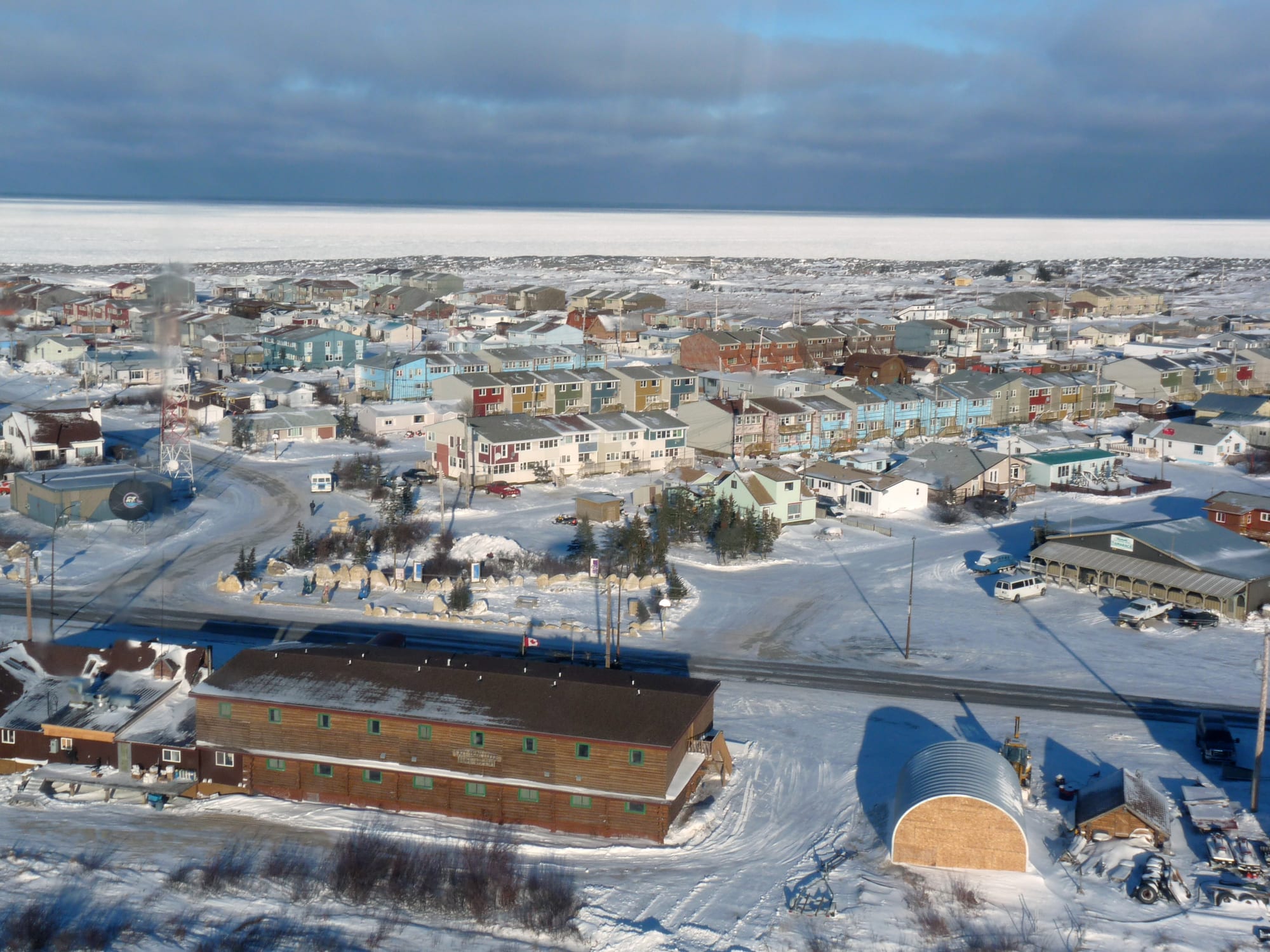
The town itself is small enough to walk across in about ten minutes. Beyond it, visitors use taxis, a hire vehicle, or the tour companies' tundra vehicles, buses, boats and helicopters. Walking out of town on foot is not safe because of the bears.
A hire vehicle is useful for exploring the shore road and doubles as shelter if a bear appears.
🛬 Airport & Station Connections
There is no road. Churchill Airport, about 6 kilometres east-south-east of town at the former Fort Churchill base, has scheduled Calm Air flights from Winnipeg. VIA Rail's Winnipeg–Churchill train runs twice a week, the only overland link, and takes roughly two days; the line was washed out by floods in 2017 and passenger trains resumed in December 2018. Some tours fly charters from Winnipeg.
🚶 Walkability
The town centre is compact and walkable by day, with everything within a few minutes. Walking along the shore, on the rocks or beyond the edge of town is dangerous because polar bears may be close, especially in autumn and after dark.
🛡️ Safety
The main dangers are the weather and wildlife: frostbite and whiteouts in winter, summer storms and tornadoes, deer and moose on roads at dusk, and polar bears in and around Churchill, which has a bear alert system and patrols. Bears that loiter near town are held in a holding facility, known locally as the 'polar bear jail', until the bay freezes.
Never walk alone on the edge of town or along the shore, take a taxi to outlying sights such as Cape Merry, dress for extreme wind chill, and carry insect repellent in summer. Check current official travel advice before travelling.
🌦️ Climate
Harsh subarctic. Winters are long and frigid, from early October to May, with northerly winds off the frozen bay making it far colder than its latitude suggests. Summers are short, cool to mild, with long days.
- Summer
- short and cool to mild, with long daylight and many biting insects; the record high is 36.9°C, set in August 1991
- Winter
- frigid — January averages about -26°C, colder than the latitude would suggest
🤝 Local Customs
More than half the townspeople are Indigenous, mostly First Nations, with Métis and Inuit residents. People are informal and used to visitors in season. Tipping of 15–20 per cent is expected in restaurants, and tour guides are commonly tipped. Ask before photographing residents.
Identification is asked for when buying alcohol; respect closed areas and the instructions of bear patrols and guides at all times.
💳 Common Payment Methods
The currency is the Canadian dollar. Cards are accepted in many places, though some shops take cash only and a little cash is useful for tipping guides; cash totals are rounded to the nearest five cents.