💰 Budget
Pucón is one of the expensive towns of the Lake District, and prices climb in January and February, when rooms are hardest to find. Out of season it is cheaper and quieter. Guided volcano climbs, rafting trips and visits to the hot springs are the main extra costs, and a hire car or taxis add to the bill for the parks and lakes outside town.
- Daily Budget Midrange
- USD 110–220 (lakeside hotel or cabin, restaurant dinners, a guided excursion, a hire car)
- Daily Budget Shoestring
- USD 40–75 (hostel bed, set-menu lunches, local buses to the lakes and parks)
Book rooms well ahead for January and February, and check what refund applies if a volcano climb is cancelled for weather or volcanic activity.
📅 Best Time to Visit
December to March is the main season, with the warmest weather, open trails and the busiest lake beaches; January and February are the peak. November and April are quieter and still pleasant. In winter there is skiing on the slopes of the volcano and the hot springs are at their most appealing, though rain is frequent in the lowlands.
⏳ Suggested Number of Days
Three or four days suit a first stay, with five to seven for the national parks and more distant lakes. Weather matters more than distance: a volcano climb or a mountain walk can be postponed by cloud, rain or volcanic activity, so a spare day is worth having.
- First Visit
- 3–4 days
- With Surroundings
- 5–7 days
🚆 Transportation
The town itself is small, and taxis, colectivos and small public buses cover the trips out of it. Regular buses run to Caburgua and towards the national parks, and intercity buses link Pucón with Villarrica and Temuco. Tour agencies in the centre provide transport for climbs, rafting and hot-spring trips. A hire car gives the most freedom for the parks.
Taxis and agency transfers are the usual way to the ski area and the start of the volcano climb.
🛬 Airport & Station Connections
Pucón Airport has seasonal summer flights from Santiago. The rest of the year most air travellers fly to Temuco, about 100 km to the north-west and roughly an hour and a half away by road. Buses run daily from Santiago, many of them overnight and taking around nine to eleven hours, and from Temuco, Villarrica and Valdivia; the road in is Route 199 from the Pan-American Highway at Freire.
🚶 Walkability
The centre is small enough to cover entirely on foot, and the lakeshore and the main square are a few minutes apart. Cycle lanes run along the main road. The lakes, parks, rivers and hot springs all lie outside town and need a bus, taxi, tour or car.
🛡️ Safety
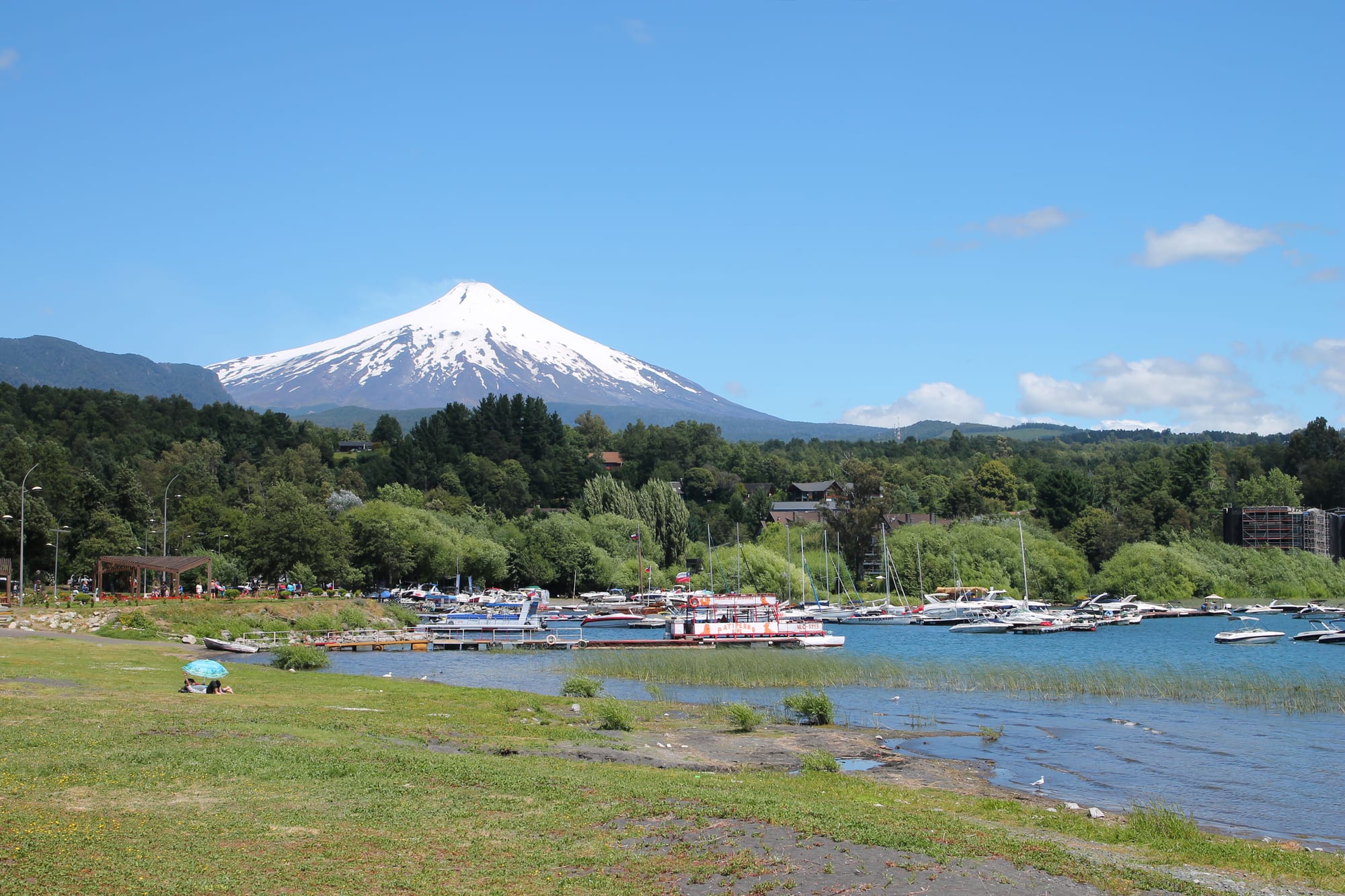
Chile is one of the safer countries in South America, but petty and opportunistic crime has risen, especially in Santiago and Valparaíso — pickpocketing, bag-snatching, phone theft, and distraction scams in tourist areas, markets, and on transport. Pucón is a calm town, and the main risks here are natural ones: the Villarrica volcano, whose 2015 eruption led to the evacuation of more than 3,000 people from nearby communities, cold lakes and fast rivers, and changeable mountain weather. Lahars, or volcanic mudflows, have struck the area in the past; a 2014 study found most of the town outside their likely paths.
Climb the volcano only with a registered guide or with the national park service's permission, respect volcanic alert levels and road closures, and use experienced operators for rafting. Check current official travel advice before travelling.
🌦️ Climate
An oceanic climate, cool and wet for much of the year, with a relatively stable summer that is the main reason for the town's popularity. Snow covers the volcano in winter, and rain can fall in any month.
- Summer
- December–February is mild to warm, with days typically reaching 22–25°C and rarely passing 30°C
- Winter
- June–August is cold and rainy, with temperatures typically reaching only 2–4°C and snow on the volcano
🤝 Local Customs
Spanish is spoken with a fast Chilean accent, and English is common in the tour agencies and hostels but limited elsewhere. The town lies in the Araucanía, the region with the largest Mapuche share in Chile, and Mapuche communities live around it; horse-riding trips visit some of them. Many Chilean households take once, a light evening tea, rather than a late dinner.
Ask before photographing people in Mapuche communities, follow guides' instructions on the volcano, and keep to marked trails in the national parks.
💳 Common Payment Methods
The currency is the Chilean peso (CLP), and prices carry a lot of zeros. Cards are widely accepted in the town's hotels, agencies and restaurants, and there are ATMs in the centre, though they charge fees and cap withdrawals. Carry cash for the hot springs, rural buses and small places outside town.