💰 Budget
Valdivia is a working university city rather than a resort, though its accommodation is generally no cheaper than in Pucón or Puerto Varas. Boat trips to the forts and taxis or tours to the coast are the main extra costs; local buses and the ferry make the forts cheap to reach independently.
- Daily Budget Midrange
- USD 95–180 (central hotel, restaurant dinners, a river boat trip, taxis)
- Daily Budget Shoestring
- USD 40–65 (hostel or guesthouse, market lunches, city buses and the Niebla ferry)
Rooms fill up during the Semana Valdiviana in February and the film festival in October.
📅 Best Time to Visit
December to March is the driest and warmest time and the season for boat trips, beaches at Niebla and the Semana Valdiviana in February. Rain falls through the year but mostly from March to October, when the city earns its nickname Valdilluvia, a play on lluvia, rain. October brings the film festival.
⏳ Suggested Number of Days
Two or three days cover the city and a trip to the coast. Allow three to five to add the wetlands and inland lakes or the coastal forests. Heavy rain can make outdoor days hard work, so a spare day helps outside summer.
- First Visit
- 2–3 days
- With Surroundings
- 3–5 days
🚆 Transportation
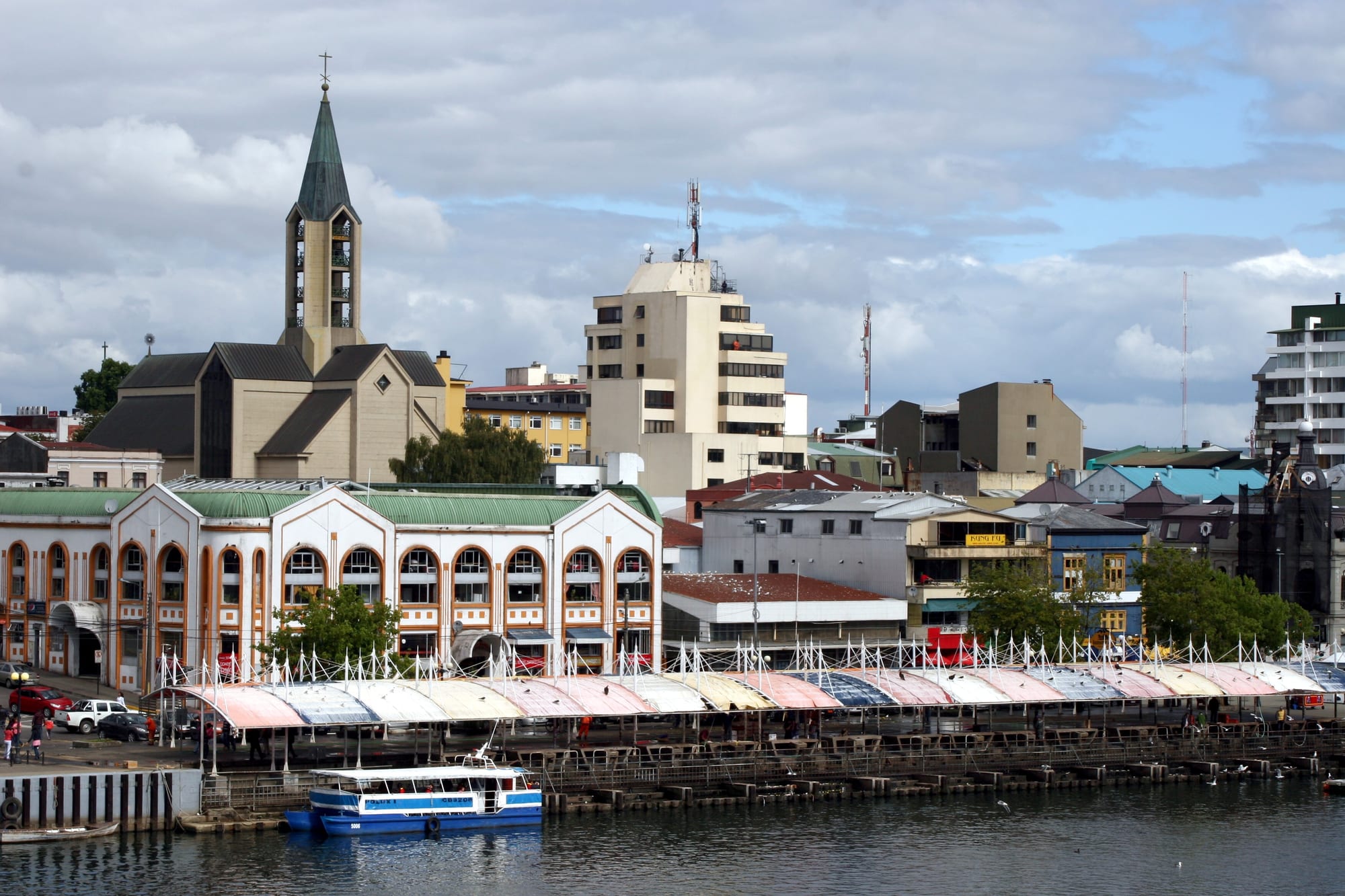
City buses cover the urban area until early evening for most destinations; the regional transport network's app has the most up-to-date route information. Buses run hourly to Niebla, and from there the Niebla–Corral ferry, the last ferry still in service on the rivers, crosses the river mouth. Tour boats leave from the riverfront near the fish market for Mancera Island, Corral and Punucapa. Taxis are easy to find.
Going to the forts by bus and ferry is cheap and quicker to Corral than the road.
🛬 Airport & Station Connections
Pichoy Airport, the city's main airport, is 32 km north-east of the city along the road to the Pan-American Highway. Valdivia is about 850 km south of Santiago, and long-distance buses arrive from there, from Puerto Montt in about three hours and from Pucón in about three hours, at the bus terminal near the river.
🚶 Walkability
Downtown and the riverfront are flat and compact, and the walk from the main square to the fish market takes only a few minutes. Teja Island is across the Pedro de Valdivia Bridge, an easy walk from the centre. Rain is the main obstacle, and the coast, the forts and the wetlands need a bus, boat or taxi.
🛡️ Safety
Chile is one of the safer countries in South America, but petty and opportunistic crime has risen, especially in Santiago and Valparaíso — pickpocketing, bag-snatching, phone theft, and distraction scams in tourist areas, markets, and on transport. Valdivia is a relatively calm city. It lies in a highly seismic zone: parts of it stand on former wetlands and artificial fill that suffered in the earthquakes of 1960 and 2010, and the coast at Niebla and Corral is exposed to tsunamis.
Watch bags in the markets and at the bus terminal, learn the tsunami evacuation signs on the coast, and keep a respectful distance from the sea lions. Check current official travel advice before travelling.
🌦️ Climate
A cool, wet climate in the zone of Valdivian temperate rainforest, with about 1,750 mm of rain a year, mostly from March to October, brought by frontal systems with much cloud and few clear days. Snow is rare; the most recent falls were in 2020, 2007 and 1995.
- Summer
- December–February is mild, with average temperatures of about 17°C
- Winter
- June–August is cool and very wet, with average temperatures of about 8.5°C
🤝 Local Customs
Valdivians are proud of the city's double heritage, Spanish and German, seen in the forts and the wooden houses, and of its beer, rivers and university. German clubs, schools and a volunteer fire company run by German descendants survive, and place names mix Mapuche, Spanish, Quechua and German roots. The student population keeps the cultural scene active.
Respect the wildlife at the fish market and in the wetlands, ask before photographing traders, and dress for rain.
💳 Common Payment Methods
The currency is the Chilean peso (CLP). Cards are widely accepted in hotels, restaurants and shops, and ATMs are common downtown, though they charge fees and cap withdrawals. Cash is useful at the market stalls, on buses and on the ferry.