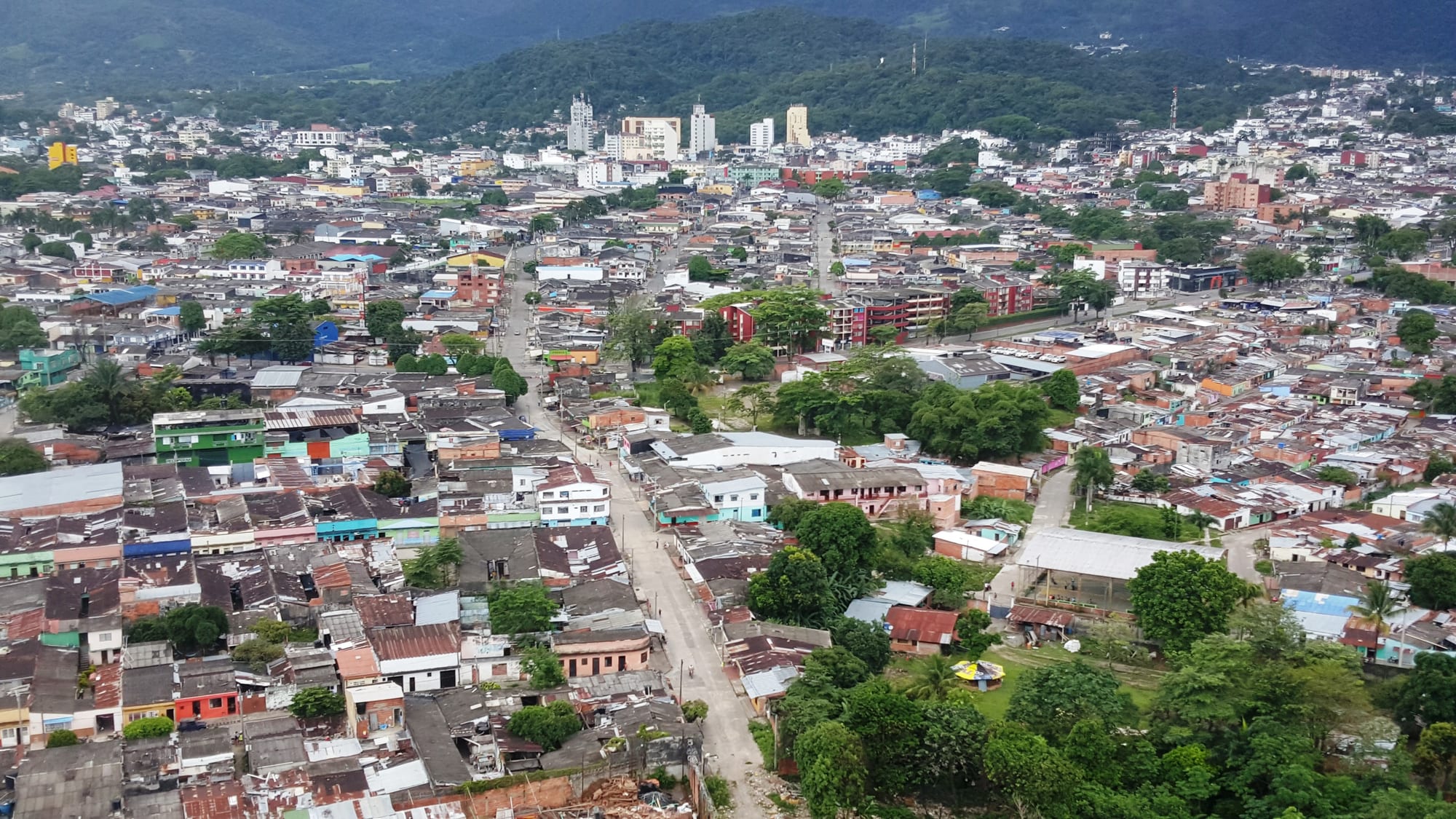
A wide view over low, colourful rooftops and tree-lined streets of Villavicencio, with tower blocks and forested foothills behind

Los Llanos & the Orinoco, Colombia

Villavicencio

Villavicencio spreading across the plain below the green foothills of the Eastern Andes. (CarlosE Duarte / Wikimedia Commons · CC BY 3.0)

The capital of Meta, at the foot of the Eastern Andes where the Llanos begin, about 75 km south-east of Bogotá. Founded by settlers in the 1840s and known as the Gateway to the Plains, it grew on cattle, farming and oil into the commercial centre of the eastern plains, a hot, green city of joropo, coleo and roast veal.

Neighbourhoods

  • The historic centre
    • First-time visitors
    • Historic district
    • Cafés

    The old heart of the city around the central Parque del Hacha, with restaurants and cafés. Shops, banks and government offices fill the surrounding streets.

    Open in Maps
  • Around the bus terminal
    • Close to buses
    • Budget stays
    • Street food

    The streets around the intercity Terminal de Transporte, where many simple hotels with round-the-clock receptions line Calle 15 to the west of the station, and street-food stalls set up in the evenings.

    Open in Maps
  • 7 de Agosto
    • Nightlife
    • Dancing

    A district known for the variety of dance clubs along its main street, where the city goes out at weekends to dance.

    Open in Maps
  • The northern foothills
    • Nature
    • Close to the airport

    The green edge of the city where the plain meets the Andes, along the road towards Restrepo and Cumaral, with the Los Ocarros biopark and its nature reserve, and the airport just north of the city.

    Open in Maps

Things to do

Monuments and viewpoints

  • Cristo Reyviewpoint

    A statue of Christ the King about 30 metres high on El Redentor hill, arms outstretched over the city, raised as a symbol of protection and a plea for peace.

    Open in Maps
  • Monumento a los Fundadoreslandmark

    The last work of the Colombian sculptor Rodrigo Arenas Betancourt, in the park of the same name on the road towards Acacías.

    Open in Maps
  • Monumento a la Biodiversidadlandmark

    A yellow hand with a ring on each finger, paying homage to the natural wealth of the eastern plains.

    Open in Maps

Parks and squares

  • Parque de los Periodistaspark

    A city park better known as the Parque Infantil, which took its present name in 1987 by agreement with the Círculo de Periodistas del Meta, the journalists' association.

    Open in Maps
  • Parque del Hachapark

    The central park officially named after José Eustasio Rivera, author of the novel The Vortex, but known for its monument of an axe, recalling the settlers who cut the first trails into Meta.

    Open in Maps
  • Plaza Los Centaurospark

    A square named after its sculpture of a llanero cowboy merged with his horse, where people gather for performances of llanero folklore.

    Open in Maps
  • Parque Las Malocaspark

    The park that hosts the yearly Mujer Vaquera contest of llanera riding and ranch skills, with llanera music.

    Open in Maps

Wildlife

  • Bioparque Los Ocarrospark

    A zoo park of about 5.5 hectares devoted to the animals of the Orinoco region, among them giant armadillos, Orinoco caimans and snakes in its serpentarium, around an artificial lake.

    Open in Maps

Music, sport and nights out

  • Llaneros F.C.attraction

    The city's professional football club, which plays in Colombia's top division, the Categoría Primera A, at the Bello Horizonte stadium.

    Open in Maps
  • Dance clubs of 7 de Agostoneighborhood

    A main street lined with dance clubs of every kind, the city's best-known place for a night out.

    Open in Maps

Short trips from the city

  • Restrepoattraction

    A foothill town on the road beyond the Los Ocarros biopark, one of the neighbouring municipalities growing in popularity with visitors.

    Open in Maps
  • Cumaralattraction

    A small town in the foothills, on the road beyond the Los Ocarros biopark.

    Open in Maps
  • Acacíasattraction

    A town on the road south of the city, on the way towards San Martín, the first historic town of the Llanos.

    Open in Maps
  • Puerto Lópezattraction

    A river town on the Meta, east of the city across the plains, on the road towards the Orinoco region.

    Open in Maps

Seasonal events

  • Concurso Mundial de la Mujer VaqueraMarch

    A three-day contest at Parque Las Malocas in which llanera women compete in milking, riding, saddling and rein handling, with llanera music from leading performers.

  • Anniversary of Villavicencio6 April

    The city's birthday, celebrated with free concerts, parades, fairs, sports competitions and fireworks.

  • International Joropo Tournamentfirst week of July

    The most important cultural event in Meta: five days of joropo contests for harpists, maraca players, singers and dancers, a beauty pageant and the Joropódromo, when more than 3,000 couples dance joropo through the streets.

Eat and drink

Long-standing places and food districts in Villavicencio. Hours, ratings and directions come from your maps app, always current.

Villavicencio classics

  • Carne a la llanerarestaurant

    Mamona, or veal a la llanera: a young calf roasted over wood, seasoned only with salt and beer, and served with cassava, potatoes and plantain at the city's grills.

    Open in Maps
  • Pan de arrozrestaurant

    Rice bread, a snack made with rice and curd, the subject of a special safeguard plan before the Ministry of Culture.

    Open in Maps

Food districts and markets

  • Calle 15 street foodneighborhood

    Street-food stalls that set up in the evenings along Calle 15, west of the intercity bus terminal.

    Open in Maps
  • Grills of the cityneighborhood

    The city's wide variety of restaurants and grills offering carne a la llanera and other typical dishes of the plains.

    Open in Maps

Experience Villavicencio

History

For many decades after the German conquistador Nikolaus Federmann crossed the plains from Venezuela to the Bogotá plateau in 1536, the Llanos below the Eastern Andes stayed largely unsettled. Colombia's life was in the mountain valleys, and the heat, the mountain barrier and the climate kept the plains a forgotten frontier, though their llanero horsemen fought on both sides of the wars of independence and crossed the Andes with Bolívar in 1819.

Villavicencio began in the 1840s, when farmers from Cáqueza, on the eastern slopes behind Bogotá, started a small settlement called Gramalote; the city counts 6 April 1840 as its founding date. It became a parish in 1855 and was named after Antonio Villavicencio, a patriot of the independence war. In the 1850s it had no more than about 20 inhabitants, but vaccines, a mule road and plenty of free land drew more settlers, and as roads improved, farmers could send produce and cattle up to the markets of Bogotá.

After 1948, during La Violencia, the llanero guerrillas drove the army out of towns across the plains; they never took Villavicencio but brought the fighting to the nearby Apiay military base, until the 1953 coup brought Gustavo Rojas Pinilla to power and an amnesty. Oil and gas from the Apiay field, cattle and agriculture then fuelled growth to over 500,000 people by 2018. A new road of bridges and tunnels shortened the drive to Bogotá. In 2025 an earthquake centred in neighbouring Cundinamarca damaged two shopping centres and brought down a water tank in the city.

Culture & Customs

Villavicencio calls itself La Puerta al Llano, the Gateway to the Plains, and affectionately Villavo la bella. Like the rest of the eastern plains it is a land of migrants: people from the Andean interior and the coasts have settled here since its founding and taken on llanero ways. Mamona, coleo, cockfighting, joropo, legends and the poncho are the markers of that culture, which locals see as struggling against modern urban life.

Joropo is everywhere. The International Joropo Tournament, held in the first week of July, is the biggest cultural event in Meta, with contests for harpists, maraca players, singers and improvised contrapunteo duels, and the Joropódromo, when more than 3,000 couples dance through the streets. In March, the Concurso Mundial de la Mujer Vaquera at Parque Las Malocas celebrates the skills of llanera women on horseback. The city's monuments honour the same identity, from the Centauros sculpture of a cowboy merged with his horse to the axe in Parque del Hacha recalling the first settlers.

The city is the main university centre of the plains, with the public University of the Llanos and several private institutions drawing students from neighbouring departments. Llaneros F.C., the professional football club, plays in Colombia's top division at the Bello Horizonte stadium.

Daily Life

The municipality had about 531,000 people in 2018, and Villavicencio is the most important commercial centre of the eastern plains and the main collection and supply point for the towns of the Orinoco region.

Cattle, agriculture and crude oil drive the economy, with gas and oil from the Apiay field, but most jobs are in commerce and services. Construction is a major activity, and the roads that carry the produce of the plains up to Bogotá and the interior keep the trade moving. Tourism is growing in the city and in neighbouring towns such as Acacías, Cumaral, Restrepo and Puerto López.

The city is very hot for most of the day, and life adjusts to it: the breezes that come off the foothills in the morning and at nightfall bring relief, and minibuses, some lit up after dark, carry people across town. Weekend nights mean dancing in the clubs of 7 de Agosto, music and roast meat.

Food

Villavicencio's food is the food of the plains. Carne a la llanera — also called mamona or ternera a la llanera — is its signature: veal from a calf slaughtered while still suckling, roasted over wood and seasoned only with salt and beer, served with cassava, potatoes and plantain, and sometimes with a chilli sauce and a beer or panela lemonade. It is eaten at the Joropódromo, birthday parties and family gatherings, and the city has a wide choice of grills that serve it.

Pan de arroz, a snack of rice and curd, is the local speciality bread, the subject of a special safeguard plan before the Ministry of Culture. Rice arepas, cassava bread, tungos and soups such as sancocho and pajarilla broth complete the everyday table, along with river fish.

Drinks include guarulo, masato, lemonade made with panela, guarapo de piña and café cerrero, while the local spirits are Aguardiente Llanero and Ron San Martín Añejo. In the evenings, street-food stalls line Calle 15 near the bus terminal.

Planning tools

Budget

Villavicencio is inexpensive. Hotels near the bus terminal are cheap, set lunches cost little, and a plate of roast veal at a grill is good value. Trips onto the plains or to Caño Cristales are sold as packages at much higher prices.

Daily Budget Midrange
USD 80–150 (comfortable hotel, meals at grills, taxis, biopark entry)
Daily Budget Shoestring
USD 30–50 (simple hotel near the terminal, set lunches, street food, minibuses)

Book rooms early for the joropo tournament in July and for the anniversary celebrations in April.

Best Time to Visit

The city is hot all year. January is the driest month, and the dry season from about December to March is best for trips onto the plains. The festival calendar peaks with the Mujer Vaquera contest in March, the city's anniversary on 6 April and the International Joropo Tournament in the first week of July, in the rainy season.

Suggested Number of Days

One or two days are enough for the city itself. Allow three or four to add the foothill towns and a trip onto the plains. A festival visit may need an extra day.

First Visit
1–2 days
With Surroundings
3–4 days

Transportation

Minibuses run frequently through the city; there are no fixed stops, and passengers flag them down and get off anywhere. Services end in the evening, at different times on each route. Local taxis fill the gaps.

Ask the minibus driver about the last service on a route, and take a taxi after dark.

Airport & Station Connections

La Vanguardia Airport, just north of the city, has flights to the rest of Colombia, including with Avianca and LATAM. Bogotá is about 75 km away: a modern road of bridges and tunnels has cut the drive to about an hour and a half in good conditions, but buses from Bogotá's Salitre terminal often take three to four hours with city traffic.

Walkability

The centre's parks and squares are close together and easy to walk, with tree shade in the parks. Beyond the centre the city spreads out along busy roads, and the heat at midday makes long walks tiring; minibuses and taxis cover the distances to the biopark, the terminal and the outer districts.

Safety

Colombia is far safer for visitors than its reputation, and the main cities and tourist regions are well travelled, but crime requires attention. Villavicencio is visited without serious trouble, though the usual city precautions apply, especially at night and around the bus terminal.

Keep phones out of sight, use taxis at night, and check road conditions on the Bogotá highway in the rains. Check current official travel advice before travelling.

Climate

A hot, very wet tropical rainforest climate, with an average temperature of about 25.6°C, daily temperatures from about 21 to 30°C and around 4,500 mm of rain a year. Breezes from the Andean foothills cool the city in the morning and at nightfall.

Summer
the drier months around January bring the least rain, with days around 30°C
Winter
from April to November every month brings more than 400 mm of rain, with heavy storms and days of about 21–30°C

Local Customs

Villavicencio is a city of migrants from the Andean interior and the coasts, proud of its llanero identity. Joropo, coleo, mamona and the poncho are signs of that culture, though locals worry that urban life is pushing them aside. Cockfighting also survives.

Dress is casual and light because of the heat; ask before photographing people.

Common Payment Methods

The currency is the Colombian peso (COP). Cards are accepted in larger shops, hotels and restaurants, but cash is needed for minibuses, street food and small grills. ATMs are found at the bus terminal and throughout the city; withdraw inside banks or malls by day.