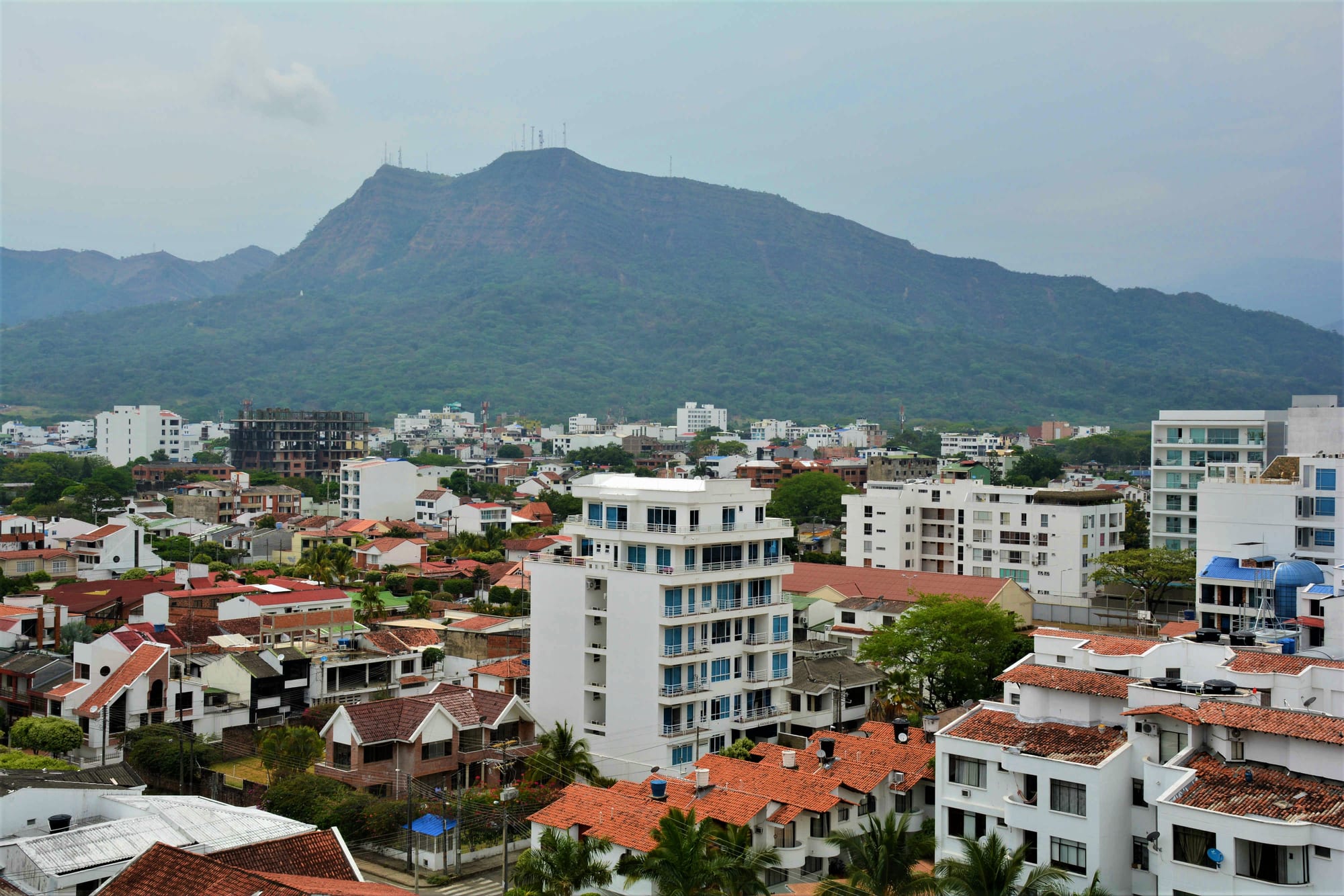
White apartment blocks and red-tiled houses among palms, with a green forested mountain rising behind under a cloudy sky

Los Llanos & the Orinoco, Colombia

Yopal

Yopal's buildings at the foot of the Andean foothills that rise to the west of the city. (Cámara de Comercio de Casanare / Wikimedia Commons · CC BY-SA 4.0)

The capital of Casanare, at the foot of the Eastern Andes where they drop to the plains, beside the Cravo Sur river. Founded in 1915 as a cattle drovers' stopping place, it grew with the department's oil boom into one of the fastest-growing cities in Colombia, and it remains a llanero city of cattle, joropo and coleo.

Neighbourhoods

  • El Centro
    • First-time visitors
    • Best for food
    • Historic centre

    The old core of the town, around the main Parque Francisco de Paula Santander, the scene of the city's civic and social life. Cafés, older hotels, shops and the best-known museum are close by, and the streets are lively in the evenings.

    Open in Maps
  • The Cravo Sur riverside
    • Parks and nature
    • Birdwatching

    The north-eastern edge of the city runs down to the Cravo Sur, a river that rises in the páramo of Boyacá. Parque La Iguana stretches along its bank with paths, kiosks and sports pitches on the river beach, and iguanas and birds in the trees.

    Open in Maps
  • The newer avenues and shopping centres
    • Shopping
    • Modern hotels

    Since the oil boom, Yopal has spread across the plain in new barrios along wide avenues with cycle lanes. Large shopping centres such as Gran Plaza Alcaraván and Unicentro, with cinemas, supermarkets and newer business hotels, are the focus of this side of the city.

    Open in Maps

Things to do

Parks and museums in town

  • Parque Francisco de Paula Santanderpark

    The main square, named after General Santander, who was sent to Casanare during the wars of independence, and once shaded by representative plains trees such as the camoruco and the totumo.

    Open in Maps
  • Casa Museo Ocho de Juliomuseum

    The museum singled out among the city's museums in local sources on Yopal's sights.

    Open in Maps
  • Parque Resurgimientopark

    A park laid out on the site of the old airstrip known as La Última Lágrima, which was levelled in the 1950s by political prisoners during the years of partisan violence.

    Open in Maps

Nature and viewpoints

  • Parque Natural La Iguanapark

    A 280-hectare park on the bank of the Cravo Sur with trails, water channels, bridges, kiosks and native forest, where iguanas and tropical birds are easy to see.

    Open in Maps
  • Mirador de la Virgen de Manareviewpoint

    A statue of the Virgin of Manare, patroness of Casanare, on a hill about 3 km from the city, reached on foot in about an hour and visited by pilgrims walking the Stations of the Cross in Holy Week; the views take in the city.

    Open in Maps
  • La Aguatocaattraction

    A natural bathing pool about 12 km from the edge of the city, reached by car, motorcycle, bicycle or on foot.

    Open in Maps

Short trips from the city

  • Poreattraction

    A town founded in 1644 that was named capital of the province during the wars of independence and was the place where Bolívar's and Santander's forces joined before Boyacá; in 2021 it became the first town east of the Andes listed as a Pueblo Patrimonio de Colombia.

    Open in Maps

Seasonal events

  • Fiestas patronales of the Virgen del CarmenYearly

    The city's patronal festival in honour of Our Lady of Mount Carmel.

  • Ferias y fiestas de fin de añoEnd of the year

    The city's end-of-year fair and festivities.

Eat and drink

Long-standing places and food districts in Yopal. Hours, ratings and directions come from your maps app, always current.

Yopal classics

  • Mamona and llanero grillsrestaurant

    Restaurants roasting veal the plains way, in large pieces on wooden stakes beside an open fire, served with cassava, potatoes and plantain.

    Open in Maps
  • Restaurants and cafés around the central parkneighborhood

    The streets around the main park hold many of the city's cafés and restaurants, serving sancocho de gallina, arepas with cheese, fresh fruit juices and sweet black tinto coffee.

    Open in Maps

Experience Yopal

History

Before the Spanish conquest, the land where Yopal stands belonged to the Achagua people, who grew cassava and pineapple, traded with the peoples of the mountains and used a hallucinogenic snuff made from the yopo tree, which grew in abundance along the Cravo Sur. The city takes its name from a yopal, a grove of these trees, that stood on the site of today's city. From about 1650 Jesuit missionaries set up cattle haciendas in Casanare, among them Caribabare, Cravo Sur and Tocaría, worked by Indigenous labour.

The modern town was founded in 1915 by settlers from Boyacá, when Elías Granados built his house where the centre now stands. 'La Estancia de Don Elías' became a compulsory stopping place for drovers taking cattle up to Tunja and Santander for sale. By 1930 there were only a handful of houses; the first school opened in 1932 and the first fiestas were held in 1934. The municipal seat was then at El Morro in the hills, and in 1937 a group of Yopal's residents took the municipal archives from El Morro by night on muleback to press their case. After a long dispute, an ordinance of the Boyacá assembly made Yopal the municipal seat in 1942.

Growth came with political change and oil. In 1973 Casanare was separated from Boyacá as an intendencia with Yopal as its capital, and in 1991 the new constitution made it a full department. From only 213 inhabitants in 1951, the municipality grew to about 87,000 by 2003, swelled by the department's oil industry, and it remains one of the fastest-growing cities in the country.

Culture & Customs

Yopal is a city of llanero culture, the cowboy tradition of the Colombian and Venezuelan plains. Joropo, played on harp, cuatro and maracas with fast, stamping dance steps, is heard in bars and at every celebration, and traditional instruments such as cuatros and maracas are sold in the city. The calendar includes the Cimarroncito de Oro festival, a Joropera Internacional, the Torneo de Contrapunteo y de La Voz Recia — a contest of improvised sung duels and powerful plains singing — and the Garcero del Llano student festival.

Coleo, in which riders chase a bull at full gallop and try to bring it down by twisting its tail, is the region's sport; the city has its own coleo arena and hosts the Copa América de Coleo. The patronal festival of the Virgen del Carmen and the end-of-year fair are among its popular celebrations. Religion is visible too: the statue of the Virgin of Manare on the hill above the city, the patroness of Casanare, draws pilgrims who walk the Stations of the Cross in Holy Week.

Casanare's Indigenous peoples are represented in the city at the Casa Indígena of the regional Indigenous organisation, ORIC, which brings together groups including the Sáliba, Tsiripu, Maibén, Cuiba, Amorúa and Sikuani. Hospitality is a point of pride across the plains, and llaneros are known for their independence and their attachment to cattle, horses and land.

Daily Life

The municipality had an estimated 192,758 people in a 2025 projection — about 193,000 — making Yopal the second city of Colombia's eastern plains after Villavicencio. The urban area is divided into seven comunas with more than 120 barrios, from the old Centro and Brisas del Cravo to newer districts spreading across the plain.

Cattle remain the backbone of the local economy, alongside rice, oil palm, plantain, maize, coffee and cassava. Oil is the department's largest source of income, from fields such as Cusiana and Cupiagua in the neighbouring municipalities of Tauramena and Aguazul, and much of the city's growth comes from people drawn by the industry and by Yopal's role as the capital. Many of its hotels were built in the 1990s to serve the oil companies, and large shopping centres have since opened, such as Gran Plaza Alcaraván, Unicentro and Morichal Plaza. Rapid growth has also brought pressure on housing and services, and the city has absorbed many newcomers with incomes below the national average.

Days start early and slow down in the midday heat. In the evenings people gather in the central park, the shopping centres and the riverside park, and weekends mean football, joropo, roast meat and cold beer. Cycle lanes run along the main avenues, and a university campus opened in 2010 adds students to the city.

Food

Yopal eats like the rest of the plains. The great dish is mamona, also called ternera a la llanera: a young calf cut into large pieces, skewered on wooden stakes and roasted slowly beside an open fire for hours, then served with cassava, potatoes and plantain. Carne asada, pisillo — dried, shredded beef or fish — and gallina criolla, free-range chicken, are everyday dishes, and sancocho de gallina, a hearty hen soup, is a local favourite.

Travel guides also point to rellena, hayacas, tungo and picadas, platters of mixed chopped specialities. Breakfast and snacks often mean arepas with cheese and fresh orange juice, and river fish such as cachama are fried or grilled.

The day is punctuated by small cups of sweet tinto coffee, fruit juices made with water or milk are everywhere, and masato, a fermented rice drink, is another traditional choice. Cold beer is the drink of choice in the heat, especially at weekend gatherings with joropo music and meat from the grill.

Planning tools

Budget

Yopal is an inexpensive city for food and local transport, with many small and mid-sized hotels, a legacy of the oil boom. The main extra cost is a stay on a working cattle ranch or a wildlife trip into the Casanare savanna, which is usually arranged as a package with transport, guide and meals.

Daily Budget Midrange
USD 80–160 (business hotel, restaurant meals, taxis; ranch stays cost considerably more)
Daily Budget Shoestring
USD 30–50 (simple hotel, set lunches, local buses and taxis)

Arrange ranch and wildlife visits in advance through the ranches or established local operators, which handle transport from the city.

Best Time to Visit

The dry season, from about December to March, is the most comfortable time and the best for seeing the wildlife of the plains gathered at the remaining water. The long rainy season from April to November turns much of the savanna into shallow floodplain.

Suggested Number of Days

The city itself needs a day or two. A stay on a cattle ranch or a trip into the savanna adds several days, and the season, the state of the roads and transfer times to the ranches decide how many.

First Visit
1–2 days
With Surroundings
3–5 days

Transportation

Taxis and local buses are inexpensive and plentiful, and the main avenues have cycle lanes. A car or an organised transfer is needed to reach the ranches and towns of the plains, where distances are long and some roads are cut by flooding in the rainy season.

Agree on transport to and from a ranch before setting off; public transport rarely reaches them.

Airport & Station Connections

El Alcaraván Airport, on the south-eastern edge of the city, has domestic flights to Bogotá and Bucaramanga and a new terminal opened in 2018. Three highways link Yopal with Bogotá — through Villavicencio, through Sogamoso and over the Andes by way of Guateque — and buses run from the city's terminal to Bogotá, Bucaramanga and Villavicencio.

Walkability

The centre is flat and easy to walk, with the main park, cafés and shops close together, and Parque La Iguana is within walking distance on the river side of town. The newer districts are spread out along wide avenues, and the heat makes long walks tiring around midday.

Safety

Colombia is far safer for visitors than its reputation, and the main cities and tourist regions are well travelled, but crime requires attention. Yopal and the Casanare ranches are visited without serious trouble, but armed groups remain active in parts of the eastern plains, above all in neighbouring Arauca and along the Venezuelan border.

Keep phones and valuables out of sight, use registered taxis at night, check regional security before travelling far into the countryside, avoid Arauca and the rural border areas, and use insect repellent against mosquitoes. Check current official travel advice before travelling.

Climate

A tropical monsoon climate at about 350 metres above sea level, with a short but distinct dry season from December to March and a long wet season covering the other eight months. The average temperature over the year is about 27°C.

Summer
the dry season, December–March: the least humid months, with February the warmest; the annual average is about 27°C
Winter
the wet season, April–November: humid and rainy, with the heaviest rain from April to July; the annual average temperature is about 27°C

Local Customs

Yopal is a llanero city that takes pride in its cattle-ranching traditions, joropo music and coleo. People are warm but formal in address: a greeting and the polite 'usted' come before business. Dress is light and casual in the heat, with neater clothes for churches and offices. Visitors to a ranch are often welcomed with coffee and a meal.

Ask before photographing people, and follow the ranch hands' instructions around cattle and horses.

Common Payment Methods

The currency is the Colombian peso (COP), with prices running into the thousands. Cards are accepted in hotels, shopping centres and many restaurants, but cash is needed for small shops, taxis and buses and in the countryside. ATMs are easy to find; use those inside banks or shopping centres during the day.