💰 Budget
Villavieja and the Tatacoa are cheap. Simple hotels in town and campsites and cabins in the desert cost little, and meals are home cooking at modest prices. The main extras are transport around the desert — there is no public transport, so tours, tuk-tuks and mototaxis add up — and the observatory sessions.
- Daily Budget Midrange
- USD 60–120 (cabin or posada room, a guided tour of the desert, an observatory session)
- Daily Budget Shoestring
- USD 25–45 (tent or hammock in the desert, home-cooked meals, minibus from Neiva)
Agree the price of any tour, tuk-tuk or mototaxi before setting off, and carry plenty of water.
📅 Best Time to Visit
The desert is hot all year. The drier months, around June to September and December to February, give clear days and the best chances of clear night skies for stargazing, but August and September are also the hottest. Rains are short and scarce.
⏳ Suggested Number of Days
Most visitors stay one night or two, since the desert is at its best at dawn, at dusk and after dark. A longer stay suits those who want to walk both deserts slowly or return for more than one night of stargazing.
- First Visit
- 1–2 days
- With Surroundings
- 2–3 days
🚆 Transportation
The town is small enough to cross on foot. There is no public transport into the desert: visitors take tuk-tuks or mototaxis from the main square, join a guided tour of a few hours, or walk. The town to the observatory is about 6 km on a paved road, and Los Hoyos is about 6 km further.
Walking in the desert is possible, but avoid the midday heat, carry plenty of water and sun protection, and do not climb on the formations.
🛬 Airport & Station Connections
Minibuses and shared jeeps run from the bus terminal in Neiva, about 32 km away, in roughly an hour; the last services of the day leave in the late afternoon or early evening. Neiva's Benito Salas Airport is the nearest airport, and Neiva's terminal has buses to the rest of the country.
🚶 Walkability
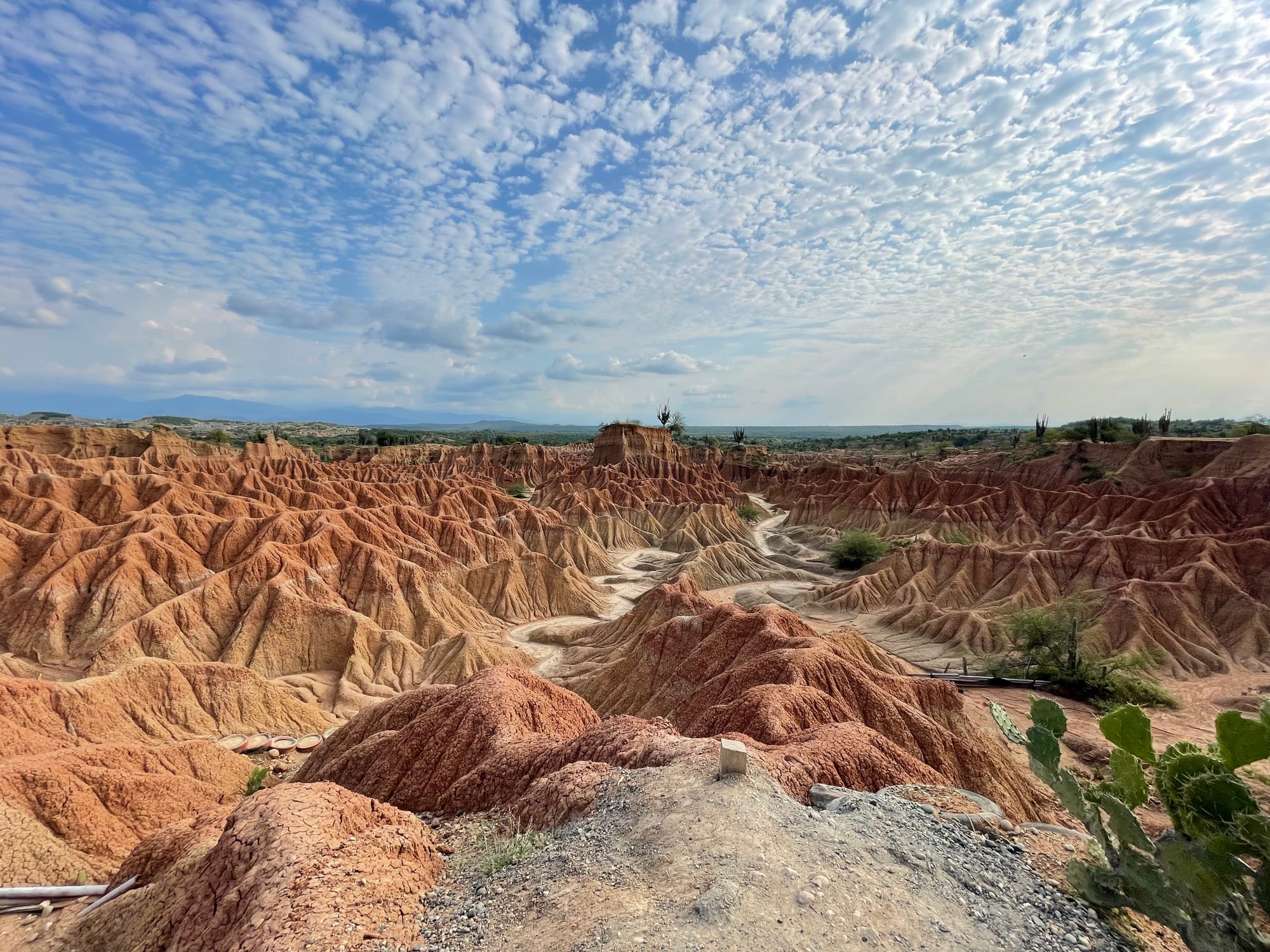
The centre is a few flat blocks around the square, easy on foot. The desert road is long, shadeless and hot, so most visitors ride to the gullies and walk within them. Paths inside El Cuzco and Los Hoyos are loose clay and sand, slippery after rain.
🛡️ Safety
Colombia is far safer for visitors than its reputation, and the main cities and tourist regions are well travelled, but crime requires attention. The Tatacoa is visited without serious trouble by most travellers. The practical dangers are the heat, dehydration and sunburn, and scorpions, spiders and snakes are among the desert's wildlife.
Carry more water than seems needed, wear a hat and closed shoes, and avoid walking in the gullies at midday. Check current official travel advice before travelling.
🌦️ Climate
Very hot and dry at about 430 metres above sea level. The municipality has a mean temperature of about 30°C, with maxima reaching 40°C and minima of about 12°C, humidity of roughly 57–73 per cent and very little wind. Rain is scarce.
- Summer
- August and September are the hottest months, when maxima reach about 40°C
- Winter
- the short rainy spells bring little relief — the temperature can still pass 40°C, and nights can fall to around 12°C
🤝 Local Customs
Villavieja is a small, friendly farming town that calls itself the paleontological and astronomical capital of Huila and of Colombia. Visitors are asked not to climb on the eroded formations, which are fragile clay.
Leave fossils and stones where they lie, keep to the paths in the gullies, and ask before photographing people.
💳 Common Payment Methods
The currency is the Colombian peso (COP). Cash is essential: the town is small, and the campsites, posadas, tuk-tuks, mototaxis and tours in the desert work almost entirely in cash. Neiva has banks and ATMs, so it is wise to bring enough pesos from there.