💰 Budget
Alajuela is cheaper and quicker to reach from the airport than San José, which makes it a common choice for the first and last nights of a trip. Rooms near the airport cost a little more than their standard suggests, but meals at sodas and the market, and buses that run every few minutes to San José, keep daily costs low.
- Daily Budget Midrange
- USD 100–180 (mid-range hotel near the airport, restaurants, taxis and a guided trip into the hills)
- Daily Budget Shoestring
- USD 40–70 (hostel or guesthouse, soda and market meals, local buses)
Red city taxis take only colones, while the orange airport taxis also accept US dollars; carry small notes for buses.
📅 Best Time to Visit
The city is mild all year. December to April is dry and sunny, with the clearest views of the volcanoes; from May to November mornings are usually fine and rain falls in the afternoon. Juan Santamaría Day on 11 April is the city's own celebration.
⏳ Suggested Number of Days
The city itself takes a day at most, and many visitors stay a single night on arrival or before a flight. Two or three days allow trips into the volcano and coffee country to the north and west; whether Poás is open is the main thing that changes the number.
- First Visit
- 1 day
- With Surroundings
- 2–3 days
🚆 Transportation
Two bus companies run frequent services between Alajuela and San José, and buses also go to Heredia, Sarchí, San Ramón and the villages towards Poás. A commuter train links the city with San José through Heredia, mostly at rush hours; it passes close to the airport but does not stop there. Red taxis wait at stands around the city, and a hire car is the easiest way to reach the hills.
Ask about the volcano's status before setting out, and allow for heavy traffic towards San José at rush hour.
🛬 Airport & Station Connections
Juan Santamaría International Airport, Costa Rica's main gateway, is about 3 km south of the city centre — a short taxi ride, and close enough to walk from the hotels on the airport side. San José is about 19 km to the south-east by bus, train or road, and buses from the Pacific coast and the north-west pass through the city.
🚶 Walkability
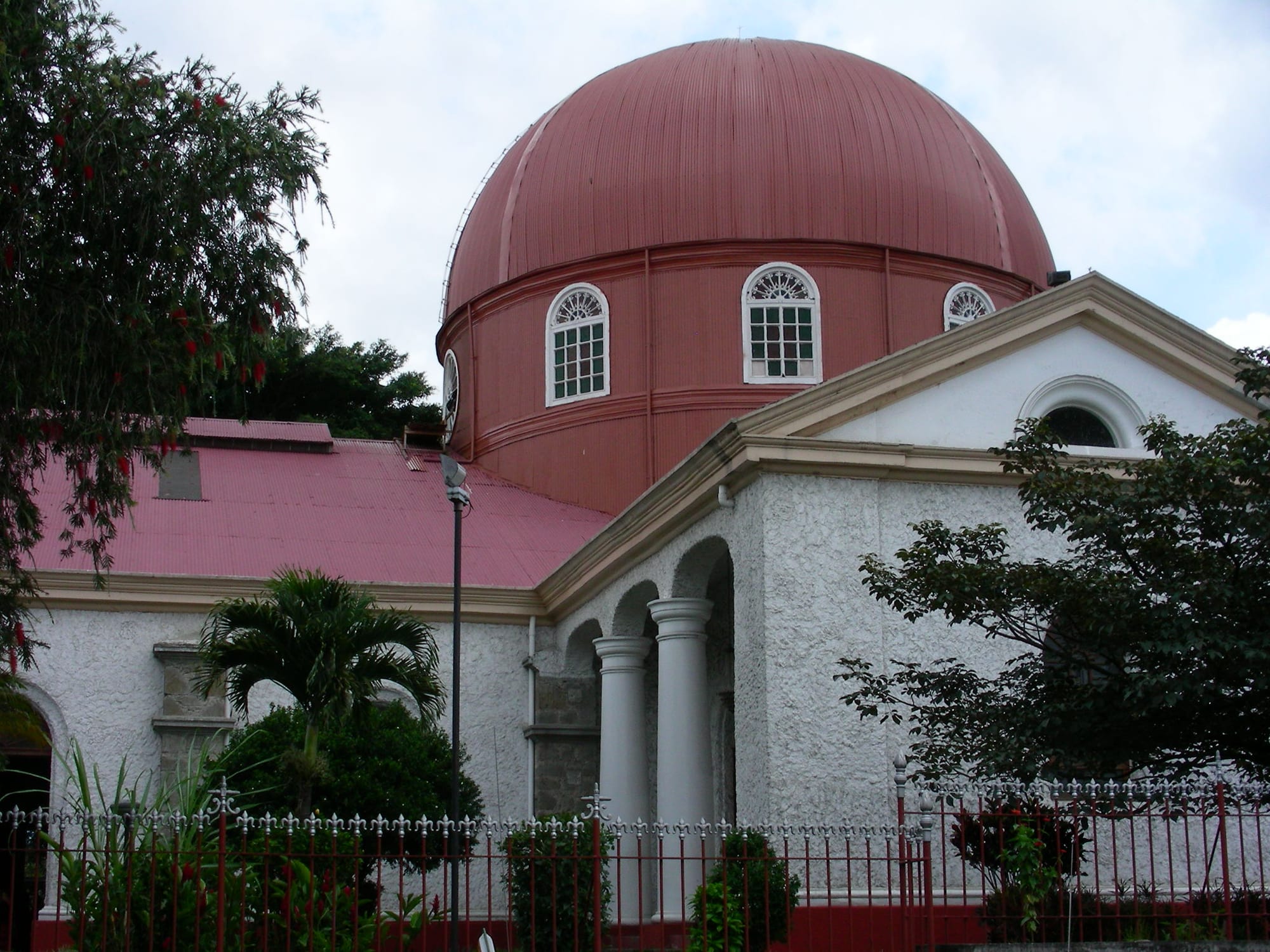
The centre is a compact grid, and the cathedral, the parks, the museum and the market are all within a few blocks of one another. Pavements are narrow and traffic is heavy on the main roads, and the airport, the outer districts and the hills need a bus or taxi.
🛡️ Safety
Costa Rica still compares well with its Central American neighbours, and crime that reaches visitors is usually petty theft or the occasional armed robbery — break-ins to parked rental cars, bag-snatching on beaches, and pickpocketing in San José. Homicides have risen in recent years, mostly linked to drug gangs in poorer districts away from tourist areas. Poás is an active volcano and its national park is closed at times of unrest; it was closed indefinitely in 2025.
Keep bags close in the market and at bus stops, use registered taxis at night, and follow official closures on the volcanoes. Check current official travel advice before travelling.
🌦️ Climate
Mild and fairly dry by tropical standards, and slightly warmer than San José, with average temperatures of about 23–26°C and low humidity for much of the year. The city lies at about 950 metres; the slopes of Poás above it are much cooler and often in cloud.
- Summer
- dry season (December–April): sunny, warm days of around 23–26°C on average
- Winter
- rainy season (May–November): similar averages of about 23–26°C, with afternoon showers
🤝 Local Customs
Alajuelenses are proud of their city's part in national history and of their football club, La Liga, whose rivalry with Saprissa of San José divides the country. A greeting comes before any request, the formal usted is widely used, and pura vida serves as hello, thanks and goodbye. Tipping taxi drivers is not expected, though leaving the change is welcome.
Dress modestly inside the cathedral and churches, and ask before photographing people in the market.
💳 Common Payment Methods
The currency is the Costa Rican colón (₡). Cards are widely accepted in hotels, restaurants and shops, and US dollars are taken for larger purchases; colones are needed for buses, city taxis, the market and sodas. There are cash machines at the airport.