💰 Budget
Cienfuegos is cheaper and less touristy than Trinidad, and many travellers stay here and visit Trinidad on a day trip. Casas particulares are the usual places to stay, and boat trips, taxis to the castle, the botanical garden or the beach, and paladar dinners are the main costs. Visitors pay almost entirely in cash.
- Daily Budget Midrange
- USD 90–180 (a good casa, paladar dinners, taxis and a day trip to Trinidad or the Escambray)
- Daily Budget Shoestring
- USD 35–60 (casa particular with breakfast, peso pizza and state cafeterias, Víazul buses)
Bring all the cash needed in euros or US dollars; US-issued cards do not work and ATMs are unreliable.
📅 Best Time to Visit
December to April is dry and the most comfortable time for walking the centre and the Malecón. Summer is hot and wet, with heavy afternoon storms, and September and October carry the highest hurricane risk; in 2005 Hurricane Dennis made landfall near the city.
⏳ Suggested Number of Days
A day or two covers the city itself. Three or four days allow for the surrounding coast and countryside, or for using the city as a base for the mountains and Trinidad.
- First Visit
- 1–2 days
- With Surroundings
- 3–4 days
🚆 Transportation
The centre and Punta Gorda are both easy to walk around but are about 3 km apart, linked by the Paseo del Prado along the bay. Horse-drawn carts carrying six or eight passengers run up and down it, and taxis can be arranged through casas for the castle, the beach and the lagoon.
Fuel shortages regularly disrupt buses and taxis, so confirm transport a day ahead and keep plans flexible.
🛬 Airport & Station Connections
Cienfuegos is about 250 km from Havana. Víazul buses between Havana and Trinidad stop here, and slow trains run from Havana on alternate days. Trinidad is roughly an hour and a half by road. Jaime González Airport is an international airport serving the city, though as of 2024 it had only one scheduled flight, to Toronto, and Cuba stopped refuelling airliners in February 2026.
🚶 Walkability
The grid of the centre, with wide streets laid out by the French founders, is easy and pleasant on foot, and the Malecón makes a good long walk to Punta Gorda. The castle, the beach, the lagoon and the botanical garden need a taxi or a boat.
🛡️ Safety
Cuba has low levels of violent crime and is generally very safe for visitors. The centre is generally safe, and Cienfuegos, like the region's other smaller cities, sees few problems. Power cuts and water shortages affect the whole region.
Keep valuables secure, agree taxi and cart fares in advance, and carry a torch for power cuts. Check current official travel advice before travelling.
🌦️ Climate
A tropical savanna climate, hot and on the sheltered Caribbean side of the island. The rainy season from May to October brings heavy afternoon storms, and hurricanes can strike the coast.
- Summer
- Across the region's plains and coast, summers are hot and humid, around 31–34°C, with afternoon storms
- Winter
- Across the region's coast, winters are warm and dry, around 26–28°C by day
🤝 Local Customs
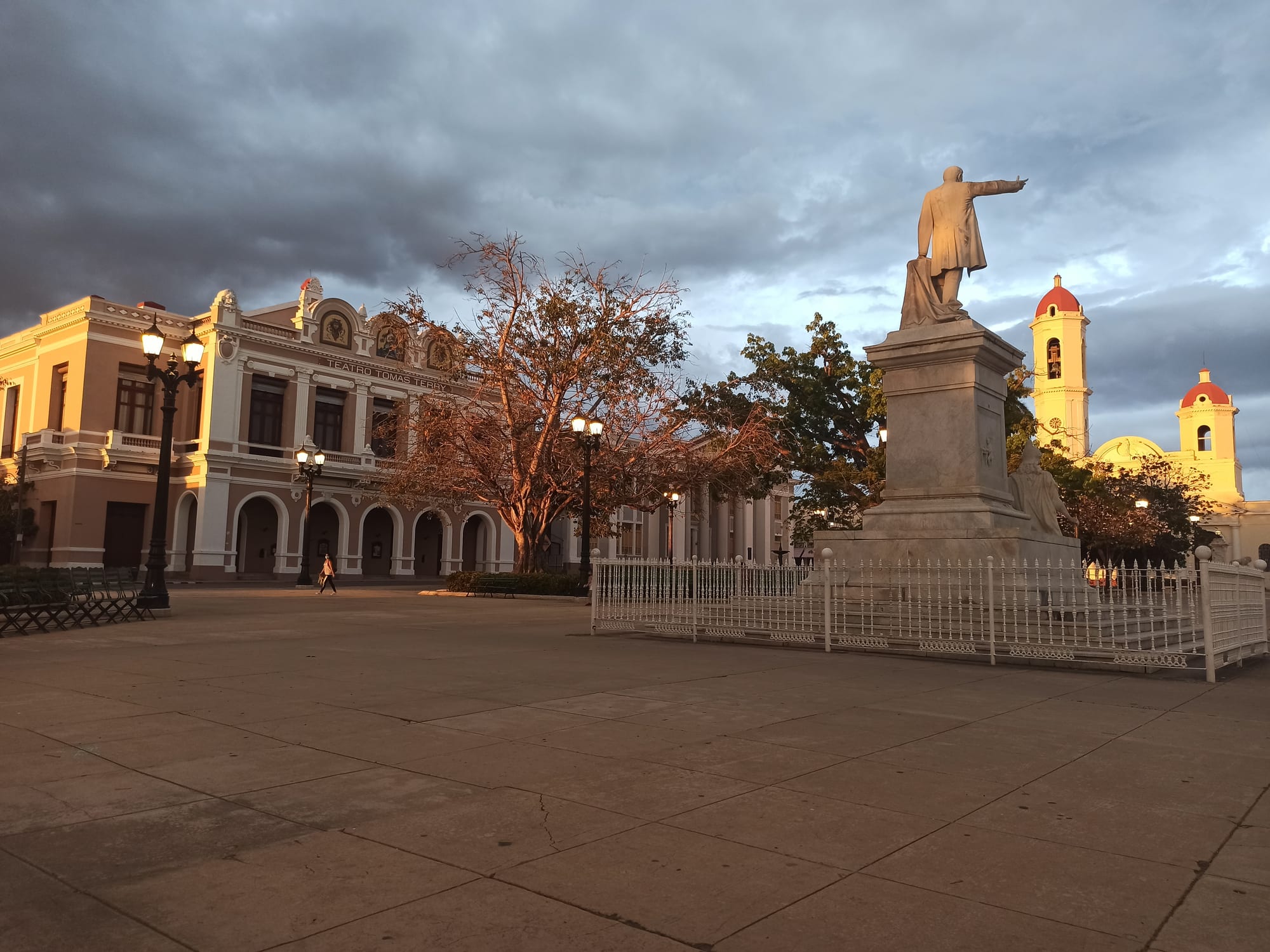
Cienfuegueros take pride in their city's French origins and neoclassical buildings, and in Benny Moré, born in the province. Life moves outdoors in the evenings, to the park and the sea wall. Many everyday places price in pesos, while services for visitors usually price in foreign currency.
Dress modestly in churches, ask before photographing people, and tip musicians, guides and casa hosts in cash.
💳 Common Payment Methods
The currency is the Cuban peso (CUP), but many services for visitors are priced in US dollars or euros, and exchange rates vary widely. Bring cash in euros or US dollars and change small amounts at a time; US-issued cards do not work, and ATMs are unreliable.